
Start with a warm handshake and eye contact to show respect, then use open‑ended storytelling with wooden peg people to explore feelings. Practice turn‑taking, sharing, and clean‑up routines so kids learn responsibility and patience. Introduce Road‑of‑Peace conflict‑resolution steps, teaching “I feel…” statements and role‑play. Assign daily leadership roles like line leader or material manager to model teamwork. Keep going to discover how each lesson builds deeper empathy.
Start With a Warm Handshake and Eye Contact for Empathy

Ever wondered how a simple handshake and steady eye contact can set the stage for empathy? You begin by offering a warm handshake and direct eye contact, signaling respect and attentiveness. This greeting creates a calm tone that invites children to share feelings openly.
After the handshake, ask an age‑appropriate prompt like, “Hi, how are you feeling today?” and then practice active listening. Acknowledge their response before you speak, reinforcing turn‑taking and showing that you value their voice.
Repeating this routine daily builds a habit of respectful greetings and lays a foundation for conflict resolution. By modeling these gestures, you teach children that empathy starts with simple, intentional contact. Incorporating natural wooden peg people into play can further support social-emotional skill development by encouraging open-ended storytelling and diverse character exploration.
Practice Turn‑Taking and Sharing Materials to Build Respect
How can you turn a simple classroom routine into a powerful lesson in respect? You start by setting clear classroom guidelines: a “one of each” rule, visible waiting cues like red tape, and a tidy clean‑up routine. When children practice turn‑taking and sharing shared materials, they see that waiting and respecting others’ use reduces conflict. You reinforce teaching empathy by praising polite waits and gentle hand‑overs. After each activity, students clean up, returning items to their proper places, replenishing supplies, and putting boxes back on shelves. This personal responsibility keeps resources ready for the next child and deepens empathy development. Consistent turn‑taking, sharing, and orderly clean‑up turn respect and foster lasting conflict reduction. Incorporating tools like the Toddlers Kitchen Step Stool with Safety Rail can promote independence and safety, enhancing the learning environment.
Teach Conflict‑Resolution With Road‑Of‑Peace Activities
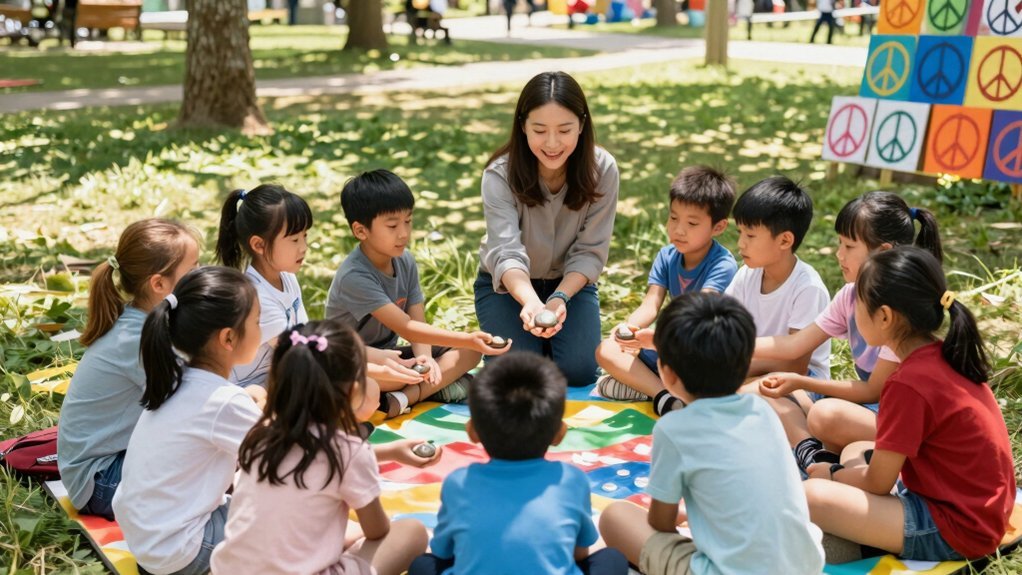
Building on turn‑taking and clean‑up routines, you can turn everyday disagreements into teachable moments with Road‑of‑Peace activities. You guide children learning through concrete vocabulary, role‑play scenarios, and reflective questions that surface emotions and foster empathy. Each session links conflict resolution to character education, reinforcing peace‑building habits that stick beyond the classroom.
These activities also promote social interaction and collaborative play, essential skills for emotional growth.
| Step | What You Do |
|---|---|
| 1 | Identify the conflict and name the emotions involved. |
| 2 | Invite each child to share perspective using “I feel…” statements. |
| 3 | Role‑play the situation, trying a Road‑of‑Peace response. |
| 4 | Discuss how the chosen action restores calm and respect. |
| 5 | Celebrate the successful peace‑building outcome together. |
Teach Clean‑Up Routines to Reinforce Personal Responsibility
A tidy classroom isn’t just neat—it’s a daily lesson in responsibility. You teach children clean‑up routines that turn mess into order, reinforcing personal responsibility and empathy for shared resources. When a spill occurs, you guide them to wipe it up, and after a game they return pieces to their boxes, closing lids and replenishing supplies. This consistent practice embeds accountability into classroom management, showing that each student’s actions affect the next user. By celebrating the joy of a clean shelf, you model respect for materials and encourage children to take ownership of their environment. The habit of returning work promptly cultivates empathy, because students recognize how their care supports peers and maintains a thriving learning space. Using non-toxic materials in classroom supplies further promotes safety and respect for everyone’s well-being.
Teach Daily Leadership Roles That Model Empathy and Teamwork
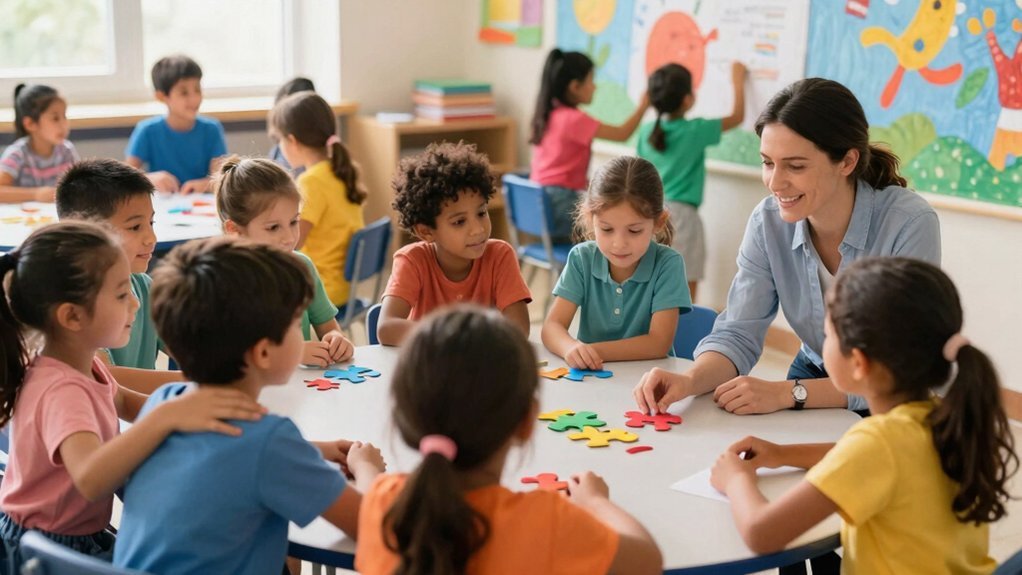
When you assign daily leadership roles—like line leader, material manager, or discussion facilitator—you give each child a concrete way to practice empathy and teamwork.
In morning meetings, introduce a rotating schedule that ties roles and responsibilities to classroom routines, so students see how their actions affect peers.
Introduce a rotating schedule in morning meetings so students see how their actions directly impact peers.
Use visual cues, such as red‑tape signs, to remind the line leader to greet everyone and the material manager to share supplies evenly.
As you model behavior, emphasize listening, turn‑taking, and supportive language.
Encourage student collaboration by having the discussion facilitator ask for input before decisions, reinforcing that leadership isn’t about authority but about caring for the group.
This structure builds empathy, strengthens teamwork, and normalizes shared responsibility.
Including accessible and well-organized spaces, like the Humble Crew Toy Storage Organizer, can further support children in practicing responsibility and teamwork through shared clean-up routines.
Frequently Asked Questions
How Can I Adapt Empathy Lessons for Children With Sensory Processing Challenges?
You’ll simplify cues, use tactile or visual supports, break activities into short steps, let them choose comfortable environments, and model calm reactions, ensuring each empathy task feels safe and manageable.
What Biblical Verses Best Support Teaching Forgiveness in Daily Activities?
You can lean on Ephesians 4:32, Colossians 3:13, and Matthew 6:14‑15, letting those verses guide you as you model forgiveness daily, reminding kids that mercy restores relationships and eases hearts.
How Do I Measure Progress in a Child’s Empathetic Behavior Over Time?
You track empathy by noting how often they recognize feelings, ask supportive questions, and adjust behavior. Record observations weekly, rate responses on a simple scale, and compare trends to see growth.
Can Empathy Training Be Integrated Into Virtual or Hybrid Church Services?
Yes, you can weave empathy drills into virtual or hybrid services by adding interactive storytelling, role‑play breakout rooms, live polls, and reflective prayer moments that prompt participants to share feelings and support each other.
What Age‑Appropriate Language Helps Children Recognize Invisible Emotional Pain?
You’ll use simple, concrete words like “sad,” “hurt,” or “upset,” and pair them with phrases such as “I see you’re feeling invisible pain,” encouraging kids to name feelings and notice others’ quiet struggles.