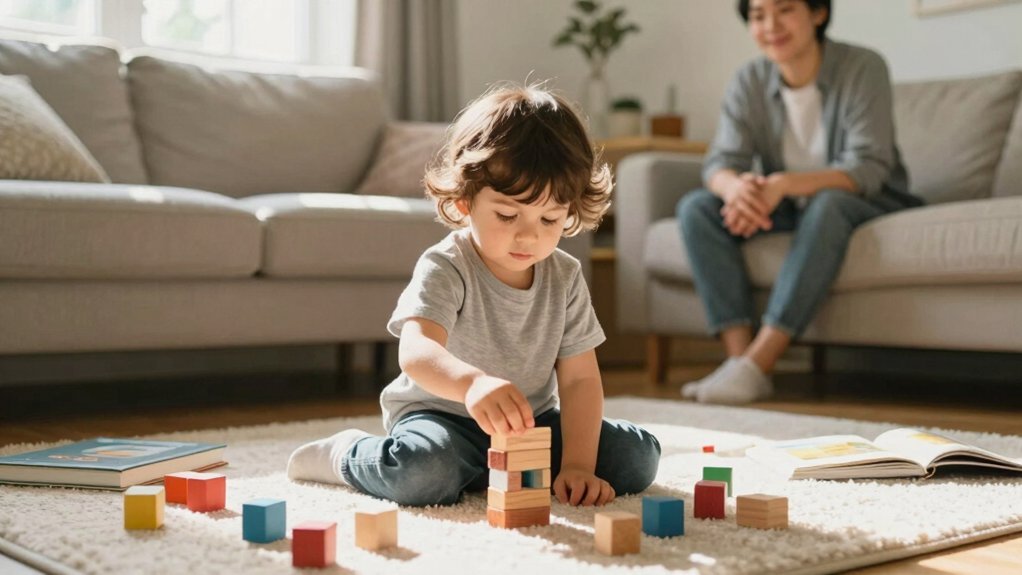
When you honor your child’s natural learning rhythm, you let neuroplasticity work its magic—multisensory, socially rich input is absorbed at their own speed, building deeper mastery and lasting retention. Internal motivation and mastery outweigh external grades, fostering resilience and self‑regulation. A flexible, self‑directed environment lets them explore, repeat, and succeed without pressure, while mixed‑age settings provide mentorship and inspiration. Keep watching for signs of frustration or skill gaps, and intervene only when safety or essential concepts demand it—there’s much more to discover.
Why a Child’s Natural Learning Rhythm Beats Grades

Ever wonder why a child’s natural learning rhythm often outpaces—or falls behind—classroom grades? You’ll see that “average” milestones span wide ranges, so a single percentile or grade doesn’t define ability. Neuroplasticity lets each brain absorb multisensory, socially rich input at its own learning pace, producing gains even when report cards lag. When you prioritize internal motivation and mastery over external scores, you boost resilience and long‑term retention while easing anxiety. Age differences within a class and unique wiring—like ADHD or anxiety—further shift the pace, meaning a one‑size‑fits‑all grading system can mislead. Embracing personalized pacing honors your child’s natural rhythm and unlocks deeper, more sustainable growth. Providing tools like child-size whisks tailored to developmental stages can also nurture confidence and practical skills along the way.
How Montessori Self‑Directed Materials Match Your Child’s Pace
You’ll see your child gravitate toward the activities that spark curiosity, because the materials let them choose what to explore. Each tool is calibrated to the child’s current readiness, so they master concrete concepts before moving to abstract ones. As they succeed, the built‑in feedback nudges them toward the next skill level, keeping the pace truly theirs. Just like well-designed mats with non-slip surface technology provide stability for equipment, tailored learning materials offer stable support for your child’s developmental progress.
Choice‑Driven Exploration
How does a child’s curiosity guide their learning when they’re free to choose materials that truly resonate with them? You watch them gravitate toward a puzzle that sparks a question, then linger until they’ve mastered the pattern. The self‑directed trays let them pick, experiment, and repeat at a natural learning pace, without pressure to finish before peers. In mixed‑age rooms, older children demonstrate techniques, while younger ones mimic, creating a fluid rhythm of discovery. Sensorial blocks, bead strings, and practical life tools engage sight, touch, and sound, so mastery builds through hands‑on repetition or rapid exploration, whichever fits the child’s tempo. Your observation notes capture each breakthrough, reinforcing that growth, not a clock, drives progress. Selecting materials that support multi-step sequences helps build confidence and independence tailored to each child’s development.
Material‑Aligned Readiness
When children follow their curiosity, they naturally gravitate toward the materials that spark their interest, and those very tools are built to match each child’s readiness. Montessori self‑directed materials isolate a single concept—like numeracy or symmetry—so you can work on it until you truly master it before moving on. The hands‑on, sensory nature lets you manipulate concrete objects, turning abstract ideas into tangible experiences that align with your learning pace.
Mixed‑age classrooms let older peers demonstrate higher‑level tasks, while you stay with the pieces that fit your current level. Teachers watch your interactions, noting when you’re ready for the next challenge, rather than forcing a timetable. This material‑aligned readiness keeps progress natural and empowering. Many tools designed for child development, such as fine motor skill development tongs, support this individualized practice by matching each child’s pace and grip strength.
Adaptive Skill Mastery
Ever wondered why some children breeze through a concept while others need a bit more time? You’ll see adaptive mastery in action when your child picks a Montessori material that matches their readiness. The graded levels and controlled sequences let them work until they truly understand before moving on, so progress feels natural, not forced. Multi‑sensory tools—bead chains for math, sensorial blocks for shape—encode ideas at the speed your brain prefers, boosting retention. Self‑correction reduces pressure, keeping engagement steady. Meanwhile, teachers track individualized records, stepping in only when the child is ready for the next challenge. This personalized rhythm turns learning into a confident, self‑directed journey. Using Montessori-friendly tools, like the Comfy Cubs step stool, empowers children to reach their learning environments independently, reinforcing their natural pace.
Montessori Science: Intrinsic Motivation and Long‑Term Success
You’ll notice that when children follow their own curiosity, they stay engaged far longer than with scripted lessons. The hands‑on experiments in Montessori science let them experience concepts directly, which cements the knowledge for years to come. As they master each discovery, they build confidence that fuels both short‑term enthusiasm and long‑term skill retention. Incorporating Montessori-inspired play kitchens with interactive features supports cognitive, language, and motor skill development through authentic pretend play.
Driven Curiosity
Why does curiosity thrive when children steer their own learning? You’ll see intrinsic motivation ignite as they pick tasks that match personal interests, turning work into play.
In a mixed‑age classroom, younger kids watch older peers solve problems, while older ones mentor, reinforcing a culture of inquiry.
When you let your child set the pace, stress drops and flow emerges—focus deepens, and they repeatedly tackle challenges on their own terms.
This self‑directed exploration builds persistence and self‑regulation, laying a foundation for lifelong learning. Montessori materials, such as puzzles with self-correcting design, support this process by encouraging independent trial-and-error and measurable progress.
Long‑Term Skill Retention
When children follow their own curiosity, the knowledge they acquire sticks. You’ll see intrinsic motivation turn fleeting facts into lasting competence. By letting your child set the pace, they dive deeper into concepts, building sturdy neural pathways instead of superficial recall.
Hands‑on, multisensory activities cement those pathways, so each lesson remains accessible long after the classroom ends.
Mixed‑age settings add natural mentoring and spaced repetition, reinforcing skills through meaningful practice rather than rushed milestones.
When you honor this self‑directed rhythm, confidence and curiosity stay alive, preventing burnout and encouraging continual application of what they’ve learned. The result is a resilient, long‑term skill retention that fuels future success.
Classroom Examples of Montessori Emotional‑Resilience Activities

Ever wondered how a Montessori classroom can turn everyday moments into resilience‑building exercises? You’ll see mixed‑age groups pair younger and older peers, letting older kids model calm problem‑solving while younger ones feel safe trying. Hands‑on, self‑directed tasks nurture autonomy, so children regulate emotions without adult prompts. Calm, uninterrupted work periods let focus grow, and real‑life skill stations—like self‑care or time‑management—boost confidence and reduce frustration. Teachers observe conflicts, guide resolution, and reinforce empathy, weaving emotional learning into every activity.
| Activity | Age Range | Resilience Goal |
|---|---|---|
| Peer‑Mentor Reading | 3‑6 & 6‑9 | Builds supportive mentorship |
| Practical Life Stations | 4‑8 | Enhances self‑efficacy |
| Calm Work Blocks | 5‑10 | Encourages focus & perseverance |
| Conflict‑Resolution Role‑Play | 6‑12 | Strengthens empathy & self‑regulation |
7 Everyday Ways Parents Can Create a Pressure‑Free Learning Home
Montessori’s focus on self‑directed, calm work naturally extends to the home, where you can turn everyday moments into low‑pressure learning opportunities. Offer a predictable routine with flexible blocks for exploration, so your child knows what to expect but can choose activities freely. Set up a learning‑rich environment: provide multisensory materials, a quiet corner, and easy‑to‑reach supplies that invite self‑directed learning. Observe and document tiny gains in a personal log, avoiding comparisons or timelines. Use calming, encouraging language; skip labels and deadlines that suggest milestones must be hit by a certain date. Integrate real‑life tasks—cooking, cleaning, chores—as hands‑on practice, letting your child engage at their own pace while building useful skills.
Identifying Early Signs That a Child Needs Extra Guidance
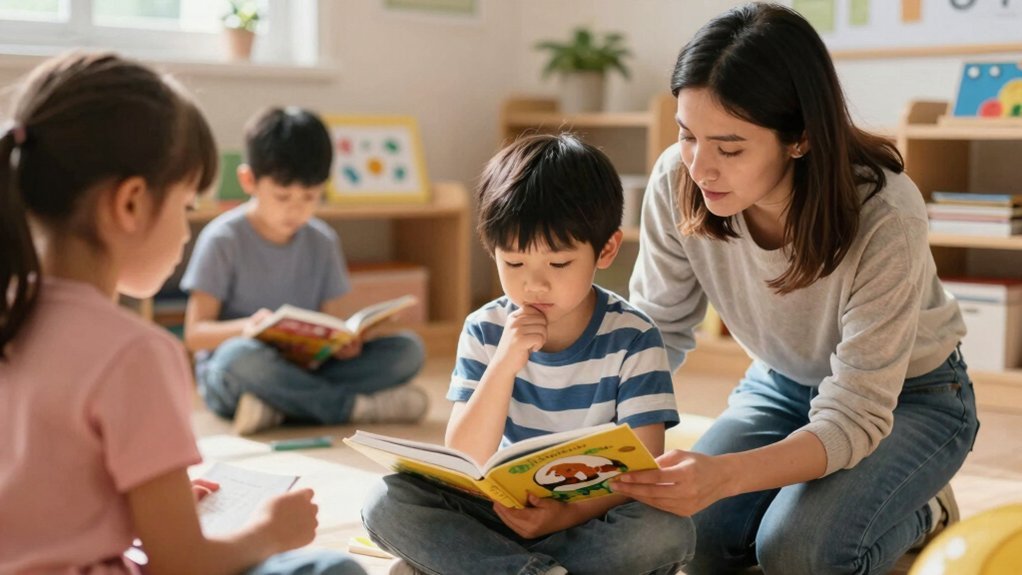
Notice any delays in speech, difficulty following simple instructions, or trouble with fine‑motor tasks like gripping a crayon—these are early red flags that your child may need extra guidance.
Look for persistent trouble shifting between activities or staying focused longer than five to ten minutes; such patterns often signal a learning gap.
If your child repeatedly gets frustrated or withdraws while peers breeze through tasks, the current pace may be misaligned with their readiness.
Inconsistencies—strong language skills paired with lagging motor abilities—suggest a need for tailored support.
Track these behaviors over weeks, and if they linger beyond a few months or affect daily functioning, consult a pediatrician or developmental specialist to explore targeted learning interventions.
When to Intervene: Spotting Guidance Needs Without Stifling Independence
After spotting those early red flags, the next step is deciding when to step in without taking away your child’s autonomy. You watch for persistent frustration, avoidance, or regressions that signal deeper needs—sensory overload, anxiety, or missing supports. If the child consistently struggles with foundational skills for months while peers master them in 2–3 months, intervene with targeted, time‑limited scaffolding or adapted materials. Notice readiness shifts, like a sudden interest in a new skill, and offer guidance that capitalizes on that window without pressuring speed. Prioritize open‑ended exploration and social learning, stepping in only for safety, access, or essential concepts. This approach respects the child learning pace while supplying just‑in‑time help.
Frequently Asked Questions
Why Is It Important for Children to Learn at Their Own Pace?
You’ll see that learning at your own pace reduces stress, boosts confidence, and fuels intrinsic motivation, letting you master basics before advancing, which leads to deeper understanding, resilience, and lasting enjoyment.
Why Is It Important for Children to Learn About Nature?
You’ll spark curiosity, boost memory, and lower stress by immersing kids in nature; they’ll develop observation skills, scientific thinking, and a lifelong sense of environmental responsibility.
What Are the Three Most Important Contributions From Parents in Their Child’s Learning?
You contribute by modeling intrinsic motivation, creating a distraction‑free, self‑directed environment, and documenting progress to personalize support—each fostering autonomy, confidence, and lifelong learning.
What Are the Advantages of Recognizing Children’s Talents Early?
You’ll boost confidence, tailor learning, and accelerate mastery; early talent spotting lets you personalize challenges, deepen engagement, and foster resilience, while reducing anxiety and supporting holistic social‑emotional growth.



Leave a Reply