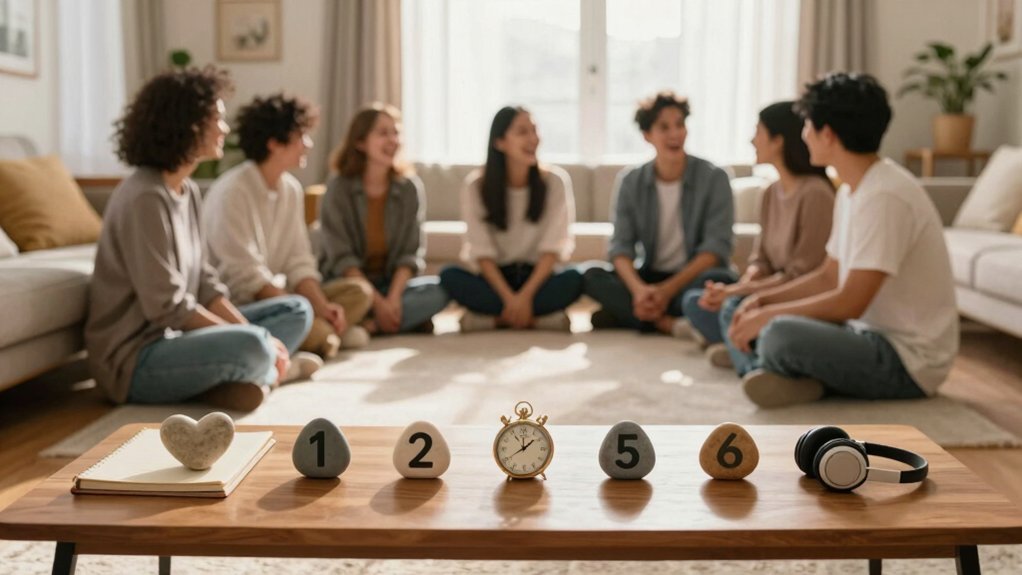

When kids do short, rule‑based movement games, their brains fire up networks that handle working memory, cognitive flexibility, and self‑control. Activities like freeze‑dance or Simon Says force them to remember steps, switch rules, and suppress impulses, which strengthens executive‑function circuits. The bursts of physical activity also boost attention and mood, making the learning spikes more effective. Keep these quick, equipment‑free games in daily routines, and you’ll see rapid gains—plus more strategies await if you keep exploring.
Easy Movement Games to Boost Executive Function at Home & School
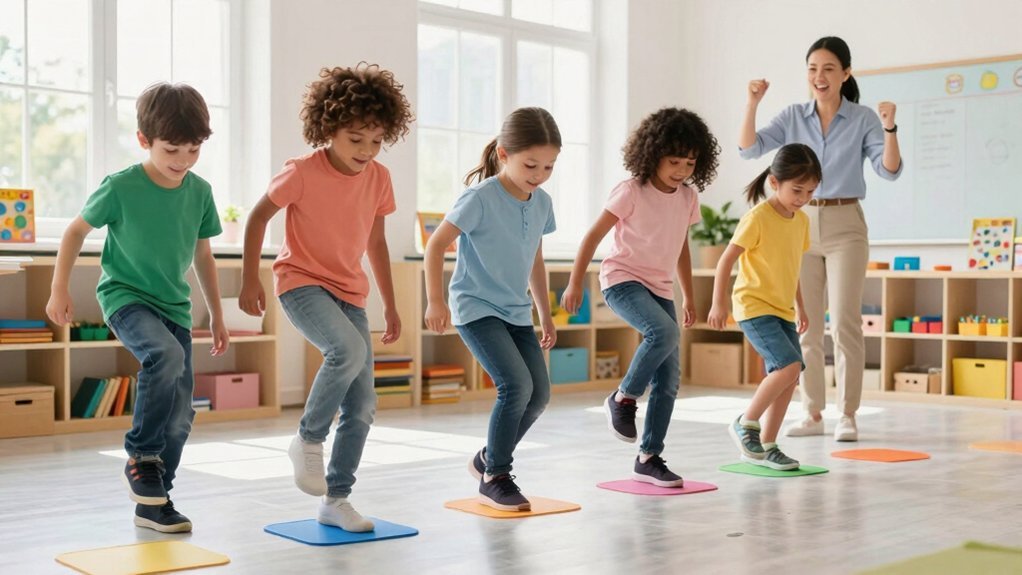
A quick, 12‑minute dance session can sharpen your child’s executive function, especially for kids who start with lower scores. You can set up a freeze‑dance game at home or in a classroom, alternating between music bursts and stillness. When the beat drops, children jump, wiggle, or stomp, then freeze on cue. This active play targets working memory, cognitive flexibility, and attention while keeping the mood fun.
Use movement breaks between lessons or as a home activity after homework. Simple classroom intervention ideas—like “Simon Says” with directional moves—reinforce the same skills without equipment. By embedding these short, purposeful movement bursts, you give children a practical boost to executive function that fits any routine. Incorporating tools with safety rail features can also encourage confidence and independence during physical activities for young learners.
How Movement Improves Working Memory & Cognitive Flexibility for Executive Function
When children jump, wiggle, and freeze on cue, they’re not just having fun—they’re training their brains. You’ll notice that a 12‑minute movement‑based intervention boosts executive function in preschoolers, especially working memory and cognitive flexibility.
In a study of 111 four‑ and five‑year‑olds, free‑dance and musical‑game groups outperformed stationary peers on tasks requiring sequencing and rule‑following.
The freeze‑dance condition, which forces real‑time decisions and rapid transitions, yielded the biggest gains, even for kids who started with lower scores.
Short classroom activity games that demand memory of steps and flexible thinking give an immediate, scalable boost.
Using child-friendly tools like mini broom and dustpan sets during movement activities can further engage children and develop motor skills.
Why Movement‑Based Play Enhances Inhibitory Control & Self‑Regulation for Executive Function
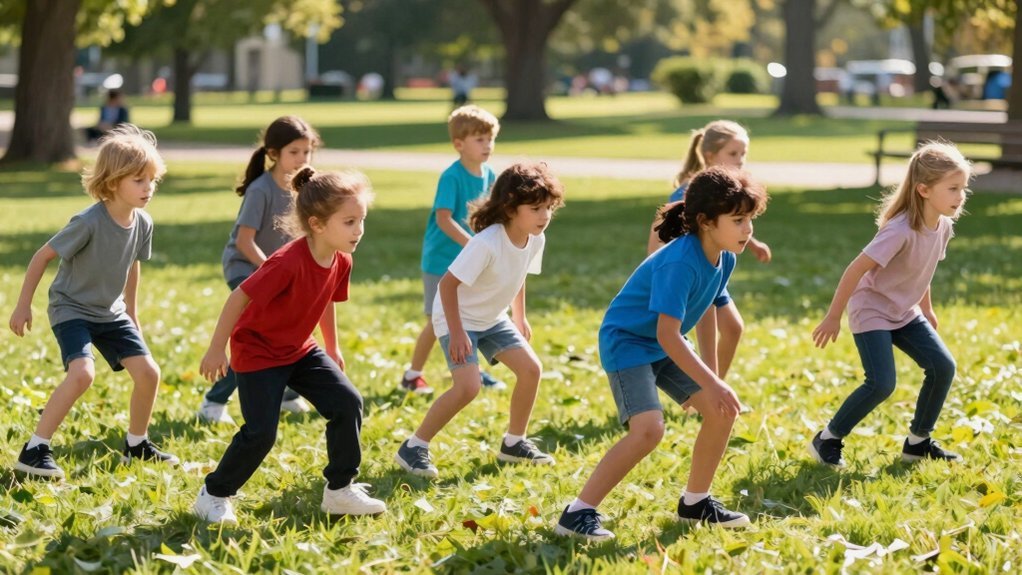
Kids who practice freeze‑dance—halting on cue and resuming motion only when a signal appears—learn to suppress impulses and follow rules in real time. You’ll see that short, rule‑based movement in a dance game boosts inhibitory control and self‑regulation for preschool children. The 12‑minute classroom intervention is a cognitively engaging activity that forces real‑time decisions, so kids must decide when to move or freeze. This constant rule‑following sharpens executive function, especially for those who start with lower scores.
Compared with free‑dance or quiet coloring, the structured dance game yields the strongest gains across executive‑function components. By embedding movement into daily routines, you give children a simple, equipment‑free tool that rapidly enhances self‑control and flexible thinking. Incorporating fine motor skill activities such as wooden spinning tops can further strengthen these developmental gains by promoting hand-eye coordination and concentration.
Frequently Asked Questions
Do Children With Physical Disabilities Benefit Similarly From Movement Games?
You’ll see that children with physical disabilities still gain executive benefits from movement games, though adaptations may be needed to match their abilities and guarantee safe, engaging participation.
How Much Daily Movement Is Needed to See Measurable Executive Function Improvements?
You need about 60 minutes of moderate‑to‑vigorous movement each day—split into 10‑minute bouts—to trigger noticeable gains in attention, working memory, and self‑control for most children.
Can Virtual Reality Movement Activities Replace Physical Play for Executive Function Development?
You can’t fully replace physical play with VR; it offers some cognitive stimulation, but real‑world movement provides richer sensory feedback and social interaction essential for robust executive function development.
What Age‑Specific Movement Activities Are Most Effective for Early Childhood?
You’ll find that ages 3‑5 thrive on simple obstacle courses, balance beams, and rhythmic dancing; ages 5‑7 benefit from structured games like tag, hopscotch, and basic sports drills that challenge coordination and planning.
Are There Cultural Differences in How Movement Influences Executive Function?
You’ll find cultural norms shape movement’s impact on executive function; some societies emphasize structured play, boosting self‑regulation, while others favor free exploration, fostering creativity and flexible thinking.