

Observe what sparks their curiosity and note patterns across games, books, and play. Offer low‑pressure, child‑led experiences like trial classes, museum trips, or simple kits that feel like fun, not tests. Ask open‑ended questions such as “What made you interested in that?” to keep the dialogue playful. Set up a sensory‑friendly exploration area with easy‑reach supplies and calming textures. Share your own learning projects to model lifelong curiosity. Connect them with mentors who share similar passions. Celebrate each tiny discovery, and you’ll find even more ways to nurture their interests.
Observe What Captivates Your Child’s Interests
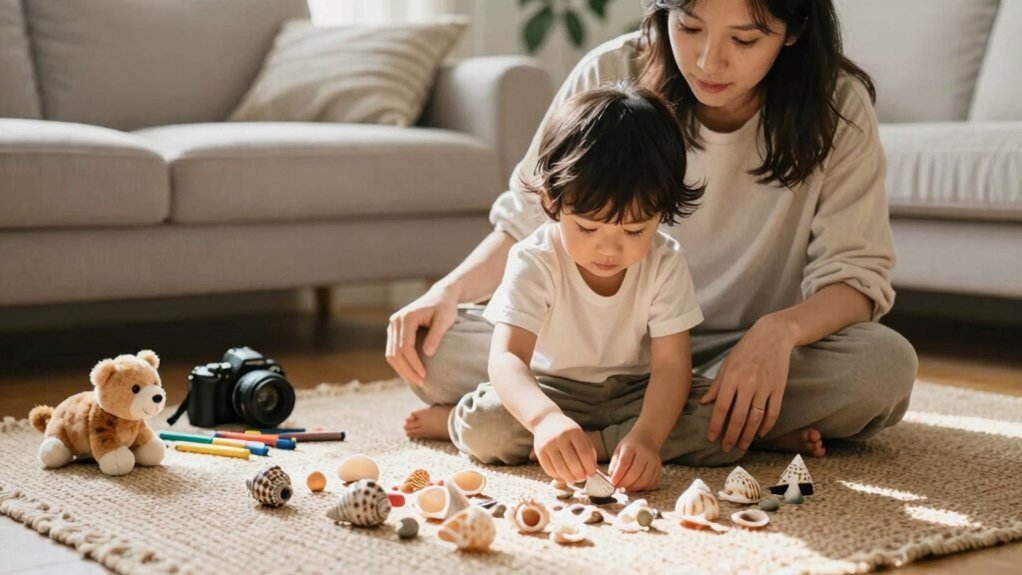
Where does your child’s curiosity linger? You watch the games they gravitate toward, the books they flip through, the melodies they hum. Those moments are clues, and your observation tells you which sparks ignite their energy. Pay attention during free time; the activities they choose without prompting reveal latent gifts. Offer a range of experiences—sports, art, music, dance, travel—so natural affinities surface.
Don’t assume a lack of talent just because interest isn’t immediate; curiosity often blooms after varied exposure. Notice patterns as they explore different environments; a budding skill may flicker before it steadies. Let the things that energize them guide your next steps, turning observation into a roadmap for deeper, supportive experiences. Incorporating hands-on learning tools that provide tactile and visual engagement can further nurture developing interests and skills.
Offer Low‑Pressure Experiences to Support Their Interests
You can gently explore options by offering trial classes, museum trips, or simple kits that let your child play without pressure. Celebrate each tiny discovery, because those small wins signal genuine curiosity. By asking light‑hearted questions and letting their answers steer the next activity, you keep the experience fun and stress‑free. Introducing educational tools like the Montessori Binomial Cube can promote fine motor skills while nurturing curiosity.
Explore Options Gently
Ever wonder how to let your child’s curiosity blossom without feeling forced? You can explore options gently by offering low‑pressure experiences that feel like play, not a test. Start with a short art workshop, a science kit, or a simple coding puzzle, then step back and watch. Ask questions about what they liked, what felt fun, and whether they felt rushed. Use those clues to suggest a related activity—maybe a museum visit after a dinosaur book, or a family jam session after a music lesson. Keep each trial brief and optional, and check in regularly about enjoyment and fatigue. By staying flexible and child‑led, you let their interests guide the next step, not a rigid agenda. Providing Montessori-friendly tools like step stools can support their independence as they safely explore new activities and environments.
Celebrate Small Wins
After exploring options gently, the next step is to celebrate the tiny victories that show up along the way. You can give effort appreciation by naming the exact progress—“you practiced for 15 minutes and got better at that chord.” Offer low‑pressure experiences: short, optional trials that match the child’s current curiosity, keeping the mood light and fun. Set up a clutter‑free corner for regular, minimal practice, and track milestones on a visible board. Seeing a line of achievements reinforces self‑efficacy and keeps enthusiasm alive. Using materials with Montessori command cards and real objects can further enrich these learning moments by promoting hands-on engagement and language development.
| Moment | Phrase to Use |
|---|---|
| First try | “You gave it a go, great effort!” |
| Consistent practice | “You kept at it for a week, impressive!” |
| Skill improvement | “Your chord sounds clearer now.” |
| Overcoming hesitation | “You tried something new, well done!” |
| Long‑term growth | “Look how far you’ve come!” |
Ask Open‑Ended Questions That Nurture Their Interests

You can spark curiosity by asking, “What made you interested in that?” and then follow up with prompts like, “How would you like to explore it further?” Keep the conversation playful and reflective, using invitations instead of tests to guide their learning.
Explore Curiosity Through Play
How can you turn a child’s fleeting wonder into a lasting adventure? Ask open‑ended questions like, What felt exciting about that activity?” and then jump into joint exploration—plan a simple project together that builds on the answer. Use playful prompts and humor; for instance, “If this activity were a superhero, what power would it have?” to unleash creative thinking. Provide a loose, diverse set of materials—blocks, art supplies, science kits—so the child can experiment freely while you stay open to new directions their questions spark. Revisit earlier interests with curious check‑ins, noting how curiosities evolve and ensuring topics don’t fade. This blend of inquiry and hands‑on play keeps their enthusiasm alive and deepens learning. Incorporating realistic role play costumes can also enhance imaginative play by giving children tangible ways to explore different professions and scenarios.
Invite Reflection With Prompts
Curiosity thrives when you pause and ask, “What sparked your excitement about this?” Open‑ended prompts like that invite children to explore their thoughts without feeling guided, turning fleeting interest into meaningful reflection. You can follow up with, “What would you like to do next with this interest?” or “What would a project around that topic look like at home or school?” Encourage them to name even tiny sparks—“Tell me what you enjoyed most about today’s activity and why.” Pair each question with a reflective pause and active Listening, then summarize their ideas to validate and extend their thinking. Schedule low‑pressure check‑ins that focus on their current curiosities, not on benchmarks, to keep engagement steady. Incorporating tools with practical design features can also help maintain focus and organization during these explorations.
Create a Sensory‑Friendly Exploration Area to Support Their Interests
Ever wonder how a calm, sensory‑friendly corner can spark a child’s natural curiosity? You can set up a sensory-friendly exploration area with low lighting, soft textures, and easy‑reach supplies like finger paints, puppets, and simple instruments. Keep shelves labeled, rotate displays, and showcase creations to reinforce ownership. Offer tactile options—fabric swatches, sand, clay—and calm‑down tools such as noise‑reducing headphones and fidget items. Place books and reference materials within arm’s reach so the child can self‑direct learning. Celebrate effort by displaying projects, letting the space feel like a personal studio rather than a performance stage. Adding low reading corner cushions can enhance comfort and create a cozy atmosphere that invites longer periods of engagement.
| Item | Purpose |
|---|---|
| Soft lighting | Reduces overstimulation |
| Fabric swatches | Provides tactile variety |
| Noise‑reducing headphones | Offers sensory regulation |
| Rotating display | Highlights progress and ownership |
Show Your Own Learning Projects to Support Their Interests

After setting up a calm, sensory‑friendly corner, you can deepen the experience by sharing your own learning projects. Show your own learning projects to support their interests by pulling out drafts, goal sheets, and progress milestones. Invite your child to ask questions, then explain what you’re learning and why in open‑ended, pressure‑free language.
Point out overlaps—maybe you’re coding a simple robot while they love dinosaurs, or you’re sketching patterns that echo their favorite colors. When setbacks arise, narrate how you adjust, normalizing growth and resilience. This transparency models lifelong curiosity and turns abstract interests into tangible skills, encouraging collaborative problem‑solving and reinforcing the joy of discovery.
Connect Them With Mentors Who Support Their Interests
How can you turn a child’s budding passion into real‑world expertise? Start by introducing them to trusted adults who share the same interest. Arrange mentor visits or shadowing sessions so the child can watch the mentor in action, ask questions, and see how the skill applies outside the classroom. Use mentor‑led demonstrations or practice activities to model techniques and give the child hands‑on experience. Let mentors provide constructive feedback that respects the child’s natural pace and enthusiasm, reinforcing confidence without pressure. Highlight role models from diverse backgrounds to broaden horizons and prevent narrow expectations. By connecting the child with supportive mentors, you turn curiosity into competence and open pathways to future growth.
Celebrate Progress While Continuing to Support Their Interests
Mentor visits spark curiosity, but the real boost comes when you celebrate each step the child takes. Acknowledge every milestone—finishing a project, sticking with a practice week, or simply trying a new technique. Use praise that highlights effort and growth, saying things like, “I’ve noticed how you’ve improved your technique through consistent practice.” Create a dedicated display area for their creations; seeing their work on the wall reinforces pride and motivation.
Keep the momentum by offering fresh resources and varied opportunities related to their interests, while watching for signs of burnout. Balance celebration with rest and unstructured play, ensuring they stay enthusiastic without feeling pressured. This approach nurtures confidence and sustained engagement.
Frequently Asked Questions
What Is the 3-3-3 Rule for Children?
You’ll notice the 3‑3‑3 rule means giving a child a new activity or pause every three minutes, three hours, and three days, helping you keep engagement high while preventing overstimulation.
What Is the 7 7 7 Rule in Parenting?
You limit your child’s screen time to seven hours daily, ensure seven hours of sleep, and fill the remaining seven hours with structured or family activities, reviewing the balance every seven days.
What Is the 10-10-10 Rule for Kids?
You use the 10‑10‑10 rule by pausing, then asking yourself: How will this decision affect my child in ten minutes, ten months, and ten years? It guides calm, balanced choices.
How to Follow Your Child’s Interest and Learn?
You explore their interest by watching what they gravitate toward, asking open‑ended questions, then providing tools or activities that match, and joining them in short, low‑pressure projects that deepen learning.