
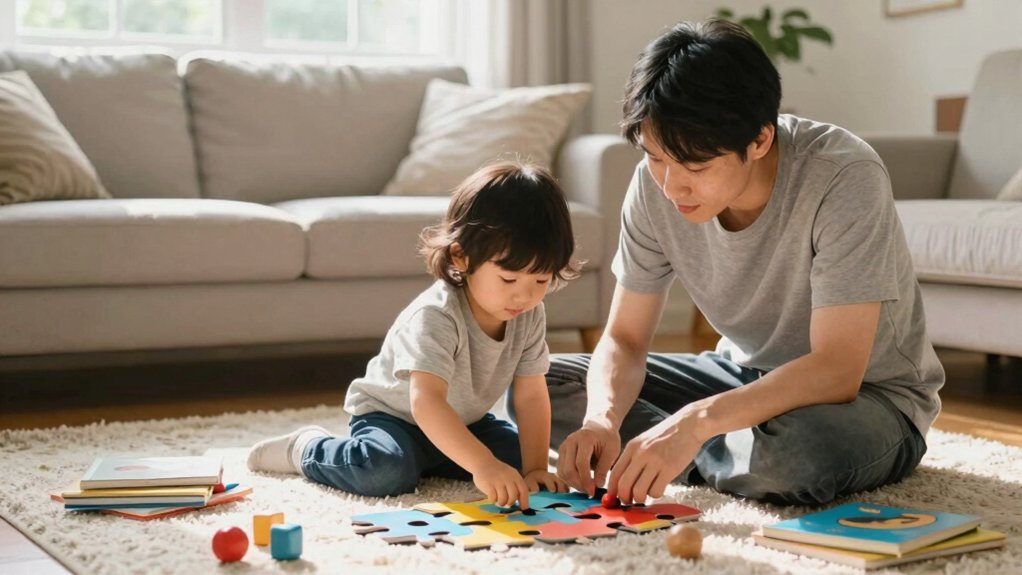
Track how long your child spends on each task, note dips, plateaus, and bursts, and compare those patterns with school observations and home routines. Use a simple log or app, review it weekly, and share brief check‑ins with teachers to align expectations and accommodations. Set up a calm, organized learning space, give low‑pressure resources that match their interests, and celebrate tiny wins in a Victory Journal. Keep these habits consistent, and you’ll discover even more strategies to support their rhythm.
Identify Your Child’s Current Learning Pace

Usually, you’ll notice that a child’s learning pace isn’t a straight line but a series of ups and downs that vary by subject and over time. To identify the current pace, start by timing how long it takes your child to complete tasks, not just whether they finish them. Track these durations across subjects, noting dips, plateaus, and bursts of speed. Compare school observations with home routines—family schedules, bedtime, and after‑school activities can shift the tempo. Look for patterns: slower processing speed may appear as longer response times even when intelligence is high. Use a simple log or app to record start‑to‑finish intervals, then review the data weekly. This concrete evidence lets you pinpoint where accommodations are needed and supports a realistic, individualized learning plan. Introducing practical tools like child-safe whisks can also help develop fine motor skills and coordination aligned with your child’s learning stage.
Observe Natural Curiosity Without Interrupting It
Pay attention to the spontaneous questions your child asks and let them linger without steering the conversation. Offer low‑pressure resources that match their interests, and give them unstructured time to explore them at their own pace. When they return to a topic, respond with open‑ended prompts that deepen their curiosity rather than dictating the next step. Providing children with engaging and realistic tools, such as the LOYO Kids Role Play Costume Set, can further stimulate imaginative learning experiences.
Nurture Spontaneous Questions
How can you honor a child’s natural curiosity without breaking its flow? You watch, you listen, you let the question surface, then you pause. Give the child 5–10 seconds of think‑time before you respond, and use open‑ended prompts like “What do you think might happen?” Capture each spontaneous query in a simple “curiosity journal” so you can revisit it later. When you answer, build on the interest they’ve already shown, avoiding a quick fix or a test‑like feel. Use the recorded questions to shape activities that match their pace—longer exploration for complex topics, quick dives for fleeting wonders. This approach nurtures their innate inquisitiveness while keeping learning fluid and self‑directed. Tools like a Montessori step stool can support children’s independent exploration by enabling safe access to new learning environments.
Allow Unstructured Exploration Time
After noting the child’s spontaneous questions, give them uninterrupted, unstructured exploration time. Let them wander through blocks, books, or the backyard without a preset agenda, and watch their curiosity surface naturally. You’ll notice which topics they linger on, so jot down those moments for later reflection. Resist the urge to correct or redirect every action; instead, create a safe, distraction‑free zone where they can investigate at their own pace.
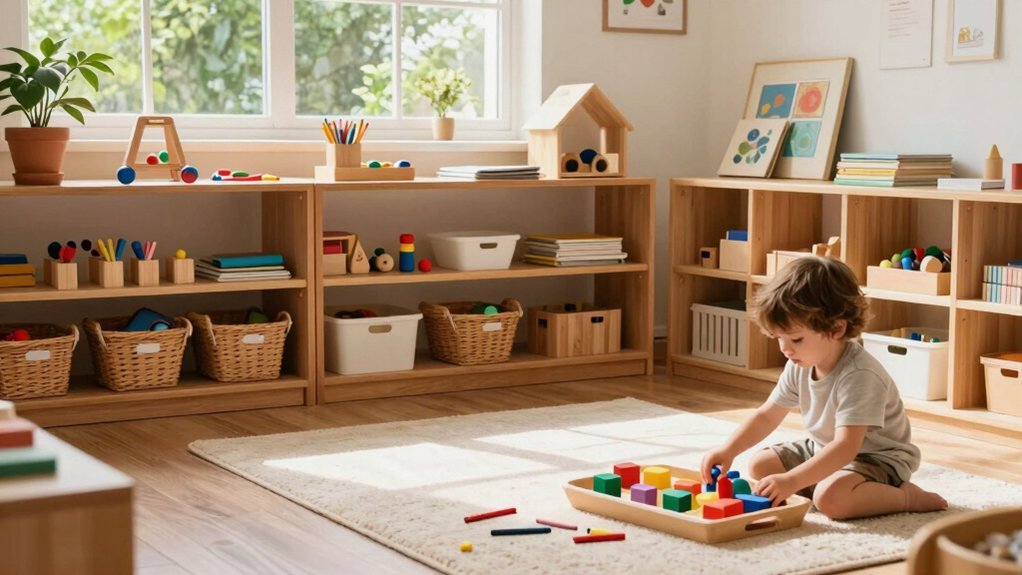
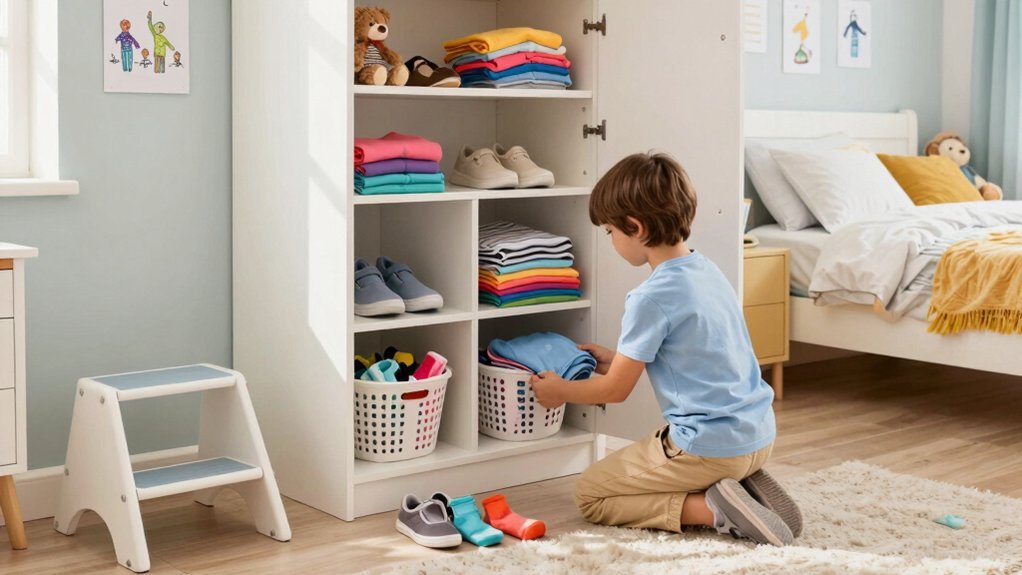
When a particular interest repeats, use it as a springboard for deeper learning, weaving in resources that match their emerging questions. After the session, review your notes, identify strengths, and plan personalized supports that honor the child’s intrinsic motivation and rhythm. Providing low shelves designed to child height and accessibility can further foster independence during these exploratory moments.
Create a Home Learning Space That Supports Pace
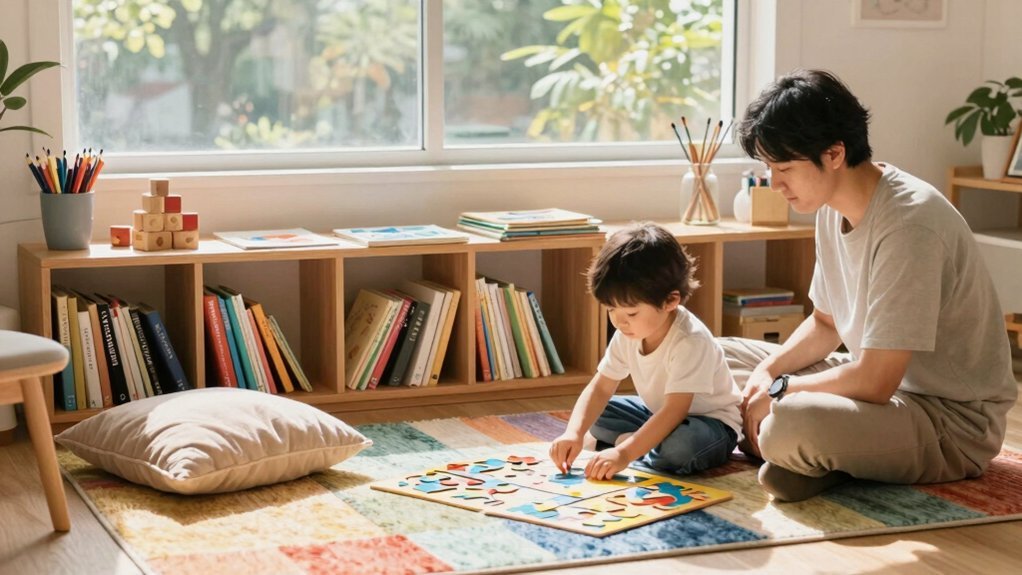
Where can a child truly thrive? In a dedicated learning space that feels calm, organized, and inviting. Choose a quiet corner, clear the clutter, and let natural light flood the area. Keep notebooks, pencils, a calculator, and a dictionary within easy reach, and ban non‑educational devices while work’s in session. Sit with your child, read aloud, and discuss topics right there—modeling curiosity and a love of learning. Set a routine that respects their processing speed: short focused bursts, regular breaks, and flexible timing for each task. Celebrate tiny victories— a finished sentence, a mastered concept—by posting them on a progress board. These visual cues boost confidence and reinforce a steady, personalized pace. Incorporating age-appropriate design features in their learning tools can further support their growth and engagement.
Choose Activities That Match Your Child’s Interests
A well‑set learning space is only the starting point; now you need activities that tap directly into what excites your child. Start by watching which books, games, or topics light up their face, and then build lessons around those interests. Offer a mix of hands‑on projects, short reads, and interactive apps that match their preferred learning style, so they stay engaged without feeling rushed.
When a subject sparks curiosity, give extra time for exploration; if frustration appears, pivot to a different format. Schedule brief check‑ins to confirm understanding and adjust upcoming tasks, keeping the pace steady and comfortable.
Apply Freedom Within Limits for Self‑Directed Play

A balanced mix of autonomy and structure lets your child explore freely while staying safe and focused. Set up a dedicated play area and a predictable routine so they can start self‑directed play without waiting for prompts. Offer a curated selection of toys, books, and open‑ended questions that spark curiosity, but let them decide how to use them. Keep boundaries clear—safety rules, time limits, and visible learning goals—so the space feels secure yet flexible. Check in gently, observing progress and reminding them of the goals without taking over. After each session, reflect together on what they chose, what they learned, and how the limits shaped their exploration, guiding future self‑directed options. Incorporating Montessori-inspired play kitchens with interactive and educational features can further promote independence and real-world imitation during self-directed play.
Track Small Wins With a Victory Journal
Frequently, a simple Victory Journal transforms everyday triumphs into lasting motivation; by jotting down each small win—like choosing a book on your own or writing a full sentence after a handwriting hurdle—you create a tangible record of persistence, creativity, and problem‑solving that reinforces progress and shifts focus from perfect outcomes to continuous growth. You can review entries nightly, noticing patterns of courage and strategy use, which builds confidence and steadies pacing. The journal also invites brief reflection: what helped, what felt new, and how you can repeat the success. This habit nurtures a growth mindset without pressure, keeping learning fun and personal. Using child-safe tools, such as whisks with ergonomic handles, can similarly support safe and confident skill development in practical activities.
| Date | Win | Why it matters |
|---|---|---|
| Mon | Chose a book independently | Shows autonomy |
| Tue | Wrote a full sentence after struggle | Demonstrates perseverance |
| Wed | Used breathing technique to stay calm | Highlights self‑regulation |
| Thu | Completed a puzzle without help | Reflects problem‑solving |
Share Progress With Teachers While Respecting Rhythm
You can sync your child’s rhythm with the teacher by sharing brief, concrete updates that highlight each incremental win. When you celebrate those small successes, you keep the focus on progress rather than speed, and you create space to communicate any needs thoughtfully. This collaborative approach lets both you and the teacher tailor support while honoring your child’s natural learning pace.
Sync Rhythm With Teacher
How can you keep the teacher in sync with your child’s unique learning rhythm? Start with consistent communication—schedule brief weekly check‑ins to share observations, note any pace shifts, and ask for classroom insights. Keep the dialogue focused on understanding, not speed, and bring concrete preferences like seating or interaction style so the teacher can tailor support without pressure.
- Share specific learning preferences and seating notes to help the teacher adjust the environment.
- Review portal feedback and classroom notes together, highlighting growth and areas needing adaptation.
- Ask for and be open to teacher recommendations, treating the teacher as a resource hub for rhythm‑aligned strategies.
Celebrate Incremental Wins
Ever notice how a tiny triumph—like your child picking a book on their own—can spark lasting confidence? When that happens, jot it down in a Victory Journal or drop a note into a Victory Jar. These small records become proof of steady progress you can share with teachers without turning the conversation into a competition. Highlight the resilience they showed, the problem‑solving steps they tried, and the independence they gained, not just test scores. Align each entry with their IEP goals, showing how the child’s pace is moving forward. When you update educators, focus on the slow‑but‑steady progress, and suggest any tweaks to support that rhythm. This keeps collaboration tight while honoring your child’s unique learning flow.
Communicate Needs Thoughtfully
When you share a child’s progress, focus on concrete observations—like needing five extra minutes for note‑taking or thriving with visual math supports—so teachers can tailor in‑class help without disrupting the child’s natural rhythm. Your communication should be brief, factual, and anchored in the strategies you already use at home. Mention seating or interaction preferences, such as front‑row seats or frequent check‑ins, and explain how timers, breaks, or visual cues boost focus. Stay open to teacher suggestions, adopt them gradually, and keep updates concise—an email or portal note after each conference works well. This steady, respectful exchange builds a collaborative rhythm that honors your child’s learning pace.
- Highlight specific needs (extra time, visual supports)
- Share home‑based strategies and preferences
- Request brief, regular updates from teachers
Adjust Expectations When Plateaus Occur
Why does a child’s learning sometimes feel stuck, then suddenly surge? You’ll notice plateaus when progress flattens, but they’re not failures—they’re natural pauses before growth spikes. Celebrate tiny wins like choosing a book or writing a full sentence; these moments prove learning is still happening. Shift your talks with teachers from end‑of‑year scores to daily gains and increasing independence. Keep a Victory Journal or give last‑day shout‑outs to capture gradual improvements. Remember, an IEP can still show progress even if a goal isn’t fully met; plateaus often precede meaningful breakthroughs. By adjusting expectations, you reduce pressure, stay supportive, and keep the focus on steady, long‑term development.
Choose Simple Accommodations for Slow Processors
You can set up structured break tasks so your child gets short, predictable pauses that keep fatigue at bay. Pair those breaks with visual timers that show exactly how long each activity will last, giving them a clear cue to stay on track. Together, these tools turn a hectic day into a manageable rhythm.
Structured Break Tasks
Ever notice how a brief pause can keep a child’s mind from fogging over? Structured breaks give your child short, purposeful pauses between steps, preventing cognitive overload for slow processors. You can set a 2‑5‑minute timer or end a break after a sub‑task, letting them reset without losing momentum. Offer written and verbal instructions, then let them stretch, sip water, or do a quiet sensory activity. Monitor how long tasks run and tweak break frequency to match their pace, keeping engagement high and frustration low.
- Use a timer to signal 2‑5‑minute breaks after each sub‑task.
- Provide both written and spoken directions before each segment.
- Incorporate low‑stimulation movement, like a quick stretch, during breaks.
Visual Timers for Tasks
Can a simple visual timer turn an intimidating task into a manageable series of steps? You can pick a sand‑filled hourglass, an analog clock with a moving hand, or a timer app that flashes every five to ten minutes. Set the timer, break the activity into short chunks—five minutes of reading, then five minutes of writing—and celebrate each completion. Pair the visual timer with a clear checklist so your child watches progress accumulate as each item gets checked off. Review the pacing regularly; if the intervals feel too long or short, adjust the timer and reminders to match your child’s processing speed and stamina. These visual timers give concrete pacing, lower anxiety, and keep the task feelable.
Turn Everyday Tasks Into Mini‑Learning Moments
From the kitchen counter to the car seat, everyday tasks become perfect mini‑learning moments when you weave simple questions and observations into routine actions. You can turn grocery shopping into a math lesson by asking your child to compare prices, add totals, or read nutrition labels. In the car, point out road signs, estimate distances, and discuss why certain routes are chosen. Choose books that match your child’s interests and read aloud, pausing for quick comprehension checks. Offer brief, guided questions that spark problem‑solving without taking over the activity, and celebrate persistence when they stay engaged longer than expected.
- Ask “How much does this cost together?” to practice addition and subtraction.
- Prompt “What does this sign tell us?” while driving to build reading and reasoning.
- Pause during storytime with “What might happen next?” to boost listening and prediction skills.
Reflect on Year‑End Growth Beyond Grades
When the daily mini‑learning moments wrap up, it’s time to look back at the whole year and ask what growth shows up beyond the report card. You’ll notice that progress isn’t a straight line; it weaves through independence, focus, and communication.
Even if an IEP goal isn’t fully met, the document evolves, capturing subtle shifts in persistence and social‑emotional skills. Celebrate small wins like a longer reading session, a calmer conflict resolution, or a new willingness to ask for help. These signs of growth paint a richer picture than test scores alone.
Frequently Asked Questions
What Is the 3-3-3 Rule for Children?
You’re looking at a framework that tracks three daily life areas, three time frames—short, medium, long—and three outcome types: effort, process, progress, helping you observe and support your child’s learning pace.
What Is the 7 7 7 Rule in Parenting?
You give your child seven minutes to respond, seven minutes to process, and seven minutes to reflect, letting them think at their own speed, reducing pressure, and encouraging steady, authentic learning.
What Are the 5 C’s of Learning?
You’ll find the 5 C’s are Curiosity, Confidence, Concentration, Collaboration, and Communication—each a skill you can nurture by encouraging questions, celebrating effort, minimizing distractions, promoting teamwork, and modeling clear dialogue.
What Is the 3 6 9 12 Rule for Kids?
You follow the 3‑6‑9‑12 rule by checking your child’s progress at roughly three, six, nine, and twelve‑month intervals, noting tiny wins, adjusting expectations, and updating support plans accordingly.

Leave a Reply