You support a child’s interests by keeping safe, age‑appropriate materials within easy reach and rotating them often to stay fresh. Use open‑ended, hands‑on items—blocks, fabrics, natural objects—so they can explore independently while you lightly guide with questions. Blend real‑world and outdoor elements, and set up low shelves and central space for free movement. A dynamic, accessible setup encourages curiosity, and if you keep going you’ll discover more ways to nurture their passions.
How to Build a Stimulating Environment That Matches Your Child’s Interests

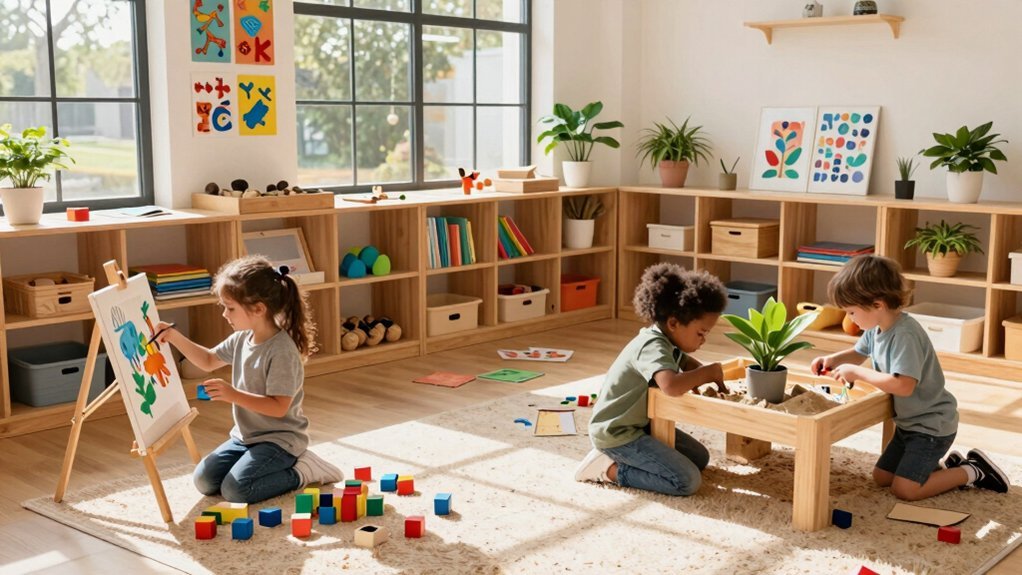
How can you turn everyday spaces into a playground that mirrors your child’s passions? Start by shaping the environment to reflect their interests. Group materials by age, keeping simple, safe items within reach for early childhood exploration and swapping in more complex resources as they grow. Rotate colors, toys, and layouts regularly so each play session feels fresh, sparking curiosity and learning. Offer open‑ended, hands‑on activities—blocks, fabrics, natural objects—so they can experiment and solve problems independently. Supervise lightly, stepping in to guide without stifling self‑directed play. Bring outdoor elements and real‑world connections into the mix, letting nature and everyday tools expand their interests across domains. This dynamic setting fuels continuous discovery and joy. Incorporating child-safe, durable items with spill prevention technology supports independence and reduces mess during play.
How to Pick Age‑Appropriate Toys That Really Spark Curiosity
After shaping a space that mirrors your child’s passions, the next step is choosing toys that grow with them. In this environment, focus on age‑appropriate items that match developmental milestones, swapping simple manipulatives for more complex puzzles as they mature.
Pick materials that invite hands‑on play—wood blocks, fabric scraps, natural stones—so each piece becomes a launchpad for exploration. Rotate selections regularly to keep curiosity alive, ensuring safety and accessibility for independent play while leaving room for guided learning when needed. Using tools like the Montessori tower step stools can further encourage independence and hands-on learning.
How to Set Up the Space for Easy Access and Independent Exploration

Where do you start when turning a room into a playground that invites kids to explore on their own? First, clear a central open space where movement feels effortless. Place low shelves and bins at child height so access is immediate, and group items by age‑appropriate materials. Younger kids get simple, safe blocks and texture books, while older ones find puzzles, building kits, and art supplies that challenge them. Rotate colors, toys, and textures weekly to keep the environment fresh and spark curiosity.
Arrange hands‑on activities in clusters, allowing children to move from one station to the next without adult intervention. Offer a nearby adult presence that watches, guides, and celebrates learning through play, ensuring independent exploration thrives. Choosing shelves with rounded edges and non-toxic finishes enhances safety and durability in the play space.
How to Use Sample Open‑Ended Prompts for Choice and Creativity
Wondering how to spark kids’ imagination while giving them real choices? Create an environment where open‑ended prompts invite inquiry and let children steer their own learning experiences. Align prompts with child interests, then sprinkle guiding questions that nudge toward goals without stifling creativity. When kids hear “What could happen if you mix these colors?” they explore choice, develop vocabulary, and practice problem‑solving.
| Prompt Example | Learning Focus |
|---|---|
| “Design a story about a garden that talks.” | Creativity & language |
| “Choose three tools to build a bridge from blocks.” | Choice & engineering |
| “Imagine a new animal that lives in your backyard.” | Inquiry & biology |
Use these samples daily; they turn ordinary moments into rich, self‑directed adventures. Hands-on materials like the Montessori binomial cube can further deepen exploration by linking concrete play to abstract concepts.
How to Balance Guided Activities With Free Play
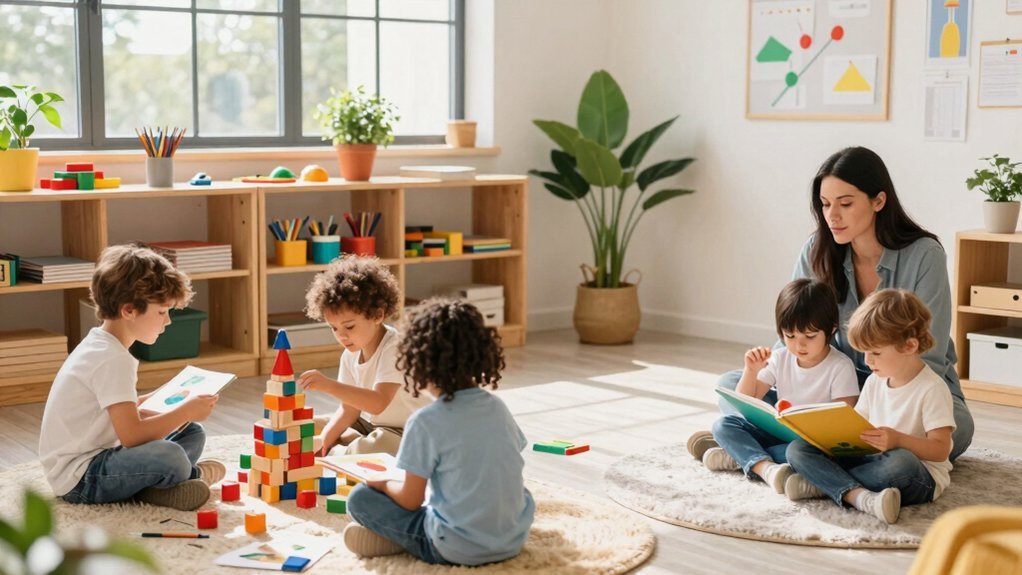
You’ll want to weave structured guided play with plenty of free‑play moments, so children can explore on their own and still receive purposeful support. By offering open‑ended prompts and resources, you give them the freedom to choose while subtly steering toward learning goals. This balance keeps the environment dynamic, nurturing both agency and growth. Choosing materials made with BPA-free, non-toxic materials ensures children can safely engage with their environment.
Balance Structured GuidedPlay
Often, the sweet spot between guided activities and free play emerges when you weave gentle prompts into children’s self‑directed moments, allowing them to stay in control while you subtly shape the learning path. In a guided play environment you balance structured learning opportunities with autonomy by choosing open‑ended materials that invite multiple uses. Pose guiding questions during conflicts or turn‑taking to nudge problem‑solving without taking over, preserving children’s sense of agency. Schedule routines that blend collaborative tasks and open‑ended exploration, so kids feel belonging while pursuing their interests. Align your prompts and feedback with what excites them, turning curiosity into purposeful contexts and keeping the transition between guided activities and free play fluid and intentional. Incorporating play items with Montessori-inspired features can enhance cognitive, motor, and social development while supporting authentic pretend play.
Flex Free Play Opportunities
How can you keep play both lively and purposeful? Offer regular free play opportunities that blend open-ended play with subtle guidance. Let children shape the play environment by choosing colors, toys, or rules, which nurtures autonomy and exploration. Rotate materials often so fresh combinations spark problem‑solving and keep boredom at bay.
As an educator as facilitator, join in as a play partner, asking open‑ended questions that echo their curiosities. Encourage group rule‑making to build belonging while preserving individual interests. Your prompts should extend learning without directing it, allowing self‑directed discovery to flourish. By balancing structure and freedom, you create a dynamic space where every child can investigate, create, and grow. Integrating tools like Montessori Rough and Smooth Boards can enhance tactile sensory experiences that support concentration and independent learning.
How to Track Interests and Refresh the Environment
What signs reveal a child’s emerging passions? You notice repeated topics, the materials they gravitate toward, and the questions they ask during play and group activities. Use systematic observation intervals to log these patterns, then match them with open‑ended resources that invite inquiry. Rotate toys, colors, and display items to refresh the environment, aligning each change with the latest interests. When a child’s curiosity shifts, adjust the setup promptly so learning stays challenging yet attainable. Embed the observed interests into project‑based learning, designing short investigations that build on the same themes. Document outcomes, then use that data to plan the next refresh, keeping the space dynamic and responsive to every new spark.
Frequently Asked Questions
How Do We Want Children to Feel in Supportive Environments?
You should feel safe, confident, and curious—ready to take risks, make mistakes, and explore new ideas without fear, knowing you’re valued, respected, and supported by caring adults and peers.
What Are the 8 Environmental Factors That Influence Child Development?
You’ll find eight key factors: safe spaces, varied materials, responsive caregivers, predictable routines, nature access, cultural inclusivity, open‑ended resources, and guided play that together shape cognitive, social, and emotional growth.
What Is a Supportive Environment for Children?
You create a supportive environment by providing safe, flexible spaces filled with open‑ended materials, predictable routines, cultural inclusivity, and opportunities for autonomy, collaboration, and active, curiosity‑driven exploration.
How Does the Environment Support Children’s Development?
You thrive when the environment offers hands‑on materials, open spaces, and responsive caregivers; it sparks curiosity, builds skills, and nurtures emotional security, letting you explore, learn, and grow confidently.