
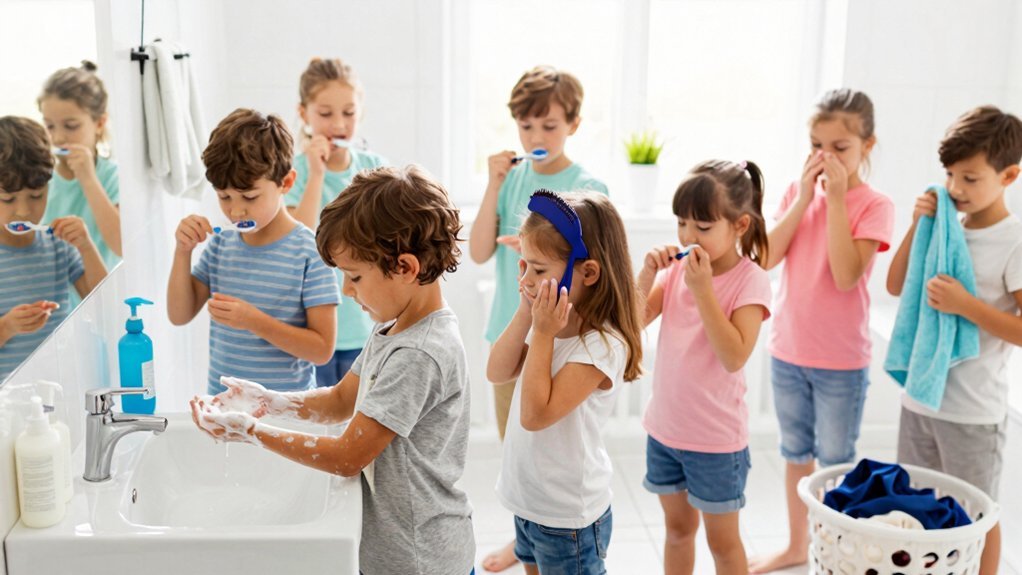
Teach your child a 20‑second hand‑washing routine with a timer or song, brush teeth twice daily using a pea‑sized fluoride dab, and start flossing around age 6 with picks or waxed floss. Let them shower safely, using a non‑slip mat and warm water, then apply a gentle, unscented deodorant after drying. Encourage independent nail trimming with child‑safe tools, daily clean clothes and socks, proper toilet wiping and washing, and keep all hygiene supplies in low, labeled caddies. Keep reading to discover more tips that boost confidence.
Our Recommended Product on Amazon

As an Amazon Associate we earn from qualifying purchases.
Handwashing for Kids: 20‑Second Soap Routine
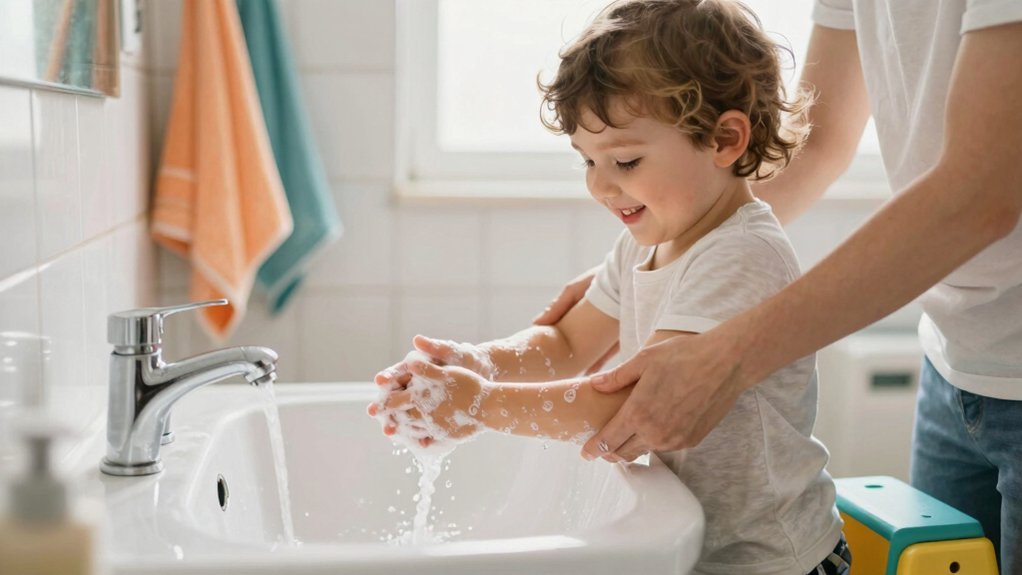
Ever wondered how a simple 20‑second routine can turn handwashing into a habit kids actually enjoy? You start by showing them how to lather soap, scrub every surface, and rinse for exactly 20 seconds—use a timer or a catchy song to keep the pace. Then let them practice independently, stepping in only when they need help. Reinforce the habit by washing before meals, after bathroom trips, and after outdoor play, so it becomes part of daily hygiene habits. Keep a child‑friendly soap dispenser at eye level and a towel within reach, making rinsing and drying effortless. Over time, kids internalize the routine, turning handwashing into a natural, enjoyable part of their day. Incorporating these habits aligns with age-appropriate safety standards essential for safe and effective hygiene practices in early childhood.
Brush Teeth Twice Daily – Kid‑Friendly Tips
After mastering a quick 20‑second handwash, the next habit to lock in is brushing teeth twice a day. Start toothbrushing when children turn two, using a pea‑sized fluoride dab and a soft‑bristled, colorful brush that feels fun in their hands. Set a 2‑minute timer or play a short song so they know the routine’s length. Supervise at first, guiding them through circles and gentle strokes, then gradually hand over control as fine‑motor skills improve, aiming for independence by age six to nine. Tie brushing to meals or bedtime cues, turning it into a game where they earn stickers for consistency. Regular checks keep hygiene on track while fostering confidence and self‑reliance. Encouraging activities like using child-safe mini tongs can also promote hand-eye coordination and fine motor skill development alongside daily hygiene habits.
Floss Daily for Strong Oral Health
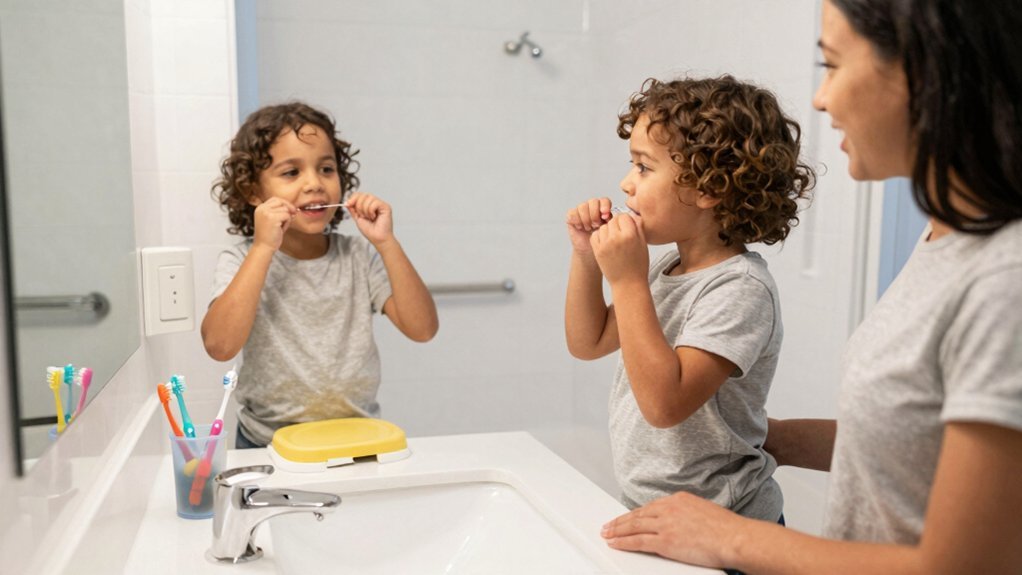
When should kids start flossing? You can introduce floss daily in the elementary years, ages 6‑9, as soon as they can handle a waxed strand or a floss pick. Pair it with their two‑minute brushing routine, and you’ll see plaque drop and gingivitis risk shrink. Guide them through the motion, then let them take the lead—this builds independence while safeguarding oral health. For young children, choosing tools that offer adjustable support can make the flossing process safer and more effective.
| Age | Tool |
|---|---|
| 6‑7 | Floss picks |
| 8‑9 | Waxed floss |
| 10‑12 | Unwaxed floss |
| 13‑15 | Dental tape |
| 16+ | Traditional floss |
Shower Independently: Safe Steps for Children
Flossing builds confidence in personal care, and the next step is mastering shower independence. You’ll set a regular routine after play or sports, aiming for daily or every‑other‑day showers based on age and activity. Start by adjusting water to a comfortable 37–38 °C, then guide the child to wet their body, apply a small dab of gentle wash, lather, rinse, and dry with a clean towel. Use age‑appropriate supervision: stand nearby, watch the steps, and intervene only if needed. Emphasize safety steps—place a non‑slip mat, keep soap away from eyes, and monitor temperature. Provide a hygiene checklist or chart so the child can mark each completed task, reinforcing independence and consistency. Using tools like a Kitchen Step Stool for Kids with Safety Rail can further support your child’s independence by providing safe access to bathroom or shower counters.
Apply Kid‑Safe Deodorant Correctly
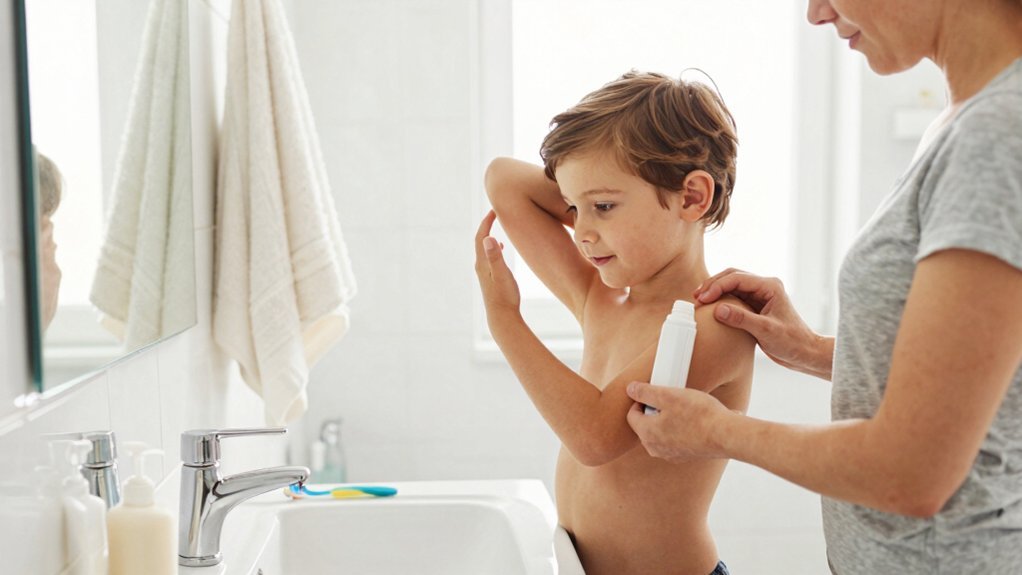
You’ll want to pick a gentle, unscented deodorant that won’t irritate your child’s skin. After the morning shower, apply a thin, even layer to clean, dry underarms. This routine keeps odor at bay while teaching them proper hygiene. Using products made from non-toxic, BPA-free materials ensures safety and health during daily routines.
Choose Gentle, Unscented Formula
Wondering which deodorant is safe for your pre‑teen? Choose a gentle, unscented formula that respects pediatric skin care. Look for an unscented deodorant labeled fragrance‑free, dye‑free, and hypoallergenic. These products avoid aluminum, parabens, and alcohol, reducing irritation risk on young underarms. Start introducing them around ages 10‑12, when puberty brings new odor patterns. Guide your child to apply after a shower, letting them build confidence while you monitor for rash. If irritation appears, switch formulas or consult a pediatrician. Maintaining a clean and safe environment also supports overall child health, much like the non-toxic finishes used in trusted children’s products.
| Feature | Why It Matters |
|---|---|
| Fragrance‑free | Prevents scent sensitivities |
| Dye‑free | Reduces chemical exposure |
| Hypoallergenic | Minimizes allergic reactions |
| Aluminum‑free | Avoids harsh metal compounds |
| Alcohol‑free | Keeps skin from drying out |
Apply After Morning Shower
How can you make deodorant application a seamless part of your child’s morning routine? After the shower, guide your child to dry their underarms and then let them dab a thin layer of kid‑safe deodorant. Show them how to use a small amount on each side, smoothing evenly to avoid clumps. Supervise the first few tries, then step back as they gain confidence. Check for irritation and choose fragrance‑free formulas. Consistent practice turns this step into a habit, reinforcing independence and good underarm care.
- Use a mild, unscented deodorant suitable for ages 10‑12.
- Apply to completely dry skin right after the morning shower.
- Teach a gentle, even swipe to prevent residue on clothing.
- Offer positive feedback to cement the habit and boost independence.
Incorporating easy maintenance and care habits in your child’s routine can also include selecting fabrics and products that support hygiene and comfort.
Brush and Tie Back Hair Every Day
You’ll start each day by combing your child’s hair to smooth tangles and keep it clean, then use a simple tie‑back to hold it securely while they move.
Choose a child‑sized brush and a gentle elastic so the routine feels comfortable and easy.
As they get the hang of it, you can step back and let them manage the process on their own.
Daily Comb Hair Routine
Ever notice how a quick brush and a simple ponytail can keep your child’s hair tidy all day? A consistent hair routine builds independence while preventing tangles and sweat. Start each morning by letting your child pick a child‑sized brush and a soft hair tie from a low shelf. Guide them through gentle detangling, then secure the hair in a non‑slip ponytail or bun. Use visual cues or a checklist so they know exactly what to do, reinforcing confidence and self‑care.
- Choose a wide‑tooth comb for easy detangling.
- Brush from roots to ends, keeping strokes smooth.
- Secure with a soft, stretchy elastic to avoid breakage.
- Store tools within reach to encourage daily practice.
Secure Hair With Simple Tie‑Back
When you brush your child’s hair each morning and then secure it with a soft, stretchy tie‑back, you keep the strands out of their face, reduce distractions, and build a habit they can manage on their own. A gentle, soft‑bristle brush untangles knots, while a non‑metal elastic keeps hair tidy during play and school. Set a consistent time—right after waking or before breakfast—so the hair‑tie‑back routine becomes predictable. Let your child practice the steps: brush, pull the tie‑back into place, then glance at the mirror for a quick self‑inspection. This simple ritual teaches independence, minimizes scalp irritation, and ensures hair stays out of the way, fostering confidence and focus throughout the day.
Trim and Clean Nails Safely
How can you keep your child’s nails tidy and safe while fostering independence? Start nail trimming early, using child‑safe tools like small‑blade clippers or rounded‑tip scissors. Teach them to clip straight across, then smooth edges with an emery board. Make it a weekly routine, washing hands before and after, and disinfecting tools regularly. As they grow, let older kids trim while you supervise from a comfortable height, gradually easing guidance to boost independence.
Start early with child‑safe tools, clip straight, smooth edges, and make weekly nail care a supervised, independent routine.
- Choose safe, age‑appropriate nail clippers or scissors.
- Clip straight across to avoid snagging and cuts.
- Smooth rough edges with an emery board after each trim.
- Incorporate nail trimming into a consistent weekly hygiene routine.
Wear Clean Clothes & Socks Daily
You’ll start a daily clothing rotation by picking a fresh outfit each morning, and you’ll make a sock‑change routine a habit so your child’s feet stay clean and comfortable.
Swapping underwear and socks every day prevents irritation and odor while boosting confidence.
Use a simple checklist or chart to reinforce the fresh undergarments habit and keep the process smooth.
Daily Clothing Rotation
Ever wonder why fresh socks and clean clothes matter every day? You can turn a simple daily routine into a powerful independence builder by mastering clothing rotation. When kids swap sweaty shirts, pants, and underwear after school, they avoid skin irritation and odor while reinforcing hygiene habits. Visual cues—like a rotating drawer or outfit chart—make the process clear and fun.
- Teach a quick after‑school check: socks, shirt, pants, underwear.
- Use a visual rotating drawer or chart to signal what’s clean.
- Introduce a “laundry‑day” habit: sort, wash, dry, put away.
- Celebrate each successful swap to boost confidence.
These steps embed independence, keep skin healthy, and cement lasting hygiene habits.
Sock Change Routine
Swapping shirts and pants is only half the story; the real hygiene boost comes when kids change into fresh socks each morning and right after any playtime. You’ll set up a simple daily routine: a visible cleanliness checklist on the bathroom wall shows a picture of clean, dry socks and a checkbox. Each morning and after recess, your child picks a pair, checks the chart, and slides them on, reinforcing independence and sock hygiene. Teach them to feel for dampness or holes, and to wash hands after handling dirty socks. Rotate socks with the rest of the wardrobe so the chart stays accurate. This habit cuts odor, prevents fungal infections, and builds confidence in managing personal care without adult prompting.
Fresh Undergarments Habit
How can a simple daily habit of putting on fresh underwear, socks, and outer clothes keep your child comfortable and healthy? You’ll notice fewer odors, less skin irritation, and a boost in confidence when your child learns to manage clothing hygiene independently. Visual cues, like a morning chart, reinforce the routine and turn it into a game. Pairing this habit with outfit selection strengthens routine consistency and builds independence skills.
- Offer a clear, child‑sized chart that marks “clean” vs. “soiled” zones.
- Teach your child to check armpits, groin, and feet before dressing.
- Encourage them to choose fresh undergarments and socks each morning.
- Praise the effort, linking clean clothing to feeling good and staying healthy.
Practice Proper Toilet Hygiene
Why not start a predictable toilet routine, taking your child to the bathroom at regular times—after meals, before bedtime—to build habit and confidence? Use gentle, non‑pressuring language to praise each effort, reinforcing toilet hygiene and independence. Begin with close supervision, then let your child sit, wipe, and wash hands while you watch discreetly. Respect privacy by closing doors and encouraging self‑care. Celebrate each step without over‑rewarding, keeping the experience calm and enjoyable.
| Step | Action | Goal |
|---|---|---|
| 1 | Schedule regular visits | Build routine |
| 2 | Use positive language | Boost confidence |
| 3 | Supervise initially | Ensure safety |
| 4 | Encourage wiping & washing | Foster independence |
| 5 | Respect privacy | Promote dignity |
Organize Personal Hygiene Supplies for Easy Access
After you’ve set a consistent toilet routine, make sure the tools your child needs are right where they can reach them. A low, labeled caddy or bin creates clear organization and boosts accessibility, letting your kid grab a toothbrush, gentle shampoo, or nail clipper without adult help. Keeping daily items in a reachable drawer reinforces independence and smooths transitions between routines. Rotate supplies regularly—swap out toothbrushes every three months and reseal toothpaste caps—to maintain hygiene standards and avoid interruptions.
- Step stool and child‑sized toothbrush within arm’s reach of the sink
- Labeled bins separating hand soap, toothpaste, brushes, towels, wipes
- Low drawer or shelf for daily‑use items to encourage independent retrieval
- Backup supplies stored in a low cabinet for seamless routine continuity
Frequently Asked Questions
What Are the 4 C’s of Good Hygiene?
You’ve got Cleanliness, Consistency, Cooperation, and Confidence—each one you nurture helps kids master hand‑washing, brushing, routines, and self‑care, turning daily hygiene into confident independence.
What Are the 4 Basic Habits of Personal Hygiene?
You practice four basic personal hygiene habits: wash your hands with soap for twenty seconds, brush your teeth twice a day, bathe or shower regularly, and cover your mouth when you cough or sneeze.
What Are Some of the Hygiene Practices That You Should Instill in a Child?
You should teach them regular hand‑washing, daily teeth brushing and flossing, consistent bathing or showering, using visual checklists, and providing child‑friendly tools while supervising and encouraging independence.
What Are the 5 Personal Hygiene Habits?
You’ll teach them to wash hands for twenty seconds, brush teeth twice daily, bathe or shower regularly, clip nails and keep hair tidy, and cover their mouth when coughing or sneezing.