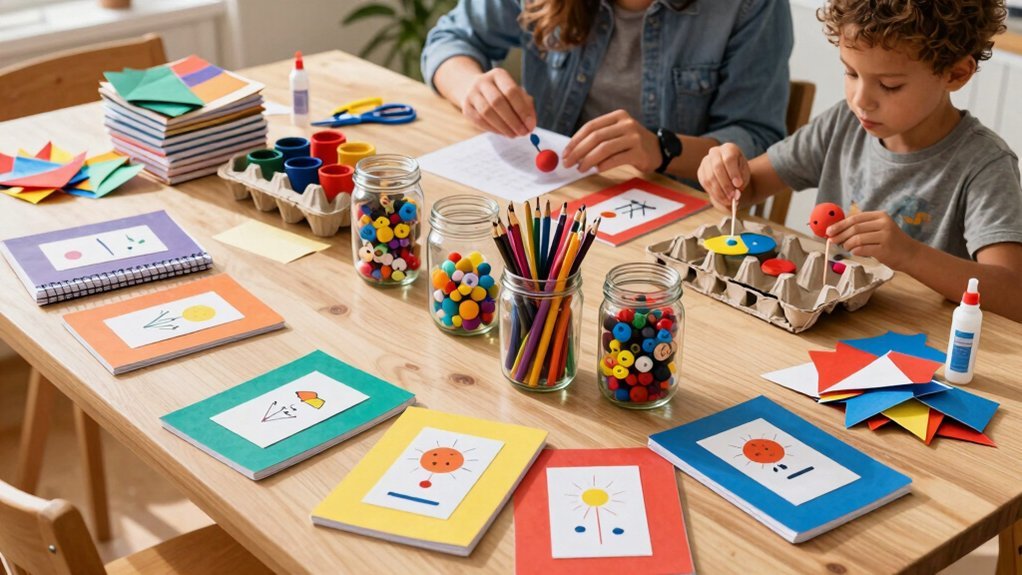
You can cut costs by repurposing everyday kitchen items into homeschool tools. Use a muffin tin as a math‑sorting tray, glass jars for science specimens, and resealable containers for individual work trays. Turn cardboard, egg cartons, and paper rolls into geometry assemblies or engineering projects. Reuse dry‑erase markers and whiteboard sheets for erase‑and‑reuse worksheets, and store them in sturdy tote bags or cardboard folders for quick access. If you keep going, you’ll discover even more budget‑friendly ideas.
Transform Kitchen Items Into DIY Homeschool Supplies
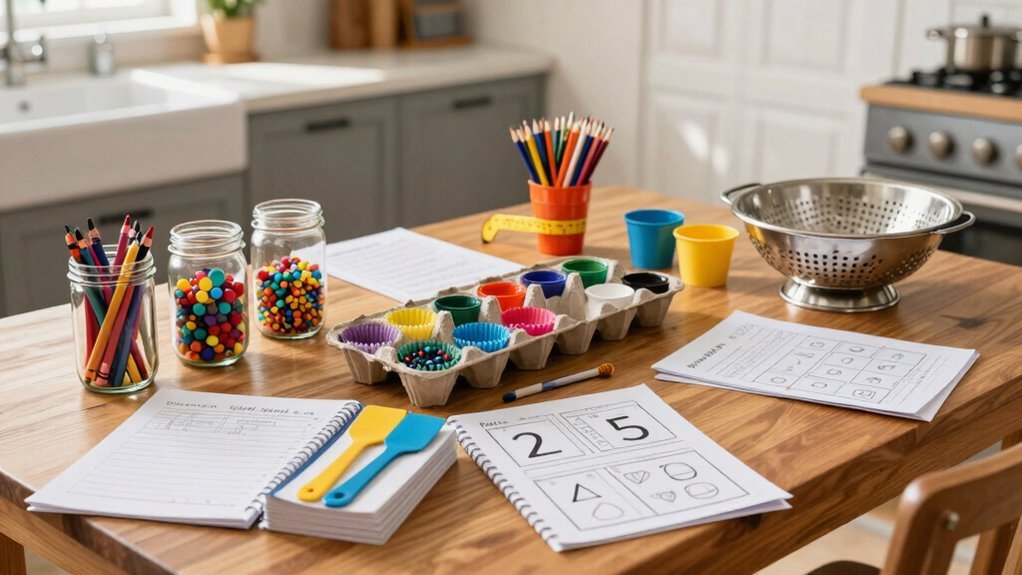
When you look around your kitchen, you’ll find a treasure trove of everyday items that can double as affordable homeschool tools. A muffin tin becomes a math‑sorting tray, while glass jars hold specimens for science experiments, turning ordinary kitchen items into DIY homeschool supplies. Re‑purpose resealable plastic containers as individual work trays; they keep manipulatives, craft bits, and literacy games organized, delivering instant cost‑saving. Slip printable alphabet or number sheets into sealed document sleeves or menu covers for a reusable dry‑erase surface, then laminate PDFs at home for multi‑use practice. Upcycle cardboard, egg cartons, and paper rolls into geometry assemblies, seed‑germination kits, and simple engineering projects. These hands‑on learning setups use reusable materials, cut expenses, and keep your homeschool space tidy. Montessori-friendly tools like the Kitchen Step Stool for Kids with Safety Rail can also foster independence and practical life skills during homeschooling activities.
Craft Reusable DIY Homeschool Supplies At Home
A few simple household items can become reusable homeschool tools that save you money and time. Turn old dry‑erase markers and whiteboard sheets into erase‑and‑reuse worksheets, then store them in a repurposed cardboard folder for quick access.
Use glass jars as durable classroom tools for counting, sorting, or science experiments, and label them with open‑source printable tags.
Convert a sturdy tote into a portable supply hub, filling it with repurposed materials like scrap paper, fabric scraps, and binder clips for hands‑on learning.
Build Low‑Cost DIY Homeschool Sensory Kits For Core Subjects

Reusing the cardboard folder and glass‑jar manipulatives you already built, you can now assemble low‑cost sensory kits that reinforce reading, writing, and math. Grab dry‑erase boards, markers, water‑based paints, and washable glue sticks as reusable supplies for letter tracing and number writing. Upcycle jars, cardboard tubes, and bottle caps into DIY manipulatives for counting, sorting, and early operations. Fill labeled bags with nature‑based textures—sand, rice, dried beans—to create tactile phonics and math activities. Combine scrap paper, fabric scraps, and old magazines with printable inserts for pattern‑recognition and color‑blending tasks. Store everything in clear, modular kits, each section labeled for a core subject, so you can swap components across grades and keep costs down. Using child-size aprons during activities helps protect clothes while fostering independence and creativity in young learners.
Turn Found Objects Into DIY Homeschool Nature Exploration Kits
A handful of everyday items can become powerful nature‑exploration tools, letting you turn walks into science labs without spending a dime. You can repurpose glass jars into bug‑observation kits, label each jar, and slip a leaf or beetle inside for close study.
Cardboard tubes become seed‑dispersal experiments, while clear plastic lids or old lenses make DIY magnifying glass kits for pond life. Gather pinecones, rocks, and feathers in labeled bins to build nature journals that double as sorting stations.
Use plastic bottles and yogurt cups to craft rain gauges and wind cups, then record data in printable, free‑to‑download worksheets. These budget‑friendly, repurposed materials turn ordinary walks into homeschool nature exploration, offering endless educational activities and science experiments. Incorporating breathing exercise cards during nature breaks can also help children improve focus and manage anxiety.
Frequently Asked Questions
How to Make Homeschooling Work Financially?
You’ll cut costs by budgeting a small monthly fund, buying reusable supplies, sourcing secondhand items, printing black‑and‑white PDFs, and tracking inventory so you reuse or swap materials instead of repurchasing.
What Is the Tim Tebow Law for Homeschooling?
You can join public school extracurriculars under the Tim Tebow Law if you file an annual notice, meet state enrollment rules, pay any required fees, and stay compliant with local homeschooling regulations.
Can I Write off Homeschool Curriculum on My Taxes?
Yes, you can usually deduct homeschool curriculum as educational expenses if your state permits it; keep receipts, verify local tax rules, and consult a professional to ensure compliance and maximize any allowable credit.
Are Kids Happier Being Homeschooled?
Yes, you’ll notice kids happier when homeschooled because you tailor pace, blend interests, and foster strong family bonds, creating a relaxed, engaging environment that sparks curiosity and reduces stress.