Give your child bright, tactile percussion tools—mini shakers, tambourines, rhythm sticks, and lightweight scarves—to spark grasping, shaking, tapping, and sweeping gestures. Choose soft scarves and ribbons for large‑motor sweeps, and add sensory beads or foam shapes for tactile feedback. Keep everything on a low, child‑height shelf with color‑coded bins so they can grab what they need independently. Use a simple 60‑120 BPM playlist on a soft mat to guide structured play, and you’ll discover even more ideas for age‑specific adaptations and safety tips.
Music‑and‑Movement Instruments for Tiny Hands
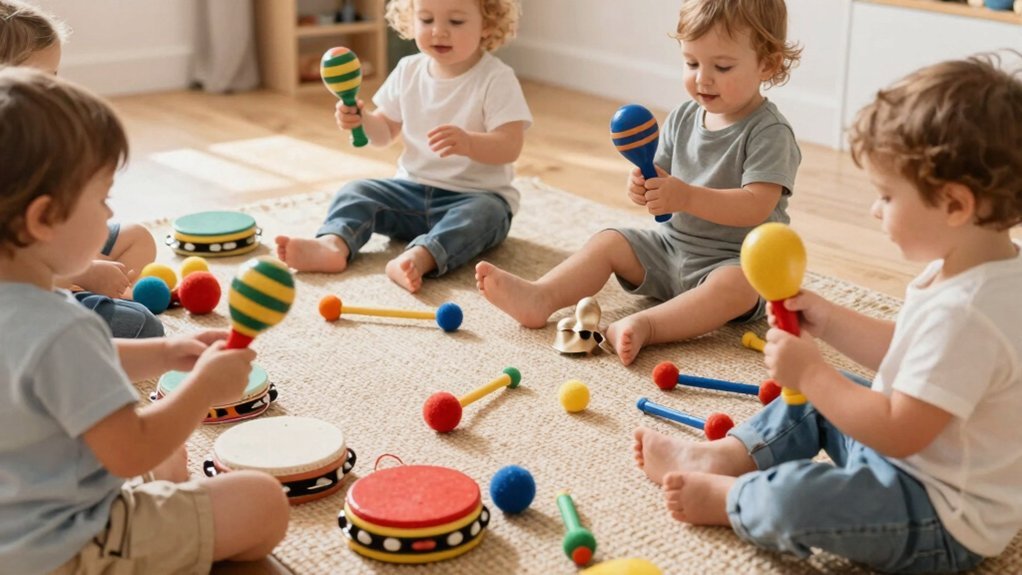
A shaker, tambourine, or miniature drum lets you guide a child’s tiny hands to grasp, shake, and tap, building fine‑motor control and finger dexterity while they follow a beat. Offer shakers and hand drums in bright colors; the tactile feel and audible feedback reinforce cause‑and‑effect learning. Add rhythm sticks that click or rattle, giving visual cues that sharpen beat‑keeping and support movement development.
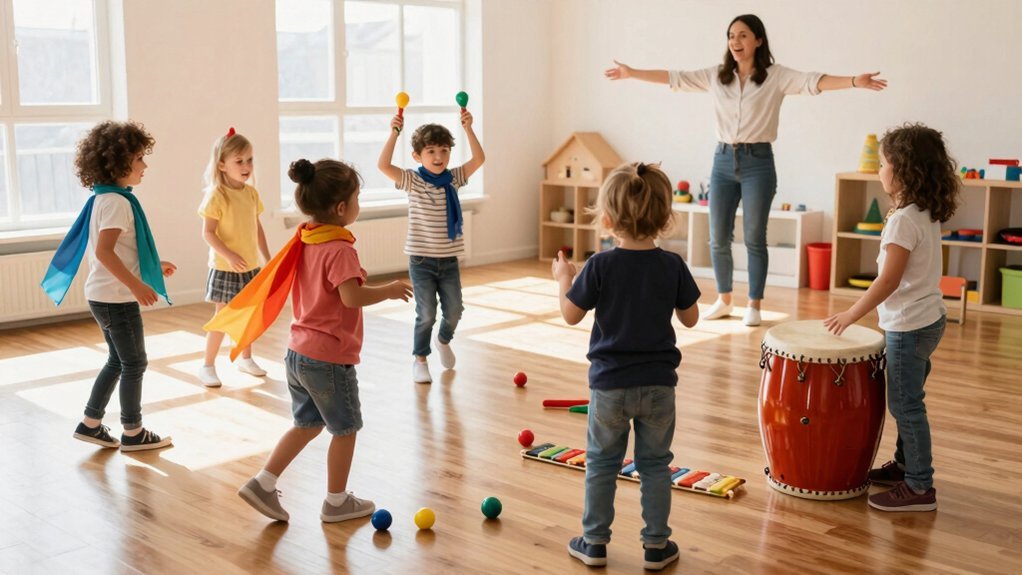
Group the child with a small percussion ensemble—bongos, mini tambourines, or hand drums—so turn‑taking and collaborative play emerge naturally. Even lightweight scarves can be waved while a rhythm is played, linking large‑motor swaying to the same musical pulse. These music materials together nurture fine motor skills, auditory discrimination, and early social coordination. Providing safe and stable support, such as a Montessori-friendly step stool, helps children engage more confidently in movement activities.
Choosing Sensory‑Rich Props for Spatial Play
Why not turn your play space into a sensory‑rich landscape that invites children to explore movement and space? Soft scarves and ribbons invite sweeping arm gestures while visual tracking. Sensory beads and shakers add tactile sparkle, keeping focus on spatial cues. Open‑ended props—lightweight balls, foam shapes, rhythm sticks—let kids roll, toss, and maneuver to music, boosting vestibular input. Mirror‑safe instruments encourage hand‑tempo coordination, and obstacle‑like setups such as pillows, low mats, or tunnels turn music cues into navigation challenges.
Incorporating storage solutions with modular configurability can help keep these materials organized and accessible for dynamic play sessions.
| Prop Type | Sensory Goal | Movement Benefit |
|---|---|---|
| Soft scarves, ribbons | Visual‑tactile | Extended arm reach |
| Sensory beads, shakers | Tactile feedback | Rhythmic spatial awareness |
| Lightweight balls, foam shapes, rhythm sticks | Open‑ended play | Balance, coordination, navigation |
| Mirror‑safe instruments | Auditory‑visual | Hand‑tempo sync |
| Obstacle‑like setups | Proprioceptive | Balance, problem‑solving |
| Open‑ended props | Creative | Spatial exploration |
| Rhythm sticks | Auditory | Timing, direction |
| Foam shapes | Tactile | Body awareness |
| Soft scarves | Visual | Spatial mapping |
Create a Home Rhythm‑Station With DIY Instruments and Layout Tips

When you set up a home rhythm‑station, place a low, child‑height shelf within easy reach and line it with small percussion toys—shakers, tambourines, xylophones, and drums—so kids can grab and explore independently. Add labeled containers or color‑coded bins for each sound source, then sprinkle DIY instruments like toilet‑paper‑tube maracas, rice‑filled container drums, and bottle shakers with varied levels. A soft mat with a simple 60‑120 BPM playlist invites both structured activities and open‑ended play, turning everyday beats into movement development opportunities. The layout encourages instrument exploration, rhythm discovery, and early childhood music joy while keeping everything at low shelf accessibility.
A low, child‑height shelf stocked with labeled percussion toys and DIY instruments sparks independent rhythm exploration.
- Feel the excitement when kids sort sounds into labeled containers.
- Watch confidence grow as they master beat‑keeping on the mat.
- Celebrate creativity during open‑ended play with DIY instruments.
Integrating sensory-rich textures into musical play complements rhythm skills by enhancing sensory awareness and fine motor development.
How to Adapt Materials for Each Age Group
Through thoughtful tweaks, you can match each age’s developmental stage with the right musical tools. For infants, choose soft rattles, malleable scarves, and gentle shakers that invite grasping and face‑to‑face movement, fostering early motor development. Adaptation for toddlers means lightweight percussion—maracas, tambourines—and larger rhythm props that support stomping, marching, and basic rhythm sense.
Preschoolers benefit from a broader palette: drums, xylophones, hand drums, and rhythm cues that sharpen beat discrimination and coordinated dance. Across all groups, use age‑appropriate mats, mirrors, and open‑scoped scarves to boost body awareness and spatial orientation. Include seated options, quieter volumes, and simplified step‑by‑step movements to ensure inclusivity for varied sensory and motor abilities.
Incorporating kid-sized mirrors into activity spaces can further enhance self-awareness and movement feedback for children.
Keeping Music‑Movement Gear Safe for Kids
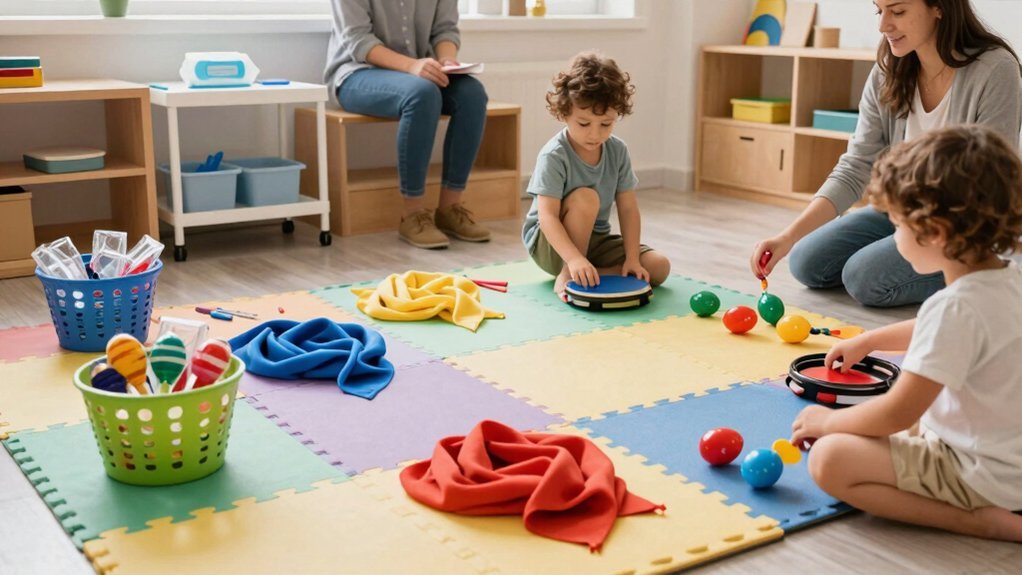
After you’ve matched each age group with the right musical tools, the next step is keeping that gear safe. You’ll notice that toddlers and early‑childhood kids thrive when music and movement happen in a secure space. Regularly inspect instruments for splinters, loose parts, or sharp edges, and replace anything that feels unsafe. Choose lightweight scarves or ribbons that wash easily, reducing choking hazards while encouraging lively play ares. Always keep an adult within arm’s reach; active supervision lets you intervene the if handling gets rough, preserving both fun and safety.
- Inspect and repair – Spot wear before it becomes a danger.
- Clear the play area – Remove obstacles that could cause trips or falls.
- Store wisely – Use labeled bins at child height for quick, safe access.
Additionally, selecting instruments that meet CPC/ASTM safety standards ensures the highest level of protection during active music and movement play.
Frequently Asked Questions
What Are the Essential Materials for Music and Movement Activities?
You need shakers, tambourines, drums, scarves or ribbons, colored cards, mirrors, balls, mats, a music player, and cue sheets—each lets you explore rhythm, coordinate moves, and keep the space safe.
What Music Is Good for Child Development?
You’ll find upbeat, tempo‑varied songs—like simple rock beats, lullabies, and playful nursery rhymes—great for child development; they spark movement, rhythm perception, and motor coordination while keeping kids engaged.
How Does Music Help With Movement?
You boost movement by syncing beats to your body, so rhythm cues your muscles, improves balance, and refines coordination. Repetitive songs train timing, while varied tempos challenge and expand your motor control.
How Do Music and Movement Help the Child’s Development?
You boost balance, coordination, and social skills when you pair rhythmic music with dancing, clapping, or instrument play, because the beat guides your movements, sharpens timing, and encourages interactive, expressive experiences.