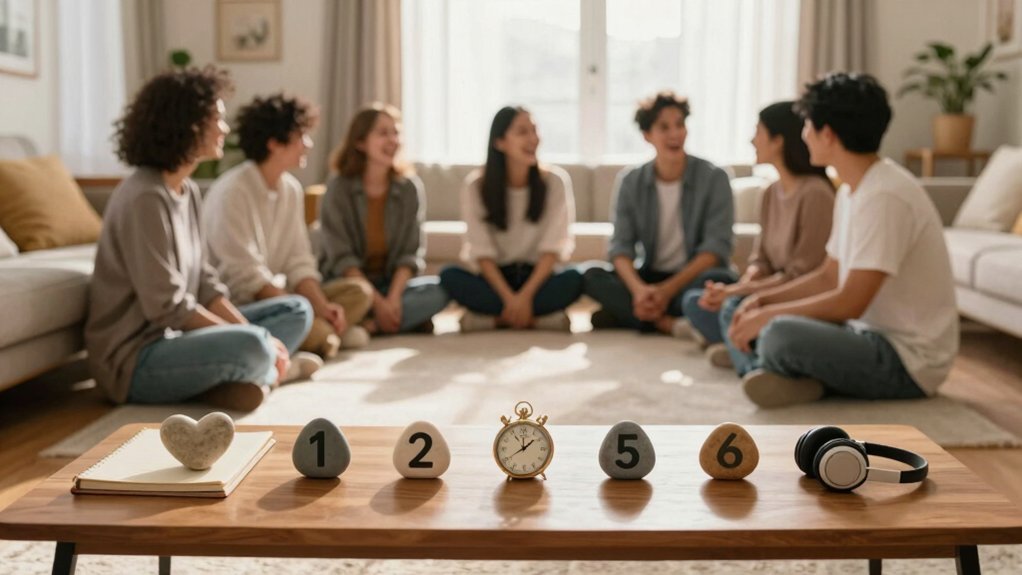

You can replace a time‑out with co‑regulation, staying calm, breathing slowly, and naming the child’s feelings to keep the connection intact. Try a time‑in: sit side‑by‑side, breathe together, then move to a nearby calm spot while staying within reach. After the surge eases, use a rewind to rehearse the right response, and let natural consequences teach cause‑and‑effect. Keep the bond strong, and the next steps will show you how to deepen these practices.
Why Time‑Outs Fail and What Time‑Out Alternatives to Use

Why do time‑outs often miss the mark? You’re isolating a child who, under age 7, can’t yet self‑regulate, so shame or anger replaces learning. The “bad” label cracks connection and makes love feel conditional. Instead, try time‑ins: sit close, co‑regulate, and label emotions to calm the amygdala. Use de‑escalation steps like deep breaths, then shift to collaborative problem‑solving, setting a boundary with compassion that’s firm but non‑punitive. When calm returns, employ replays/rewinds—role‑play the desired behavior so the child practices emotional regulation in a safe context. These research‑backed alternatives preserve connection, teach skills, and avoid the isolation that fuels escalation. Just as child-safe juicers prioritize gentle and safe processing, peaceful conflict solutions emphasize calm and connection through child-safe strategies.
Co‑Regulation Techniques: Model Calmness for Effective Time‑Out Alternatives
Co‑regulation means you model calmness while your child is upset, turning a potential time‑out into a connected “time‑in.” By staying physically present, breathing slowly, and naming the feelings you see, you keep the amygdala from hijacking the brain and give the child a live example of how to self‑regulate. Use pre‑event preparation to agree on joint breathing cues and time‑ins before tension spikes. When emotions rise, stay warm, validate, and shift to connected strategies that reinforce emotional regulation. After the episode, reflect together, repair the bond, and adjust the plan. Maintaining consistent routines helps children feel secure and supports emotional regulation over time.
| Step | Action |
|---|---|
| 1 | Pre‑event preparation: set signals |
| 2 | Joint breathing: sync breaths |
| 3 | Name feelings: label emotions |
| 4 | Time‑in: stay present |
| 5 | Reflect: discuss outcome |
Time‑Ins: Apply This Core Time‑Out Alternative for Connected Discipline

Building on the calm, shared presence you create with co‑regulation, time‑ins keep you and your child together in the moment of distress instead of pulling them away. You stay side‑by‑side, breathing and naming feelings, then move to a nearby calm‑down space where you both remain within reach. This connected discipline lets you model emotional regulation without a timer or a lecture. After the surge eases, you engage in brief reflective dialogue, reinforcing the parent‑child connection. Only later, when listening capacity rises, do you introduce behavior guidance, linking the calm experience to future choices. Experts like Dr. Daniel Siegel and UCLA studies show that this approach reduces power struggles and builds trust, making discipline feel nurturing rather than punitive. Providing children with supportive tools such as a Montessori step stool encourages independence and confidence, which can further enhance the effectiveness of connected discipline techniques.
Rewinds: Practice Desired Behavior After Calm Returns
When the storm of emotion settles, you can turn the moment into a rehearsal by “rewinding” the incident and guiding your child through the desired response. A calm return gives you a safe window for behavior practice: you briefly describe the trigger, pause, then model the appropriate reaction. Offer positive feedback each time your child repeats the skill, reinforcing self‑regulation. Frame the rewind as learning from incidents, not punishment, and link it to time‑in alternatives that keep connection alive. Repeating the sequence helps the child remember the correct steps, strengthening neural pathways for future conflicts. Over time, these focused rewinds build confidence, reduce escalation, and make calm, constructive responses the default. Using tools like Montessori-friendly timers can support children in transitioning smoothly and maintaining focus during these practice moments.
Natural Consequences: Turn Misbehavior Into a Teaching Moment and Handle Resistance

How can you turn a child’s mistake into a real‑world lesson without resort to to punishment? By letting natural consequences unfold, you transform misbehavior into a teaching moment that deepens the parent‑child connection. When a child refuses to wear a coat, the chill they feel becomes a clear cue to choose wisely next time. You stay calm, explain the link between action and outcome, and support responsible choices. Even if resistance spikes, you keep the tone non‑punitive, reinforcing learning through outcomes rather than blame.
- Allow the result to happen naturally, keeping safety in mind.
- Discuss the cause‑effect link immediately after the event.
- Validate feelings of frustration while guiding toward better decisions.
- Model problem‑solving to show how to adjust future behavior.
- Celebrate the child’s corrective action to strengthen the connection.
Frequently Asked Questions
What Is the 7 7 7 Rule for Parents?
You use the 7‑7‑7 rule by pausing seven seconds to breathe, modeling calm for seven minutes before conflict, then giving your child seven minutes to de‑escalate together, fostering connection over punishment.
What Are Alternatives to Time Out?
You can try time‑ins, replays, compassionate boundaries, time‑apart with recovery activities, immediate de‑escalation, repair‑centered rebuilding, emotion coaching, natural consequences, or collaborative problem‑solving instead of traditional time‑outs.
What Is the 3 3 3 Rule for Kids?
You use the 3‑3‑3 rule by giving your child three minutes of calm, three minutes of discussion, and three minutes of reflection, helping them process feelings, stay connected, and reset behavior.
What Are the Peaceful Ways of Resolving Conflict?
You resolve conflict peacefully by listening actively, validating feelings, using “I” statements, staying calm, collaborating on solutions, setting clear boundaries, and focusing on mutual needs instead of blame.