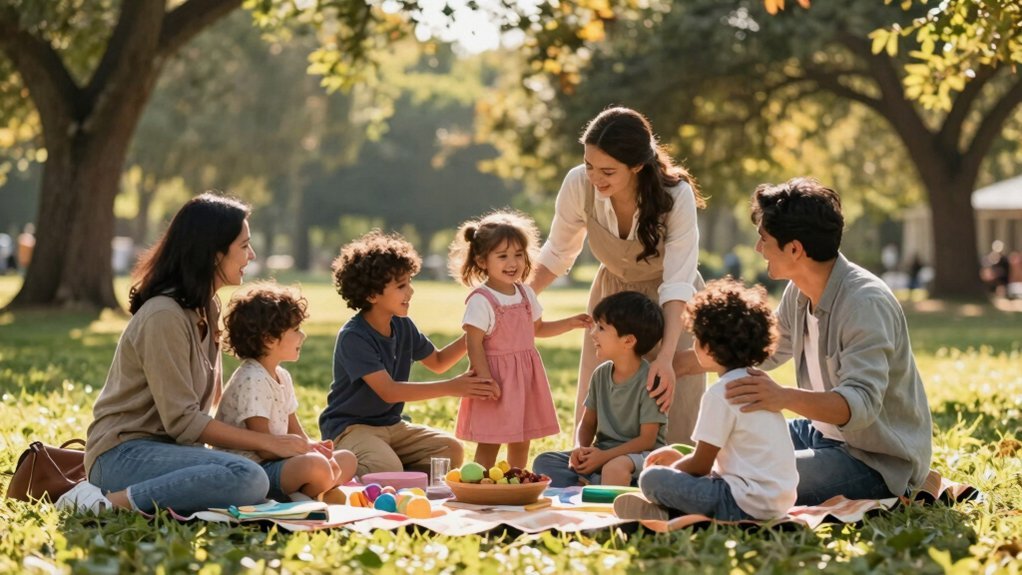
You create harmonious communities by modeling respectful communication, empathy, and calm self‑regulation in everyday parenting. When you actively listen, validate feelings, and set warm boundaries, you turn home interactions into safe emotional spaces that teach trust and collaborative problem‑solving. These habits ripple outward, strengthening neighborhood bonds, aligning school routines, and reducing conflict. By consistently applying these principles, you’ll discover deeper strategies for building resilient, inclusive communities.
Define the Core Principles of Peaceful Parenting
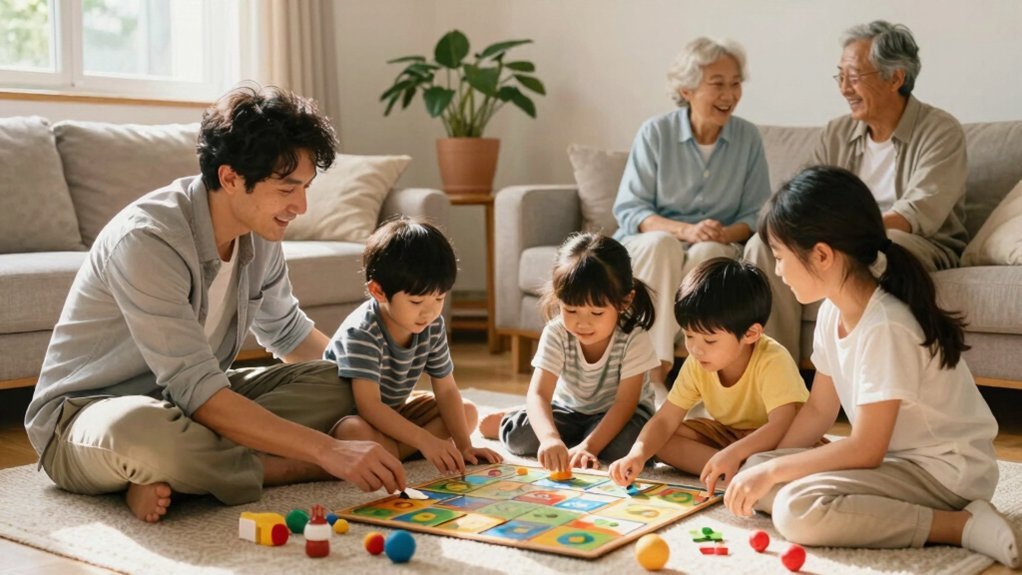
When you embrace peaceful parenting, you ground your family life in four core principles: respect, emotional regulation and empathy, positive guidance and reinforcement, and communication through collaborative problem‑solving. You model respect by honoring each person’s feelings and setting clear boundaries upheld with love.
Emotional regulation becomes a shared skill; you stay calm, label feelings, and help your child do the same.
Stay calm, label feelings, and teach your child to regulate emotions together.
Empathy drives you to validate emotions before correcting behavior, creating safety for honest expression.
Positive guidance replaces punishment— you offer choices, praise effort, and teach problem‑solving steps.
Active listening fuels collaboration: you hear the root need, reflect it back, and co‑create solutions.
This balanced approach builds trust, nurtures autonomy, and strengthens the family’s collective resilience.
Incorporating tools such as a Montessori step stool can further empower children’s independence while maintaining safety in daily routines.
How Active Listening Builds Neighborhood Trust
When you listen attentively, neighbors sense genuine respect and trust grows instantly.
Sharing stories creates a common thread that deepens bonds and makes everyone feel heard.
This approach mirrors how movable clock hands in educational toys allow children to engage actively, fostering understanding through hands-on practice.
Attentive Listening Elevates Trust
Attentive listening, the cornerstone of peaceful parenting, validates emotions, mirrors content, and confirms understanding at eye level, instantly strengthening trust between parent and child. When you practice attentive listening, you show empathy and give non‑judgmental responses that let your child feel heard. This active listening builds solid parent‑child communication, turning everyday conversations into opportunities for mutual respect.
You model mature dialogue, so your child learns to express needs and solve problems collaboratively. Warm boundary setting follows naturally, keeping connection while clearly stating expectations.
As you repeat this pattern at home, you carry the same trust into your neighborhood, encouraging neighbors to listen actively, respect each other’s perspectives, and collaborate calmly. The ripple effect creates a more peaceful, trusting community. Incorporating emotion flash cards and coping strategies can further enhance emotional awareness and regulation, supporting harmonious interactions.
Shared Stories Strengthen Bonds
How often do you notice that a simple story shared at dinner can ripple outward, strengthening the whole neighborhood?
You notice how empathy and validation in a family conversation become a model for others. When you practice active listening—mirroring content, confirming understanding, and asking open‑ended questions—you teach children to respect each other’s feelings.
Those habits spill into family communication beyond the home, creating mutual respect among neighbors. Kids who see parents treat them as equal partners learn collaborative problem solving and carry that mindset to block meetings.
Over time, this shared storytelling builds micro‑connections that knit the street together, boosting community trust and making the entire area feel safer and more supportive.
In much the same way, providing children with Montessori-friendly tools that grow with them teaches respect for their development and nurtures confidence.
Conflict Diffusion Through Empathy
Stories you share at dinner spark empathy, and that same empathy becomes a powerful tool when conflict arises. When you practice active listening, you mirror content, validate emotions, and confirm understanding at eye level, turning tension into calm. This peaceful parenting habit teaches children emotional intelligence, showing them how to name needs and feelings before they explode. In the neighborhood, you same listening‑first approach models conflict resolution, reducing power struggles and encouraging cooperation. Neighbors feel safe, knowing you hear them, and they respond with respect, fostering community trust. Over time, consistent active listening creates a culture of open communication, where disagreements dissolve quickly and collaborative problem‑solving becomes the norm.
Model Self‑Regulation (Peaceful Parenting) to Boost Community Resilience
Ever wondered how a single parent’s calm can ripple outward, shaping an entire community’s resilience? When you practice self‑regulation, you model peaceful parenting that teaches emotion regulation to your child. A brief pause before responding lets you use calm communication, while reflective listening shows how to honor feelings without reacting. Your parental modeling creates a stable emotional climate, encouraging impulse control and social competence. Those skills travel beyond the home, fostering trust and safety in neighborhood interactions. As more families adopt breathwork, brief resets, and attentive listening, the collective mood shifts toward empathy and cooperation. This shared foundation strengthens community resilience, turning individual calm into a powerful, communal asset. Tools like child-safe scissors can also support early skill development and confidence, reinforcing these positive behaviors in young children.
Collaborative Problem‑Solving (Peaceful Parenting) From Home to School
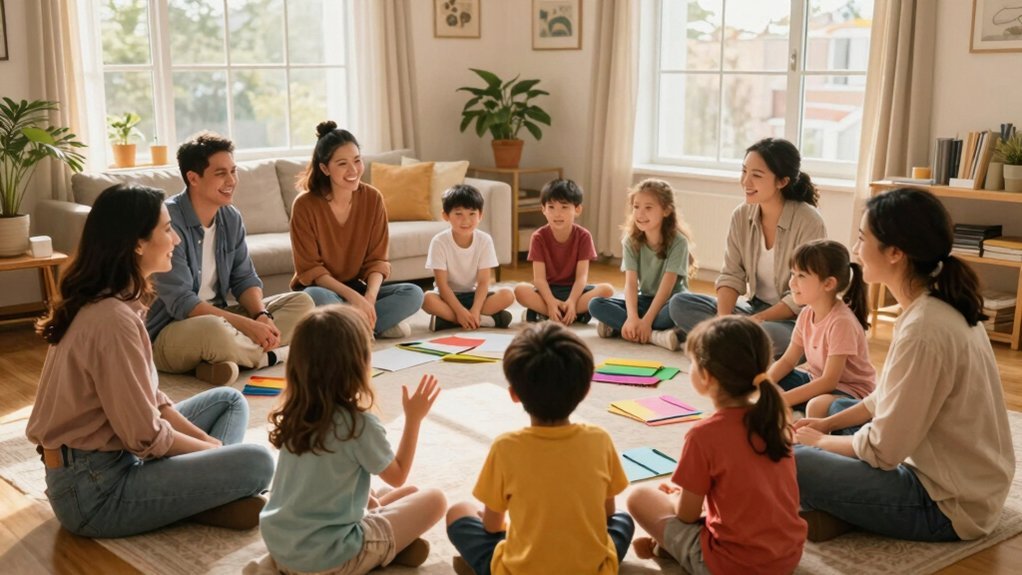
You’ll notice that shared values and mutual respect lay the groundwork for a structured dialogue where everyone feels heard.
By inviting children into inclusive decisions and community circles, you turn conflicts into collaborative solutions.
Using tools like visual schedules and warm boundary‑setting, you bridge home practices to school routines with ease.
Incorporating Montessori command cards can further support children’s development of communication and problem-solving skills in these collaborative settings.
Shared Values, Mutual Respect
How can shared values and mutual respect transform the everyday dynamics between home and school? When you align family‑school values, you create a seamless bridge that supports peaceful parenting and nurtures emotional regulation. Children sense the consistency, so they engage in problem‑solving with fidelity, not defiance. Collaboration becomes second nature, and mutual respect fuels a climate where every voice matters.
- Define core values together – teachers and parents co‑create a shared vision for behavior and learning.
- Practice active listening – validate feelings at home and in class to reinforce emotional regulation.
- Set consistent, compassionate boundaries – ensure boundaries‑punitive discipline mirrors school expectations.
- Schedule micro‑connections – daily rituals and calm transitions strengthen family‑school alignment.
Using tools designed with safety features in mind, such as child-safe cooking thermometers, also teaches children the importance of caution and responsibility in everyday tasks.
Structured Dialogue, Inclusive Decisions
Why not turn every family‑school conversation into a structured dialogue that invites children’s ideas and respects their perspectives? When you set up a structured dialogue, you create a clear format where each voice is heard, and the process naturally leads to inclusive decisions. You guide the talk with calm, explain the reasoning behind boundaries, and ask for children input, turning rules into collaborative experiments. This peaceful parenting approach builds family trust, because kids see that their thoughts shape outcomes rather than being dismissed. By practicing collaboration and boundaries with empathy, you reduce power struggles and nurture autonomy. The result is a supportive environment where decisions feel fair, learning is continuous, and everyone feels valued.
Community Circles, Collaborative Solutions
When structured dialogues at home show how kids’ ideas shape rules, the same principle can expand into community circles at school. You’ll see peaceful parenting in action when teachers and families gather, using non‑violent communication to co‑create norms. The shift from family‑inclusive decision making to a broader school climate builds mutual respect and reduces power struggles. By treating each circle as a problem‑solving lab, you empower students to propose solutions, test them, and refine them together.
- Set clear, shared goals for the circle.
- Use active listening and “I” statements to keep tone non‑violent.
- Invite parents and staff to participate in family‑inclusive decision making.
- Celebrate each collaborative solution to strengthen school climate.
Creating Safe Emotional Spaces (Peaceful Parenting) in Families and Communities

A safe emotional space lets kids voice feelings without fearing punishment, which research shows boosts attention, learning engagement, and regulation regulation. You build that space by prioritizing emotional safety and practicing active listening. When you validate emotions, you lower their intensity and deepen connection. Your own parental self‑regulation models calm behavior, showing children how to manage stress. Identify underlying needs—belonging, safety, love—before reacting, and meet them with empathy. Set family boundaries with warmth, using calm communication that explains limits without shaming. Offer choices to empower autonomy, reducing power struggles. By consistently applying these techniques, you create a home atmosphere that nurtures confidence, cooperation, and resilience, laying the groundwork for harmonious community interactions.
Empathy‑Based Discipline Reduces Neighborhood Conflict
Ever notice how a simple shift from punishment to understanding can calm a whole block? When you practice empathy‑based discipline, you replace punitive reactions with active listening and non‑violent communication. This approach teaches emotional regulation, so kids stop erupting into tantrums that spark neighborhood conflict. Your family’s peaceful parenting style models prosocial behavior, and those habits ripple outward, creating calmer streets and safer shared spaces.
- Validate feelings – acknowledge emotions before correcting behavior.
- Use “I” statements – express concerns without blame.
- Collaborate on solutions – involve children in decision‑making.
- Model calm responses – demonstrate emotional regulation for peers.
These steps turn tension into cooperation, turning a noisy block into a harmonious community.
Shared Values and Rituals Strengthen Community Bonds
If families embed shared values and simple rituals into daily life, they create a ripple effect that binds neighbors together. You’ll notice that daily micro‑connections, screen‑free dinners, and bedtime reviews become predictable moments where emotional validation and cooperative behavior flourish. These rituals model peaceful parenting, showing children how to listen, share, and resolve disagreements through democratic problem‑solving. As kids internalize shared values, they carry respect and empathy into the neighborhood, turning casual greetings into genuine collaborations. The result is stronger community bonds: neighbors cooperate on block projects, parents support each other’s challenges, and conflict eases because everyone feels heard and safe. By consistently practicing these habits, you nurture a resilient, caring environment that extends far beyond your home.
Sustaining Communities With Ongoing Practices and Support
When you weave ongoing seminars, coaching, and counseling into community life, you create a structured support system that keeps peaceful parenting practices thriving. You’ll notice how breathwork and emotional regulation become daily habits, reinforced by community resources like podcasts and blogs. Ongoing support fuels collaborative problem‑solving, while non‑punitive discipline stays front‑and‑center through regular microconnections and daily rituals.
Weaving seminars, coaching, and counseling into community life builds a resilient, supportive network for peaceful parenting.
- Schedule weekly breathwork circles to reset stress levels.
- Offer a shared online hub of community resources for quick reference.
- Host monthly collaborative problem‑solving workshops for parents.
- Embed daily rituals—bedtime reviews, family dinners, secret handshakes—to sustain relational touchpoints.
These practices weave resilience into the fabric of the neighborhood, ensuring peaceful parenting endures.
Frequently Asked Questions
Which Sibling Is Usually the Favorite?
You won’t reliably identify a favorite sibling because peaceful parenting treats each child equally; you focus on their needs, listening actively, and giving love and attention without bias, preventing favoritism.
What Is the Peaceful Parenting Approach?
You practice peaceful parenting by listening actively, modeling calm self‑regulation, collaborating on solutions, and setting warm boundaries, fostering trust and empathy while avoiding punishment or reward‑based control.
What Are the Factors That Promote Harmony in the Family?
You foster family harmony by actively listening, showing empathy, setting consistent loving boundaries, modeling self‑regulation, involving kids in decisions, celebrating rituals, and maintaining daily micro‑connections that build trust and respect.
What Are the 3 C’s of Gentle Parenting?
You practice the 3 C’s—Connection, Calm, Cooperation—by listening empathetically, regulating your emotions before responding, and inviting your child to help solve problems together, fostering trust and shared responsibility.




Leave a Reply