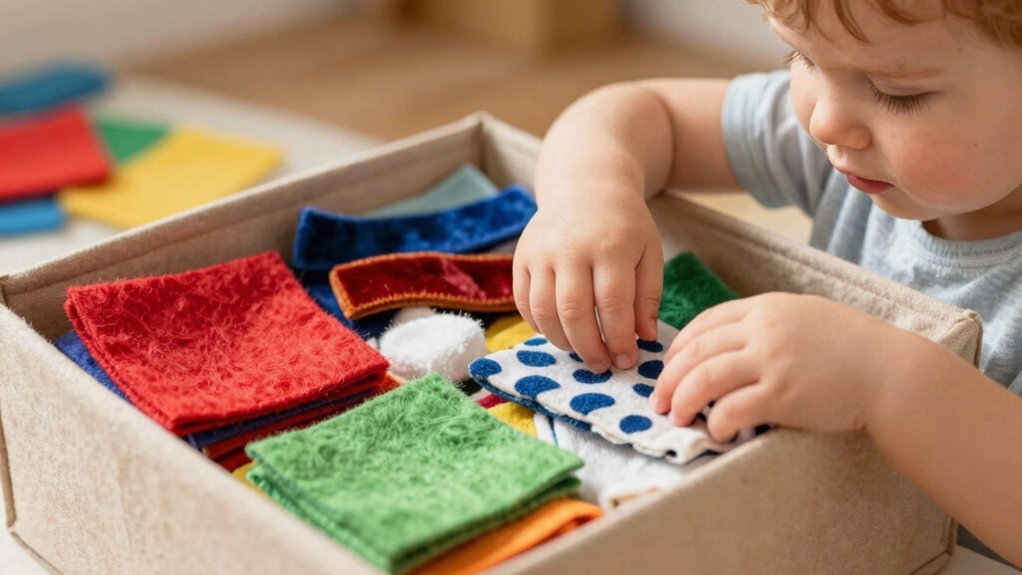
Grab a shallow, sturdy container—like a wipes box—and fill it with assorted fabric scraps such as silk, felt, burlap, and cotton, each in bright colors and safe, non‑toxic material. Rotate the textures weekly, and let your toddler pull out swatches to practice grip, compare softness, and match colors to labeled cards. Add simple pull‑out challenges, blindfolded sorting, and a portable version for trips, and you’ll discover even more creative extensions.
Fabric Sensory Box Materials: Scraps, Containers, Safety

A good fabric sensory box starts with a sturdy, easy‑to‑refill container—think a clean wipes box or a shallow bin—filled with assorted fabric scraps like silk, burlap, felt, and cotton. You’ll want a mix of textures: soft silk, rough burlap, smooth felt, bumpy cotton, and ribbed pieces, so each pull‑out offers a new tactile surprise. Choose a fabric box that’s simple to open and close, then you can refill it quickly after each session. Safety matters: avoid loose threads, tie up small ends, and keep scraps large enough that toddlers can’t swallow them. Supervise the play, check for frayed edges, and store the box in a calm, portable spot—perhaps under a blanket or canopy—to keep the space focused and inviting. Selecting materials with non-toxic and durable qualities ensures a safer and longer-lasting sensory experience.
Set Up Your DIY Fabric Sensory Box
Pick a sturdy, shallow container—like an empty wipes box—that’s easy for little hands to grip and tip. Fill it with a mix of fabric scraps ranging from silky smooth to rough burlap and bumpy felt, and sprinkle in colorful patterns for visual interest. Rotate the textures regularly so toddlers always have fresh, contrasting surfaces to explore. Consider including non-toxic materials to ensure safety during sensory play.
Container Selection Tips
Looking for a simple, safe container for your DIY fabric sensory box? Choose a sturdy wipes tub or similar box with a wide mouth and smooth edges. A fabric container that’s easy to open lets toddlers pull out swatches without struggle, while a secure lid keeps scraps from spilling when you’re not supervising. Opt for a clear or lightly colored side so you can spot the contents at a glance, and avoid containers with tiny detachable parts that could become choking hazards. Make sure the interior is smooth, free of sharp corners, and large enough to hold a dozen pairs of fabric pieces. Arrange the fabric so children can reach in freely, encouraging repetitive extraction and fine‑motor practice. For safety and ease of use, consider containers that feature non-slip surfaces to help toddlers maintain a steady grip.
Texture Variety Ideas
Choosing a sturdy wipes tub already gives you a reliable base, now fill it with a mix of fabrics that vary in feel and look.
Start with two 55‑inch squares of the same material for stability, then add at least a dozen pairs of fabric textures—silk for smoothness, burlap for rustic roughness, felt for plush softness, and ribbed cotton for subtle ridges.
Include vivid patterns like plaids, stripes, and florals to cue visual discrimination alongside tactile exploration.
Balance soft, medium, and coarse pieces so toddlers can compare grip strength and pressure.
Rotate or replenish the swatches weekly to keep the box fresh and extend engagement, fostering descriptive vocabulary as they name silky, bumpy, rough, and other sensations.
To encourage responsibility and hands-on participation, incorporate child-friendly cleaning tools like Mini Broom and Dustpan Sets for Kids as part of the sensory play setup.
Explore Textures: Silk, Felt, Burlap, More

You’ll notice silk feels soft, smooth, and cool against tiny fingers, while felt offers a dense, warm, and quiet texture to explore.
Burlap adds a rough, natural, and richly textured contrast that sparks curiosity.
Switching between these fabrics keeps the sensory box fresh and invites endless tactile discovery.
Incorporating natural materials like sustainably harvested wood enhances sensory engagement and aligns with eco-friendly play principles.
Silk: Soft, Smooth, Cool
When toddlers slip their fingers into a fabric box, the cool, smooth glide of silk instantly stands out against the rougher feel of burlap or the soft heft of felt, sharpening their texture discrimination and encouraging precise pinch‑and‑pull or sliding motions. You’ll notice how silk’s slippery surface pushes them to adjust grip, refining fine‑motor control. Pairing silk with coarser fabrics creates vivid contrasts that spark descriptive language—soft, smooth, rough, bumpy. Keep silk pieces small and lightweight for quick pull‑outs, and always supervise to avoid moisture damage or shedding.
- Offer a silk strip alongside a burlap square for side‑by‑side comparison.
- Encourage a “pinch‑and‑pull” game to practice release timing.
- Use silk to introduce the word “cool” in tactile vocabulary.
- Rotate silk pieces frequently to maintain novelty and safety.
Including activities that promote fine motor skills like those seen in wooden bead lacing sets can further enhance toddlers’ developmental play.
Felt: Dense, Warm, Quiet
Silk’s slippery glide gives way to felt’s dense, warm hug, inviting toddlers to explore a texture that’s both plush and quiet. You’ll notice felt’s thick matte surface invites little hands to grasp, tug, and even tear under supervision, building fine‑motor strength.
Its warm plushiness creates a calming pocket inside the fabric box, so when a child pulls out a felt square, the experience feels soothing rather than overstimulating. Because felt holds color brilliantly, you can mix bright reds, soft blues, and natural tans for visual variety while keeping the tactile focus consistent. Cutting felt into shapes or stitching scraps together is quick and safe, letting you assemble patterns that encourage discrimination between textures without introducing the roughness of burlap.
In addition to tactile development, integrating hands-on tools like a wooden abacus can further support early math skills through engaging manipulation and counting activities.
Burlap: Rough, Natural, Textured
Because burlap’s rough, fibrous surface feels so different from silk’s smooth glide and felt’s plush hug, it instantly sharpens a toddler’s tactile discrimination. You’ll notice the earthy beige‑brown tone standing out against brighter scraps, giving a visual cue that invites curiosity. When a child pulls a strip, the gritty drag and soft rustle add auditory and proprioceptive feedback, deepening the sensory experience. Because burlap frays easily, you’ll cut it into small, sewn‑together pieces to keep fibers contained while preserving its distinctive texture. Mixing it with silk, felt, and cotton expands vocabulary—rough, coarse, fibrous—while encouraging exploration.
- Cut burlap into safe, sewn strips
- Pair with bright fabric scraps for contrast
- Encourage pulling to hear the rustle
- Discuss texture words while playing
Color‑Code Swatches for Sorting & Vocabulary

Curious how a simple fabric swatch can turn color learning into a hands‑on adventure? You lay out a handful of bright swatches beside labeled color cards or bins, then invite your toddler to match each piece to its name. By grouping reds, blues, greens, and yellows, the activity builds a visual‑tactile connection that reinforces vocabulary. You can expand to shade terms—light, dark, pastel—by adding slightly tinted swatches. The tactile feel of the fabric helps kids differentiate colors even before they can name them, while the act of picking up and placing each piece sharpens fine motor skills. Later, try blindfolded sorting to challenge memory and deepen the color‑association link. This playful system turns abstract color concepts into concrete, sensory experiences.
Play Pull‑Out Activities to Build Fine Motor Skills
You’ll love watching your toddler pull scraps from a fabric container, repeating the motion to strengthen tiny hand muscles.
The varied colors and patterns turn each pull into a quick sorting game that keeps them engaged.
Adding a few extra pieces after each round lets the practice continue, building endurance and coordination.
Text Text Container
A handful of fabric scraps tucked inside an empty wipes container turns a simple box into a pull‑out station that sharpens fine motor skills. You’ll notice your toddler’s pincer grasp improve as they reach in, pull a ribbon out, and tuck it back. The container’s low‑cost design lets you swap silk, burlap, or felt for varied texture, keeping hands busy and eyes focused. As skills grow, you can stitch scraps into a chain or tie them together for a longer pull‑out sequence, all while the container stays easy to clean.
- Use bright, contrasting colors to boost visual interest.
- Rotate textures weekly to maintain curiosity.
- Encourage the child to count pieces while pulling.
- Add a simple label on the container for early literacy practice.
Repetitive Pull‑Out Practice
The fabric‑scrap box you set up becomes a repeatable pull‑out station, letting toddlers grasp, pinch, and yank the same piece over and over while their hand muscles strengthen. You can use a clean wipes container or a repurposed Kleenex box, filling it with soft scraps, torn towels, or even a few wipes for texture variety. Each time the child pulls a piece out, they practice a precise grip, then you replace the item so the loop continues. This predictable rhythm so sensory processing and keeps focus sharp. To extend the challenge, connect two scraps with a thread, sew a short chain, or tie pieces together, creating longer pulls and new tactile cues. The setup stays low‑cost, portable, and endlessly repeatable.
Color‑Pattern Sorting Fun
Ever wondered how a simple fabric box can turn color‑pattern sorting into a fine‑motor workout? You’ll love watching your toddler rummage through a bin of fabric scraps, pulling out matching swatches, and slotting them back in. The tactile pinch and precise placement sharpen pincer grasp, while the visual hunt for identical colors and prints builds discrimination skills. You can start with basic color‑matching, then add a blindfold for memory practice. Replenish the scraps after each round to keep the challenge fresh and the engagement high.
- Offer a mix of bright solid colors and patterned prints.
- Use a shallow container for easy reach.
- Prompt your child to name each hue and pattern.
- Gradually introduce blindfolded sorting for memory boost.
Add Animals & Shapes to the Fabric Sensory Box
Plenty of plush dogs, cats, birds and fabric‑cut circles, squares, and triangles turn a simple sensory box into a lively learning hub. You’ll notice that each animal comes on soft plush while each shape uses velvety or ribbed fabric, giving distinct tactile cues that sharpen discrimination during sensory play.
Swap the pieces regularly, and prompt your toddler with “find the circle” or “pull out the dog” to boost vocabulary and shape‑recognition skills. The varied textures keep hands busy, encouraging fine‑motor control as little fingers grasp, pull, and sort.
Add Scarves & Ribbon for Soft Pull‑And‑Grasp Play
A handful of bright scarves and ribbons can turn a simple fabric sensory box into a soft, pull‑and‑grasp playground.
Bright scarves and ribbons transform a simple fabric sensory box into a soft, pull‑and‑grasp playground.
You’ll notice toddlers reaching for the colorful scarves, their fingers learning to grasp, pull, and release.
The variety of textures—silky, crinkly, or plush—keeps their sensory curiosity engaged, while the easy insertion and removal lets you swap pieces fast for endless exploration.
By adding scarves you also give a visual cue that supports color and pattern recognition, turning each pull‑and‑grasp action into a mini‑lesson in fine‑motor control and texture vocabulary.
- Choose scarves in contrasting colors for visual interest.
- Mix silk, cotton, and crinkly ribbons for tactile diversity.
- Secure a few loops inside the box to keep scarves from slipping out.
- Rotate the scarves regularly to maintain novelty and challenge.
Try Blindfolded Sorting for a Fun Sensory Challenge
When you slip a soft blindfold over a toddler’s eyes and hand them a mix of silk, burlap, and felt swatches, you instantly turn a simple fabric box into a tactile treasure hunt. Start with a wipes container filled with paired textures, then ask the child to feel each piece and describe it aloud. After a few rounds, remove the visual cue and let them sort solely by touch, pairing silk with silk, burlap with burlap, and felt with felt. Offer minimal prompts—“soft?” or “rough?”—to encourage self‑correction. As they succeed, increase difficulty by mixing colors or adding extra textures. This progressive challenge sharpens tactile discrimination, builds confidence, and keeps the sensory play fresh and engaging.
Make a Portable Fabric Sensory Box for Travel
How can you turn a tiny wipes container into a travel‑ready sensory hub? Grab an empty wipes box, line it with a soft cloth, then fill it with 10–15 pre‑cut fabric scraps—silk, burlap, felt, velvet, satin—in bright colors and patterns. Add a scented square and a lightweight scarf that you can tie to the lid for quick identification. Pack the box in a tote, and you’ll have a portable, tactile playground that fits on a car seat or airplane tray.
Turn a wipes box into a portable sensory hub with pre‑cut fabrics, scents, and a tied scarf for easy travel.
- Use varied textures (soft velvet, rough burlap, smooth satin) for tactile exploration.
- Include scented squares to engage the sense of smell.
- Pre‑cut fabric scraps into several sizes for easy handling.
- Attach a ribbon or scarf for fast retrieval and reassembly.
Keep Your Fabric Sensory Box Clean and Organized
Ever wondered how to keep your fabric sensory box tidy and safe for every play session? Use a dedicated container—like a wipe box or small fabric bin—to hold all scraps, so nothing rolls away. Label or color‑code each fabric type (silk, burlap, felt, etc.) so toddlers can sort textures and you can spot missing pieces quickly. After each adventure, pull out any soiled or odorous fabrics and toss them in the wash; this prevents smells and keeps the sensory experience fresh. Establish a quick cleanup routine: return every scrap to the fabric box, then wipe down the container before storing it. Finally, inspect each piece for loose fibers or tiny parts and discard anything worn, reducing choking hazards and keeping play safe.
Creative Extensions: Walls, Collages, and Canopy Play
Keeping the fabric box tidy sets the stage for bigger projects, and now you can turn those scraps into interactive walls, collages, and canopies. You’ll love how a fabric wall with varied texture—silk, burlap, felt—invites multimodal exploration while toddlers rearrange felt pieces on a large adhesive sheet. A tactile quilt, painted or sewn, becomes a wall hanging that sparks pattern recognition. Hang a lightweight blanket as a canopy, adorn it with phosphorescent star stickers, and tuck pockets or flaps into the panel for quiet, imaginative play.
Turn fabric scraps into tactile walls, quilts, and canopies that spark multimodal play and imagination.
- Glue felt scraps to a removable wall sheet for endless collage swaps.
- Paint or sew fabric squares into a quilted wall hanging.
- Suspend a blanket canopy with star stickers for a cozy nook.
- Add sewn pockets and flaps to the wall panel for hidden treasures.
Frequently Asked Questions
What to Put in a Sensory Box for Toddlers?
You fill it with soft ribbons, silk squares, felt circles, burlap strips, washcloth pieces, and safe, textured fabric scraps—ensuring no choking hazards, keeping colors varied, and letting you replace items for repeated play.
What Do Toddlers Learn From Sensory Bins?
You learn that toddlers develop fine‑motor control, tactile discrimination, hand‑eye coordination, concentration, object permanence, sorting skills, and vocabulary as they explore textures, colors, and actions in sensory bins.
What Fabric Is Best for Sensory Issues?
You’ll find silk, felt, and burlap work best for sensory issues; silk offers smoothness, felt gives soft cushioning, and burlap adds safe roughness, all while staying large enough to avoid choking hazards.
What’s in the Box Activity for Toddlers?
You’ll find a shallow container packed with soft fabric strips, ribbon ribbons, and textured scraps. You pull, feel, and sort them, encouraging tactile exploration, color recognition, and fine‑motor practice.