
Try shaving‑cream window painting to let kids spread texture, name colors, and trace letters while you keep cleanup simple with towels and a step stool. Set up edible sensory bins using mashed avocado, corn flakes, or shredded coconut so they scoop, pinch, and describe sensations like smooth or crunchy. Finish with outdoor movement stations—ball‑pits, kite‑runs, and textured walks—to boost gross‑motor confidence and tactile vocab. Keep going and you’ll discover even more practical‑life ideas.
Shaving‑Cream Window Painting

Splashing shaving cream onto a window invites kids to explore texture and color while they write or draw. You spread a thin layer of shaving cream, then let them press fingers, fingertips, or spray bottles to feel soft textures and cool surfaces. This sensory exploration fuels window painting, encouraging fine motor skills as they trace letters or doodle shapes. Pair the activity with language prompts—ask what the cream feels like, what colors appear, or how the letters look—to boost early literacy and descriptive dialogue.
Turn‑taking turns turn turny into while keeps messy play organized, and using towels, wipes, and a smock makes cleanup quick. The whole routine fits practical life activities, blending sensory play with purposeful learning. Using tools like the Kitchen Step Stool for Kids with Safety Rail can help children safely reach windows to fully engage in this hands-on experience.
Edible Sensory Bins With Finger‑Paint Foods
A handful of edible sensory bins turn snack time into a tactile adventure, letting kids dig into safe, finger‑friendly foods like mashed avocado, corn flakes, or shredded coconut. You set up a sensory play setup with a tablecloth, old T‑shirt, and a shallow bowl, then invite fine motor development through scooping, pinching, and spreading. As they explore textures, you weave language and vocabulary, asking “Is it smooth or crunchy?” The activity supports safe mouthing while encouraging messy play that builds practical life skills. Using larger components with age-appropriate bead size helps ensure safety while children develop fine motor skills through tactile sensory play.
| Food | Texture | Skill Focus |
|---|---|---|
| Mashed avocado | Creamy | Fine motor |
| Corn flakes | Crunchy | Sensory exploration |
| Shredded coconut | Fuzzy | Language & vocabulary |
Outdoor Sensory Movement Activities: Ball‑Pit, Plastic‑Bag Kites, and Textured Walks
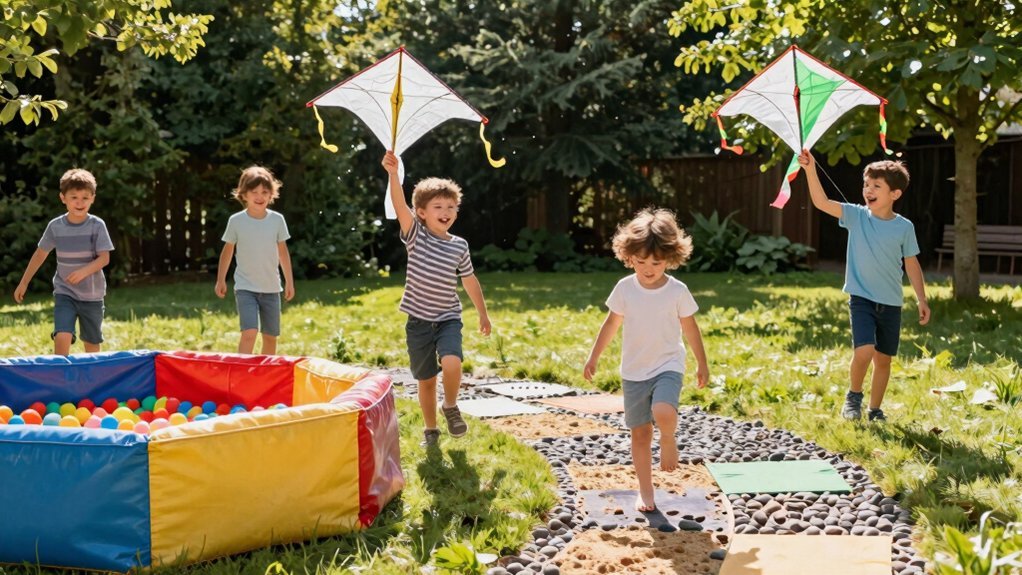
Outdoor sensory movement activities turn open spaces into dynamic learning labs, letting kids immerse themselves in a ball‑pit of 200‑500 plastic spheres, chase wind‑caught plastic‑bag kites, and step across textured tubs that spark tactile discovery. You’ll see gross motor confidence grow as children dive into a ball‑pit, pulling, pushing, and rolling balls while practicing spatial awareness. The wind‑sensory kite‑run adds kinesthetic exploration, encouraging them to sprint, adjust grip, and feel gusts on their faces. Textured walks invite tactile discrimination; they step from cool water beads to warm sand, naming each sensation. Together these outdoor sensory activities weave practical life skills into sensory integration, turning play into purposeful movement and refined perception.
Frequently Asked Questions
What Are Some Good Sensory Activities?
You’ll love letting kids squish shaving cream, dig into edible bins of avocado or cranberry sauce, shape jell‑O, crawl through a body‑sock tunnel, and pour, sort, or mix textures while you narrate each step.
What Are Play Activities for Sensory Exploration?
You can set up water‑pouring stations, stack blocks, sort colored beans, squeeze shaving‑cream mats, or thread chickpeas through cardboard holes—each activity engages touch, sight, and coordination while building practical life skills.
What Are the Four Exercises of Practical Life Central to the Montessori Method?
You focus on Care of Self, Care of the Environment, Control of Movement, and Control of Passions—each activity you design builds independence, coordination, concentration, and self‑regulation through purposeful, sequential tasks.
What Are Some Sensory Integration Activities?
You can try pouring rice or sand between containers, sorting colored beads with tongs, scooping water into trays, kneading play‑dough, and exploring textured bins with shaving cream or pudding.




Leave a Reply