
You’ll see that Montessori water‑pouring turns a simple task into a lesson in focus, independence, and polite behavior. The lift‑pour‑return sequence forces you to pause, observe, and self‑correct, building concentration and fine‑motor control. Child‑sized pitchers on a raised‑edge tray teach you to handle materials gently, respect the workspace, and clean up responsibly. Minimal adult input lets you own the process, fostering autonomy. Keep going and you’ll discover how to integrate these skills into daily routines.
Why Montessori Water‑Pouring Is a Core Courtesy Skill
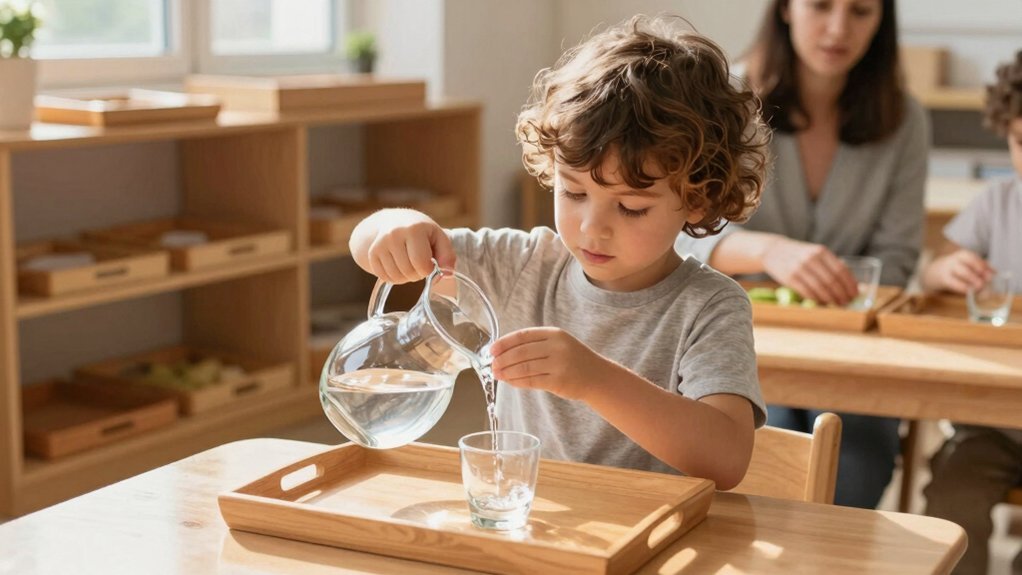
Ever wondered why a simple act of pouring water can teach a child true courtesy? When you let a child lift a pitcher, tilt it, and return it, they’re practicing the Montessori practical life skills that underpin polite behavior. The lift‑pour‑return sequence demands focus, so they learn to pause, watch the stream, and adjust their grip without adult prompting.
As they clean up spills, they experience self‑correction, internalizing responsibility for their actions. Using child‑sized pitchers on a raised‑edge tray makes the task safe and meaningful, encouraging independence. The progression from dry beans to water builds a routine that mirrors everyday manners—waiting for a turn, handling objects gently, and leaving a space tidy for the next person.
Supporting such activities, Montessori-friendly step stools with features like safety rails and non-slip surfaces ensure children can safely reach sinks and counters to pour water independently.
How to Set Up the Workspace for Montessori Water‑Pouring
You’ll start by placing a tray with raised edges on a stable surface, which keeps water contained and defines the work area.
Next, set out two child‑sized pitchers—one filled with water (add a dash of food dye if you like) and the other empty—so the child can practice pouring back and forth.
Finally, lay a towel or mat beneath the tray and keep a sponge handy for quick clean‑up of any drips.
Using child-safe materials with precision-cut edges helps maintain safety and supports independent learning during activities.
Edge Edged Tray
How can a simple edge‑edged tray transform a water‑pouring lesson? You’ll see that the raised edges define the workspace, keeping spills contained and cleanup swift. A stable, flat surface beneath the tray prevents wobbling, so the child can focus on the pour rather than balancing. The tray’s boundaries teach sequencing: place the two pitchers, a cup of water, and a towel inside the edge, and the child naturally follows the order. By managing drips and overflow within the tray, you foster independence—kids set up, pour, and tidy without constant adult intervention. Choosing materials with easy‑clean plastic surfaces ensures the tray remains hygienic and durable after repeated use.
| Component | Purpose |
|---|---|
| Raised edges | Contain water, limit spills |
| Flat base | Ensure stability, prevent tipping |
| Designated zones | Organize pitchers, water, towels |
| Easy‑clean material | Simplify post‑activity cleanup |
Child‑Sized Pitchers
Can a simple setup with two child‑sized pitchers turn a water‑pouring lesson into a focused, independent activity? You place the pitchers on a raised‑edge tray, name each one slowly, and model the two‑hand grip. By pouring at a measured pace you prevent overflow, letting the child see cause‑and‑effect. Adding a splash of colored water makes the flow visible, while a nearby sponge keeps the area tidy for the next round. The arrangement encourages autonomy, precision, and respect for materials, laying a foundation for later challenges like using a funnel or a pitcher with a pouring line.
- Position the child‑sized pitchers side‑by‑side on the tray.
- Demonstrate the grip and slow pour before letting the child try.
- Keep a sponge or cloth within reach for quick cleanup.
Spill‑Control Materials
Where does a clean, safe workspace begin? You start with a tray that has raised edges, so any spilling stays inside the boundary and you can focus on control. Place the two child‑sized pitchers on a level surface within the tray, ensuring they’re stable before the child begins. Keep a soft sponge or cloth nearby; when a splash occurs, a quick wipe removes the water and prevents slip hazards. If you want extra guidance, add a small funnel or a pouring line to teach measurement and error‑control early on. Coloring the water with a dash of dye isn’t required, but it lets the child track flow visually, reinforcing concentration and responsibility throughout the activity. Using child-sized, non-slip tools can further enhance safety and confidence during pouring activities.
How the Montessori Water‑Pouring Lift‑Pour‑Return Sequence Builds Concentration
Ever notice how a simple lift‑pour‑return routine can turn a child’s playtime into a focused exercise? You’ll see the child lift the pitcher, pause to watch the stream, then return any leftover water. This deliberate rhythm forces the child to sustain attention, because each step depends on the previous one. As the task gets harder—bigger vessels, slower pours—the child’s concentration stretches, and the self‑correcting nature of pouring (spotting spills, adjusting grip or angle) keeps the mind locked on the details. The predictable, step‑by‑step framework also builds cognitive organization, turning play into a mini‑project that the child completes with pride.
- Initiate controlled lift, then monitor water flow.
- Adjust grip, angle, or speed when spills appear.
- Return leftover water, reinforcing the full sequence.
Incorporating Montessori-inspired learning tools supports the development of fine motor skills and enhances concentration through hands-on practice.
How Montessori Water‑Pouring Develops Fine‑Motor Skills Through Grasp, Tilt, and Release
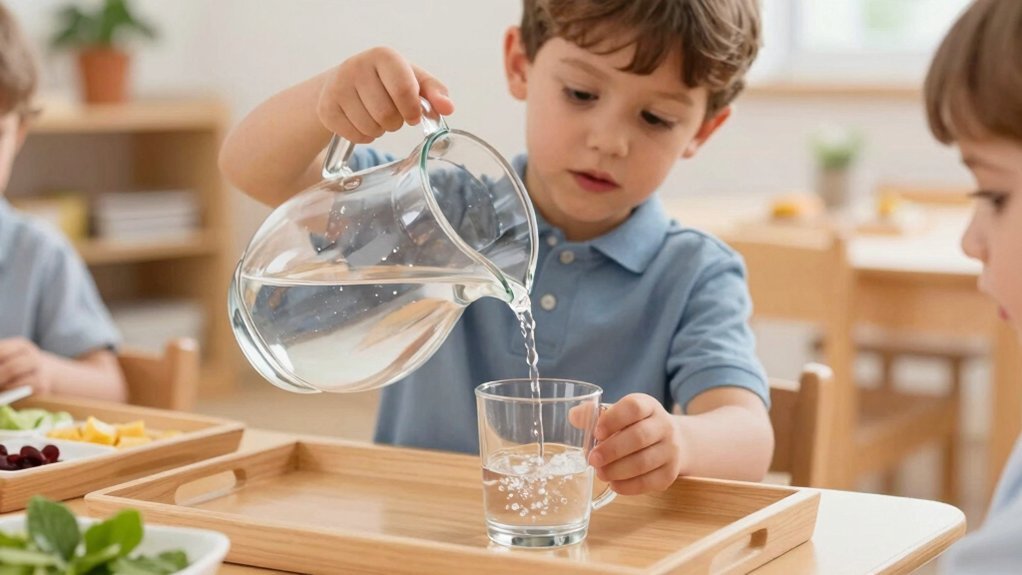
The lift‑pour‑return rhythm that sharpens concentration also trains the muscles in a child’s hands. When you hand a child a small pitcher, the first step is the grasp: they wrap both hands around the handle, feeling the weight and learning a two‑handed grip that mirrors a future pencil grasp.
Next, they tilt the pitcher, adjusting wrist angle to control the water’s flow, which hones hand‑eye coordination and proportional release.
Finally, the release phase—returning the pitcher and emptying it—requires a smooth, controlled motion that reinforces steadier hand control. Each cycle offers tactile feedback; if water spills, the child stops, wipes, and readjusts, internalizing self‑correction and precise motor planning.
This systematic practice builds the fine‑motor foundation essential for writing, drawing, and everyday tasks. Using water pouring activities with Montessori teaching aids specifically designed for small hands ensures proper posture and control during practice.
How Montessori Water‑Pouring Teaches Respect for Materials and the Environment
You’ll notice that handling the tiny pitcher and tray makes you treat them as valuable tools, not disposable items. By pouring slowly, stopping before overflow, and returning water to its source, you learn to minimize waste and respect the environment. This mindful play builds a habit of caring for both the materials you use and the world around you. Incorporating tools with washable components further enhances this respect by encouraging reuse and reducing waste.
Caring For Materials
A simple water‑pouring activity instantly teaches you to treat materials with care. You lift a child‑sized pitcher, pour into a matching vessel, and return it, practicing precision while respecting the objects. The tray’s raised edges define the workspace, so you learn to keep water contained and avoid waste. When a spill occurs, you grab a sponge and clean it up right away, reinforcing responsibility for a tidy environment. Minimal adult input lets you decide when to stop the flow, encouraging self‑correction and mindful handling of shared resources.
- Follow the lift‑pour‑return sequence to build orderly habits.
- Use the sponge promptly, turning cleanup into a learning moment.
- Observe the water level, stopping before overflow to protect materials.
Environmental Responsibility Through Play
Ever wondered how a simple water‑pouring activity can shape a child’s sense of environmental stewardship? When you guide a child to lift a child‑sized pitcher, pour slowly into a raised‑edged tray, and stop before overflow, you’re teaching water‑care that extends beyond the classroom. The defined sequence—carry, pour, pause, clean—instills respect for the workspace and the material itself.
Spills become teachable moments: the child wipes up excess with a sponge, returning every drop to its source and learning to minimize waste. Self‑correction builds accountability, while the tactile experience links careful handling of water to broader habits of order and stewardship.
Over time, these small actions nurture a lifelong commitment to caring for the environment.
Why Minimal Adult Intervention Is Essential for Independence in Montessori Water‑Pouring
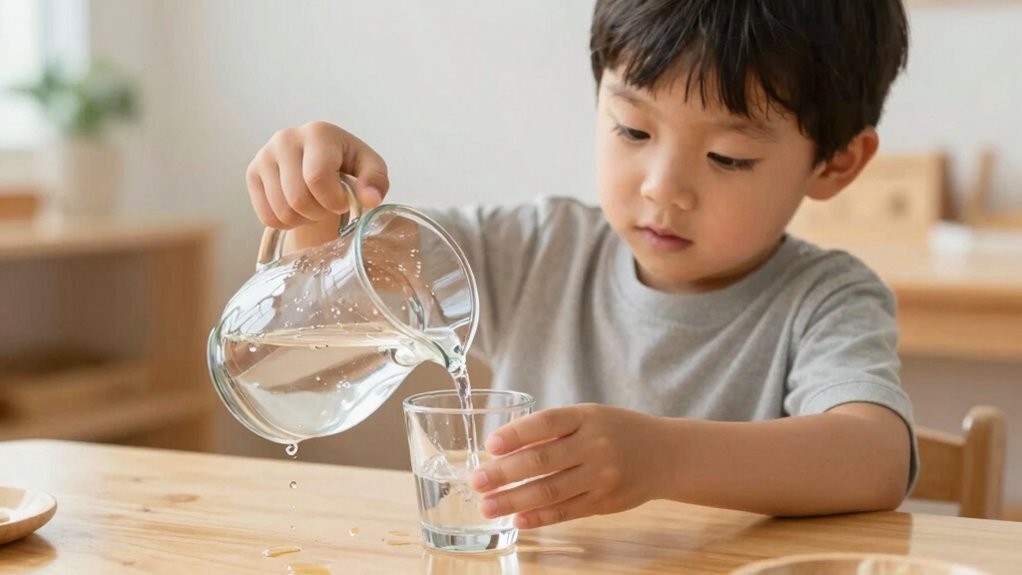
Why does it matter that you step back while a child pours? When you give them space, they own the lift‑pour‑return sequence, sharpening concentration and self‑directed problem solving. Child‑sized, real materials let them adjust grip, tilt, and pour rate without prompting, turning each spill into a learning moment. This low‑intervention rhythm builds fine motor control, hand‑eye coordination, and a sense of autonomy that carries over to other tasks.
Stepping back lets children own pouring, sharpening concentration, fine‑motor skills, and autonomous problem‑solving.
- They experience genuine independence, mastering pouring through trial and error.
- They develop fine motor skills as repeated, unassisted actions refine grip and timing.
- They internalize routine cues, learning to complete and tidy the activity on their own.
Self‑Correction and Cleanup After Spills in Montessori Water‑Pouring
How do children turn a spill into a learning moment? You’ll notice them pause, watch the water overflow, and instinctively tilt the pitcher back to stop the flow. That self‑correction sparks problem‑solving: they adjust grip, tilt, and speed, internalizing feedback that hones fine‑motor control and hand‑eye coordination.
After the pour, you’ll see them grab a sponge or cloth, wipe the spill, and return the water to its original pitcher. This cleanup routine reinforces responsibility, tidy work habits, and a sense of completion.
Minimal adult intervention lets them detect mistakes, correct them, and finish the task independently, building concentration, perseverance, and an orderly work routine that extends beyond the water‑pouring activity.
Age‑Appropriate Variations of Montessori Water‑Pouring (Dry, Colored, Funnel, Dropper)
What makes a water‑pouring activity truly adaptable is the way each variation targets a specific developmental stage. You start with dry pouring of beans or rice, letting toddlers isolate gross motor skills before handling liquid. As they gain confidence, colored water adds visual feedback, sharpening hand‑eye coordination and error detection. Introducing a funnel reduces overflow, letting you focus on tilt control and accurate transfer without constant cleanup. Finally, a dropper demands precise grip and fine motor refinement, while pouring to a line encourages estimation and self‑correction.
- Dry pouring builds sequencing and control before liquid.
- Colored water enhances visual tracking and coordination.
- Funnel and dropper variations refine tilt accuracy and grip precision.
Integrating Montessori Water‑Pouring Into Daily Routines for Lifelong Courtesy
Ever notice how a simple act of pouring water can become a daily lesson in courtesy? When you weave water‑pouring into meals, cleanup, or snack time, you turn a practical life skill into a ritual of grace and courtesy. Kids lift with two hands, pour slowly, and return the pitcher, internalizing respect for materials and others. The predictable lift‑pour‑return sequence sharpens concentration, fosters independence, and teaches turn‑taking without heavy instruction. By pairing the activity with minimal verbal cues, you model self‑control and responsibility for shared resources, reinforcing lifelong courtesy in every routine.
| Moment | Courteous Action |
|---|---|
| Breakfast | Pour juice, then rinse pitcher |
| Snack | Fill water cup, return bottle |
| Cleanup | Dry spill, place towel back |
| Bedtime | Offer a sip, store water safely |
Frequently Asked Questions
What Are the Benefits of Pouring Activity in Montessori?
You gain fine‑motor control, hand‑eye coordination, concentration, and independence; you learn self‑correction, responsibility, and precise movement, all while building confidence through repetitive, purposeful pouring practice.
What Is the Purpose of Pouring Activities?
You pour to sharpen fine‑motor control, boost concentration, and learn self‑regulation; each lift‑pour‑return sequence teaches you coordination, error‑correction, and independence, laying groundwork for later practical and academic tasks.
What Is the Purpose of Dry Pouring in Montessori?
You develop fine motor control, hand‑eye coordination, and concentration by moving dry beans or rice between containers, building the steady, deliberate motions needed before tackling liquid pouring and more complex tasks.
What Do Children Learn From Pouring Water?
You learn control, coordination, and concentration as you lift, tilt, and pour water, correcting spills, refining grip, and gaining independence through a simple, repeatable task.