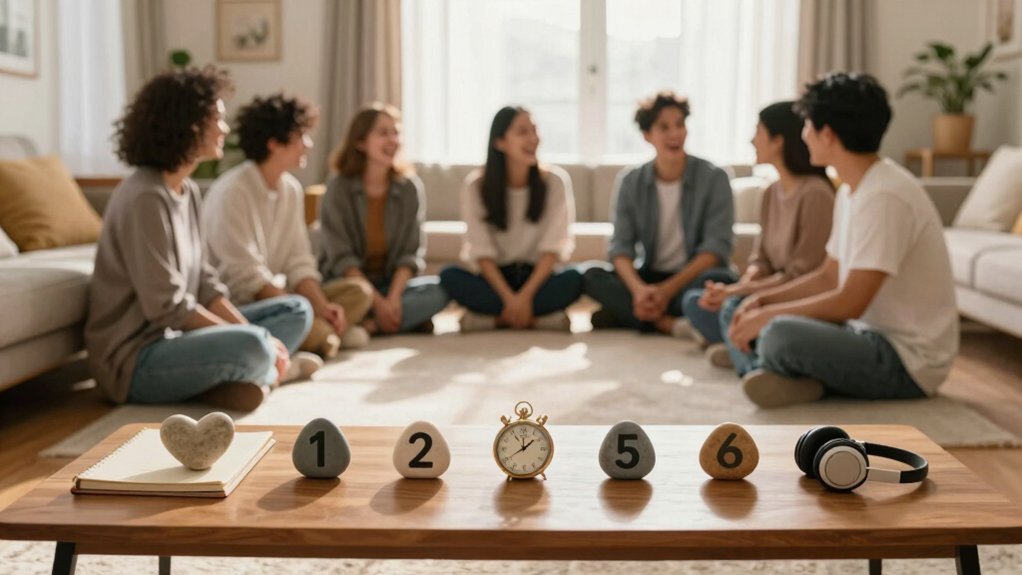

Create a 20‑minute daily calm, child‑led play block where you don’t give commands, letting imagination glide and anxiety drop. First, pause and truly listen to their tiny gestures, using comfy cushions to show trust and support. Model self‑control by recognizing your own stress triggers, stepping away briefly, then returning with a steady tone. If a morning goes off‑track, reset with a banana‑and‑milk breakfast, three deep breaths, and a positive intention, using child‑safe tools to reinforce discipline. Keep exploring these steps for deeper insights.
Start a Calm, Child‑Led Command‑Free Time
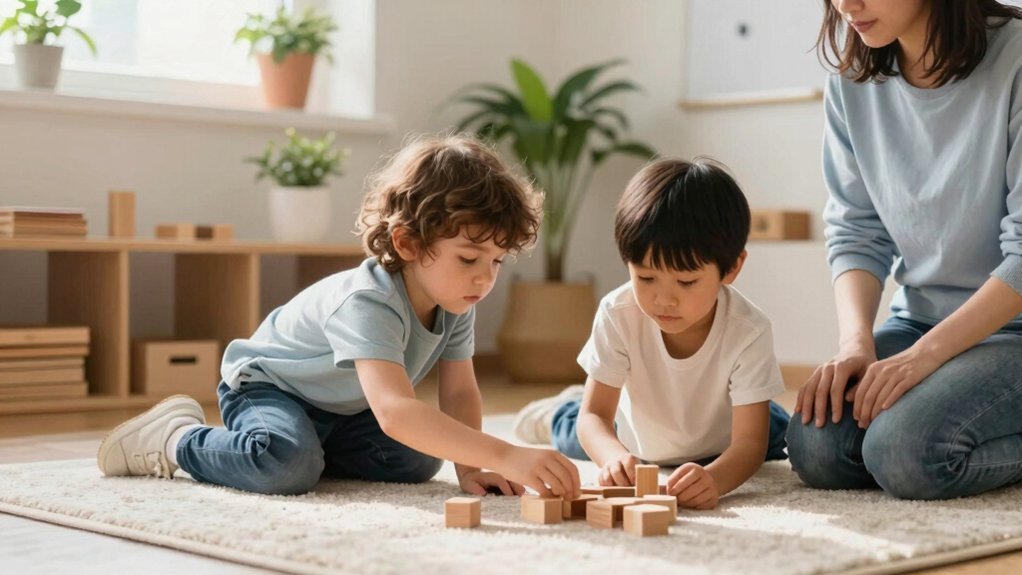
Ever wondered how a simple, 20‑minute pause can transform your child’s mood? Set aside command‑free time each day and let child‑led play take the reins. You’ll watch as trains glide, tea parties swirl, and imagination runs unchecked—no adult directives, just pure exploration. This brief, intentional pause lowers anxiety, prevents tantrums, and creates a calmer household atmosphere.
A middle child who received 20 minutes of focused, non‑intrusive play showed noticeably improved behavior and steadier self‑control. By consistently offering this space, you teach your child to regulate emotions naturally, building a foundation for later self‑discipline. The result is a more peaceful home and a child who feels heard, respected, and empowered. Using Montessori-friendly tools like a step stool with safety rail helps foster independence and confidence during these moments of self-led discovery.
Listen First to Support Command‑Free Time
Before you jump in, pause and really listen. When you give a child 20 minutes of command‑free time, your listening skill becomes the bridge to stronger self‑control. Observe the tiny gestures, the way they line up trains or pour tea, and let their world unfold without adult directives. Your quiet attention tells them you trust their ability to regulate emotions, reducing anxiety before a tantrum can spark.
Pause, listen, and let a child’s quiet play become the bridge to stronger self‑control.
- Notice patterns – watch what captures their focus.
- Validate feelings – nod, mirror language, show you’re present.
- Resist intervening – let the activity run its course.
- Reflect afterward – ask gentle questions to deepen understanding.
Comfortable and supportive seating like low reading corner cushions can enhance focus and create a calming environment during this command-free time.
Calm Down First: Model Self‑Control

How can you stay calm when a child’s outburst threatens to spiral? Recognize your own stress triggers first; if you’re aware, you can pause and model calmness instead of reacting in anger. Step away briefly to create space for self‑regulation, then return with a steady tone and purposeful language. Your measured response shows the child how to manage impulses in real time, turning a heated moment into a teaching opportunity. Emphasize self‑discipline by demonstrating, not shouting or spanking, and keep any consequences tightly linked to the behavior. This approach reinforces calm, measured response and teaches the child that self‑control is achievable through thoughtful, calm actions. Integrating age-appropriate tools such as 4–6 inch utensil lengths can also help children develop fine motor skills and patience during learning activities.
Reset the Day With a Do‑Over Routine
When a morning feels off‑track, a quick Do‑Over routine can reset the entire day. You’ll notice how a simple banana‑and‑milk breakfast signals a fresh start, giving both you and your child a moment to breathe. This pause builds self‑control, letting you return to tasks with renewed perspective while extending grace to yourself. The routine also models emotional safety, showing that a reset isn’t a failure but a compassionate choice.
- Pause, acknowledge the stumble, and take three deep breaths.
- Sip a banana‑milk blend, feeling the nutrients fuel focus.
- State a positive intention for the next hour.
- Re‑engage the activity, keeping an eye on self‑control cues.
Introducing tools like child-safe tongs can further enhance fine motor skills and self-discipline during play or practical tasks.
Frequently Asked Questions
What Is the 3 3 3 Rule for Kids?
You follow the 3‑3‑3 rule by pausing three minutes before reacting, waiting three hours before deciding on something big, and delaying three days before committing long‑term, which builds your self‑control.
What Are Some Ways to Develop Self-Control in Children?
You can build self‑control by setting clear, short‑term goals, modeling calm responses, using “pause‑and‑think” cues, offering choices with limits, and practicing brief, consistent consequences after misbehavior.
What Are the 5 C’s of Self Discipline?
You’ll find the five C’s are Consistency, Calmness, Conscience, Control, and Commitment—each one helps you teach kids to regulate impulses, pause before reacting, reflect morally, manage actions, and stay dedicated.
What Is the 7 7 7 Rule for Parenting?
You apply the 7‑7‑7 rule by setting expectations or consequences that last seven minutes for immediate redirection, seven days for weekly reinforcement, and seven weeks for long‑term habit solidification.