Tailor daily routines to your child’s temperament, interests, and developmental stage, and you’ll boost confidence and school readiness. Use play‑based activities that match their curiosity, keeping each segment short (5–15 minutes) to stretch attention and nurture executive function. Partner with caregivers to share observations, set personalized goals, and celebrate small wins, turning everyday moments into structured, joyful learning. Keep exploring for more practical strategies that deepen readiness.
Why Tailored Routines Build Confidence for School Readiness

Why does a tailored routine matter for your child’s confidence? You’ll see that customized daily patterns directly boost school readiness by matching activities to your child’s individual development. In early childhood, you can weave family input into meals, play, and bedtime, making each moment developmentally appropriate. Ongoing assessment and informal observations let you spot strengths and gaps, so you adjust the routine before challenges become obstacles. Proactive social‑emotional supports—like responsive caregiving and inclusive play—help your child regulate emotions and build self‑esteem. When you honor your child’s temperament and interests, you create a predictable yet flexible environment that nurtures confidence, laying a solid foundation for future learning and successful school transition. Using educational tools that emphasize individual readiness and developmentally appropriate skills can further enhance this personalized approach.
Designing Play‑Based Routines That Foster Curiosity and School Readiness
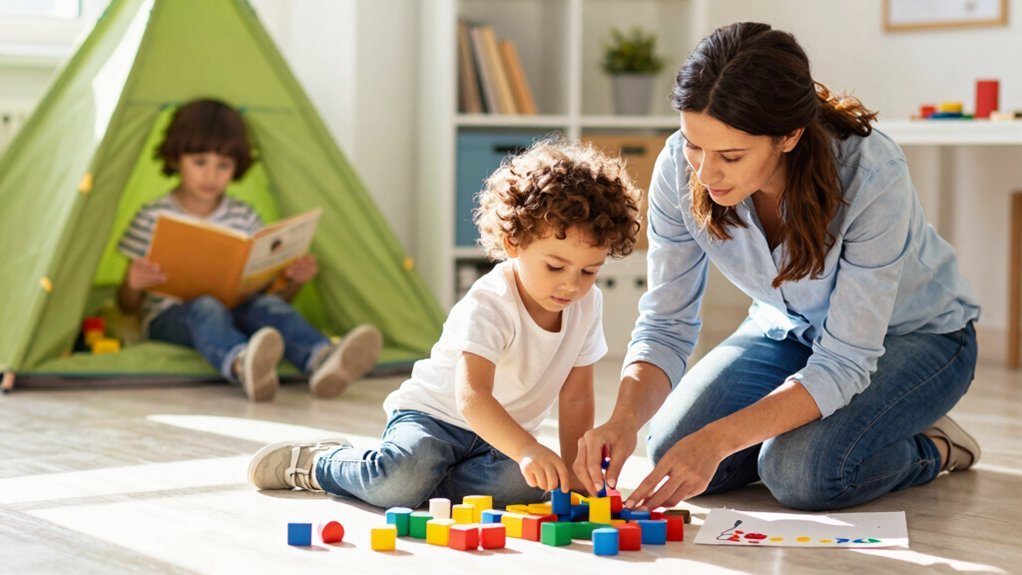
How can you turn everyday play into a powerful learning engine? Build play‑based routines that match each child’s interests and developmental level, weaving exploration into baths, walks, and storytime. Keep activities age‑appropriate and hands‑on, lasting 5–15 minutes, so they stretch attention while nurturing executive function. Use restorative conflict guidance to boost social‑emotional development and self‑regulation. Partner with caregivers: share observations, set individualized goals, and celebrate small wins. This caregiver partnership creates a seamless transition to preschool, as children practice planning, flexible thinking, and language in low‑stress contexts. By respecting individualized development, you turn simple play into a structured yet joyful pathway toward school readiness. Incorporating age-appropriate storage solutions can further support independent cleanup and organization, reinforcing responsibility in early learners.
Choosing Activities That Support School‑Readiness Development

What activities truly set a child on the path to school success? You’ll pick tasks that nurture social‑emotional skills, self‑help skills, and emotional regulation while respecting developmentally appropriate pacing. Home visitors can shape family‑informed plans, and readiness assessments guide individualized plans that honor secure attachments and smooth transitions to group settings.
| Focus | Example Activity | Goal |
|---|---|---|
| Social‑emotional | Role‑play sharing circles | Build empathy, peer interaction |
| Self‑help | Dress‑themselves stations | Foster independence, daily routines |
| Emotional regulation | Calm‑down corner with sensory tools | Teach coping strategies |
| Group transition | Small‑group story time | Ease entry into classroom dynamics |
Using Montessori-friendly tools such as a step stool with safety rail can further support a child’s growing independence by allowing safe and confident access to learning environments.
Frequently Asked Questions
What Are the 5 C’s of Child Development?
You’ll find the 5 C’s are Calmness, Cooperation, Communication, Curiosity, and Critical thinking—each skill you nurture through responsive caregiving, modeling language, collaborative play, and guided exploration.
What Is the Most Important Readiness Skill for All Children?
You’ll find that social‑emotional readiness—self‑regulation, relationship building, and clear communication—is the single most essential skill for every child’s success in school and beyond.
What Are the 5 R’s of Managing Behavior?
You use Restorative Practices, respect viewpoints, assign responsibility, reflect on feelings and solutions, and reintegrate the child into the group with collaborative problem‑solving.
What Are Effective Strategies for Guiding Children’s Behavior?
You guide behavior by offering calm explanations, setting clear expectations, using non‑punitive consequences, encouraging emotional reflection, and involving children in problem‑solving, so they learn self‑regulation and empathy.