
Natural child development pacing means you follow your kid’s unique rhythm instead of forcing milestones. You let growth unfold at its own speed, pausing when they need time to process and offering rich, responsive experiences that match their interests. Genetics set a baseline, while prematurity or home environment can tweak the tempo, so flexible, low‑pressure interactions nurture neuroplasticity. By observing, documenting strengths, and avoiding comparisons, you support healthy progress—continue to discover how to spot red flags and when professional guidance can help.
What Is Natural Child Development Pacing?

What exactly is natural child development pacing? You recognize that early development follows each child’s own timeline, so milestones are flexible guides, not rigid rules. You notice growth isn’t linear—one child may walk later but solve puzzles early, and you adjust your expectations accordingly. Pacing means you slow your interactions, pause for the child’s response, and avoid over‑instruction that can overwhelm. You provide responsive, multi‑sensory support that nurtures neuroplasticity without pressuring fixed outcomes. You adapt activities to the child’s pace, document progress respectfully, and create rich, exploratory environments. By honoring the child’s unique rhythm, you foster confidence, curiosity, and steady progress across all developmental domains. Just as quick response time is crucial for accurate cooking thermometers, timely responsiveness is key in supporting effective child development pacing.
Genetics, Prematurity & Home Environment: Their Impact on Developmental Pace
How do genetics, prematurity, and the home environment shape a child’s developmental rhythm? Your child’s DNA sets the baseline tempo, but it isn’t destiny. Genetics lay the blueprint for motor, language, and social growth, while prematurity can temporarily slow early milestones because the baby missed essential in‑womb development. Birth complications—low weight, infections, injuries—add brief pauses, yet most kids catch up as their bodies and brains mature. The home environment then fine‑tunes the pace: responsive caregiving, rich language, and safe exploration can accelerate progress within each domain. Incorporating hands-on, age-appropriate materials like Montessori magnet kits can further support and enrich developmental pacing through interactive learning.
Practical Ways Parents Can Support Natural Child Development Pacing Without Pressure
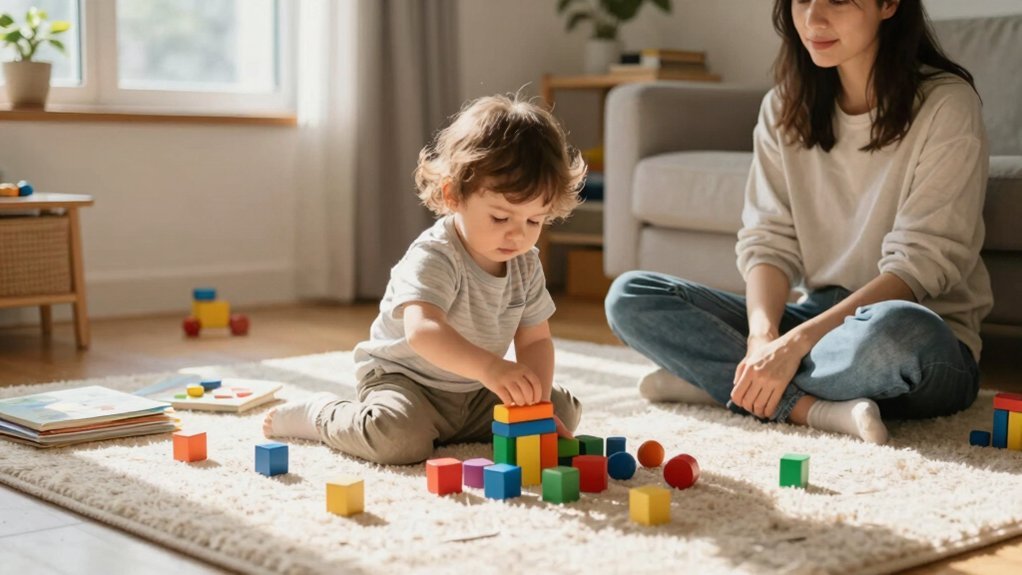
Ever wondered how to nurture your child’s growth without turning milestones into a race? You can start by practicing responsive interactions—pause after you ask a question, give your child time to reply, and match your pace to theirs.
Build daily routines that favor connection and exploration: read together, play with hands‑on toys, and let transitions flow naturally instead of sprinting. When a skill isn’t ready, adapt the activity; for example, use crawling‑based motor tasks if walking isn’t on the table.
Keep a simple log of observations, noting strengths and patterns without comparing to peers. Use a calm, supportive tone and avoid labels. Early intervention works best when it feels like patience and presence, not pressure.
Choosing tools that promote independence, such as a Montessori step stool, can also support development by empowering children to safely explore their environment.
When to Seek Professional Guidance for Developmental Delays or Concerns
When should you call a professional about your child’s development? You should act if you notice early signs that your child isn’t meeting typical milestones or if you see any regression. Trust your instincts, but let concrete observations guide you. Prompt evaluation can uncover developmental delays and connect you with resources before gaps widen.
Act early: notice signs or regression, trust instincts, and seek professional evaluation promptly.
- No babbling by 12 months, no single words by 16 months, or no pointing gestures by 18 months.
- Sudden loss of previously acquired skills, persistent unresponsiveness to social cues, or inability to engage in age‑appropriate play by 24 months.
- Multiple missed milestones across motor, language, and social domains, or any medical red flag such as seizures or known genetic risk.
If any of these occur, schedule a pediatrician visit and consider a formal developmental screening. Early intervention improves outcomes and eases future challenges. Additionally, incorporating Montessori-inspired developmental toys can support early learning and fine motor skill development during this critical period.
Frequently Asked Questions
What Is the Definition of Developmental Pacing?
Developmental pacing means you pause after prompting a child, letting them process and respond at their own speed, rather than rushing them, so you respect their natural learning rhythm and avoid overwhelm.
Is Pacing Normal for Toddlers?
Yes, pacing’s normal for toddlers; you’ll notice they naturally slow down or speed up activities based on their attention and energy, and you should match your interaction speed to keep them comfortable and engaged.
What Are the 5 Stages of Child Development?
You’ll see five stages: infancy (0‑2 years), early childhood (2‑6 years), middle childhood (6‑12 years), adolescence (12‑18 years), and emerging adulthood (18‑25 years). Each phase brings distinct physical, cognitive, and social milestones.
What Are the 3 Core Standards of DAP According to NAEYC?
You follow DAP’s three core standards: design age‑appropriate activities, tailor responses to each child’s unique abilities, and embed socially and culturally appropriate practices that honor diverse backgrounds.