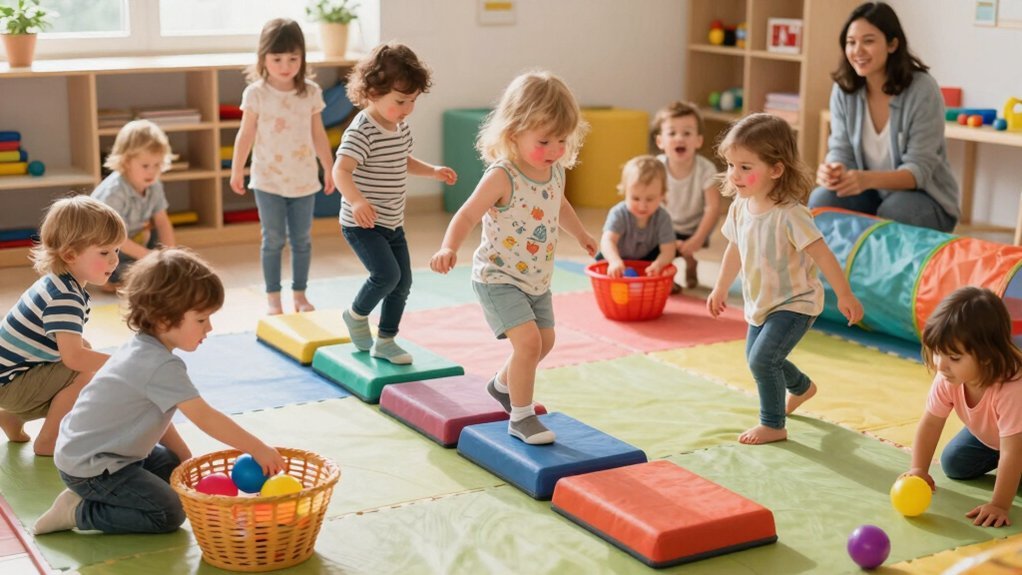
You can spark your toddler’s brain with ten simple, safe movement activities: start with rhythm‑driven pot‑marches using lids and spoons, then try animal‑inspired crawls, hops, and flies for whole‑body coordination. Add a balance‑beam tape path to strengthen the core, and play soft‑ball tosses with oversized balls for hand‑eye skill. Use a push‑pull toy parade to boost walking, and set up imaginative prop play like baskets as trains. These fun, structured moves build confidence and learning—keep exploring for even more ideas.
Why Movement Boosts Toddler Learning
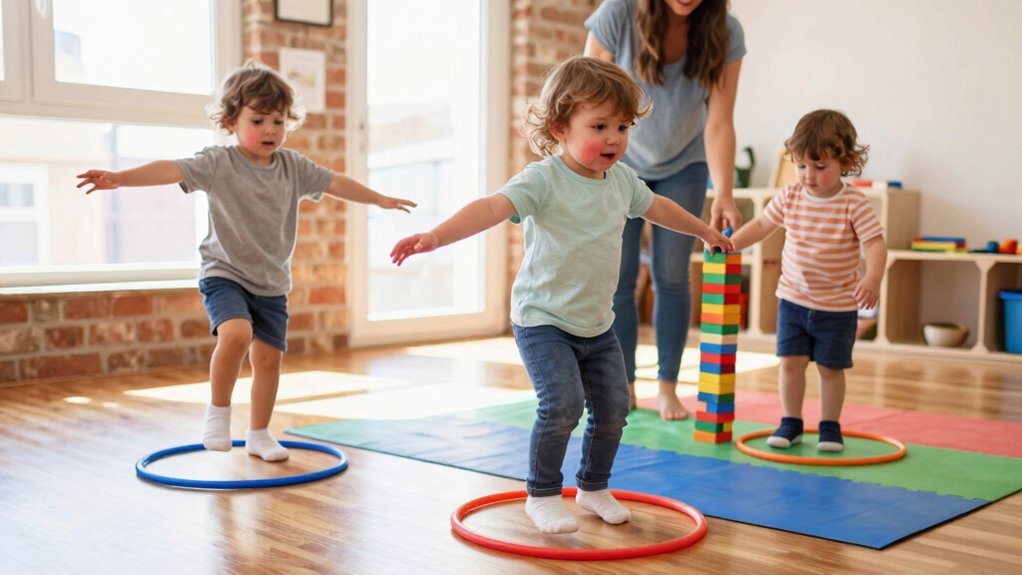
Why does movement matter for your toddler’s learning? You’ll see that active play fuels physical development, sharpens cognition, and builds emotional resilience. When your child runs, jumps, or climbs, they’re strengthening gross motor skills that underpin balance, coordination, and endurance. Those core abilities translate into smoother handwriting, better posture, and more confidence in tackling new tasks.
Diverse movement experiences—like crawling, twisting, or tossing a ball—spark imagination, stretch attention spans, and reinforce memory. Structured, play‑based sessions also nurture teamwork and a sense of belonging, helping your toddler feel secure while exploring. By weaving locomotor, non‑locomotor, and manipulative actions into daily routines, you create a rich environment that supports problem‑solving, self‑esteem, and lifelong learning. Using tools such as Montessori-friendly step stools encourages independence and physical engagement during these activities.
Music‑Driven Rhythm Activities for Toddlers
Ever wonder how a simple beat can turn a living room into a learning lab? You can turn pot lids into cymbals and spoons into drums, marching around a makeshift parade that sharpens auditory‑motor coordination. Play “Happy Birthday” or a rhythmic chant, pause, pick a flashcard, and say a sentence like “It’s a cat.”
Set up a circle where you follow a teacher‑chosen melody, adding verbs—clap, march, walk, dance—as you progress to present‑continuous forms. Use tempo cues to guide safe, space‑aware movement, letting children anticipate and sync actions. Pair the rhythm with story prompts, letting them role‑play a character while maintaining beat timing. This blend of music, movement, and language builds focus, memory, and expressive skills.
Animal‑Inspired Crawls, Hops, and Flies
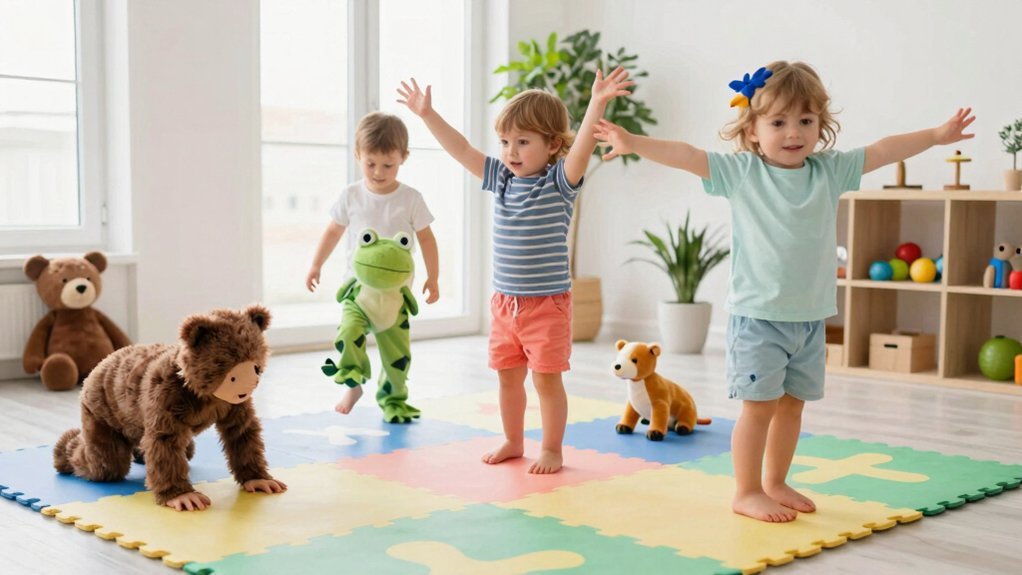
A quick, fun way to boost toddlers’ whole‑body coordination is to let them imitate animal movements—crawling like a worm, hopping like a frog, or fluttering like a butterfly. Set up a safe, open space with clear pathways so they can move freely without bumping into furniture. As they crawl, they engage core muscles and learn directional awareness while navigating obstacles. When they hop, they develop leg strength, balance, and timing, pretending to spring across a pond. The butterfly flutter encourages light, arm‑wide motion that builds shoulder stability and imagination. Start with single actions, then combine them into a sequence—crawl, hop, fly—to challenge endurance and motor planning. Keep the play age‑appropriate, lively, and supportive, and watch their movement skills flourish.
Soft‑Ball Toss & Target Games
You’ll see your toddler’s hand‑eye coordination sharpen as they aim soft balls into baskets, and the simple goal‑setting of hitting a target builds confidence.
By varying distances and angles, you keep the challenge fresh while encouraging them to focus on the task.
Playing turn‑by‑turn with a sibling or caregiver also nurtures social turn‑taking and cooperative play.
Hand‑Eye Coordination Development
Soft‑ball toss and target games give toddlers a fun, low‑impact way to build hand‑eye coordination while strengthening large‑motor skills. You’ll pick a soft, oversized ball that’s easy to grip, then set up a basket or box as a target. Tossing the ball into the target hones aiming accuracy and encourages spatial awareness. You can vary the distance, start close and gradually step back, letting the child adapt to longer throws. Mix in rolling and kicking to keep the movement dynamic, and use indoor or outdoor spaces that are safe for precise catching and throwing. Add simple imitative motions—like copying a teacher’s toss—to deepen hand‑eye coordination while keeping the activity engaging. These activities also promote cognitive, language, and motor skills development in toddlers, supporting overall growth.
Simple Goal‑Setting Practice
Building on hand‑eye coordination, you can turn the soft‑ball toss into a simple goal‑setting exercise. Place a basket or box within reach, explain that each successful toss earns a smile, and watch your toddler aim with purpose. As accuracy improves, increase the distance or add another target, turning play into measurable progress. Vary ball size or number of targets to match energy levels, keeping the activity fresh and motivating. This structured tossing builds gross‑motor control while reinforcing the concept of setting and achieving a goal, laying a foundation for future learning. Incorporating sensory activities like olfactory discrimination alongside physical games can further enhance cognitive development.
| Target | Distance | Reward |
|---|---|---|
| Small basket | 2 ft | Sticker |
| Medium box | 3 ft | High‑five |
| Large bin | 4 ft | Extra story time |
| Floor hoop | 5 ft | Snack |
| Wall target | 6 ft | Play‑date invitation |
Social Turn‑Taking Skills
When kids wait for their turn to toss the soft ball, they’re learning patience, anticipation, and how to signal readiness with a simple “my turn” gesture. You’ll notice that using a soft or oversized ball keeps play safe while they practice shared anticipation and waiting behavior. Encourage them to request or offer turns with a quick “my turn” or a hand‑raise, reinforcing turn‑taking through clear, predictable rotations.
Target games add a cooperative problem‑solving layer; children negotiate aiming spots, decide who goes next, and celebrate each successful pass. Positive reinforcement—cheers, smiles, or a sticker—cements the routine, turning movement‑based play into a natural lesson in social turn‑taking skills. Incorporating hands-on learning activities like magnetic exploration kits can further enhance fine motor skills and cognitive development during play.
Balance‑Beam Tape Path for Core Strength
You’ll notice how walking the taped line engages your toddler’s core, building stability with each step.
Keep the tape wide at first, then narrow it gradually to boost balance while you clear the area of obstacles and stay close for safety.
Supervise closely, ensure the floor is slip‑free, and keep the beam low enough for a safe fall zone.
Core Strength Benefits
Stepping onto a taped balance‑beam path forces toddlers to engage their core, sharpening trunk stability and postural control. You’ll notice how each deliberate step activates deep abdominal muscles, giving them a solid “core” foundation for later movement. As they walk the narrow line, slow, controlled motions improve proprioception, letting them sense where their body parts are in space. This heightened body awareness translates to better posture when they run, jump, or climb. Varying the tape’s texture or width keeps the challenge fresh, prompting stronger engagement each time. Incorporating this balance1 activity into daily play also builds endurance and focus, encouraging coordinated, multi‑segmental movement that supports overall toddler development. Using storage solutions with anti-tipping hardware can also help maintain a safe environment for active toddlers during play.
Safety Tips for Use
Where can you set up a balance‑beam tape path so it stays safe and fun? Choose a clear, open floor away from furniture, with enough space for a toddler to step off the line without hitting anything. Remove rugs, toys, and cords, then lay a non‑slip tape strip. Keep the path short at first, and add visual cues like flashcards at each end to guide focus. Supervise closely, offering a hand for support until confidence builds. Gradually extend the line or add a gentle wobble, always checking that the surrounding area remains free of hazards. Pair the activity with a simple story—crossing a river or a bridge—to keep anxiety low and safety high. Using materials with non-toxic coatings ensures the environment remains safe for toddlers during movement activities.
| Area | Action | Reason |
|---|---|---|
| Floor | Clear clutter | Reduces fall risk |
| Tape | Use non‑slip material | Enhances grip |
| Ends | Place visual cards | Guides attention |
| Supervision | Stay within arm’s reach | Ensures immediate help |
| Extension | Add length slowly | Maintains safety control |
Bubble‑Chase Tracking and Reaching Exercise
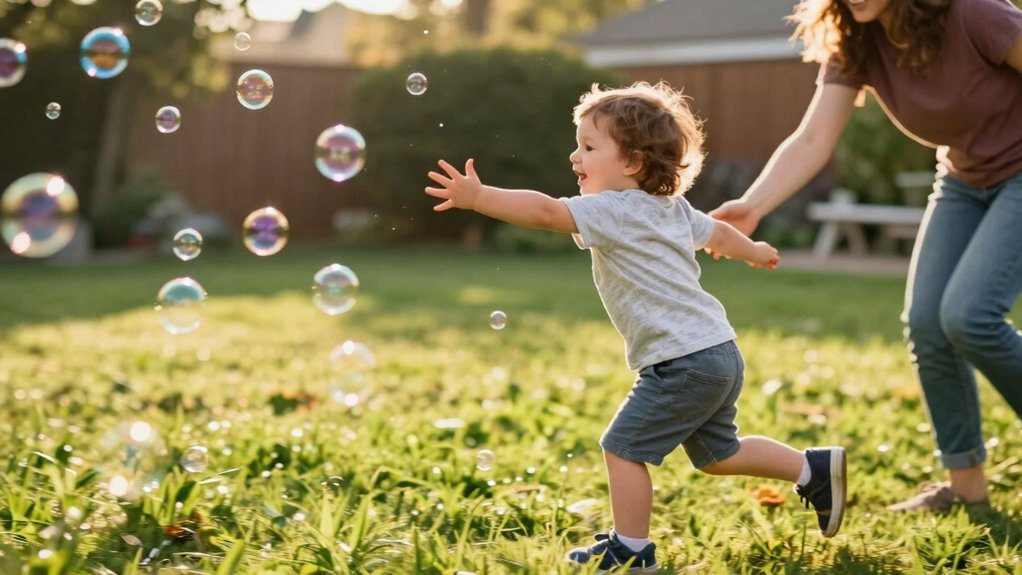
Curious how a simple bubble can turn playtime into a mini‑workout? You’ll see your toddler’s eyes lock onto floating spheres, then darting after them. The Bubble‑chase game forces visual tracking as the bubble drifts high, swoops mid‑air, and settles near the floor. When they stretch, bend, or step to pop it, hand‑eye coordination sharpens and finger precision improves.
Varying heights challenges postural control, prompting knee and ankle engagement while they chase. The glossy, gently popping bubbles add sensory joy without harsh noise, keeping motivation high. Keep the area clear of toys and furniture, and use soft‑wand bubbles to avoid eye irritation or slips. This simple routine blends gross motor moves with fine motor focus, boosting overall development. Incorporating hands-on learning engagement techniques like tactile activities can further support developmental growth during play.
Push‑Pull Toy Parade for Walking Skills
A push‑pull toy parade turns everyday walking practice into a fun, confidence‑building routine. You’ll notice your toddler’s posture straighten as they grip a sturdy handle and step forward, then backward, feeling the toy’s stability under their weight. The rhythmic push and pull encourages coordinated leg movement and helps them shift weight smoothly, reinforcing balance.
Set up a safe, open space and let them explore a small wagon or stand‑up push toy, integrating it with other large‑motor play. Supervision keeps the area fall‑free while the activity naturally blends into daily routines, making locomotor skill development feel effortless and enjoyable.
- The thrill of mastering a new stride
- The joy of hearing wheels roll beneath tiny feet
- The pride of completing a mini‑parade around the room
- The comfort of a familiar, textured handle guiding each step
Rhythm Marches Using Pots, Lids, and Spoons
You’ll set up a safe space with sturdy, easy‑to‑grab pots, lids, and spoons, making sure nothing’s sharp or heavy.
Then you’ll guide the kids to march in time, letting the clatter of lids become cymbals and the tap of spoons a steady drum beat.
This simple rhythm and beat focus builds gross‑motor coordination while keeping the materials child‑friendly.
Ist Rhythm and Beats
Ever wonder how a simple kitchen pot lid can turn a hallway into a lively parade? You can spark a rhythm march by handing each toddler a lid or spoon, then cueing a steady beat as you all march forward. The clink of metal and the thump of wood give clear auditory markers that help kids predict the next beat and sync their steps. As they move, they’re also practicing gross‑motor coordination and auditory processing, turning ordinary objects into musical instruments that reinforce multimodal learning.
- The lid’s bright clang sparks excitement.
- The spoon’s warm thud invites confident strides.
- marching marching tempo builds focus and anticipation.
- Shared rhythm creates a joyful, cooperative atmosphere.
Safe Materials and Setup
Where can you find the safest setup for a rhythm march? You’ll want an open, uncluttered floor where toddlers can stride without tripping. Choose sturdy, lightweight pots, metal lids, and wooden spoons; they’re easy to grip and won’t shatter. Keep the area free of cords and toys, and lay down a non‑slip rug if the surface is slick. Demonstrate the beat slowly, letting each child hear the lid’s “clang” and feel the spoon’s “tap” before they join. Supervise closely, and keep the props within arm’s reach so you can intervene instantly if a toddler drops a lid or wanders too far.
| Prop | Safety Tip |
|---|---|
| Pot lid | Use plastic‑coated metal, avoid sharp edges |
| Spoon | Choose wooden or silicone, no splintering |
| Pot | Empty, lightweight, no hot contents |
Imaginative Prop Play: Baskets as Trains
Often a simple basket becomes a rolling train, turning ordinary movement time into vivid pretend play that sharpens narrative skills. You’ll notice how imaginative play transforms a soft basket into a locomotive, inviting toddlers to push, pull, and shuffle between “cars.” As they chant “All aboard the green car,” they practice sequencing, follow directions, and describe destinations, which fuels language growth. The open‑space setup lets them sprint, turn, and negotiate space, building gross‑motor confidence while staying safe. You’ll hear giggles ripple through the room as they collaborate, invent stories, and celebrate each stop.
- The thrill of a moving “train” sparks excitement.
- Soft baskets keep play safe and gentle.
- Cooperative shuffling nurtures teamwork.
- Narrative chants boost vocabulary and sequencing.
Ride‑On and Pull‑Wagon Exploration for Leg Power
A ride‑on or pull‑wagon becomes a portable gym for toddlers, letting them shift weight, balance, and propel themselves while strengthening leg muscles.
You’ll notice them wobbling at first, then mastering weight‑shifting movement as they push off the ground.
Place the toy on carpet, grass, or a smooth hallway to keep the motion fluid and safe.
Encourage them to pull a small wagon while walking; the resistance builds coordinated gait and leg power.
Alternate between ride‑on and pull‑wagon play to vary the challenge and keep the rhythm lively.
As they explore indoor and outdoor spaces, they develop gross‑motor confidence, improve balance, and enjoy active movement that fuels progressive mobility growth.
Frequently Asked Questions
How Much Daily Movement Is Ideal for Toddlers?
You should aim for at least an hour of active play each day, mixing free‑movement, structured games, and outdoor exploration, so your toddler gets enough physical stimulation to support growth and learning.
Can Movement Activities Replace Traditional Academic Lessons?
You can’t fully replace traditional lessons with movement, but you can weave active play into learning. It reinforces concepts, boosts attention, and builds skills, so blend both for balanced development.
What Safety Precautions Are Needed for Indoor Obstacle Courses?
You’ll need to clear the area, pad hard edges, supervise constantly, use non‑slip mats, secure loose items, keep obstacles low, and check for sharp corners or hazards before each session.
Do Toddlers Need Special Footwear for Balance‑Beam Exercises?
You should choose soft‑soled, flexible shoes with non‑slip soles; they let toddlers feel the beam, maintain grip, and avoid stiff, heavy footwear that could hinder balance and increase injury risk.
How Can Parents Adapt Activities for Children With Sensory Sensitivities?
You can modify activities by lowering volume, using soft lighting, offering textured props, allowing breaks, and providing clear, simple instructions; keep movements gentle, predictable, and give the child control over pace.



Leave a Reply