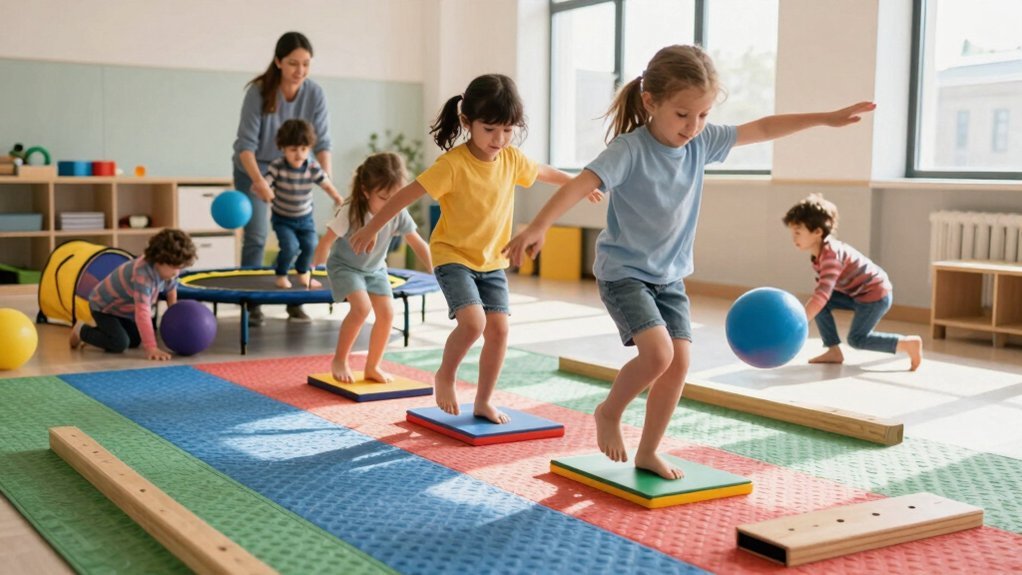
You can boost kids’ neural pathways by mixing cross‑crawl play, balance‑beam walks, and quick proprioceptive breaks like wall push‑ups or weighted backpack lifts. Those moves fire the cerebellum, cortex, and prefrontal areas, sharpening attention, coordination, and executive function. Adding rhythmic jumps, patterned claps, or binomial‑cube drills deepens bilateral integration, while mindful breathing and body‑scan pauses calm the nervous system. Keep exploring these strategies to discover even more ways to nurture brain wiring.
Boost Brain Wiring With Movement Activities for Children
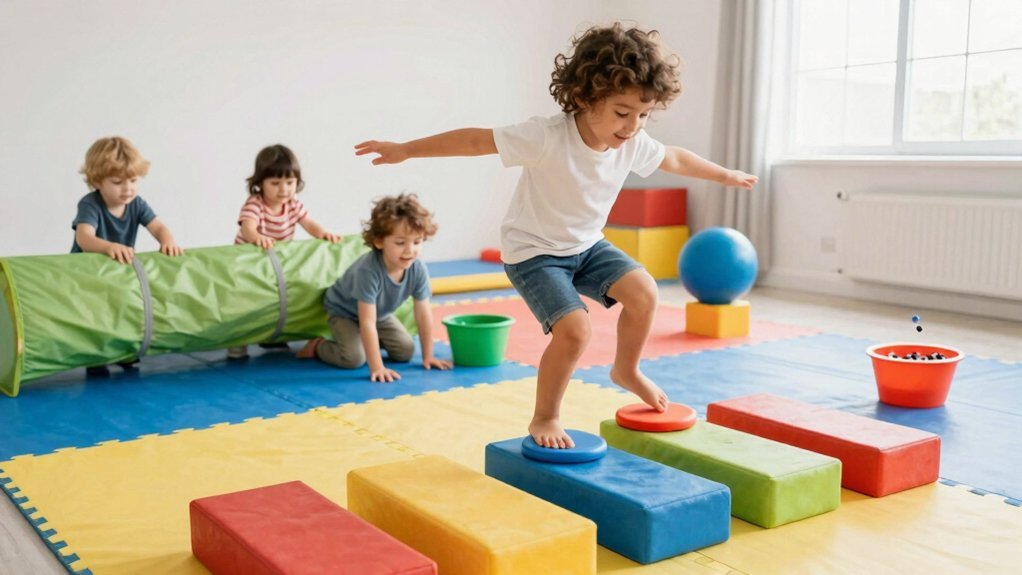
Jump into play, and you’ll spark neural activity across the cerebellum and cortex, wiring your child’s brain through natural circuits that boost motor, cognitive, and executive functions. When children engage in movement, they create robust neural pathways that reinforce brain wiring essential for executive function.
Simple motor activities—running, jumping, climbing—challenge balance and coordination, prompting the prefrontal cortex to grow connections that support planning and self‑control.
Free, self-directed play lets kids experiment with space, rhythm, and force, strengthening bilateral integration and attention.
Incorporating tactile and visual stimulation with materials like the Montessori Brown Stair promotes visual discrimination and fine motor skills development during movement activities.
Activate Both Hemispheres Using Cross‑Crawl Play
Ever wonder how a simple game of “crab walk” can fire up both sides of your child’s brain? When you guide them into a cross‑crawl, they swing opposite arms and legs, engaging bilateral motor pathways that boost hemispheric integration. This pattern forces inter‑hemispheric communication through the corpus callosum, sharpening coordination and cortical planning. The movement also delivers rich proprioceptive feedback and vestibular input, sharpening spatial awareness and body schema.
As they repeat the pattern, executive function circuits light up, improving focus, working memory, and self‑regulation. Regular cross‑crawl play strengthens neural networks that underlie motor control, attention, and cognitive processing, laying a solid foundation for learning and development. Using tools like the Comfy Cubs Kids Step Stool Montessori Tower can further encourage independence and motor skill growth through safe, hands-on engagement in daily activities.
Use Proprioceptive & Vestibular Breaks for Focus
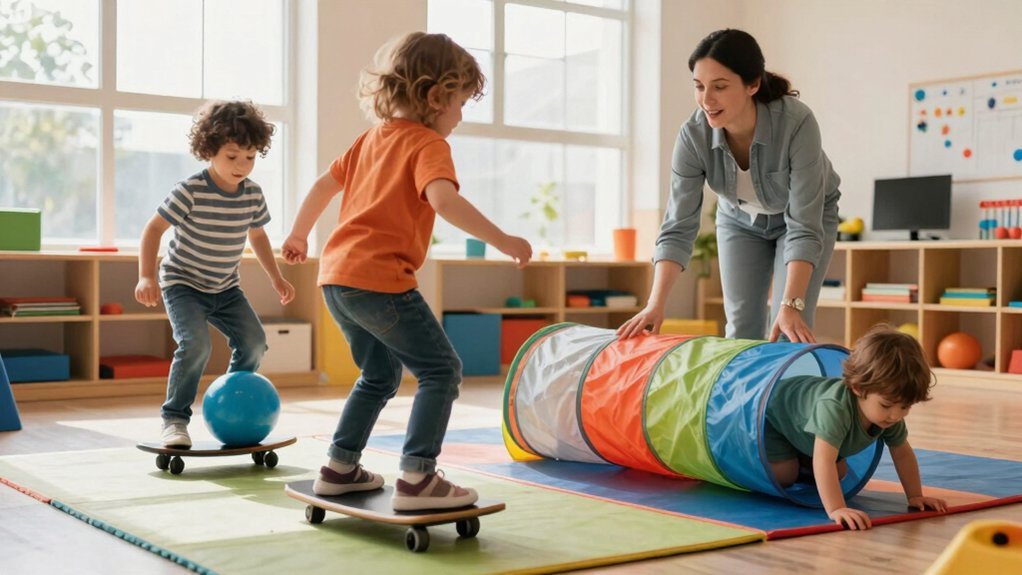
You can give kids a quick proprioceptive or vestibular break to reset their nervous system and sharpen focus. Heavy‑work moves like wall push‑ups or balance challenges such as cross‑crawls fire tactile and inner‑ear inputs, boosting attention control.
These short, purposeful activities strengthen visual‑motor planning and eye‑hand coordination, keeping them engaged in the next task. Using mirrors with natural wooden frames can further enhance visual self-recognition during these movement activities.
Balance BalanceVestibularInput
How can a quick, 3‑minute balance break sharpen a child’s focus? You can stand on a wobble board, walk a low beam, or do a single‑leg stance while counting breaths. This vestibular challenge fires the cerebellar system, boosting coordination and spatial awareness. Simultaneously, the proprioceptive load from shifting weight engages muscles and joints, reinforcing body awareness. The cross‑body adjustments required create interhemispheric communication, strengthening the corpus callosum and linking the brain’s halves. Within minutes, neural pathways reset, arousal steadies, and attention spikes. By inserting these short, multi‑plane balance breaks between lessons, you give the nervous system a reset, reduce mental fatigue, and prime the child for focused learning. Integrating tactile-rich materials such as those found in Montessori stereognostic mystery bags can further enhance sensory processing during these breaks by developing stereognostic sense.
Explain TactileBody
Why not give your child a quick “tactile‑body” reset? A short 3‑minute break that mixes proprioceptive and vestibular cues can jump‑start brain connectivity. Have them lift a weighted backpack, do wall push‑ups, or hug a bear‑sized pillow for deep pressure.
Follow with a quick spin, a balance‑beam step, or a jump‑rope burst to stimulate the inner ear. This tactile‑movement combo floods neural pathways with rich sensory input, sharpening sensory processing and calming arousal.
The heavy work activates the cerebellum while the vestibular motion engages the prefrontal cortex, fostering bilateral integration. Kids transition smoother, sustain focus longer, and build stronger neural connections—all in a brief, fun movement break.
Including structured activities like pounding pegs with a hammer can further support fine motor skills and hand-eye coordination development, enhancing neural pathway strengthening through tactile input.
Boost AttentionControl
A quick “tactile‑body” reset already shows how short, heavy‑work bursts can calm the nervous system; now add a focused proprioceptive and vestibular break to sharpen attention. You’ll notice that movement‑based activities—like a quick cross‑crawl or wall push‑up—fire the vestibular system and proprioception, delivering the heavy‑work input that steadies arousal. Bilateral movement patterns activate interhemispheric communication, boosting neural integration that underpins sustained attention.
During transitions, a 3‑minute break of crawling, jumping, or marching resets the prefrontal cortex, strengthening executive function. Repeating these structured breaks builds stable pathways, while mixing in new variations prevents habituation. The result is a calmer nervous system, heightened focus, and improved self‑regulation for the tasks that follow. Incorporating tools with ergonomic handles and durable designs can further support developmental activities by ensuring safe and effective engagement.
Play Sensory‑Motor Games to Strengthen Neural Pathways

Ever wondered how a simple game of “mirror” or a cross‑crawl can boost your child’s brain? Those playful, sensory‑motor moves fire multiple regions, linking cortex and cerebellum while sharpening proprioception and coordination. When kids repeat rhythmic jumps, balance‑beam walks, or patterned claps, they trigger neuroplasticity that strengthens neural pathways and supports executive function like attention and self‑control.
Playful sensory‑motor moves fire multiple brain regions, sharpening coordination, proprioception, and executive function.
- Cross‑crawl challenges – alternate arm‑leg lifts across the midline, boosting inter‑hemispheric integration.
- Mirror‑movement drills – copy facial or hand gestures, sharpening proprioceptive feedback and coordination.
- Rhythmic dance sequences – combine steps, turns, and claps to engage timing, auditory cues, and motor planning.
These games turn fun into brain‑building sessions, laying a solid foundation for learning and problem‑solving. Manipulating Montessori materials such as binomial and trinomial cubes also enhances spatial reasoning and neural connectivity through hands-on algebraic exploration.
Apply Mindful Breathing & Body‑Scan for Attention
You can start with a calm breath technique that engages the parasympathetic system, then guide the child through a body‑scan awareness step to anchor each sense. This simple routine sharpens focus and supports emotional regulation.
The result is clearer, sustained attention during movement tasks.
Calm Breath Techniques
How can a simple breath reset a child’s focus? You can teach calm breath techniques that instantly shift the nervous system toward the parasympathetic state, boosting mindfulness and emotional regulation. When you guide a child through diaphragmatic breathing—hand on the belly, slow inhale, gentle exhale—they experience deep breathing that steadies attention and reinforces learning pathways.
- Box breathing – four counts in, hold, four counts out, hold; repeat four cycles.
- Belly‑rise count – inhale for three seconds, feel the belly rise, exhale for three seconds, notice the fall.
- Humming exhale – breathe in, hum softly while exhaling to activate the vagus nerve.
These practices cultivate attention reinforcement, calm the mind, and lay a neural foundation for better focus.
Body‑Scan Awareness Steps
What if you guided a child’s attention from head to toe while breathing slowly? A body scan paired with mindful breathing shifts focus step‑by‑step, activating parasympathetic tone and calming neural pathways. You start at the crown, notice sensations, then move down the neck, shoulders, arms, torso, hips, legs, and finally the toes, each pause matched with a slow inhale‑exhale. This rhythm builds interoceptive awareness, linking the insula and somatosensory cortex to prefrontal regulation.
Repeating the 3‑5‑minute sequence strengthens attention networks, improving arousal regulation across tasks. The breath‑body coupling creates physiological coherence, so the child experiences smoother autonomic control and clearer focus, laying a resilient foundation for future learning.
Focused Attention Benefits
Ever notice how a simple breath‑and‑body routine can sharpen a child’s focus? When you guide kids through mindful breathing and a quick body‑scan, you trigger the parasympathetic system, which calms nerves and reshapes neural pathways tied to attention. The practice lowers cognitive load, letting them stay on task and boost executive function. Pairing short rhythmic breaths with proprioceptive movement—like slow inhales while crossing arms—creates a steady feedback loop that reinforces focus.
- Begin with three deep breaths, counting each inhale and exhale.
- Transition to a body‑scan, noting sensations from head to toe.
- Finish with a movement break that mirrors the breathing rhythm.
These steps weave body awareness into daily routines, strengthening attention networks and supporting sustained concentration.
Build a Daily Montessori‑Style Movement Routine for Kids
Ever wonder how a brief, varied movement break can boost a child’s focus and self‑regulation? Start a Montessori‑style movement routine that weaves 3‑minute bursts into morning, midday, and afternoon slots. Offer self‑directed activities like a cross‑crawl across a rug, a balance‑beam walk, or a quick proprioceptive squeeze ball session. Let kids pick the order, fostering autonomy and strengthening executive function. Rotate sensory‑rich moves—deep breathing, rhythmic clapping, or a gentle roll—to keep neural connectivity lively. Keep the schedule predictable yet fresh, repeating core exercises while swapping details. This mix of proprioceptive input and cross‑body motion fuels the prefrontal cortex, sharpening attention and self‑regulation throughout the day.
Frequently Asked Questions
What Activity Builds the Most Neural Pathways?
You’ll find that open‑ended, vigorous play—like running, jumping, climbing, and improvisational games—builds the most neural pathways, because it forces your brain to constantly coordinate movement, balance, and decision‑making.
What Are the Exercises for Neuroplasticity for Children?
You’ll boost kids’ neuroplasticity with crawling tunnels, balance‑beam walks, dancing to varied tempos, textured‑toy sensory bins, pattern puzzles, rhythmic music, storytelling, and brief mindfulness breathing sessions.
How Can You Stimulate Neural Pathways?
You stimulate neural pathways by encouraging active play: let kids crawl, hop, skip, and swing; incorporate balance beams, dance, obstacle courses, and rhythmic games that demand coordination, balance, and rhythmic timing.
What Activities Are Good for Children’s Brain Development?
You’ll boost kids’ brains by letting them crawl, balance on one foot, jump rope, dance, play catch, do cross‑crawls, practice yoga poses, and explore obstacle courses that demand coordination and rhythm.