
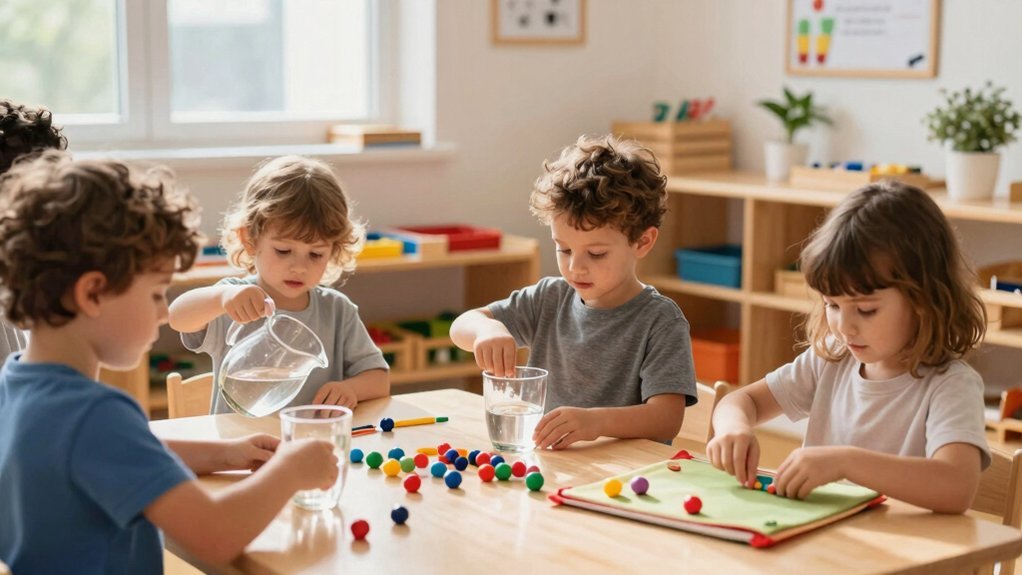
You’ll see that practical‑life activities like pouring, tidying, and using child‑sized tools boost independence by letting kids complete tasks from start to finish, which builds confidence. They sharpen fine‑motor skills through real‑world grips and hand‑eye coordination. Repetitive routines train concentration and focus, while sequencing tasks develop problem‑solving and planning. Sharing chores nurtures empathy, cooperation, and resilience. Naming actions links language to math concepts and sensorimotor experiences. Keep going to discover more details.
What Are Practical Life Activities? An Overview
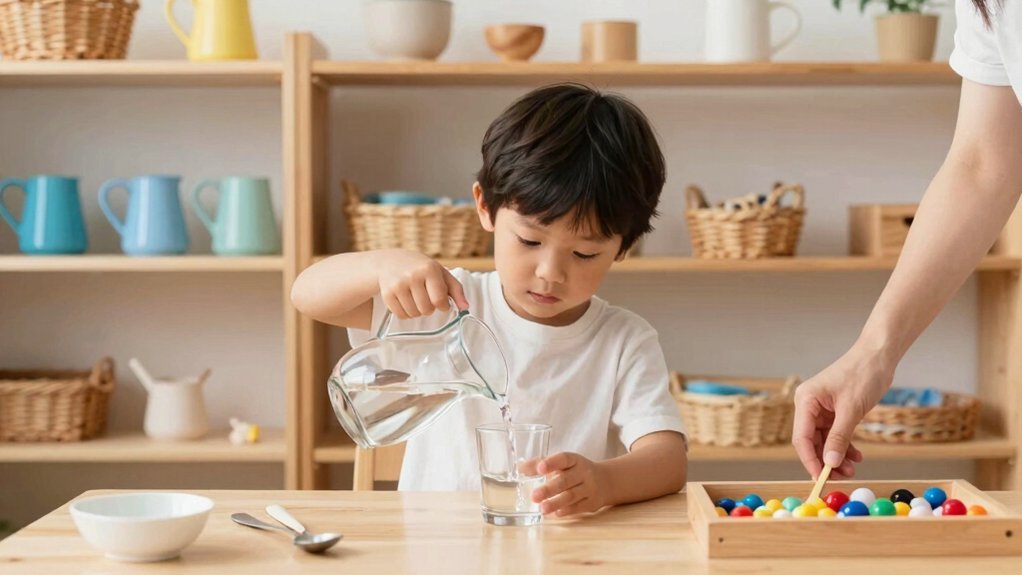
Practical life activities are purposeful tasks that mimic everyday chores, using real household items to help children build independence, coordination, and concentration. In a Montessori classroom you’ll find a prepared environment where trays hold child‑sized tools—brooms, pitchers, sponges—ready for hands‑on work. You guide the child to sweep, pour, or button a coat, letting them repeat the action until they master the movement. This repetition builds independence, boosting self‑esteem as they see tangible results.
The activities also teach focus, because each step demands attention and careful observation. By engaging in these real‑world tasks, children learn to adapt to social expectations and develop a sense of belonging, laying a solid foundation for lifelong learning. Using mats with non-slip surface technology during these activities can help create a stable and safe workspace that enhances concentration and movement mastery.
Independence & Self‑Care: Building Confidence Through Daily Tasks
Ever wonder how a simple daily routine can turn a toddler into a confident, self‑reliant learner? You can nurture independence by giving kids child‑sized, practical life tools for self‑care. When they pour a drink, wash hands, or tidy a broom, they follow a clear left‑to‑right sequence that builds self‑confidence. Completing a task from start to finish offers tangible gratification, reinforcing pride and a sense of ownership. These daily tasks become stepping stones toward autonomous learning and a positive self‑image.
Toddler routines build confidence, pride, and independence through hands‑on, left‑to‑right tasks.
- Offer real utensils and soap for hands‑on self‑care practice.
- Set up a mini‑clean‑up station with a child‑size broom and bin.
- Create a simple, visual routine chart for morning and evening chores.
- Providing safe, child-friendly furniture like a Kitchen Step Stool with Safety Rail helps children confidently engage in these tasks by giving them secure, independent access to countertops and sinks.
Fine Motor Mastery: Strengthening Hand‑Eye Coordination With Everyday Work

How can everyday chores turn a child’s hands into precise, confident tools? In Practical Life, you’ll see that simple tasks—pouring water, scooping beans, using child‑sized utensils—activate fine motor skills and sharpen hand‑eye coordination.
Real materials demand authentic grip patterns, so each scoop or pour trains the small muscles needed for a steady pencil grip. As your child repeats these purposeful actions, dexterity builds, grip strength improves, and visual feedback syncs with tactile input.
The routine of moving objects from one container to another creates a feedback loop that refines sensorimotor integration. By mastering these everyday work, they gain independence, confidence, and the foundation for more complex tasks ahead.
Incorporating natural wood loose parts during play further enhances fine motor development by providing tactile, open-ended experiences that support hand-eye coordination.
Concentration & Focus: Developing Sustained Attention Through Repetitive Routines
When you guide a child through a repetitive routine, you’re building discipline that steadies their focus. Watching them sequence each step—like pouring water or setting a table—sharpens their attention to the task at hand. The chance to self‑correct along the way reinforces concentration and turns routine into a learning habit. Engaging children in activities like using color-coded wooden spinning tops further enhances their sustained attention and fine motor skills development.
Repetitive Routine Builds Discipline
Repetitive practical‑life routines channel attention toward intentional actions, so each repetition strengthens your child’s concentration and willpower. When you let them pour water, button a coat, or walk a line, the practical life tasks become mini‑training grounds for discipline. The steady rhythm of repetition builds neural pathways that support sustained focus, while the sense of accomplishment fuels independence. Over time, your child learns to self‑correct, reducing impulsive bursts and embracing calm perseverance.
- Simple chores (e.g., setting the table) turn daily work into disciplined practice.
- Incremental difficulty (adding a new step each week) keeps concentration sharp.
- Consistent routines embed order, allowing your child to act independently with confidence.
Incorporating adjustable child-size aprons during art and cooking activities helps maintain safety and focus while encouraging responsibility.
Task Sequencing Enhances Attention
Ever wonder why a simple series of steps can keep a child’s mind glued to a task? In practical life, task sequencing turns routine chores into brain‑training drills. When kids follow ordered steps—like pouring water, then wiping the tray—they practice planning, notice mistakes, and boost sustained attention. The visual cue of left‑to‑right shelving or color‑coded bins reinforces concentration, while repetitive execution builds intrinsic motivation. Over time, the habit of completing each step before moving on transfers to reading, math, and social interactions, making focus a natural habit rather than a forced effort. Incorporating materials with real object matching further enhances children’s focus and vocabulary development.
| Activity | Ordered Steps | Attention Benefit |
|---|---|---|
| Pouring | 1. Gather cup 2. Fill 3. Transfer | Sustained attention |
| Shelving | 1. Pick 2. Place 3. Align | Concentration |
| Color‑coding | 1. Identify 2. Match 3. Sort | Focus |
| Transferring | 1. Load 2. Move 3. Unload | Planning skill |
Self‑Correction Strengthens Focus
Why does fixing a mistake feel so rewarding? When you let a child pour water or fold cloth, the practical life task gives instant feedback. They spot the spill, adjust the grip, and the error disappears. That self‑correction sharpens focus because the brain learns to anticipate the next step. Repetition turns a fleeting glance into sustained attention, and each successful cycle builds independence.
- Immediate feedback lets them see consequences and correct instantly.
- Structured routines (left‑to‑right shelving, incremental difficulty) nurture planning and concentration.
- Real‑world materials keep motivation high, so focus stays engaged across cycles.
Incorporating tools made from BPA-free, durable materials ensures safety and supports uninterrupted learning during these activities.
Problem‑Solving Skills: How Practical Life Fuels Cognitive Growth
You’ll notice that arranging tasks in a clear order helps you plan each step before you start, and the child follows that sequence to reach the goal.
When a mistake pops up, you instantly spot it, pause, and adjust, turning error detection into a learning moment.
This cycle of planning, testing, and correcting builds the core of problem‑solving skills.
Sequ Planning and Sequencing
How does a child learn to plan when every task is broken into clear, repeatable steps? You’ll see that practical life activities turn abstract planning into tangible sequencing. By pouring, carrying, and transferring objects, the child internalizes a step‑by‑step order that fuels cognitive development. Repeating these tasks with child‑sized tools reinforces the sequence, letting the child anticipate the next move and act independently. The left‑to‑right and top‑to‑bottom arrangement of shelves mirrors reading patterns, sharpening abstract reasoning and independence.
- Use child‑sized tools to model orderly actions.
- Repeat each activity until the sequence feels automatic.
- Gradually release responsibility so the child plans and executes alone.
Error Detection and Correction
When a child masters the sequence of pouring, transferring, and buttoning, the next step is noticing when something goes wrong and fixing it. Practical life activities give you concrete feedback, so you spot mismatches instantly. You start predicting the next move, tightening cognitive planning while you experiment with child‑sized tools. Each spill or mis‑button becomes a mini‑lesson in self‑correction, reinforcing child independence. The routine’s left‑to‑right, top‑to‑bottom order builds an internal checklist that later supports math and literacy error detection.
| Feel | Why it matters |
|---|---|
| Pride | Seeing a mistake turn into success boosts confidence |
| Curiosity | Mistakes spark questions, deepening understanding |
| Autonomy | Fixing errors alone nurtures independence |
| Resilience | Repeated correction builds perseverance |
| Joy | Mastery feels rewarding, encouraging more exploration |
Social‑Emotional Growth: Fostering Empathy, Cooperation, and Resilience

Practical Life activities let children practice empathy, cooperation, and resilience daily. You’ll see them share tools, offer help, and celebrate small victories, which fuels social‑emotional growth. When a child wipes a table for a peer, they’re not just cleaning—they’re learning empathy. When they take turns pouring water, they’re mastering cooperation. Repeated, self‑directed chores give them a sense of achievement, building resilience through constructive feedback and gentle correction.
Everyday chores nurture empathy, cooperation, and resilience, turning simple tasks into powerful social‑emotional lessons.
- Grace and Courtesy exercises teach polite interaction and patience.
- Group chores such as setting the table encourage turn‑taking and shared responsibility.
- Simple clean‑up routines let children experience success, reflect on mistakes, and bounce back confidently.
These Practical Life moments embed empathy, cooperation, and resilience into everyday life, shaping confident, adaptable learners.
Practical Life Integration: Language, Math, and Sensorial Connections
Because children name each step while they pour, sort, or clean, they’re simultaneously building vocabulary, grasping sequencing, and sharpening their senses. In practical life you’ll hear them label actions, which fuels language development and ties directly to math concepts like counting and ordering. The tactile feel of beans, water, or fabric delivers rich sensorial experiences that sharpen discrimination while fostering independence. As they arrange objects left‑to‑right or top‑to‑bottom, they mirror reading and numerical order, turning everyday chores into cognitive rehearsals.
| Activity | Core Benefit |
|---|---|
| Pouring | language development, sensor |
|
| Sorting | math concepts, independence |
|---|---|
| Cleaning | sensorial experiences, concentration |
| Shelving | sequencing, math concepts |
| Transferring | problem‑solving, independence |
Frequently Asked Questions
What Are the Benefits of Practical Life Activities?
You’ll gain independence, stronger fine‑motor control, better concentration, problem‑solving confidence, and social‑emotional skills like collaboration and responsibility, while learning real‑world tasks that translate to home life.
How Do Activities Help Child Development?
You see children gaining confidence, focus, and fine‑motor control as they pour, cut, and clean; these tasks sharpen concentration, problem‑solving, and independence, laying a solid foundation for broader learning.
What Are the 5 Key Areas of Practical Life?
You’ll find five key areas: Preliminary Exercises, Care of Self, Care for the Environment, Grace and Courtesy, and Control of Movement—each designed to build independence, coordination, social skills, and focused concentration.
How Do Exercises of Practical Life and Sensorial Activities Contribute to Child Development?
You develop coordination, focus, and sensory discrimination as you pour, button, and sort, because each task demands precise movements, sustained attention, and real‑time self‑correction, building confidence and cognitive flexibility.




Leave a Reply