
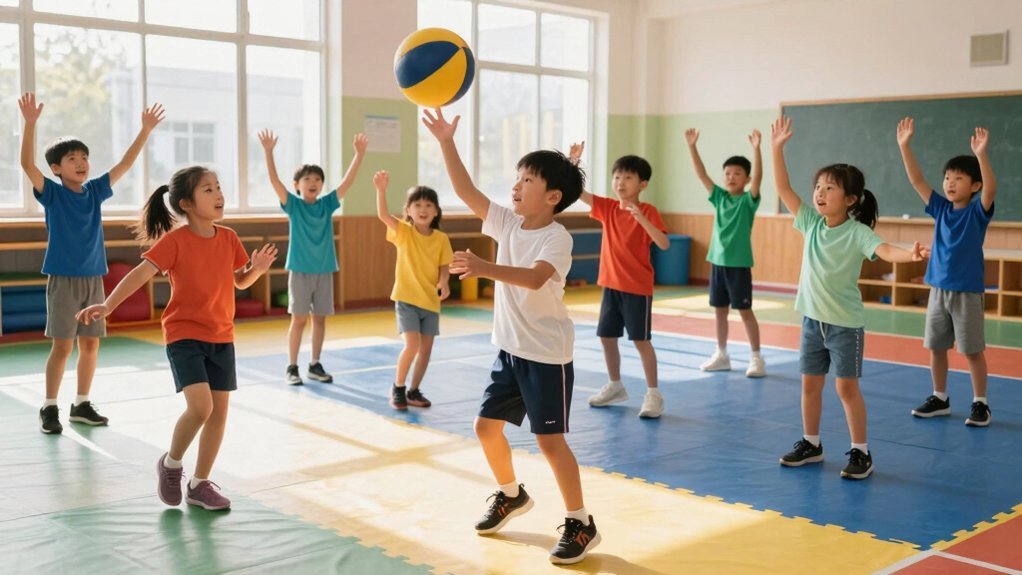
You’ll find that short, purposeful movement breaks sharpen your child’s attention, boost executive function, and improve memory retention, which translate into higher reading and math scores. A five‑minute burst of activity spikes blood flow and primes the prefrontal cortex, while a brief pause afterward locks in the cognitive boost for up to two hours. Consistent “exercise‑snacks” across the day compound these gains, and tailoring intensity can help both boys and girls excel in their strongest subjects. Keep going to discover practical ways to implement these strategies.
Why Movement Breaks Matter for Learning

When students take short, purposeful movement breaks, their brains reset, letting them refocus on the lesson ahead. You’ll notice that these movement breaks spark a surge in executive function, sharpening planning, inhibition, and flexible thinking. As a result, you can expect steadier on‑task behavior and deeper engagement, which directly lifts academic performance.
The national guideline of 60 minutes of daily activity counts these brief bouts toward the goal, meaning you meet health standards while boosting cognition.
Consistently weaving movement into lessons also eases stress and improves classroom climate, creating a more supportive environment for learning. By tailoring each break to your class’s rhythm, you maximize the cognitive payoff without sacrificing instructional time. Incorporating adjustable or repositionable hooks can similarly optimize physical environments to support varied user needs and promote ease of movement.
Exercise‑Snack Science: How Short Bursts Boost Focus
Ever wonder how a five‑minute burst of activity can sharpen your students’ focus? When you sprinkle movement snacks into the day, you trigger a surge of blood flow that spikes attention and primes the prefrontal cortex. Within minutes, executive function sharpens, letting kids filter distractions and plan tasks more efficiently. High‑intensity or aerobic micro‑sessions, even just a quick dance or jump‑rope round, translate into measurable gains on math and reading standardized tests. Pair the snack with a brief rest, then jump straight into a lesson; the post‑exercise pause locks in the cognitive boost. By treating these bursts as a lifestyle habit rather than a separate workout, you embed a reliable engine for sustained academic performance. Incorporating child-friendly tools like a Montessori step stool can encourage physical activity and independence, further supporting focus and learning.
Apply Short‑Burst Activities to Strengthen Memory

You’ll notice that a quick burst of activity spikes brain chemistry, giving memory a fresh boost.
When you follow a short, vigorous movement with a brief pause, the information you just learned sticks better.
Consistently weaving these “exercise snacks” into lessons turns movement into a powerful retention tool.
Burst Benefits
Boost your child’s memory by slipping in short, high‑energy “exercise snacks” between lessons. The burst benefits of classroom physical activity are immediate: a 2‑minute sprint or jumping‑jack set spikes blood flow, sharpening attention and boosting executive function for the next task. Because intensity matters more than length, these quick bouts deliver the same cognitive lift as longer workouts, helping your child retain facts and process information faster.
When you embed a brief, vigorous burst before a math drill, the brain’s arousal level resets, reducing stress and priming neural pathways for recall. Consistently using “exercise snacks” creates a rhythm that sustains focus across the school day, turning movement into a powerful study aid. Sensory activities such as using Montessori smelling bottles also complement these bursts by engaging multiple senses, enhancing memory retention and concentration.
Memory Boosting Exercise
A 30‑second set of jumping jacks before a spelling test can fire up the prefrontal cortex, releasing dopamine and norepinephrine that sharpen attention and lock new information into memory. You’ll notice that a quick “exercise snack” spikes oxygen flow and neurochemical activity, giving your brain a brief surge that bolsters memory consolidation.
When you follow the burst with a short pause, the prefrontal cortex stays primed, supporting executive function for the next two hours. This pattern works because movement activates the same neural pathways used for learning and recall.
Integrating fine motor development activities, such as manipulating Montessori bead stairs, can further enhance cognitive skills alongside physical exercise.
Retention Through Movement
When you sprinkle short, high‑intensity movement bursts into study sessions, the brain’s attention networks fire up, making new information stick more firmly. You’ll notice that a quick jump‑jack set or a 30‑second dance break spikes dopamine, sharpening attention and priming the hippocampus for encoding. After the burst, give a brief rest, then dive back into the lesson; the earlier movement has already boosted executive function, so you can organize, retrieve, and apply facts more efficiently.
Use “exercise snacks” every 15‑20 minutes—standing, stretching, or a brief sprint—to keep the neural pathways active. Over weeks, these micro‑sessions compound, turning fleeting focus into lasting retention and stronger grades across subjects. Incorporating accessible and safe designs like low step-in storage units can help create organized play and learning environments that encourage frequent movement breaks.
Use Movement Breaks to Raise Math & Reading Scores

Movement breaks—short bursts of physical activity woven into lessons—sharpen attention, boost on‑task behavior, and lift both reading and math scores. When you sprinkle Movement into a 10‑minute classroom break, you trigger blood flow that fuels executive function and working memory, directly improving Academic performance. A quick stretch, a hop‑scotch count, or a rapid math‑related motion resets focus, lowers anxiety, and heightens processing speed for the next problem set. Consistent, brief aerobic bursts keep students engaged, while integrating kinesthetic tasks—like rotating desks for collaborative calculations—reinforces concepts through physical rehearsal. Over weeks, these regular pauses translate into higher standardized test results, because the brain retains information better after active, purposeful movement. Maintaining defined work spaces with low movement mats can enhance the effectiveness of physical activity breaks by providing stable, safe surfaces for movement activities.
How Movement Helps Boys and Girls Differently
You’ll notice that movement boosts math and reading scores more consistently for boys, while girls often show stronger gains in science. This reflects gender‑specific cognitive effects, as different brain regions respond uniquely to aerobic activity. Tailoring the type and intensity of exercises can help each child maximize those subject‑specific benefits.
Creased Subject Gains
A growing body of research shows that regular physical activity boosts test scores, but the gains aren’t uniform across subjects or genders. When you add movement to the day, you stimulate executive functioning, sharpening memory, attention, and processing speed. Those cognitive upgrades translate into better academic performance, especially in math and reading where boys often show the most noticeable improvements. Girls, meanwhile, tend to reap larger gains in science after consistent aerobic exercise. Short, frequent “exercise snacks” can be as effective as longer sessions, keeping attention high during lessons. Over months, the cumulative effect of movement‑driven brain activation creates a clear, subject‑specific lift in test outcomes, highlighting why a one‑size‑fits‑all approach to physical activity won’t maximize every child’s potential. Incorporating tactile and visual aids, such as the Montessori Pink Tower, can further enhance spatial reasoning and fine motor skills alongside physical movement.
Gender‑Specific Cognitive Effects
Because the subject‑specific lifts differ for boys and girls, it’s worth examining how movement reshapes their cognition in distinct ways.
When you integrate regular aerobic exercise, you’ll notice attention and working memory improve for both sexes, yet the downstream cognitive effects often diverge.
Boys typically show stronger math and reading gains, while girls tend to exhibit more pronounced science improvements.
These gender differences stem from distinct patterns of brain activation in regions governing focus and memory.
Executive‑function boosts from movement translate into higher standardized‑test scores, but the magnitude varies by gender.
Recognizing these nuances lets you align activity schedules with each child’s strengths, ultimately enhancing overall academic performance.
Tailored Activity Strategies
Tailored activity strategies recognize that boys and girls respond differently to movement, so designing routines that match those responses can maximize academic gains.
You’ll notice that boys often thrive with short, high‑intensity bursts that spike executive function and sharpen on‑task behavior during math drills.
Girls, meanwhile, respond well to moderate aerobic intervals combined with integrated movement that supports science concepts and sustained concentration.
Mix brief cardio sprints before reading sessions to boost working memory for both, but pair them with collaborative, movement‑rich projects for girls to reinforce spatial reasoning.
Set Up Simple Movement Stations for Any Lesson
Ever wondered how a few simple stations can keep kids moving while you teach? You can turn any lesson into an active experience by setting up movement stations that fit your classroom layout and budget. Stock each station with a pedal, stepper, wobble cushion, or fidget toy, and assign a clear rotation schedule. Students spend a minute or two at each station, then return to the main activity, so instruction never stalls. The key is to keep the stations visible, easy to access, and tied to the lesson’s learning goals.
| Station | Primary Use |
|---|---|
| Pedal/Stepper | Boost circulation while reviewing facts |
| Wobble Cushion | Enhance focus during reading or math |
| Fidget Toy Bin | Provide sensory input during listening tasks |
10 Quick Movement‑Break Snack Ideas for K‑5
When you sprinkle short, energetic “movement snacks” into a K‑5 day—like a quick stair sprint, a series of desk‑level arm circles, or a 30‑second yoga pose—students reset their focus, boost circulation, and return to learning with sharper attention.
Short, energetic movement snacks reset focus, boost circulation, and sharpen attention throughout the K‑5 day.
Try a 45‑second “under‑desk pedal” race before a math drill; the rhythmic motion raises heart rate and primes the brain for problem solving.
Pair a brief breathing count with a transition to reading, turning a routine into a mindfulness break.
Use a desk‑top “jump‑jack” burst after a science video to release excess energy.
These movement breaks embed classroom physical activity, sustain student focus, and keep the day lively without sacrificing instructional time.
Extend Classroom Movement to the Journey Home
How can you turn the walk home into a powerful learning boost? You can extend classroom movement by encouraging active transportation—walking or biking—once the bell rings.
Use Safe Routes to Schools ideas: map safe trails, set up walking school buses, and mark crosswalks so kids travel confidently.
Community guides and CDC‑backed programs give you a ready‑made framework to keep physical activity consistent beyond school hours.
Each step fuels attention, memory, and academic performance, while reducing traffic injuries and building independence.
When students arrive home energized, they enjoy better mood, sleep, and long‑term health.
Track Academic Gains From Movement‑Break Programs
What if you could see the exact impact of a five‑minute stretch on your students’ test scores? By logging pre‑ and post‑break quiz results, you’ll spot patterns: a brief burst of movement often lifts attention, memory, and executive function, which then translates into higher math and reading marks. Use a simple spreadsheet to record the type of activity—high‑intensity runs, brisk walks, or quick stretches—and compare it with weekly standardized‑test data. Over months, the numbers will reveal whether aerobic bursts consistently boost academic performance across subjects. Track both individual gains and class‑wide trends, and adjust the frequency or intensity of movement breaks to maximize executive‑function benefits and overall achievement.
Frequently Asked Questions
How Does Physical Activity Improve Grades?
You boost grades when you exercise because movement sharpens focus, memory, and processing speed, enhancing executive function and prefrontal activity, which translates into better attention, task persistence, and test performance.
Why Is Physical Movement Important for Children?
You need movement because it boosts blood flow, sharpens focus, and strengthens memory, so you stay attentive, process information faster, and retain lessons better, ultimately lifting your grades.
Why Is Physical Movement Important in the Classroom?
You boost focus and retention when you integrate movement into lessons, because short activity bursts raise blood flow, sharpen attention, and energize students, leading to higher engagement and better academic performance.
How Does Physical Activity Help Kids in School?
You boost focus, memory, and processing speed when you move, so you stay on task, retain lessons longer, and solve problems faster, which directly lifts your grades across subjects.