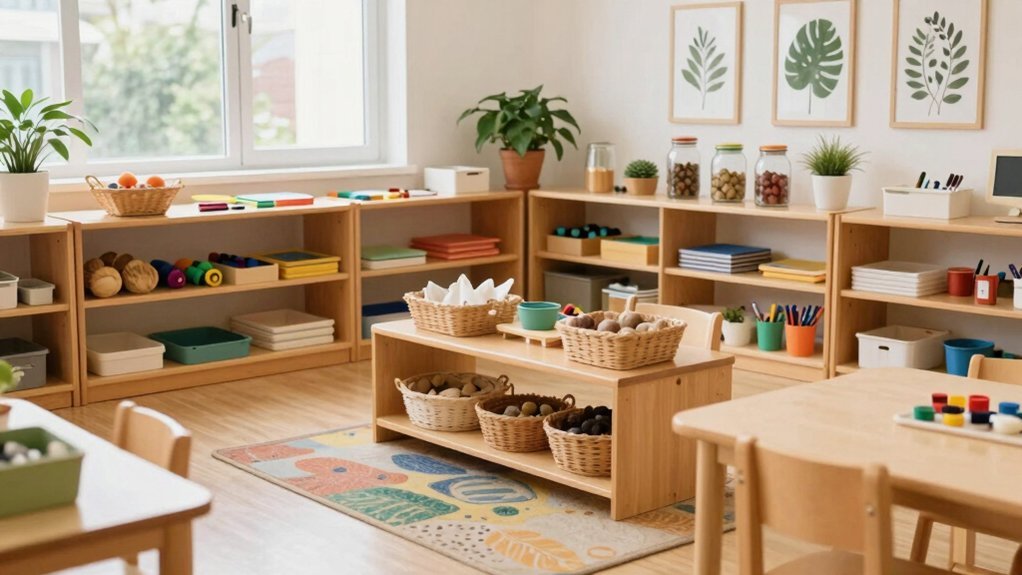
You create a perfect prepared environment by arranging low, child‑sized furniture and natural, purpose‑built materials into clear zones that follow a left‑to‑right, top‑to‑bottom order. Each zone—Practical Life, Sensorial, Language, Math, Culture—has shelves at eye level, trays that keep items tidy, and real tools that invite independent use and return. Minimal clutter, soft lighting, and natural textures foster focus, while a quiet corner supports transition and self‑regulation. Keep the space orderly, beautiful, and inviting, and you’ll discover deeper strategies for nurturing self‑directed learning.
Define a Perfect Montessori Prepared Environment
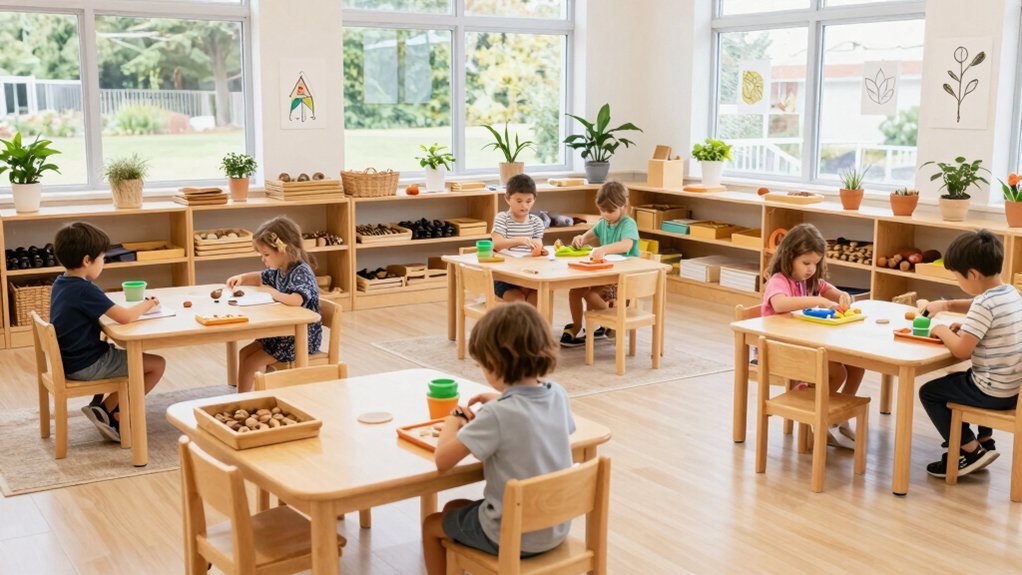
What makes a Montessori classroom truly effective? You create a Montessori prepared environment that feels neutral, orderly, and beautiful, with each item serving a clear purpose and occupying a designated place. Child-sized furniture and low, accessible shelves invite you to reach, choose, and return materials independently. You arrange educational materials left‑to‑right and top‑to‑bottom, reinforcing order and design that guide self‑directed learning. The space integrates the five curriculum areas—Practical Life, Sensorial, Math, Language, and Culture—each offering hands‑on, purpose‑built tools that spark curiosity. Minimal clutter, natural wood, glass, and plants foster concentration and a sense of belonging. As you move through the room, you experience freedom to explore, correct mistakes, and develop confidence without constant teacher intervention. Just as a carefully selected juicer can ensure safe, nutritious juice extraction, choosing child-safe materials in the environment contributes to a secure and nurturing learning space.
Identify the Six Core Principles of a Montessori Space
You’ll notice how order and beauty shape every corner, guiding children toward calm focus. The child‑sized accessibility guarantees each material invites independent exploration without frustration. And the mixed‑age community creates a living classroom where peers model skills and inspire one another. Using child-safe materials ensures a secure and durable environment conducive to learning.
Order Order and Beauty
Ever wondered why a Montessori classroom feels both orderly and inviting? You’ll see Freedom thriving within a carefully crafted Prepared Environment where Structure and Order guide every step. Shelves hold Materials in exact spots, so children locate tools without hesitation, reinforcing self‑discipline.
Beauty and Atmosphere soften the routine: soft lighting, natural wood, and simple décor create a calm backdrop that nurtures focus.
Nature and Reality weave authentic elements—plants, shells, real‑world objects—into daily work, making learning tangible.
This balance of order and aesthetic appeal invites curiosity while maintaining clear boundaries, turning the space itself into a silent teacher that respects each child’s autonomy. Incorporating spill-prevention technology in child-safe dining items further supports a prepared environment by minimizing distractions and maintaining order during mealtimes.
Child‑Sized Accessibility
How does a space become truly child‑friendly? You start with child‑sized design: furniture, sinks, and tools sit at a child’s height, granting independent access and fostering self‑mastery. Low shelves and accessible storage place materials where you can reach them, encouraging autonomy in choosing activities.
Each area features designated storage that keeps supplies organized and visible, so you know exactly where to find what you need.
Predictable placement of real, natural materials creates a clear progression from simple to complex, supporting concentration and confidence.
Varied seating and rug zones invite movement, letting you decide how and where to work.
Together, these elements build a structured, inviting environment that nurtures independent learning. Including child-safe woodworking tools designed for different developmental stages enhances hands-on experiences while maintaining safety.
Mixed‑Age Community
What makes a mixed‑age community thrive in a Montessori classroom? You’ll see children of three to six years sharing a Montessori prepared environment where each child learns from peers and models. Freedom within limits lets them choose work while respecting classroom rules, fostering independence and self‑discipline. Structure and order give every shelf a purpose, so designated materials are always where you expect them, reducing chaos and supporting focus. The social environment encourages inclusivity; older children mentor younger ones, and teachers model respectful interaction. By integrating the six core principles—freedom, structure, beauty, nature, social environment, and the prepared environment itself—you create a vibrant, collaborative space where every child feels valued and motivated to explore. Incorporating visual learning support systems strengthens communication and independence, especially for diverse learners.
Apply the Principles to Create a Functional Layout
You’ll start by installing height‑appropriate shelves that let children reach every tray without assistance.
Then, you’ll define clear activity zones for each curriculum area, keeping materials organized and distinct.
This layout gives kids the freedom to move, choose, and work independently while maintaining order.
Choosing shelves that are between 24 to 48 inches tall optimizes accessibility and encourages independent book selection.
Heighted Shelves
Ever notice how a child’s eyes light up when they can reach a tray on a low shelf without adult help? Heighted shelves give them that moment of independence, placing child‑accessible materials at eye level so they choose, use, and put back items on their own.
Arrange the shelves in a logical progression—simple items on the left and top, moving to more complex tools on the right and bottom. This layout encourages self‑correction; if a piece is misplaced, the child sees the error and fixes it.
Keep each shelf uncluttered with individual trays or baskets, reinforcing classroom organization and the minimalist aesthetic. Fixed shelving and consistent placement create a secure, navigable environment that supports seamless transitions across Practical Life, Sensorial, Language, Math, and Cultural zones.
Incorporating classroom-ready science kits can further enhance independent exploration and hands-on learning within this prepared environment.
Clear Activity Zones
When you arrange the classroom into five distinct zones—Practical Life, Sensorial, Language, Math, and Culture—you create a clear, functional layout that guides children’s learning pathways.
Place each area near a window or wall edge, using Low Shelves that keep trays at eye level.
In the Practical Life zone, line up tools on wooden racks so kids can reach them independently.
Position Sensorial materials next to Language books, allowing tactile exploration before literacy work.
Set Math manipulatives on sturdy trays beside Culture artifacts, encouraging cross‑disciplinary connections.
Keep aisles wide and sight lines open so children can scan the room and choose activities without teacher prompts.
This organized flow reduces chaos, supports self‑directed play, and reinforces the curriculum’s natural progression.
Select Child‑Sized Furniture for Independence
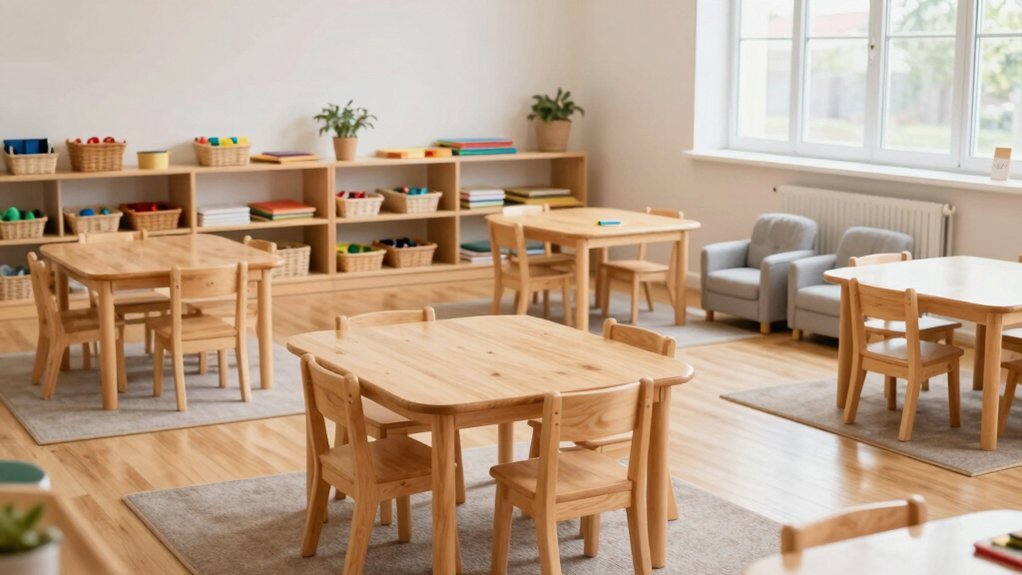
Why not start by choosing furniture that sits at a child’s height? Child-sized furniture turns a prepared environment into a launchpad for independence. Low shelves and accessible storage keep everything within easy reach, so kids can pick, use, and return items without adult help. A table and chair that match their stature invite self‑care activities—washing hands at a low sink, brushing teeth at a child‑height mirror, or opening a drawer with a comfortable handle. Natural materials add tactile richness and durability, while stable, predictable placement reduces distractions. By designing each piece for the child’s reach, you empower them to manage their space, fostering responsibility and confidence in every daily task.
Arrange Materials by Function and Developmental Stage
Choosing child‑height furniture sets the stage, now you’ll want to arrange the materials on those shelves so each item is reachable and clearly labeled. In a prepared environment, organize by function and developmental stages: place Practical Life tools on the lower left, then Sensorial, Language, Math, and Culture moving right and down. Use child‑height shelves and trays to keep Montessori materials accessible; label each bin with pictures and words. Arrange items from simple to complex, following a left‑to‑right, top‑to‑bottom flow that mirrors natural learning progression. Ensure every piece is self‑correcting and made of durable wood, metal, or glass to promote focus and responsibility. Keep each area clutter‑free, so children can repeat cycles, concentrate, and explore independently.
Create a Calm, Beautiful Atmosphere With Natural Light
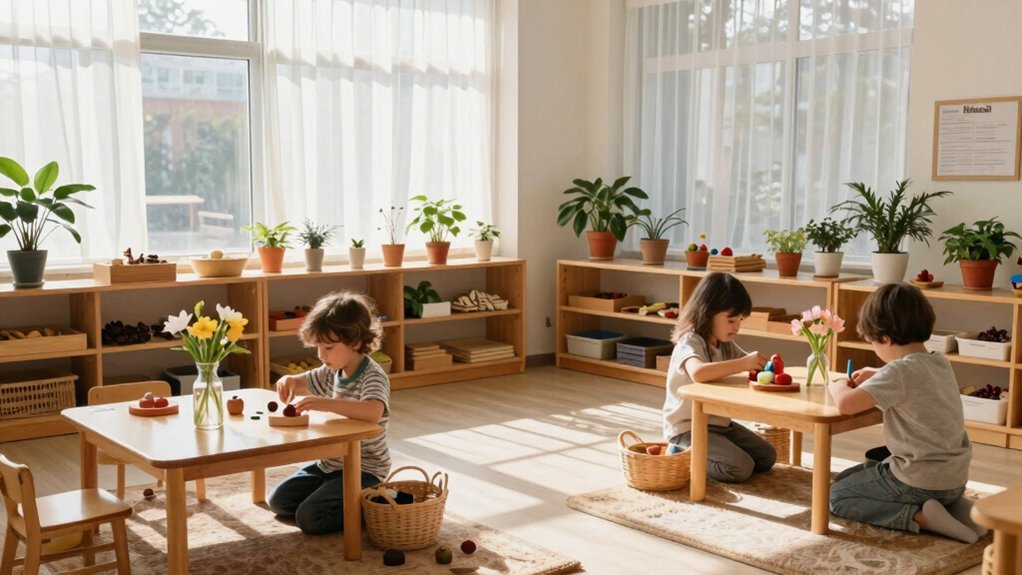
You’ll notice how soft light and warm glows spill across natural materials and simple forms, instantly calming the space.
By arranging quiet corners and gentle sounds, you create a serene backdrop that encourages focus.
The result is a beautiful, inviting atmosphere that feels both soothing and purposeful.
Soft Light, Warm Glows
Soft lighting spreads a gentle, amber‑toned glow that instantly eases the eyes and steadies focus. In a prepared environment you’ll notice soft lighting that mimics late‑afternoon sunshine, creating warm glows that calm the nervous system. A Montessori classroom benefits from this approach because the subtle illumination supports concentration without overwhelming young learners.
Good lighting design layers table lamps, floor lamps, and shaded fixtures so you can adjust intensity as the day progresses, avoiding harsh fluorescents that cause visual fatigue. Consistent levels keep the space feeling safe and steady, allowing independent work to flow.
Natural Materials, Simple Forms
Natural materials and simple forms turn a room into a calm, beautiful space that feels real and inviting. You’ll notice how wood, ceramics, and metal replace plastic, giving the prepared environment a tactile honesty that supports focus. Light streams in, highlighting a neutral palette while subtle accents keep the mood serene. Child‑accessible Montessori shelves stay uncluttered, arranged left‑to‑right, top‑to‑bottom, reinforcing independence and order.
- Choose natural materials for furniture and décor.
- Keep layouts simple and uncluttered, using a neutral palette.
- Install Montessori shelves that display tangible items at child height.
Quiet Corners, Gentle Sounds
With natural materials and simple forms already setting a calm tone, the next step is to carve out a quiet corner that blends soft lighting, gentle sounds, and abundant natural light. You’ll choose a low‑profile wooden shelf, a plush cushion, and a window‑side seat that lets daylight flood in. Soft, ambient nature recordings or low‑volume instrumental music become gentle sounds that soothe without distracting, keeping the prepared environment primed for calm learning and focused work. Keep décor minimal, use tactile ceramics, and maintain an uncluttered layout so the space feels orderly and inviting.
| Element | Example | Benefit |
|---|---|---|
| Light | Large window, sheer curtains | Natural light, reduced glare |
| Sound | Birdsong playlist, soft piano | Gentle sounds, sustained attention |
| Materials | Wood shelf, ceramic vase | Natural materials, tactile calm |
Set Up a Montessori Practical‑Life Area for Daily Skills
Ever wonder how a well‑organized Montessori Practical‑Life area can turn everyday chores into powerful learning moments? You’ll notice the child‑sized tools neatly arranged on low shelf organization, each tray labeled for quick access. The orderly environment invites independence development, and self‑correcting materials let kids spot mistakes without adult help. By returning items to their exact spot, they reinforce concentration and respect for the space.
Key setup steps
- Install a low, sturdy shelf and place trays for pouring, buttoning, sweeping.
- Choose real, child‑sized tools (metal pitchers, wooden brushes) that feel purposeful.
- Use self‑correcting materials—like a sand‑filled measuring cup that spills only when overfilled—to encourage self‑monitoring.
Design a Montessori Sensorial Corner for Texture, Color & Sound
After arranging the practical‑life tools, you can turn the same low shelf into a sensorial corner that sharpens a child’s perception of texture, color, and sound. Fill the first tier with fabric swatches and sandpaper pieces, letting the child feel rough, smooth, soft, and hard surfaces. Label each bin so the child can self‑correct when matching texture pairs. On the next shelf, place prism color tablets, then grayscale and gradient sets, encouraging visual discrimination from bold primary tones to subtle shades. Finally, add sound bells, tone boxes, and wooden shakers; arrange them by timbre and volume so the child can sort and recreate sequences. Keep the area calm, uncluttered, and clearly marked, reinforcing independence within a Montessori environment.
Build a Montessori Language Zone With Hands‑On Materials
Curious about how a language zone can spark a child’s love of words? In a Montessori language zone you’ll arrange hands‑on materials that invite independent work while building phonetic awareness. Low shelves create a child‑sized environment, so the child reaches for sandpaper letters, movable alphabets, and wooden trays without adult help. Each item is self‑correcting, letting the child notice mistakes and adjust instantly, which nurtures confidence and concentration.
- Progressive layout – start with sound‑recognition trays, then move to symbol‑matching boards, and finish with writing tools.
- Material quality – choose porcelain or wooden letters over plastic for tactile richness.
- Quiet nook – add a small reading corner with a mirror for self‑monitoring.
This setup encourages purposeful, self‑directed language exploration.
Establish a Quiet Landing Space for Transition & Regulation
How can you help your child unwind after a busy school day? Create a quiet landing space within your Montessori prepared environment that signals transition and supports regulation. Choose soft lighting, a low‑noise nook, and gentle sounds like soft music or nature tones. Keep a few calming activities—puzzles, picture books, or sensory bins—readily available, and set a consistent after‑school routine that guides the child from the school mindset to a calm atmosphere. Use a simple cue, such as a welcome sign, to mark the space and invite gentle social interaction. By offering this predictable, non‑demanding window, you enable the child to reflect, recover, and prepare for evening activities with confidence.
Reflect on Your Role to Continuously Refine the Environment
When you pause to watch how children naturally engage, you’ll see when the environment truly supports them and when it needs a gentle tweak. Your adult role isn’t to control every detail but to observe, note patterns, and let the prepared environment evolve. Each time a child struggles or shows new curiosity, you respond with thoughtful refinement, preserving independence while keeping the space stable and inviting.
- Observe before intervening – watch interests, frustrations, and readiness.
- Simplify routines – keep shelves low, materials organized, and cycles complete.
- Update deliberately – move only what the observation signals, reinforcing security and self‑direction.
Frequently Asked Questions
What Are the 4 C’s of Montessori?
You’ll find the four Cs are Freedom, Structure (or Order), Beauty, and Nature/Reality—each guiding how you design a Montessori space that encourages choice, clear organization, aesthetic calm, and authentic, natural experiences.
What Are the Six Principles of Montessori Prepared Environment?
You’ll find six principles: Freedom within limits, Structure and Order, Beauty and Atmosphere, Nature and Reality, Social Environment, and Movement toward Independence, each guiding how you design and maintain a Montessori prepared environment.
What Is the Essential Characteristic of the Prepared Environment?
You’ll find the essential characteristic is that you arrange the space deliberately, keeping it neutral, orderly, and purposeful—every item has a clear place and function, inviting independent, self‑directed exploration.
How to Create a Successful Environment?
You’ll arrange low, child‑sized furniture, tidy trays, neutral colors, and live plants; set shelves left‑to‑right, top‑to‑bottom; keep daily routines predictable; and stock self‑correcting materials across the five curriculum areas.