You’ll know a home‑learning resource is high‑quality when it aligns with standards, matches your child’s learning style and cultural context, and offers clear, age‑appropriate, evidence‑based content that’s engaging and affordable. First, check the alignment with curriculum objectives and ensure the scope and sequence are logical. Next, verify reading level, cognitive demand, and cultural relevance, looking for diverse representations. Finally, assess usability, interactive features, and price, comparing free digital options with durable printed kits. Keep going for deeper guidance.
Why It’s Hard to Pick Quality Home Learning Materials (And How to Start)

Why is it so hard to pick quality home learning materials? You face a sprawling HQIM market that offers endless options, yet few fit your district’s vision or standards.
The selection process gets tangled because teachers spend 7–12 hours each week hunting for resources, often without vetted quality, which leads to uneven materials quality.
Use EdReports as a compass: its criteria, gateways, and horizontal/vertical alignment guides help you evaluate each item’s instructional supports.
Remember to factor in culturally responsive elements and the needs of diverse learners.
Successful district implementation hinges on ongoing professional development and coaching, turning a chaotic rollout into a coherent, sustainable system.
Introducing reliable tools with age-appropriate ergonomic design supports effective hands-on learning experiences for children.
How to Match Home Learning Materials to Your Child’s Learning Style and Interests?
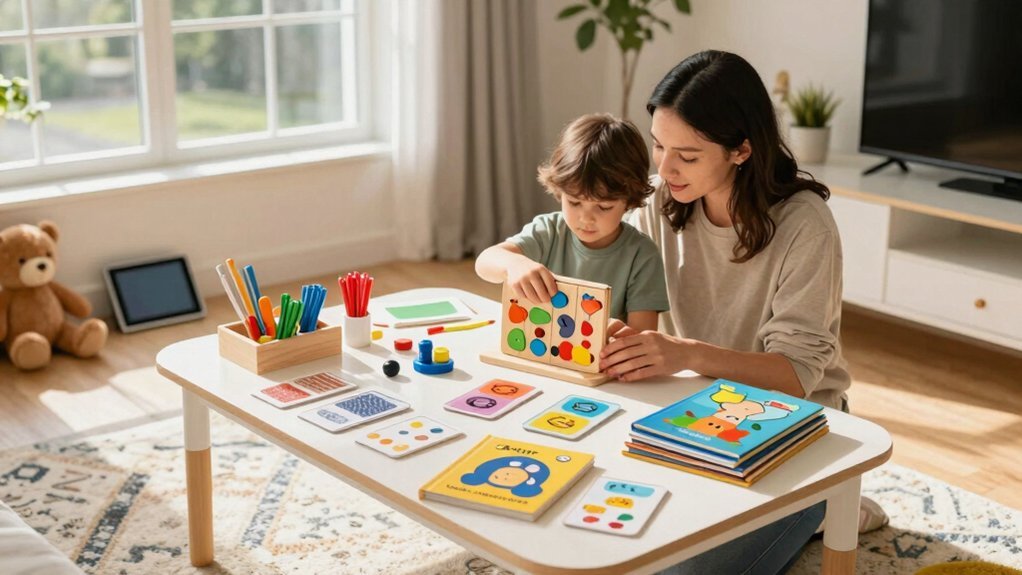
How can you guarantee your child stays engaged while learning at home? Start by matching instructional materials to their learning styles—visual, auditory, or kinesthetic. Choose multimedia resources that blend videos, podcasts, and illustrated books, then add hands‑on activities for tactile reinforcement. Personalization matters: pick kits and worksheets that reflect child interests, like wildlife or robotics, and let them set the pace. Balance screen time with offline practice and screen‑free options such as nature walks, art projects, or building blocks. Source from diverse providers—curriculum programs, local libraries, used sales, and specialty kits—to broaden exposure. Keep a feedback loop for continuous improvement, swapping out resources that lose relevance and adding fresh ones that spark curiosity.
Checklist for Evaluating Home Learning Materials: Alignment, Age‑Appropriateness, Cultural Relevance

Ever wondered if the resources you choose truly support your child’s growth? Use this checklist to audit every piece of home learning material. First, verify alignment with objectives and standards; the content should follow a clear scope and sequence that builds across grades. Next, assess age‑appropriateness: reading level, task complexity, and cognitive demand must match your child’s developmental stage. Then, examine cultural relevance—look for diverse representations and inclusive examples that reflect varied identities. Finally, test accessibility and usability: navigation should be intuitive, instructions clear, and accommodations available. Prioritize engagement by selecting interactive elements that sustain motivation. Applying this HQIM framework ensures you pick materials that truly empower learning. Additionally, considering products with spill prevention technology can enhance usability and reduce distractions during learning activities.
Where to Source Affordable, Evidence‑Based Home Learning Materials
Looking for affordable, evidence‑based home learning materials? Start by scanning online marketplaces like Amazon and eBay for new and used curricula, then cross‑check those prices with local homeschooling stores and community forums.
Scan online marketplaces, local stores, and forums to find affordable, evidence‑based homeschooling materials.
Visit libraries and tap into homeschooling resources; they often lend or host diverse materials at no cost.
Attend nearby homeschooling conferences or swap meets to discover used curricula that still meet evidence‑based standards.
Conduct a price comparison across these sourcing options, noting discounts for bulk purchases or seasonal sales.
Blend free digital content with affordable printed kits to keep your home learning budget balanced.
Consider including materials with durable construction to ensure quality and long-lasting use in home learning environments.
Frequently Asked Questions
What Are the Techniques of Evaluating Learning Materials?
You evaluate learning materials by aligning them to objectives, testing usability and accessibility, measuring engagement through interactive tasks, reviewing outcome evidence, checking technical support, and planning continuous improvement.
What Is the 70 30 Rule in Teaching?
You follow the 70‑30 rule by letting students spend roughly seventy percent of class time on active, student‑centered tasks—projects, discussions, problem‑solving—and the remaining thirty percent on direct instruction and feedback.
What Are the Five Qualities of Good Instructional Materials?
You’ll find five qualities: alignment to standards and evidence‑based practices, clear scope and sequence, horizontal and vertical consistency, built‑in instructional supports with formative assessment data, and culturally responsive, locally relevant content.
What Are the 5 C’s of Learning?
You’ll find the 5 C’s of learning are competence, conceptual understanding, communication, collaboration, and creativity—each a core dimension you should assess when designing or reviewing instructional experiences.