You can boost confidence and comprehension by matching lessons to how your child naturally absorbs info—whether they thrive on pictures, spoken words, or hands‑on activities. Watch for cues like gravitating toward diagrams, humming while counting, or preferring clay over crayons, then sprinkle visual organizers, read‑alouds, or tactile projects into daily routines. Adjust pacing and tools to fit those preferences, and you’ll see engagement rise and frustration fall. Keep exploring these strategies to discover even more ways to personalize learning.
Learning‑Style Definition & Why It Matters

Learning styles are the ways kids naturally absorb and process information—visual, auditory, kinesthetic, tactile, or any blend of these. When you grasp that these preferences aren’t rigid boxes but fluid mixes, you can tailor instruction to each child’s strengths. Visual learners thrive on pictures, diagrams, and videos; auditory learners latch onto spoken explanations and discussion; kinesthetic learners need hands‑on activities and manipulatives. Aligning lessons with those tendencies boosts child engagement, cuts frustration, and builds confidence. This insight fuels personalized learning, letting you choose the right pace, material, and method for every lesson. By honoring the way your child learns, you create a supportive environment where growth feels natural and motivation stays high. Providing child-sized tools matched to their learning preferences can further enhance engagement and skill development.
How to Identify Your Child’s Learning Style
By watching how your child naturally engages with the world, you can pinpoint whether they lean toward visual, auditory, kinesthetic, or tactile learning. Notice if they gravitate toward pictures, diagrams, or videos—those cues signal a visual preference. Listen for a tendency to remember spoken instructions, songs, or stories; that’s an auditory sign. Observe whether they thrive on hands‑on projects, movement, or building blocks, which points to a kinesthetic style. Pay attention to their love of touching, handling manipulatives, or exploring textures, indicating a tactile inclination. To identify their learning style, create varied activities, record which ones spark enthusiasm, and track retention. Combine observations across settings, and you’ll have a clear picture of how they best absorb and process information. Incorporating tools with NSF certification ensures safe and accurate learning experiences during hands-on kitchen activities.
Visual‑Learner Profile and Teaching Tips

Ever wonder how a picture can spark a child’s understanding? You’ll notice visual learners gravitate toward diagrams, flashcards, and color‑coded notes. Their strong visual memory means they absorb details from books and videos better than pure lecture. To support them, weave graphic organizers and mind maps into lessons, and model note‑taking strategies that pair icons with key concepts. Visual teaching tips—like highlighting headings, using picture‑based quizzes, and employing multisensory learning stations—keep them engaged and reinforce retention. Incorporating Montessori-inspired features in learning environments can further enhance engagement for visual learners.
| Strategy | Example |
|---|---|
| Graphic organizers | Flowcharts for story sequencing |
| Color‑coding | Highlighting math steps in red |
| Video & image cues | Short clips illustrating science phenomena |
Auditory‑Learner Profile and Teaching Tips
When you hear a concept explained aloud, it clicks instantly for auditory learners, who retain information best through spoken words and sound. You’ll notice they thrive on oral explanation and often talk to themselves while working. To support them, blend reading aloud with podcasts and audiobooks, and create frequent verbal interaction. This keeps ideas vivid and helps them remember details that written text alone might blur.
- Read aloud every lesson, pausing for questions to turn passive listening into active learning.
- Use podcasts and audiobooks as homework alternatives, letting them replay sections until they grasp the point.
- Encourage learning through discussion with debates, storytelling circles, or partner talks, so ideas are reinforced through verbal interaction.
Incorporating tools like the Comfy Cubs Kids Step Stool Montessori Tower can help create a supportive and accessible learning environment for children to engage confidently in activities that promote auditory learning.
Kinesthetic‑Learner Profile and Teaching Tips

You’ll notice your child thrives when they can explore concepts through active, hands‑on projects, so give them chances to build, experiment, and role‑play.
Integrate movement into lessons—let them stretch, walk, or manipulate objects while you explain key ideas.
Use sensory‑rich materials like textured props or kinetic kits to keep them engaged and reinforce learning.
Incorporating Montessori toys with features like color-coded sorting boxes can enhance learning through tactile and auditory feedback.
Active Hands‑On Exploration
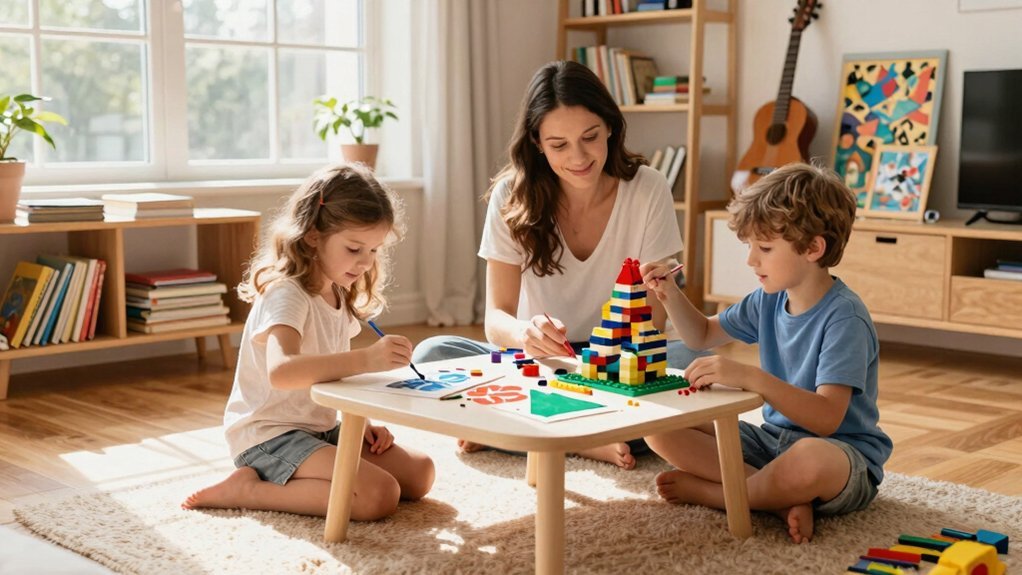
Because kinesthetic learners absorb concepts through movement, they thrive when lessons are built around hands‑on activities like experiments, model‑building, and role‑playing. You can channel that energy into active learning by designing practical activities that let them manipulate objects, test ideas, and see results instantly. Short, purposeful movement breaks keep focus sharp, while tactile manipulatives reinforce concept mastery.
- Mini‑lab stations – set up quick experiments that let your child hypothesize, test, and record outcomes in real time.
- Build‑and‑play projects – use LEGO, clay, or cardboard to construct models that illustrate abstract concepts.
- Role‑play simulations – assign characters and scenarios that require physical interaction, turning lessons into embodied experiences.
These strategies turn passive listening into dynamic, kinesthetic exploration, fostering deeper understanding and lasting confidence. Incorporating hands‑on tools made from rust-resistant and durable materials can enhance both the longevity and safety of your learning environment.
Movement‑Integrated Learning
Movement‑integrated learning taps into the natural energy of kinesthetic learners, turning physical activity into a powerful vehicle for understanding. You’ll notice that movement‑based activities keep them engaged, while hands‑on learning lets them test ideas directly. Schedule short movement breaks between tasks, and embed active participation in every lesson. Real‑world exploration—like building a bridge or role‑playing a historic scene—makes abstract concepts concrete and memorable.
| Activity | Goal |
|---|---|
| Classroom relay for math facts | Boost recall through kinetic repetition |
| Lab stations with manipulatives | Foster hands‑on discovery |
| Role‑play simulations | Encourage active participation |
| Transition stretches | Reset focus and reduce restlessness |
| Construction challenges | Link real‑world exploration to curriculum |
Incorporating tools with multi-purpose versatility can enhance engagement and practical learning experiences for kinesthetic learners.
Sensory‑Rich Materials
After exploring how movement fuels engagement, the next step is to embed sensory‑rich materials that let kinesthetic learners manipulate, build, and explore directly. You’ll notice that tactile, hands‑on experiences deepen comprehension and keep energy focused. Offer manipulatives that invite touch, encourage movement, and produce concrete results. When you pair a simple construction task with a clear outcome, the child’s curiosity transforms into mastery.
- Create stations with blocks, puzzles, or clay that invite tactile exploration and short bursts of movement.
- Integrate real‑world tasks like measuring ingredients for a recipe or assembling a simple circuit, turning abstract ideas into hands‑on evidence.
- Schedule brief, active breaks where kids can stretch, roll a ball, or rearrange manipulatives, sustaining attention and reinforcing the sensory‑rich lesson.
Observing, Recording, and Adjusting Strategies
When you watch your child at play, you can spot the subtle cues that reveal their learning preferences—whether they thrive on building, drawing, or tackling challenges. Observing closely lets you notice patterns: a child who repeatedly arranges blocks may be visual‑spatial, while one who hums while solving puzzles leans auditory. Recording these moments in a simple log helps you compare which instructional mode—pictures, hands‑on tasks, or spoken steps—boosts comprehension. Adjusting strategies becomes a routine: after a week of data, swap a visual worksheet for a tactile activity and watch the change. Collaboration with teachers amplifies the impact; share your notes and align home and classroom approaches for truly individualized instruction.
| Observation | Insight |
|---|---|
| Builds towers | Strong visual‑spatial |
| Hums while counting | Auditory processing |
| Prefers clay over crayons | Kinesthetic preference |
| Avoids loud group work | Need for quiet focus |
Planning Resources & Common Homeschool FAQs
You’ll find essential planning resources that map out funding options, tax benefits, and local school choices in Charlottesville and Albemarle County.
Common homeschool FAQs address concerns about curriculum alignment, legal compliance, and balancing extracurriculars with academic goals.
Essential Planning Resources
A well‑organized planner can turn a child’s favorite hobby into a structured learning path, and the right resources make that conversion seamless. When you start at‑home planning, you’ll first focus on identifying learning styles through quick assessments. That insight lets you design a learning environment that blends multi‑sensory learning with personalized pacing, keeping engagement high and stress low.
- Curriculum Mapping Tools – platforms that let you align subjects with your child’s strengths and interests.
- Assessment Kits – printable quizzes and digital apps that pinpoint preferred modalities and track progress.
- Community Resource Guides – lists of local workshops, mentor programs, and tax‑friendly homeschooling options.
Use these essentials to craft a flexible schedule, integrate hands‑on activities, and adjust the pace as your child grows. This approach turns everyday curiosity into measurable achievement.
Common Homeschool Concerns
So, which concerns keep popping up when families plunge into homeschooling planning? You’ll hear about learning styles, homeschooling concerns, and the fear of an unbalanced schedule. The good news is an individualized curriculum lets you match textbooks, audio narrations, video lessons, and hands‑on activities to each child’s strengths. Progress monitoring becomes a daily habit—quick quizzes, journals, and portfolio reviews show what’s working and where you need to adjust. Financial worries fade once you tap tax guides and educational resources that list deductible supplies and software. By blending modalities, you keep kinesthetic learners engaged, auditory kids listening, and visual learners watching, while staying on top of milestones and budgeting without overwhelm.
Frequently Asked Questions
How Do I Describe My Child’s Learning Style?
You describe your child’s learning style by noting whether they prefer pictures and diagrams, listening and speaking, hands‑on experiments, or tactile manipulation, then give concrete examples of how they absorb and demonstrate knowledge.
What Are Unique Learning Styles?
You’ll find that unique learning styles are the specific ways you naturally absorb and process information—whether through sight, sound, movement, or touch—often blending several preferences into a personalized approach.
What Are the Four Learning Styles for Children?
You’ve got four learning styles: visual, auditory, kinesthetic, and tactile. Visual kids thrive on pictures, charts, and videos; auditory learners prefer listening and speaking; kinesthetic kids need movement and hands‑on tasks; tactile learners learn best by touching and manipulating objects.
What Are Kolb’s 4 Learning Styles?
You’ve got Kolb’s four styles: Concrete Experience, where you learn by doing; Reflective Observation, where you think about it; Abstract Conceptualization, where you form theories; and Active Experimentation, where you test ideas.