
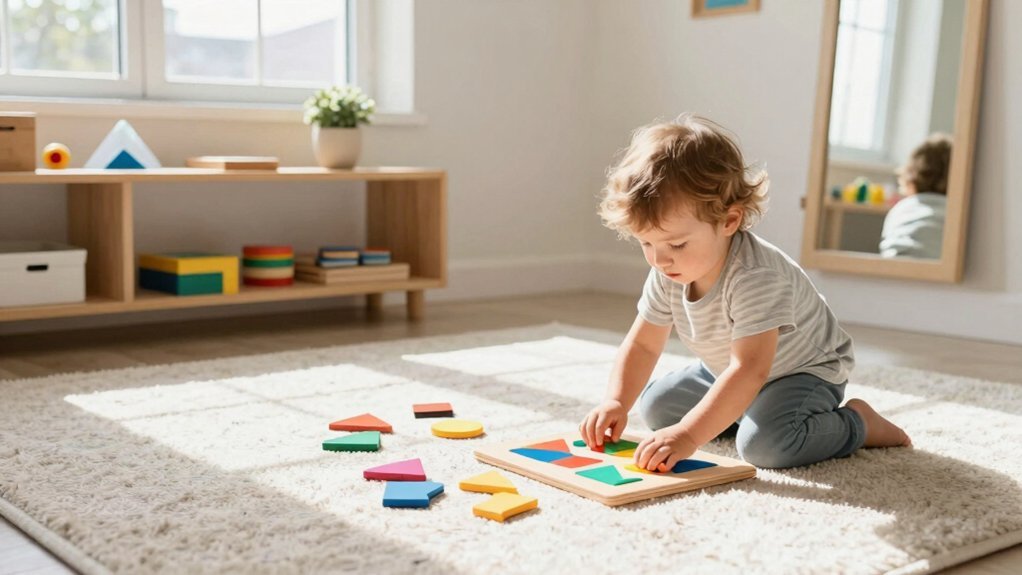
You can let toddlers discover errors as clues by giving them materials that only work when placed correctly—like a spindle box, pink tower, or buttoning frame. The pieces snap, tilt, or stay loose, so the child feels the mismatch and adjusts without adult help. Simple tools such as a pitcher, table‑setting set, or low‑shelf puzzles provide tactile and visual feedback that builds concentration and problem‑solving. Keep the space tidy, with reachable, ergonomically‑gripped items, and you’ll see confidence and resilience grow as they keep correcting themselves.
Why Errors Are Actually Helpful in Montessori Self‑Correction
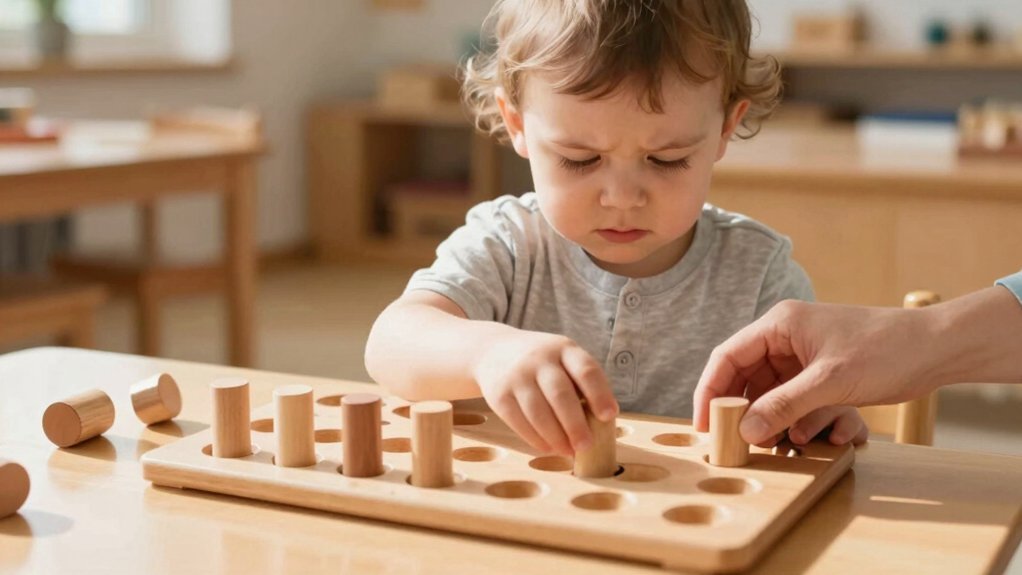
When a toddler makes a mistake with a Montessori material, the error itself becomes the teacher: the piece won’t fit, snap, or balance unless it’s handled correctly, instantly showing what’s wrong and prompting the child to adjust without any adult’s. You notice that each slip triggers sensory/material feedback that signals a mismatch, and that immediate cue sparks self‑correction.
Errors turn into data points for reflection, guiding toddlers toward problem‑solving and independent learning. By confronting mistakes, they develop intrinsic motivation, because success feels earned, not praised. The material’s built‑in controls—mechanical, perceptual, social—let you see the discrepancy, adjust, and repeat, reinforcing a cycle where each error fuels deeper concentration and lasting competence. This approach aligns with the value of natural wood quality in educational tools, offering tactile authenticity that supports sensory learning.
Everyday Materials That Enable Toddler Self‑Correction
Mistakes in the spindle box or Pink Tower show you instantly when a piece is out of place, and the same principle works with everyday items you can find at home. A simple pitcher for pouring water gives toddlers immediate visual and tactile feedback; if they spill, the mess tells them the grip or angle needs adjusting, sharpening fine‑motor control and concentration.
Buttoning frames let them feel when a button aligns, encouraging problem‑solving and independent learning.
Table‑setting guides with mismatched plates or utensils signal errors through shape and size cues, reinforcing practical‑life skills.
Using tools like a Montessori step stool can further promote independence by allowing toddlers to safely reach and engage with their environment, fostering confidence and self-sufficiency.
Mechanical, Perceptual & Social Controls of Error Explained
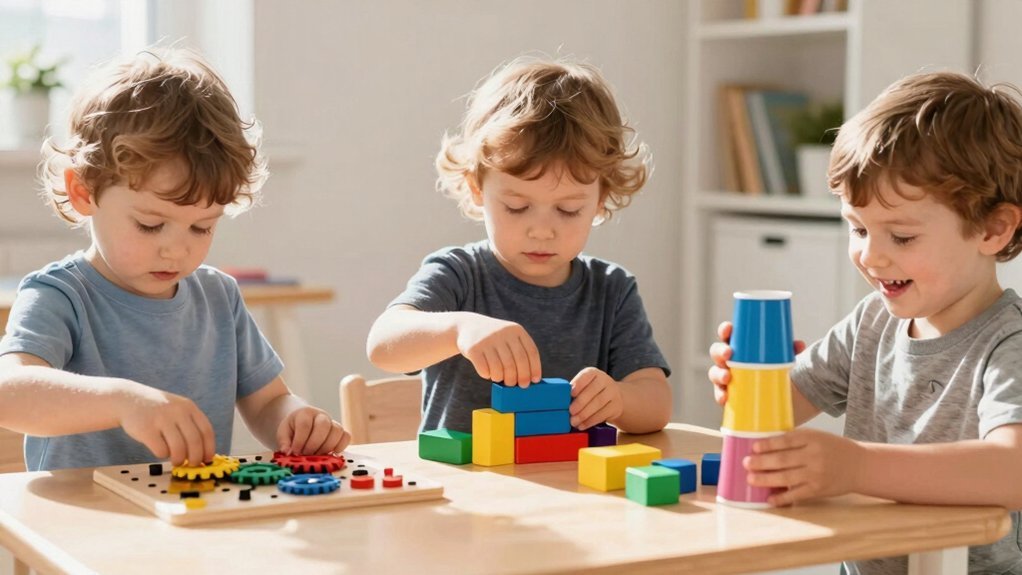
How do you keep a toddler’s learning momentum while they discover errors on their own? You can embed mechanical control, perceptual control, and social/adult‑based control into everyday tasks so the child receives error feedback without adult interruption. Mechanical control lets pieces fit only in the right spots, so a misfit instantly signals a problem. Perceptual control uses visual discrimination and tactile cues, prompting the child to notice discrepancies during task performance. Social/adult‑based control means you observe, then re‑present the activity later, encouraging trial and error and learning through mistakes. Together, these strategies nurture independence and self‑correction.
- Mechanical control: shape‑matching toys that only lock correctly
- Perceptual control: color‑coded blocks that reveal misplacement visually
- Social/adult‑based control: pause, then revisit the activity without direct correction
- Error feedback loop: encourage the child to adjust, reinforcing self‑correction and confidence
- Incorporating child-safe tools that match developmental stages aids error recognition while ensuring safe hands-on exploration.
How to Prepare a Self‑Correction‑Friendly Montessori Environment
Embedding mechanical, perceptual, and social controls into everyday tasks sets the stage for a self‑correction‑friendly Montessori space. You arrange low shelves with open‑ended mechanical puzzles and perceptual cues that instantly show errors, letting toddlers experience feedback without adult prompts. Choose materials that only work when placed correctly, so the control of error is built into each item. Keep the prepared environment tidy, with everything within reach, so independence thrives and concentration stays sharp. Allocate quiet corners where children can pause, reflect, and retry at their own pace. By scaling tables, chairs, and bins to a toddler’s height, you create a safe, inviting setting that encourages self‑correction and sustained engagement. Including child-friendly tools with ergonomic grips can further support fine motor development within the environment.
Montessori‑Based Self‑Correction Benefits: Confidence, Critical Thinking & Emotional Resilience
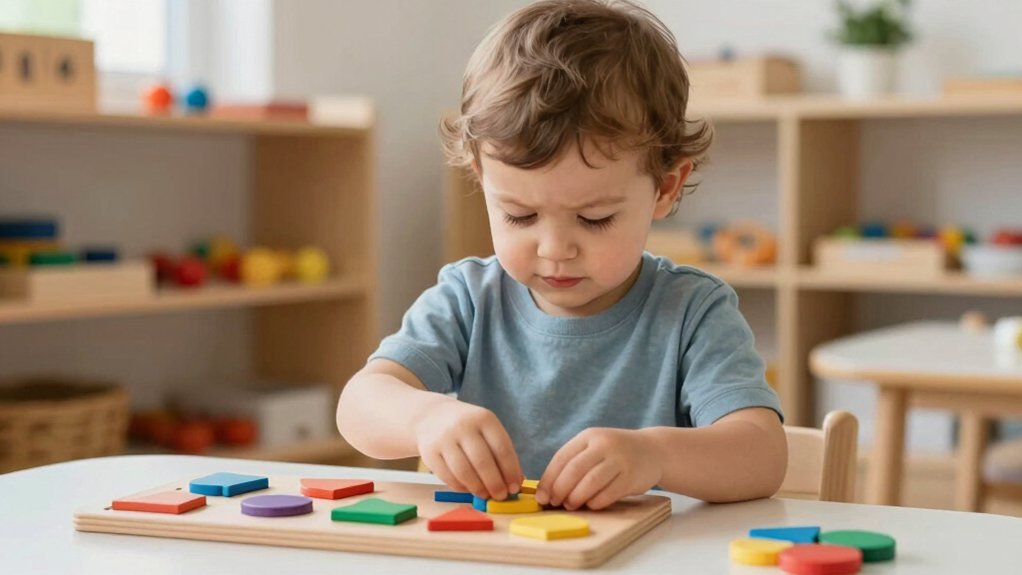
A child who can see an error instantly in a self‑correcting Montessori activity builds confidence, because the feedback comes from the material itself, not from an adult’s judgment. You’ll notice that toddlers begin to trust their own eyes, and the error feedback becomes a catalyst for self‑guided learning. The material’s built‑in controls sharpen concentration, while the need to adjust sparks critical thinking and problem solving. Over time, this cycle nurtures emotional resilience, because each correction feels like a personal victory rather than a reprimand.
- Immediate error feedback reinforces confidence and independence.
- Built‑in controls develop concentration and focus.
- Repeated adjustments sharpen critical thinking and problem‑solving skills.
- Successful self‑correction builds emotional resilience and a growth mindset.
Using materials such as Montessori sorting balls made from natural resources enhances tactile engagement and learning effectiveness.
Frequently Asked Questions
What Is the 3 3 3 Rule for Toddlers?
You follow the 3‑3‑3 rule by giving toddlers three‑minute activities, rotating through three tasks, and offering three simple steps or choices per task, keeping sessions short, varied, and manageable.
What Are Self Help Activities for 2 Year Olds?
You’ll give two‑year‑olds simple self‑help tasks like putting shoes on, washing hands, pouring water, and stacking blocks; they’ll receive instant feedback, fostering independence and confidence.
What Is the 10 10 10 Rule for Toddlers?
You follow the 10‑10‑10 rule by giving a toddler ten seconds to attempt a task, ten seconds of gentle correction, then ten seconds of praise, encouraging independent problem‑solving.
What Are 4 Ways Kids Use Self Monitoring to Learn?
You let kids compare their actions to visible results, notice mismatches, adjust techniques, repeat until correct, and reflect on errors—turning each mistake into a data point for learning.