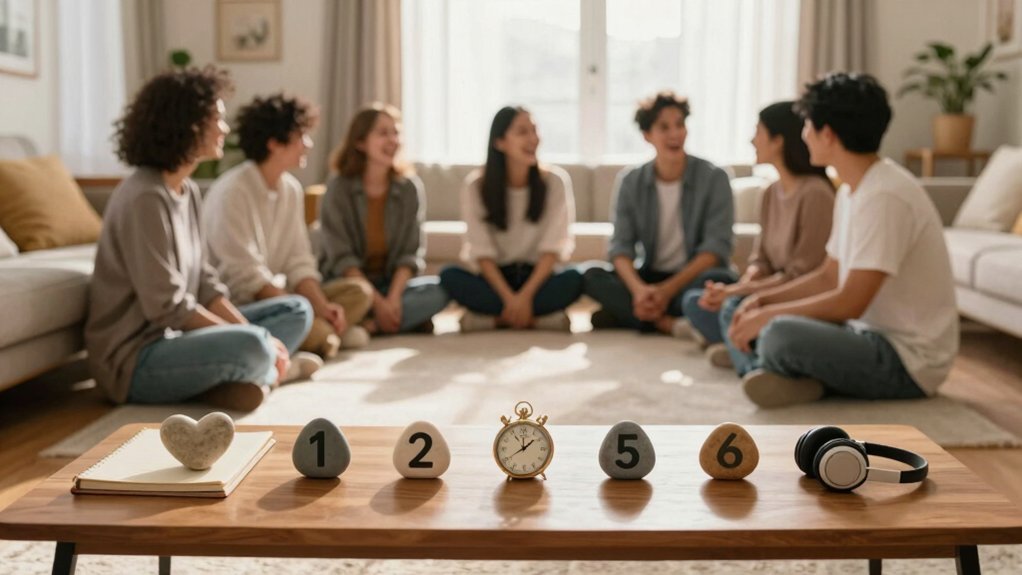

Create a calming sensory corner with a soft rug, dim lamp, and cozy bean‑bag, then add a weighted blanket or lap pad for deep‑pressure input. Include tactile tools like textured blankets, play‑dough, and rice tubs, and offer fidget fabrics or squishy toys for focused play. Use low‑volume nature sounds, noise‑canceling headphones, and a lavender diffuser for soothing ambience. Teach belly breathing with a stuffed animal and the “54321” grounding technique, and model self‑regulation through simple muscle‑movement games. Keep the space organized and safe, and you’ll discover more strategies ahead.
Create a Calming Sensory Space in 5 Simple Steps

Creating a calming sensory space starts with picking a dedicated corner or small room and laying down a soft rug, a dim lamp, and a cozy seat like a bean‑bag chair. You then add core calming items: a weighted blanket, a small sensory bin filled with textured fabrics or squishy toys, and noise‑canceling headphones to mute background noise.
Pick a quiet corner, add a soft rug, dim lamp, bean‑bag, weighted blanket, sensory bin, and noise‑canceling headphones.
Next, introduce gentle visual and tactile tools—soft textures, a lava lamp or slow‑moving bubble tube, and a low‑contrast mural or canopy that offers a safe enclosure.
Sprinkle in a mild scent with a lavender or chamomile diffuser, keeping it optional for sensitivities.
Finally, establish a simple reset routine: spend a few minutes with a chosen calming item, then follow a caregiver’s guided co‑regulation cue to ready your child for transition. Using child-friendly tools, such as a KIDS STEP STOOL WITH SAFETY RAIL, can help build independence and confidence within the sensory space.
Why Kids Need a Calm Sensory Space for Better Emotional Regulation
When you give kids an empowered sensory environment, you let them control their own arousal levels and find calm faster. That self‑soothing translates directly into stronger emotional regulation, so they can shift from stress to focus without a meltdown.
Regular, brief breaks in that space also boost attention and keep them ready for learning.
Owered Sensory Environments
A calm sensory space gives kids a predictable refuge where dim lighting, soft seating, and quiet sounds dial down overstimulation, allowing them to pause and regulate emotions before reacting.
You can create a powered sensory environment by adding a weighted blanket, a soft rug, and tactile tools that deliver deep‑pressure sensory input.
Enclose the area with a pop‑up tent or canopy to make it feel safe and private, reducing anxiety.
Adjustable auditory elements—gentle music, nature sounds, or a low‑volume lava lamp—let you match the child’s current needs without overwhelming them.
Including natural wooden animal figurines with open-ended designs supports sensory exploration and imaginative play, enhancing emotional regulation within the calm space.
Emotional Regulation Benefits
A calm sensory space gives children a predictable haven where safe, consistent input helps them recognize, process, and express emotions more healthily. When you invite them to engage in calming activities—deep‑pressure hugs, slow rhythmic swaying, mindful breathing—they’re training the prefrontal cortex to manage impulses and think flexibly.
The environment’s steady cues lower autonomic arousal, making it easier for you to co‑regulate and for the child to self‑soothe. Consistent sensory breaks turn into resilient coping habits that extend beyond the moment of distress. Incorporating age-appropriate visual stimuli like Montessori mobiles can further support emotional regulation by providing focused sensory engagement.
Set Up Soft Lighting for Low‑Stimulation Calm

Ever wondered how a simple lighting tweak can transform a child’s space into a soothing haven? You’ll create calming lighting by swapping harsh fluorescents for warm lamps or low‑wattage bulbs that dim easily. Position the source 1–2 meters away, angled to the side or behind the child, so glare never hits the eyes. Choose dimmable fixtures or gentle LED strips that let you adjust brightness for reading, play, or bedtime without flicker. Stable LED or incandescent bulbs prevent visual triggers, while a quiet corner with soft textiles reinforces the low‑stimulation vibe. Keep the area uncluttered, and you’ll give your child a consistently soothing environment that supports focus and relaxation. Incorporating sensory tools like Montessori magnet kits can further enhance calming engagement and support developmental focus.
Choose Cozy Seating and Weighted Items for Deep‑Pressure Comfort
You’ll notice how a soft bean‑bag or plush rug invites relaxed sitting, while a lightweight weighted blanket adds soothing deep‑pressure that steadies the body.
Small lap pads or stuffed animals can give targeted proprioceptive input without limiting movement.
Start with lighter weights and brief sessions, watching for any signs of overstimulation, and adjust as needed.
Choosing items made from non-toxic finishes ensures safety and comfort during sensory activities.
Soft Seating Options
Feeling overwhelmed? You can calm your child by pairing soft seating with weighted items that deliver soothing deep‑pressure. A bean‑bag chair or plush rug lets them sink into supportive contact, lowering arousal and sharpening focus during quiet moments. Meanwhile, a lap pad or weighted stuffed animal offers predictable pressure without feeling heavy.
How to choose effective soft seating:
- Pick a low‑profile bean bag that cradles the torso.
- Add a soft, washable rug for floor‑level comfort.
- Include a lightweight weighted lap pad (5–7 % of body weight) for subtle pressure.
- Test the setup during transitions; adjust the weight or cushion firmness as needed.
This combo nurtures proprioceptive awareness, promotes co‑regulation, and creates a calm, inviting space for your child.
Weighted Blanket Benefits
A weighted blanket can turn a cozy seating area into a calm, deep‑pressure sanctuary for your child. When you drape a properly sized weighted blanket over a bean‑bag or soft chair, the gentle pressure stimulates the parasympathetic nervous system, easing anxiety and supporting smoother transitions during quiet time.
Choose a blanket that’s about 10–15 % of your child’s weight—or 5–8 % if they’re younger or new to the sensation—to ensure safe, effective pressure.
Keep the child fully clothed and the blanket evenly spread across the torso, never covering the head or neck.
Monitor for overheating and supervise use, especially during rest periods, to promote self‑regulation and better sleep while respecting sensory processing needs.
Integrating sensory calming techniques such as weighted blankets with tactile learning tools can enhance both emotional regulation and educational engagement.
Deep‑Pressure Sensory Tools
Ever wonder how a simple bean‑bag or plush rug can become a calming anchor for your child? You can turn cozy seating into a deep‑pressure sanctuary by pairing soft surfaces with weighted items that deliver soothing proprioceptive input. Start with the activities they love, then gently introduce a bean‑bag, a plush rug, or a padded lap pad. Watch their arousal level and tweak pressure to stay within comfort.
- Choose a bean‑bag that cradles their torso.
- Add a weighted blanket for consistent deep‑pressure input.
- Layer soft pillows to support relaxed posture.
- Use a lap pad during reading to reinforce calm.
Add Tactile Tools and Textured Surfaces for Touch Exploration
Soft blankets, textured pillows, play dough, and rice tubs give kids a range of soothing and alerting sensations to explore. You’ll notice tactile surfaces become calming tools when you set up a safe nook—think a pop‑up tent or fort where children can touch without distraction.
Start with familiar textures, then gradually introduce new ones, always watching for signs of overwhelm. Add fidget fabrics, squishy toys, and rolled fabrics to the area; these tactile tools invite focused play and support self‑regulation.
Pair the exploration with slow, deep‑pressure activities like a weighted blanket draped over a chair, reinforcing grounding. Keep the space organized, monitor the child’s consent, and adjust texture intensity to match their comfort level. Incorporating Montessori-inspired musical instruments with natural wood and non-toxic finishes can enrich sensory experiences through safe, tactile sound exploration.
Set Up Ambient Sound Playlists and Noise‑Canceling Headphones

Ever wonder how a simple soundscape can transform a chaotic room into a soothing sanctuary? You can create that calm by curating ambient sounds and pairing them with noise‑canceling headphones. Start with a dim corner, low‑volume playlists (40–55 dB) that blend rain, ocean, forest, and soft instrumentals. The headphones cut background noise by 20–30 dB, letting the child focus on the gentle audio without overstimulation. Rotate the tracks regularly and adjust volume gradually to keep the routine fresh and child‑driven.
Steps to set it up
- Choose nature‑based ambient sounds and soft music.
- Set a consistent, low volume level.
- Use noise‑canceling headphones for each child.
- Refresh playlists weekly, matching the child’s preferences.
Safe Aroma Therapy for Relaxation: Lavender, Chamomile, Vanilla
You can introduce gentle aromas like lavender, chamomile, or vanilla to create a calming atmosphere without overwhelming your child.
Keep the diffuser on a low setting, use only a few drops diluted in water, and ensure the room is well‑ventilated.
Always watch for any sensitivities and supervise the session to keep the experience safe and soothing.
Gentle Aromas for Calm
Ever wondered how a simple scent can turn a restless moment into a calm one? You can create a soothing atmosphere with gentle aromas that ease a child’s nerves without overwhelming them. Choose low‑dose, well‑ventilated diffusions of Lavender, chamomile, or vanilla, and watch tension melt away.
- Lavender – a classic calming scent that lowers heart rate and stress.
- Chamomile – supports sleep quality and eases anxiety when added to bedtime routines.
- Vanilla – offers sweet, soothing notes that reduce agitation in calm‑down corners.
- Safety tip – keep concentrations mild, avoid direct skin contact, and ensure the child isn’t sensitive to the oil.
Safe Diffuser Usage Tips
Gentle aromas set the mood, but keeping the diffuser itself safe is just as important. When you pick a child‑safe, high‑quality diffuser, check that the bottle is clearly labeled and out of reach. Use low concentrations—about two to five drops of lavender, chamomile, or vanilla per 100 ml water—to avoid airway irritation. Position the unit in a well‑ventilated area away from heat sources, and keep it out of the child’s immediate breathing zone. Choose a model with an automatic shut‑off timer and replaceable filter for consistent diffuser safety and scent control. Watch for coughing, wheezing, headaches, or skin irritation, and stop use if any appear. Shorter diffusion sessions help maintain sensory calming without overwhelming the environment.
Build an Enclosed, Secure Corner for Extra Safety
Where can you find a calm, safe retreat for a child who needs a quick sensory reset? You can create a Calming Corner by setting up a small pop‑up tent or canopy that feels like a private hideaway. Inside, lay a plush rug, add cushions, and drape a weighted blanket for Deep Pressure input that so the nervous system. Dim harsh lights, play gentle ambient sounds, and keep the space clutter‑free with rounded‑edged furniture and discreet storage. Clearly mark the exit and teach a simple routine for entering and leaving.
- Choose an enclosed structure that’s easy to set up and take down.
- Add soft, weighted items for deep‑pressure comfort.
- Use dim lighting and soothing audio to reduce overstimulation.
- Secure furniture edges and store props out of reach.
Blend TBRI Principles Into Your Calming Sensory Space Routine
After setting up the enclosed, soft‑lit corner, weave TBRI’s empathetic engagement into every sensory break. Model calm breaths, mirror the child’s rhythm, and use gentle language to co‑regulate. Schedule a predictable sensory diet: a jump, a swing, a deep‑pressure hug, then a sip of water and a bite of snack. Each activity signals safety, stabilizes blood sugar, and reinforces self‑regulation. When the child expresses frustration, reflect it back—“I see you’re feeling overwhelmed”—and guide them toward the next calming cue. This routine builds trust, reduces mel, and keeps the space supportive rather than punitive.
| Activity | Goal | Co‑regulation Cue |
|---|---|---|
| Jumping | Release energy | Synchronized breathing |
| Swinging | Vestibular input | Soft verbal reassurance |
| Deep‑pressure hug | Grounding | Warm, steady touch |
Teach Simple Muscle‑Movement Activities Like “Making Lemonade
When you guide a child through the “Making Lemonade” activity, you turn a simple imagination game into a focused muscle‑movement break. The child stands under an imagined lemon tree, reaches up, squeezes fists, releases, then shakes out hands, delivering a calming proprioceptive burst in under 60 seconds. This short cycle builds co‑activation across arms, shoulders, and core, while the squeeze phase invites deliberate breathing that steadies focus. You can adjust intensity by changing squeeze count or adding a gentle trunk twist after the release, matching the child’s tolerance.
- Reach – lift both arms high, feeling the stretch.
- Squeeze – grip fists tightly, hold a breath.
- Release – open hands, pretend to toss lemons.
- Shake‑out – wiggle fingers and arms to reset.
Guide Deep‑Breathing Exercises: Belly Breathing & “Flower and Bubbles
One simple way to calm a child is to teach belly breathing, then add the “Flower and Bubbles” visual cue. Have them lie or stand with a hand on the stomach, feeling the rise on each slow nose inhale and the fall on the mouth exhale. Next, guide them to imagine a fragrant flower as they inhale, then to blow gentle bubbles as they exhale, repeating three to five cycles. This pairing creates a concrete focus that supports self‑regulation, slowing heart rate and activating the parasympathetic system.
Adjust hand placement—one hand on the chest—or extend the breath length for older kids. Consistent practice lets the child regain a calm baseline quickly after excitement or stress.
Ground Kids With the Five‑Senses “54321” Technique
Building on the calming rhythm of belly breathing, you can anchor a child’s attention with the “54321” five‑senses technique. This simple grounding exercise pulls the child out of anxiety and into sensory‑awareness, using nothing but the environment. You can model it aloud, then let the child name:
- Five things they see
- Four things they feel
- Three things they hear
- Two things they smell
Finally, ask for one taste. The sequence creates an external focus that interrupts rumination and lowers arousal. Because it needs no props, you can slip it into classroom transitions, therapy sessions, or home calm‑downs. Repeating the verbal cues reinforces the habit, turning sensory‑awareness into a reliable self‑regulation tool.
Model Self‑Regulation Through Playful Sensory Games
If you turn a simple sensory game into a mini‑lesson, you can instantly model self‑regulation for the child. Place a stuffed animal on the belly and guide both of you through slow, diaphragmatic breaths, counting aloud to keep rhythm. Offer a choice—stress ball or weighted blanket—so the child decides which tool to use, reinforcing self‑control. Begin each round with a song or timer, then signal the end with a gentle cue, teaching smooth transitions. Mirror the child’s breathing and counting, providing live co‑regulation. Repeat age‑appropriate activities like bead stringing or Play‑Doh molding, creating a predictable routine that tracks progress. Over time, these sensory games embed self‑regulation habits that the child can summon independently.
Frequently Asked Questions
What Is the 3 3 3 Rule for Toddlers?
You check in at three minutes, three hours, and three days after a big event, observing safety and breathing, then mood, sleep, appetite, and finally behavior changes, adjusting support as needed.
What Are Sensory Calming Activities for Children?
You can try weighted blankets, gentle rocking, breathing exercises with visual cues, quiet corners, playdough, coloring, Lego building, noise‑canceling headphones, textured fidgets, and timed transition signals to help children self‑regulate.
What Is the 5 Senses Calming Method?
You use the 5‑Senses calming method by guiding a child to name five things they see, four they feel, three they hear, two they smell, and one they taste, instantly grounding them.
What Are the 7 Sensory Needs?
You have seven sensory needs: touch, movement, body awareness, sound, sight, smell, and taste/oral input. Each one requires specific input to keep you regulated and comfortable throughout daily activities.