
You’ll boost early vocabulary and phonemic awareness by mixing sight, sound, touch, and movement. Try air‑writing letters while voicing each sound to link visual shape with auditory cues. Trace letters in sand or shaving cream for tactile feedback, then reinforce shape recognition with sandpaper letters. Build words with color‑coded tiles, saying each phoneme as you snap them together. Add a tap‑and‑say rhythm before blending tiles into whole words. Use story sticks to map characters and plot, and mark up shared reading with symbols. Explore sensory bins with hidden picture cards for targeted sound practice. Keep these routines consistent and you’ll see faster recall and stronger decoding skills.
Why Multisensory Techniques Boost Early Vocabulary
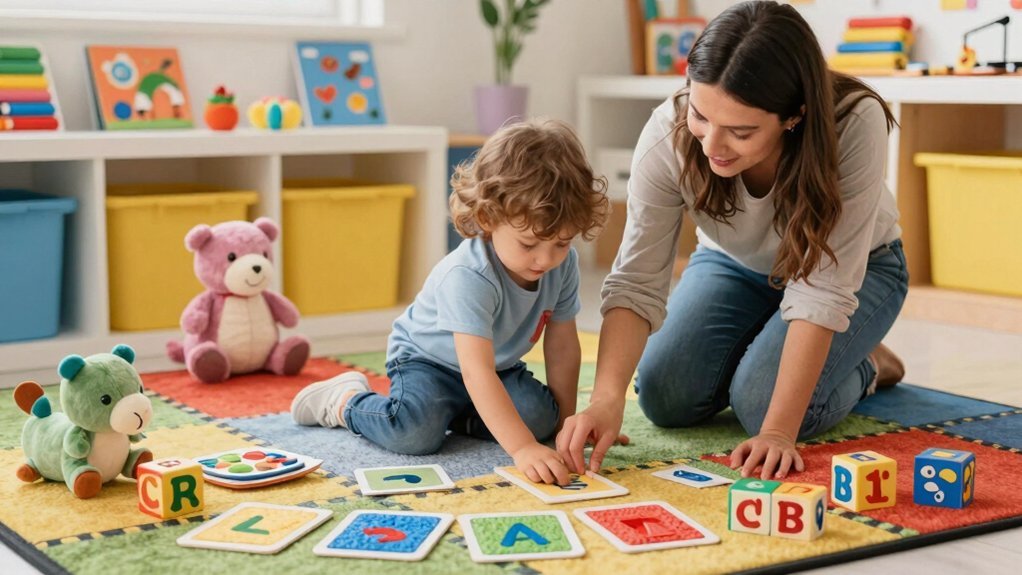
Why do multisensory techniques supercharge early vocabulary? You’ll notice that when you blend sight, sound, touch, and movement, each new word gets layered across several neural pathways. That layering creates stronger memory traces, so you recall words faster and use them more accurately.
You also feel more motivated because the activities match your sensory strengths, turning learning into a game rather than a chore. Research shows that multisensory cues sharpen print‑to‑sound links and boost phonemic awareness, which accelerates vocabulary growth. When you engage multiple senses, you’re not just memorizing definitions—you’re experiencing meaning, context, and emotion all at once. This deep, integrated encoding makes early vocabulary acquisition both robust and lasting. Using tools that promote independent access in early childhood, like Montessori-friendly kitchen step stools, can enhance hands-on learning experiences that support language development.
Air‑Writing Letters to Build Muscle Memory for Sounds
When you trace each letter in the air with two fingers, you hear its sound and feel the motion simultaneously, cementing the phoneme in your mind. This kinesthetic cue links the auditory cue to a physical gesture, so the letter’s sound pops up faster later.
Adding a vivid color or mental image while you write sharpens the memory even more. Using sensory tools like calm-down sensory bottles can enhance mindfulness and focus during learning activities.
Reinforces Letter Sounds
Air‑writing, or sky‑writing, lets you trace each letter in the air with two fingers while you say its sound out loud, turning abstract phonemes into a concrete kinesthetic cue. This multisensory learning technique ties movement to letter sounds, so the brain links the visual shape, the spoken phoneme, and the muscle memory. When you repeat the motion, the sound solidifies, helping you differentiate confusing letters and blend them into words. You can even imagine a color trail to sharpen the visual‑sound connection, making early decoding smoother and more confident.
- Trace the letter while voicing its sound.
- Use two fingers as a pointer for precise motion.
- Imagine a bright color line to enhance visual cues.
- Repeat the motion for each letter of a word.
- Pair the activity with simple words to practice blending.
Using tools with ergonomic handle design can further support children in developing fine motor skills essential for precise air-writing.
Enhances Kinesthetic Memory
Harness the power of movement to lock letter sounds into your muscle memory. When you air‑write a letter with two fingers, you say its sound aloud, letting the gesture and phoneme fuse. This simple act creates a kinesthetic memory pathway that makes retrieval faster and more reliable. Each repetition reinforces the shape‑sound link, so mixed‑up letters like “b” and “d” lose their confusion. You can even imagine a color for each letter, adding a multisensory techniques layer that deepens the connection. By turning abstract symbols into bodily actions, you translate segmentation and blending skills into muscle memory. Over time, the brain stores these patterns, letting you decode words with less conscious effort and greater confidence. Incorporating tools designed for young learners, such as child-size cleaning sets, can further enhance motor skills crucial for handwriting and language development.
Feel and Trace Sand or Shaving Cream Letters
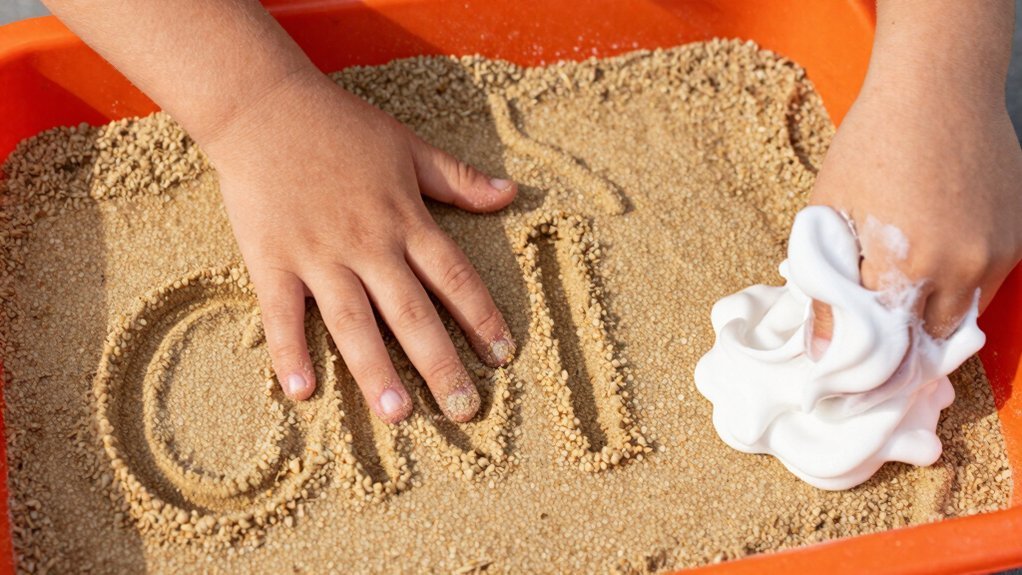
A handful of grains of sand or a dollop of shaving cream can become a tactile alphabet, letting you feel each stroke while you say the corresponding sound. You spread a small mound, shape a letter, and pronounce its phoneme, creating a multisensory link between touch and hearing. This hands‑on practice strengthens letter formation, because the finger’s movement mirrors the visual shape and the spoken sound. As you write, you hear the phoneme, see the emerging glyph, and feel the texture, cementing the grapheme‑phoneme connection. After completing a word, you read it aloud, reinforcing blending skills and phonemic awareness.
- Use a shallow tray for easy spreading.
- Model each letter before the learner traces it.
- Encourage the child to say the sound aloud while tracing.
- Gradually increase word length to build confidence.
- Clean the surface between sessions to keep the activity fresh.
For an enhanced sensory experience, tools with non-scratch silicone coatings can protect learning surfaces during tactile activities.
Trace Sandpaper Letters for Tactile Shape Recognition
Sandpaper’s gritty surface turns each letter into a tactile landmark, letting you feel the shape while you say its sound. You run your fingers over each tactile letter, tracing the rough edge as you articulate the phoneme aloud. The friction creates immediate sensory feedback, reinforcing motor memory for writing. After tracing, you arrange the sandpaper letters to spell simple words, linking shape to sound. Placing a sheet of paper over the raised forms lets you color in the outlines, producing gravestone‑style rubbings that cement visual memory. This three‑sensory loop—touch, sight, and hearing—strengthens letter‑sound comprehension and builds a solid foundation for phonics without relying on visual cues alone. These methods align well with Montessori concepts, emphasizing multi-sensory learning and durable materials for early childhood education.
Build Words With Color‑Coded Tiles for Hands‑On Phonics

You’ll start by arranging the color‑coded tiles so each hue signals a vowel or consonant, making phoneme‑letter matching crystal clear. As you place each tile, you’ll say the sound out loud, turning the activity into an engaging kinesthetic practice. This hands‑on approach lets you see, touch, and hear the word form, reinforcing spelling and reading in one seamless step. Using tools designed with height accessibility in mind can further enhance the multisensory learning experience by keeping materials within easy reach.
Coding Tiles
Ever wonder how a simple splash of color can turn phonics into a hands‑on puzzle? With coding tiles you’ll see vowels and consonants painted in distinct hues, letting you match sound to shade instantly. As you place each tile, you say its phoneme, turning visual cues into auditory articulation while your fingers feel the shape. This multisensory decoding reinforces letter‑sound relationships and makes blending feel like a game. Downloadable sets keep your lessons consistent, and you can pair them with cards or word lists for guided or independent practice.
- Choose tiles that contrast bright vowels with muted consonants.
- Say each sound aloud before snapping the tile into place.
- Blend sounds as you connect tiles, forming whole words.
- Rotate tiles to practice reverse decoding and spelling.
- Store tiles in a labeled tray for quick, structured sessions.
Phoneme‑Letter Matching
How does matching a bright‑colored vowel tile to a muted consonant tile help you lock in phoneme‑grapheme connections? You pick a red “a” tile, a gray “b” tile, and a gray “t” tile, then say /b/‑/a/‑/t/ as you snap them together. The color contrast separates vowels from consonants, so you instantly see the phoneme count in “bat.” Speaking each sound while you touch the letter tiles creates a tactile‑auditory loop that strengthens encoding. You can quickly verify that three tiles form the word, reinforcing decoding and pronunciation. Pairing this hands‑on activity with word cards lets you read the assembled word aloud, cementing the phoneme‑letter relationship without extra explanation.
Engaging Kinesthetic Practice
Color‑coded tiles turn abstract phonemes into concrete, tactile objects, letting you match each sound to its visual cue while you build a word. As you place a red vowel or a blue consonant, you say its phoneme, linking your hands with auditory feedback. When the word is complete, you read it aloud, cementing decoding and pronunciation in a kinesthetic loop. This Multi‑sensory activity can be standardized with downloadable tile sets, ensuring consistency across sessions and reinforcing phonics skills through visual, auditory, and tactile cues.
- Choose a target word and gather the corresponding colored tiles.
- Lay tiles in order, saying each letter’s sound aloud.
- Feel the shape and color as you connect phonemes.
- Read the assembled word to verify pronunciation.
- Repeat with new words, building fluency and confidence.
Tap Out Sounds to Segment and Blend Simple Words
The tap‑out‑sounds technique turns phoneme segmentation into a tactile rhythm: you tap each sound with your thumb while saying it, then blend the taps back together to pronounce the whole word. You’ll notice the multisensory benefit instantly—each tap gives proprioceptive feedback that cements the phoneme order in your mind. Start with a simple word like “bat”: tap for /b/, /a/, /t/, saying each sound aloud as you tap.
After the three taps, pause, then smoothly combine the sounds, letting the rhythm guide you to the full pronunciation. This active blending reinforces decoding and builds confidence for reading aloud. By repeating the process, you internalize the phonemic structure, making word recognition faster and more automatic.
Integrate Tapping With Word‑Building Tiles for Reinforcement
After you’ve mastered tapping each phoneme, you can deepen the skill by pairing the taps with word‑building tiles. You’ll feel the rhythm as you tap a tile, say the sound, and then blend the tiles into a word. This multisensory routine links kinesthetic, tactile, and visual cues, making letter‑sound relationships stick. The process mirrors the Wilson Reading System’s evidence‑based method, turning abstract phonemes into concrete actions that reinforce decoding.
Tap tiles, say sounds, blend rhythmically—multisensory decoding that reinforces Wilson Reading System skills.
- Tap a tile, say its sound, and count the tap.
- Arrange the tiles in order of the spoken word.
- Blend the sounds aloud while keeping the tapping rhythm.
- Verify the word by reading it silently, then aloud.
- Celebrate each correct blend to boost confidence.
Multisensory Story Sticks for Mapping Characters and Plot
You’ll notice how ColorStick characters let you physically place a hue on each protagonist, making their traits pop as you move through the story.
By swapping Plot Mapping sticks for each event, you instantly see how actions link together and where the narrative twists.
This tactile‑visual combo keeps you engaged and clarifies the whole plot in a single glance.
ColorStick Characters
Ever wondered how a handful of colored sticks can turn a chaotic story into a clear, manipulable map? You grab the ColorStick Characters set and instantly tap into a multisensory experience that fuels language development. The bright hues cue visual memory, while sliding the sticks across the table engages your hands. As you label each piece aloud, you cement the narrative structure in your mind. This tactile‑visual‑verbal loop makes abstract characters concrete, letting you track who does what and why without getting lost.
- Assign a unique color to each main character.
- Place sticks on a timeline to show actions.
- Swap sticks to explore alternate motives.
- Use tactile cues to compare character traits.
- Narrate each move to reinforce vocabulary.
Plot Mapping Sticks
A set of bright Plot Mapping Sticks turns a story’s abstract flow into a concrete, hands‑on map. You hand a stick when a character appears, a setting shifts, or an event unfolds, turning sight and touch into instant feedback. The color‑coded pieces cue you to the narrative role, while the tactile act reinforces memory. When the teacher pauses, you place sticks in sequence, visualizing cause‑effect and rehearsing retelling. This multisensory approach blends visual cues, physical manipulation, and social interaction, deepening comprehension and recall.
| Stick Type | Color | Function |
|---|---|---|
| Character | Red | Identify protagonists & antagonists |
| Setting | Blue | Mark location changes |
| Event | Green | Sequence actions & outcomes |
Multisensory Shared Reading With Interactive Mark‑Up
Multisensory shared reading with interactive markup engages students by combining listening, reading aloud, and marking text, which reinforces sight‑word recognition and phoneme‑grapheme connections. You’ll notice that multisensory reading activates auditory, visual, and sometimes tactile channels, while interactive markup ties meaning to print. As you guide learners through a passage, they underline sight words, circle vowels, and jot symbols in margins, creating a physical map of sound‑to‑letter links. This active participation boosts memory retrieval and comprehension, turning passive listening into a dynamic, hands‑on experience.
- Provide printable pages with margin space for annotations.
- Model underlining sight words before students try.
- Encourage circling of vowel patterns to highlight phonemes.
- Use simple symbols (✔, ★) to mark familiar words.
- Prompt brief oral explanations of each markup choice.
Sensory Bins With Hidden Picture Cards for Target Sound Practice
Often you’ll find that a sensory bin packed with rice, sand, or water beads becomes a lively playground for target‑sound practice: as learners dig through the textured material, they uncover Björk Speech picture cards, instantly linking the tactile search to the visual cue and the spoken phoneme. You’ll notice how the multisensory setup sparks curiosity, while the hidden cards prompt immediate articulation attempts. Each discovery reinforces sound‑symbol correspondence, because the child feels the grain, sees the image, and says the phoneme in one fluid sequence. You can tailor the bin to specific articulation goals by selecting cards that target a particular phoneme or word. The combined tactile, visual, and auditory feedback deepens memory, making the practice both engaging and effective.
Frequently Asked Questions
How Can Multisensory Methods Support Children With Speech Delays?
You can boost speech by pairing sounds with visual cues, tactile props, and movement; these rich inputs trigger multiple brain pathways, making words clearer, reinforcing memory, and encouraging confident vocal practice.
What Age Is It Appropriate to Introduce Scented Learning Activities?
You can start scented learning activities around age three, when kids safely recognize smells and follow simple instructions, but keep fragrances mild, supervise closely, and stop if any irritation or overwhelm occurs.
Do Multisensory Techniques Improve Reading Comprehension, Not Just Vocabulary?
Yes, you’ll find multisensory techniques boost reading comprehension by engaging visual, auditory, and kinesthetic pathways, which reinforces meaning, helps you retain details, and deepens understanding beyond just vocabulary.
How Often Should Parents Rotate Sensory Materials to Maintain Engagement?
You should swap sensory materials every two to three weeks, keeping activities fresh and challenging. Mixing textures, sounds, and visuals regularly sustains curiosity, prevents boredom, and reinforces learning momentum.
Can Multisensory Strategies Be Adapted for Bilingual Language Development?
Yes, you can adapt multisensory strategies for bilingual development by pairing visual cues, tactile objects, and auditory prompts in both languages, ensuring consistent exposure and switching materials regularly to reinforce each language.