
First, pause and ground yourself—breathe deep, feel your feet, and note five blue, five red, and five green objects to stay present. Then reframe the conflict from your own perspective using “I” statements, describing feelings and needs without blame. Speak calmly, focusing on specific behavior and its impact, and invite the other person’s view with open, non‑judgmental questions. Finally, create a joint action plan with clear roles and deadlines, and appreciate each other’s effort; continuing will reveal deeper strategies.
Pause and Ground: A First‑Step Guide for Peaceful Conflict Resolution
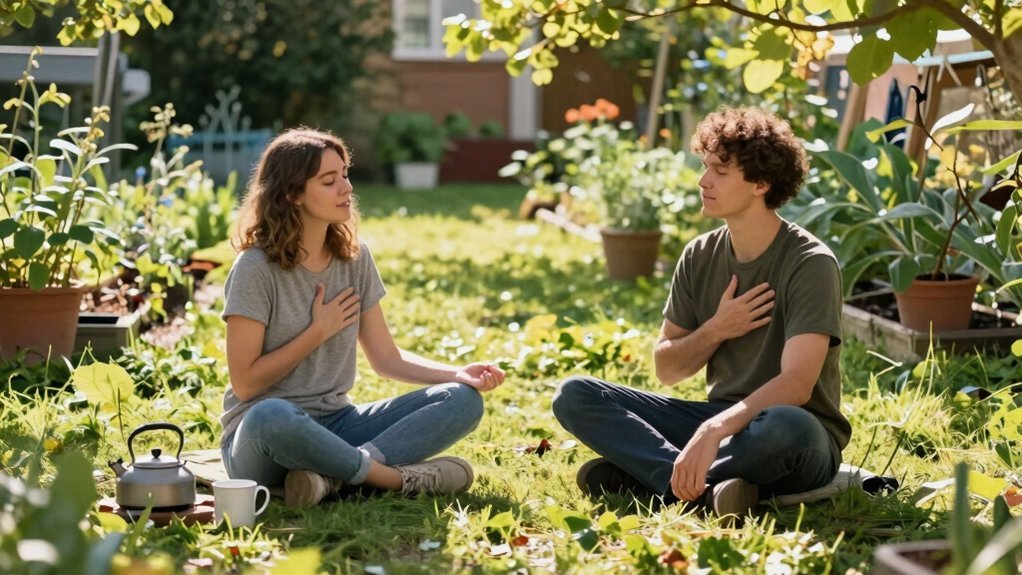
How do you keep a heated moment from spiraling out of control? You pause at the first sign of tension, then breathe deeply to shift from reactive to reflective thinking. Ground yourself by feeling your feet on the floor, noting five blue objects, five red, five green, and anchoring your emotions in the present. This grounding cue steadies you, reduces arousal, and creates space for two‑way communication. If blame or defensiveness creeps in, take a brief break—a bathroom stop or a short walk—to recenter before continuing. By incorporating these simple steps, you lay a calm foundation for conflict resolution, turning a volatile encounter into a constructive dialogue. Practicing mindfulness techniques inspired by Montessori principles can further enhance emotional regulation in tense moments.
Reframe the Conflict Using Your Own Perspective in Peaceful Conflict Resolution
A simple shift in language can turn a clash into a conversation: start by describing what you feel and need, using “I” statements instead of “you” accusations. When you frame the issue from your own perspective, you protect personal safety, demonstrate emotional awareness, and set the stage for nonviolent communication. This approach strengthens conflict management by inviting perspective‑taking and collaborative problem‑solving. You ground the discussion in observable moments, avoid blame, and encourage the other person to share their view.
- State your feeling and need with an “I” sentence.
- Cite a specific behavior you observed, not a label.
- Ask for their perspective and propose a joint solution.
Speak Calmly With “I” Statements to Express Needs in Peaceful Conflict Resolution

I’ll share how using calm “I” statements lets you express needs without triggering defensiveness. In conflict communication, start with “I feel frustrated when…” to own the emotion and avoid blame. Pair the sentence with a brief grounding moment—a pause or a deep breath—so the other person can hear you clearly. Then frame a needs‑based request: “I would like a five‑minute break to gather my thoughts, so we can continue toward a peaceful resolution.” Focus on specific behavior and its impact on you, not on character judgments. This structure invites active listening, reduces escalation, and keeps the dialogue collaborative. By consistently using I statements, you turn heated exchanges into opportunities for mutual understanding and constructive problem‑solving.
Ask for Their View Without Judgment in Peaceful Conflict Resolution
Curious about turning a tense exchange into a collaborative dialogue? You can shift the dynamic by inviting their view without judgment. Start with a gentle phrase like, “I’d like to hear your perspective on this,” then ask open questions that probe experience rather than blame. Practice active listening: pause, paraphrase, and acknowledge feelings before sharing your own thoughts. A brief pause or time‑out helps keep the nonjudgmental dialogue calm and signals you’re after mutual understanding, not victory.
- Use first‑person framing to reduce defensiveness.
- Pose open, genuine questions that focus on their experience.
- Listen actively, paraphrase, and acknowledge emotions before responding.
Using non-slip grip design techniques can similarly enhance engagement and ease in communication, promoting a more comfortable exchange of ideas.
End With a Joint Action Plan and Shared Appreciation in Peaceful Conflict Resolution

Concluding a disagreement with a clear, shared action plan and genuine appreciation transforms a tense moment into a lasting partnership. You’ll draft a joint action plan that lists concrete steps, deadlines, and who’s responsible, ensuring accountability for each task. Pair this plan with mutual appreciation, naming each person’s contribution and the value of the relationship. Frame the goals as collaborative problem‑solving outcomes, not victories, and schedule a neutral facilitator‑led check‑in to review progress and adjust commitments. Document everything in neutral language, so no party feels blamed. By aligning timelines, responsibilities, and gratitude, you turn conflict resolution into a structured, respectful process that builds trust and keeps communication open.
Frequently Asked Questions
What Are the 5 C’s of Conflict?
You’ll find the 5 C’s are Calm—pause and breathe, Curiosity—ask genuine questions, Clarity—use “I” statements, Connection—focus on shared goals, and Collaboration—solve problems together.
What Are the 5 Methods of Resolving Conflict Peacefully?
You resolve conflict peacefully by collaborating, separating people from the problem, using a neutral mediator, preparing your BATNA, and practicing calm, mindful communication through pausing before speaking.
What Is the 5 5 5 Method of Conflict?
You spot five blue items, five red items, and five green items in your surroundings, then shift focus among them. This rapid grounding lowers threat, steadies emotions, and lets you de‑escalate conflicts quickly.
How to Resolve Conflict in a Peaceful Way?
You’ll pause, breathe deeply, then state your feelings with “I” statements, focus on the issue, not the person, stay grounded physically, ask curious questions, and co‑create a mutually satisfying solution.