
You start with concrete naming, holding an object and saying, “This is a spoon,” so the child links the word to the sensory experience. Next, you move to recognition: “Show me the spoon,” letting them point without correction, which builds analytical connections. Finally, you cue recall, “What is this?” and the child retrieves the label independently, confirming mastery. This three‑step flow shifts learning from concrete perception to abstract understanding, and the next section reveals how to apply it to math and science.
What Is the Montessori Three‑Period Lesson?
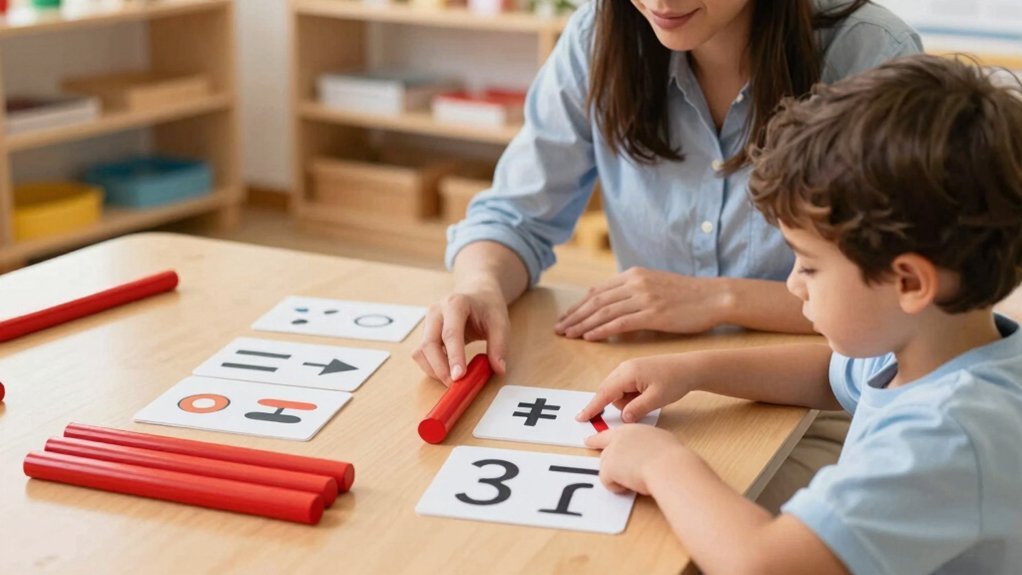
One of the core tools in Montessori classrooms is the three‑period lesson, a brief, three‑step sequence that introduces a new concept or word. In the Montessori Three‑Period Lesson you start with naming: you say “This is a triangle” to create a concrete linguistic link. Next comes recognition, where you ask the child to “Show me the triangle,” letting them point or manipulate the object without correction. The final stage is recall—prompting “What is this?” and expecting the child to name it independently. This learning sequence moves from concrete to abstract, supporting vocabulary introduction for children aged 3‑6. By pacing each period, you build mastery through naming, recognition, and recall. Montessori learning tools, such as step stools with safety features and age-appropriate design, further support the child’s independent exploration and mastery.
Concrete Naming and Sensory Indexing
The first period zero all about concrete naming, using “This is” to lock a single sensory attribute—like a color or shape—into a precise word. You say, “This is red,” or “This is a circle,” and the child hears a clean link between perception and vocabulary. That link becomes a sensory indexing cue stored in the left hemisphere, ready for later recall. In Montessori practice, period one avoids extra description; you isolate the attribute, name it, and let the brain register the exact term. The simplicity of concrete naming builds a solid foundation for future abstraction, turning fleeting sensations into durable language anchors. Educational tools like Montessori play kitchens support this learning by offering realistic features that reinforce cognitive and language skills.
| Emotion | Example | Effect |
|---|---|---|
| Joy | “This is bright yellow.” | Sparks excitement |
| Curiosity | “This is a triangle.” | Invites exploration |
| Confidence | “This is soft.” | Reinforces mastery |
| Calm | “This is smooth.” | Settles attention |
Recognition Phase: “Show Me …” Activities

What happens when you say, “Show me the red block”? You cue a recognition task where the child must point, touch, or select the object, linking it to the previously taught term. In this Montessori lesson the command “show me” drives identification and vocabulary association, moving you from concrete to abstract understanding.
Repeated activities keep the child engaged, and each successful response strengthens memory reinforcement. If the child hesitates, pause the lesson, revisit later, or revert to naming on another day to keep confidence high. The focus stays on practicing recognition—not recall—so the child builds a solid foundation for later independent naming. Using materials with color-coded bead segments can enhance quantity-symbol associations during recognition tasks.
Recall Phase: Prompting “What Is This?
Cueing “What is this?” shifts the lesson into the Recall Phase, where the child must retrieve the label without any prompts. In this third period you pause, give the cue, and watch the child’s memory surface. If they answer correctly, the association between sensory impression and vocabulary is solid, signaling mastery. If they stumble, you end the lesson or return to the first period to rebuild the connection. Use this moment to gauge retention and reinforce the mental label. This phase is especially effective when paired with puzzles that emphasize spatial and cultural learning, enhancing the child’s engagement and retention.
| Step | Teacher Action |
|---|---|
| 1 | Prompt “What is this?” |
| 2 | Observe child’s response |
| 3 | Confirm correct label |
| 4 | Decide to move on or repeat |
Why the Three‑Period Lesson Moves From Concrete to Abstract?

Concrete experiences lay the groundwork, then the lesson shifts toward abstract understanding by moving from naming objects, to recognizing them, and finally recalling the words without prompts. You see why the Three‑Period Lesson follows a Concrete to Abstract path: each stage builds on the last, turning sensory input into lasting vocabulary.
In Period 1, Naming ties a tangible item to a word, giving you a concrete reference.
Period 2, Recognition, lets you match the term to the object repeatedly, strengthening the link without demanding inference.
Finally, Period 3, Recall, asks you to retrieve the word from memory, cementing the abstract concept.
This Montessori learning progression ensures that vocabulary becomes durable, not fleeting, by anchoring language in real‑world experience. For example, using hand-woven natural materials in educational settings provides concrete sensory input that enhances learning effectiveness.
How the Left Brain Supports the Three‑Period Lesson
How does the left brain actually make the Three‑Period Lesson click? You tap the left hemisphere’s language hub, where vocabulary encoding creates a stable index for each label. In Period 1, naming links the spoken word to the sensory attribute, anchoring a symbol‑to‑object pair that the brain can retrieve later. Period 2’s recognition phase relies on the left hemisphere’s analytical processing; repeated declarative prompts reinforce explicit category labels, strengthening memory reinforcement. By Period 3, recall draws directly from that left‑side store, letting you produce the correct term when you hear “What is this?” The left brain’s precise handling of naming, recognition, and recall turns concrete experiences into durable linguistic maps, driving mastery of the Three-Period Lesson. This process mirrors how ergonomic handles in carefully designed tools enhance progressive learning and skill development.
Repetition in Period 2: Strengthening Neural Connections
You’ll notice that each repeated command builds a synaptic pathway linking the word to its attribute. Consistent practice in Period 2 keeps those connections active, so recall becomes faster and more reliable. When a child struggles, you can pause or revert to Period 1, ensuring the pathways strengthen only when readiness improves. Choosing materials with easy maintenance supports consistent use and encourages continued engagement during learning activities.
Repetition Builds Synaptic Pathways
Repeated exposure to the same object and its label in Period 2 creates and synaptic pathways, making the neural connection between visual, and word stronger each time you hear and identify it. You notice that each repetition tightens the link, turning fleeting impressions into durable recall. This memory reinforcement fuels vocabulary learning, letting you move smoothly from concrete to abstract concepts within the three‑period lesson. Active participation in game‑like drills keeps your brain engaged, so the neural pathways you build stay resilient and ready for later stages.
- Hear the word, see the object, repeat aloud.
- Use the term in a quick sentence each round.
- Match the label to a new context after several repetitions.
- Engage in a rapid‑fire quiz to retrieve the word.
- Celebrate each correct identification to strengthen memory reinforcement.
Consistent Practice Enhances Recall
The synaptic pathways you built through repeated exposure now need to stay active, and that’s where consistent practice comes in. In Period 2 repetition you shift from passive viewing to active vocabulary practice, turning naming tasks into mini‑quizzes that spark recall reinforcement.
Each session of repeated exposure nudges the brain toward memory consolidation, converting fleeting impressions into durable memory traces.
By weaving concrete examples into abstract prompts, you keep the material fresh while deepening connections.
When you stumble, pause, revisit the same words, and let the cycle of exposure and retrieval tighten the network.
This disciplined rhythm bridges the concrete‑to‑abstract gap, ensuring that later recall feels effortless rather than forced.
Managing Missteps in the Three‑Period Lesson
Ever wonder how a child’s confidence stays intact when a recognition‑phase answer misses the mark?
You can keep the Three Period Lesson flowing by treating missteps as signals, not failures. In the recognition phase you pause, avoid corrective feedback, and let the lesson end with delicate handling. When the child isn’t ready for psychic association, you simply revisit the naming period later, preserving learning readiness and the Montessori approach’s calm tone.
- End the session quietly when an error appears.
- Record the misstep without comment.
- Schedule a fresh naming round on the next suitable day.
- Observe if repeated difficulty indicates unreadiness.
- Reinforce confidence by celebrating effort, not correctness.
Practicing the Three‑Period Lesson With Everyday Objects
How can you turn a kitchen spoon or a laundry basket into a powerful teaching tool? You start with the naming period, holding the spoon and saying, “This is a spoon.” The concrete object anchors vocabulary acquisition. Next, move to recognition: ask, “Which is the spoon?” and let the child point. If they hesitate, pause and repeat the naming step. Finally, test recall by showing the spoon without cues and asking, “What is this?” Success means the child names it independently. Use everyday items—spoons, baskets, socks—to keep lessons fresh and Montessori‑aligned. When a child struggles, revisit the same concrete objects for mastery reinforcement, ensuring each Three‑Period Lesson builds confidence and fluency.
Parenting Tips for Short, Joyful Home Sessions
You’ll keep each session under five minutes, using items you already have at home so the child feels comfortable. By naming the object, asking them to point it out, and then letting them say the word, you create a clear, concrete routine. Celebrate every correct answer, even the tiny ones, to keep the mood joyful and pressure‑free.
Keep Sessions Short
Why not keep each home lesson under three minutes? Short sessions honor the child’s natural attention span and keep the three‑period lesson flowing from concrete to abstract without fatigue. In a Montessori‑style routine, you’ll use a single vocabulary introduction per object, saying “This is [word]” in period 1 wording, then ask for period 2 recognition like “Show me the [word]”. If the child hesitates, pause, plan a brief revisit for another day, and stay consistent with timing when they’re rested. This keeps early childhood learning joyful and pressure‑free.
- Aim for 2–3 minutes per lesson
- Use one clear word per object
- Phrase period 1 as “This is [word]”
- Prompt period 2 with “Show me the [word]”
- Pause and revisit if needed, don’t extend the session
Use Everyday Materials
Ever wondered how a simple spoon can become a powerful teaching tool? In a Three‑Period Lesson, you start with a concrete, everyday material and name it: “This is a spoon.” The sensory repeat of the word while your child holds the spoon sharpens attention and pronunciation. Next, prompt recognition—“Show me the spoon.” The game‑like request turns a plain object into a vocabulary cue. Finally, test memory recall: “What is this?” If the answer slips, pause and revisit later with the same item. After the quick 2‑3‑minute session, expand home learning by labeling other familiar objects, building a richer, concrete‑to‑abstract vocabulary foundation without extra toys.
Celebrate Small Successes
How can a tiny win turn a brief lesson into a confidence boost? In a 2‑minute home session, you follow the 3‑Period Lesson: name clearly, show me, then what’s this. When your child nails a step, give specific positive reinforcement—“Great job naming that—this is a square!”—to spark confidence building. Keep the tone joyful, the pace aligned with Montessori pacing, and revisit any missed connections later, preserving a low‑stakes vibe.
- Use vivid, exact praise for each small success.
- Pair the praise with a quick, fun follow‑up question.
- Keep the session under three minutes to avoid fatigue.
- Reinforce the name clearly before moving to the next item.
- Celebrate everywhere, not just the perfect answers, to sustain motivation.
Observing Concentration and Memory Growth
A few seconds of focused observation can reveal how a child’s concentration sharpens and memory expands during the Three‑Period Lesson. You watch the child move from naming a concrete object to recognizing it among distractors, then recalling it independently. The recognition phase, the longest stretch, feels like a gentle game; you notice steady eye contact and a quiet, sustained focus that signals deep cognitive flow.
As the lesson shifts from concrete-to-abstract, you see language development accelerating—words stick, and the child self‑corrects without prompting. Minimal corrective feedback keeps the rhythm smooth, and the brief 2‑3‑minute cycle prevents overload. By the end of Period 3, you can measure the growth: sharper concentration, richer memory, and a clear path toward independent learning.
Next Steps: Vocabulary for Math & Science Foundations
What if you could turn everyday math and science tools into a vocabulary‑building engine? In the Three‑Period Lesson you’ll name a term, model it with Montessori materials, then prompt recall. First you present a concrete object—beads for sum, racks and tubes for measurement—while you say the word. Next you demonstrate the concept, letting the child see the link between the tactile and the verbal. Finally you ask “What is this?” to cement recall. This concrete‑to‑abstract flow builds solid math foundations and science foundations, ensuring each term sticks before moving to abstraction.
- Use beads to illustrate sum and difference.
- Pair racks and tubes with measurement vocabulary.
- Introduce counters for quotient and variable.
- Apply experiment kits for hypothesis and result naming.
- Prompt quick recall with “What is this?” after each activity.
Frequently Asked Questions
What Is the Montessori 3 Period Lesson?
You learn the Montessori 3‑Period Lesson by first hearing “This is” to name an object, then “Show me” to recognize it, and finally “What is this?” to recall the name independently.
What Is Concrete to Abstract Teaching?
You teach concrete‑to‑abstract by first letting learners handle real objects, then naming them, and finally having them recall the terms from memory, turning tactile experience into mental concepts.
What Are the Three Stages of a Lesson?
You’ll use three stages: first, you name the item with “this is…”; second, you ask the child to identify it using “show me…”; third, you test recall by asking “what is this?”
Did Mark Zuckerberg Attend Montessori?
You won’t find any reliable source confirming Zuckerberg attended Montessori; he went to private schools in Dobbs Ferry, then Ardsley High, Phillips Exeter, and later Harvard, where he launched Facebook.