
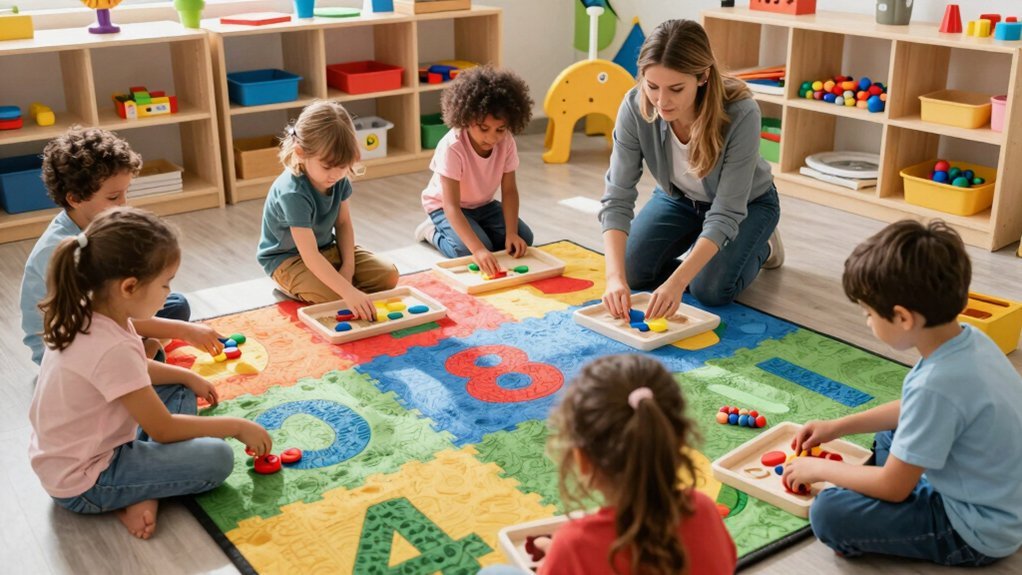
You’ll see that blending sight, sound, and movement lets your brain hook onto numbers from multiple angles, turning abstract symbols into concrete actions. The CRA progression—blocks, diagrams, then symbols—fires up visual, auditory, and kinesthetic pathways, expanding working memory and strengthening neural connections for executive function. This multisensory boost creates richer memory traces, so concepts stick longer, especially for kids with ADHD or dyscalculia. Keep going and you’ll discover more ways to harness this powerful approach.
What Multisensory Math Is and Why It Helps Kids’ Brains Grow

Multisensory math blends sight, sound, and movement into a single learning experience, turning abstract numbers into concrete, memorable actions. You engage multisensory learning by pairing visual-auditory-kinesthetic cues with manipulatives, so math concepts become tangible.
The concrete‑representational‑abstract progression lets you start with blocks, shift to diagrams, then to symbols, reinforcing neural connections that drive brain growth. Activating multiple channels boosts cognitive processing, expands working memory, and makes math comprehensible.
You’ll notice stronger neural pathways as visual, auditory, and kinesthetic inputs converge, supporting executive function and long‑term retention. This approach isn’t just fun—it builds the architecture of learning, ensuring every lesson feels like a solid, connected experience rather than a fleeting abstraction. Incorporating multi-sensory manipulatives like wooden memory games can further enhance cognitive development and memory retention in young learners.
Hands‑On Multisensory Activities That Turn Abstract Numbers Into Tangible Experiences
Ever wondered how a simple set of counting bears can make the number 27 feel concrete rather than abstract? You’ll start with a multisensory, hands‑on session: kids sort bears into groups of ten, then ones, hearing a chant that labels each pile. The manipulatives give tactile feedback while a color‑coded place‑value chart acts as visual aids.
Next, they draw the groups on paper, moving into the representational stage of the CRA sequence. Finally, they write the numeral 27, linking the concrete bears and drawings to abstract symbols. This concrete‑representational‑abstract flow reinforces counting, place value, and other math concepts, making numbers feel tangible and memorable. Using multi-sensory tactile objects ensures children engage multiple senses, enhancing retention and understanding.
Why Multisensory Math Works for All Learners (Including ADHD & Dyscalculia)

When you blend sight, sound, and touch into a single lesson, you light up multiple neural pathways at once, creating richer memory traces that stick far better than a purely visual or auditory approach. Multisensory learning gives every student, including those with ADHD or dyscalculia, visual‑tactile‑auditory cues that reinforce each other. Concrete representations—like fraction tiles, number bonds, or counting beads—turn abstract symbols into tactile experiences, easing working memory load. Hands‑on tools provide multiple entry points, so a learner can grasp a concept through sight, sound, or touch, whichever fits best. This redundancy builds math confidence, reduces anxiety, and sustains attention, making the subject accessible and engaging for all. Using durable and easy-to-clean materials like porcelain bowls with suction bases can also help maintain an effective learning environment by minimizing distractions from spills and messes.
Frequently Asked Questions
How Much Does Multisensory Math Cost for Schools?
You’ll typically spend $2,000‑$5,000 per classroom annually, covering software licenses, tactile kits, and teacher training; larger districts may negotiate bulk discounts, but costs rise with added hardware and support.
Can Parents Implement Multisensory Math at Home Without Special Tools?
You can easily bring multisensory math home using everyday items—count beans, draw shapes on paper, sing number songs, and use kitchen measures—no special tools needed, just creativity and consistency.
What Training Do Teachers Need to Deliver Multisensory Math Effectively?
You need professional development workshops covering tactile manipulatives, visual‑spatial strategies, auditory cues, and technology integration; plus coaching on lesson pacing, classroom management, and assessment alignment to ensure multisensory math works effectively.
How Is Student Progress Measured in Multisensory Math Programs?
You track progress by combining real‑time observation, quick quizzes, and digital dashboards that log accuracy, speed, and engagement, letting you adjust activities instantly and see growth across sensory modalities.
Are There Digital Platforms That Support Multisensory Math Learning?
You can use platforms like DreamBox, Prodigy, and Mathseeds, which blend visuals, audio, and interactive manipulatives, letting you explore concepts through games, videos, and tactile simulations, all on‑demand.