
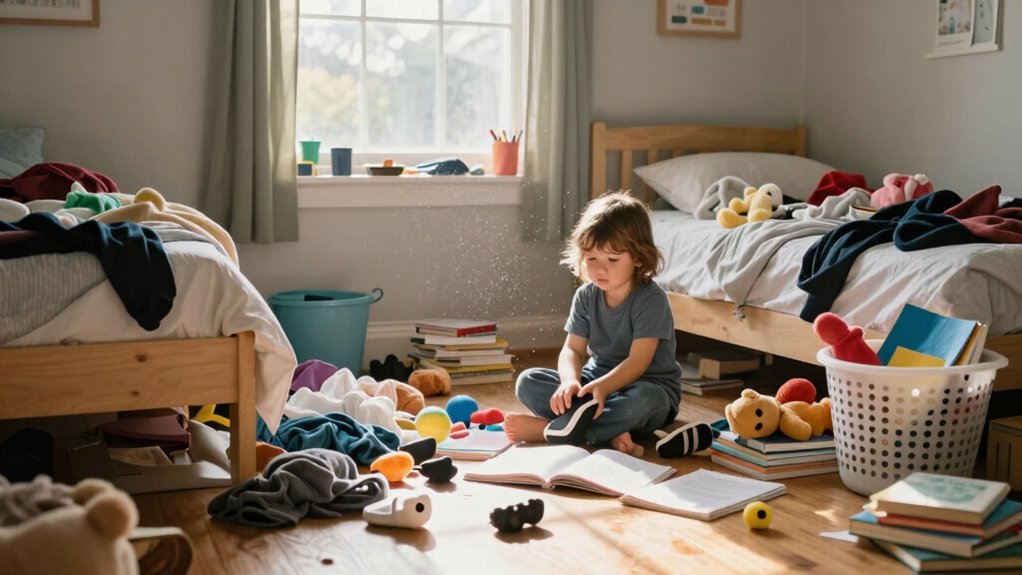
You’ll see that natural consequences turn a messy room into a live lesson in cause‑and‑effect: toys get lost, homework slips, and playtime shrinks when clutter isn’t cleared, teaching responsibility without punishment. By linking tidy habits to real outcomes—like a full laundry basket or easy‑to‑find supplies—you help your child anticipate results and choose better actions. Consistent, calm cues and simple storage reinforce the lesson, and if you keep going, you’ll discover how to embed these habits for lasting change.
Explain Natural Consequences & Their Edge Over Punishment

When a child leaves their room a mess, the natural consequence—missing a favorite toy hidden under the clutter or being unable to find a school assignment—follows directly from that choice. You notice that natural consequences differ from punishment because they stem logically from the behavior, not from an adult’s imposed penalty. By letting the child experience the result, you teach responsibility and reinforce cause‑and‑effect thinking. The child learns to anticipate outcomes before acting, which builds better decision‑making habits.
To use this approach effectively, stay consistent, keep the result safe, and avoid humiliation. This way, the child internalizes the lesson without feeling shamed, and you maintain a supportive relationship while guiding better habits. Encouraging imaginative play with realistic role play costumes can also help children understand responsibility and the impact of their actions in a fun, engaging way.
Demonstrate Real‑World Impact of a Messy Room
A messy room doesn’t just look untidy; it directly disrupts daily life. When toys are buried under a chaotic mess, your child spends minutes searching for a favorite action figure, turning playtime into frustration.
The same clutter can hide school supplies, causing tardy homework submissions and missed deadlines.
You’ll notice laundry piling up because the basket is overflowing, forcing a rushed, half‑done wash that leaves clothes still damp.
Laundry piles up as the overflowing basket forces rushed, half‑done washes, leaving clothes damp.
These natural consequences highlight the link between organization and responsibility: the mess creates tangible setbacks, while a tidy space yields immediate rewards like easy access to items and smoother routines.
Incorporating organized sorting features into a child’s environment can foster better habits and support developmental growth beyond just tidiness.
Set Natural‑Consequence Clean‑Room Expectations

Because children notice right away how a messy room blocks the things they love—like finding a favorite toy or getting to a sports practice—you can set clean‑room expectations that tie the act of tidying to those outcomes. Explain that if they leave clothes on the floor, the laundry basket stays full and their favorite shirt may be delayed; if they hide school supplies, they risk missing practice. Use natural consequences to illustrate cause and effect, not punishment. Keep the expectations age‑appropriate: younger kids help with guided sorting, older kids handle independent cleanup. Reinforce the rule calmly each day, so they see consistent outcomes when the room stays tidy. Over time, they internalize responsibility and enjoy uninterrupted access to the activities they cherish. Introducing Montessori tools like a step stool for kids can encourage children to independently manage their space, fostering responsibility and confidence.
Let the Mess Teach Itself: What Happens When You Don’t Clean?
Ever wondered what actually happens when you let a mess linger? You’ll see natural consequences kick in: toys disappear under piles, favorite shirts slip into the laundry heap, and the simple act of finding a book turns into a scavenger hunt. Those setbacks teach responsibility without a lecture, because the child feels the inconvenience firsthand.
When the messy room blocks playtime, the delay becomes a clear signal that cleaning matters.
You stay calm, offering guidance only if they ask, and you avoid anger or hovering. Consistently applying this approach lets the mess teach itself, showing how actions shape outcomes and building lasting self‑discipline.
Use an Alarm to Trigger Natural Consequences

When the mess finally blocks playtime, set a clear, audible alarm that says, “Room clean = friend time.” The sound acts as a non‑verbal cue, giving your child a concrete deadline instead of a lecture. Choose a noticeable alarm trigger that rings when the messy room persists past the agreed‑upon play slot. Immediately after the tone, remind them, “When your room is clean, then you may go play with your friends.”
Allow roughly 20 minutes—adjustable for the mess size—to tidy up. If the deadline passes and the room is still disordered, enforce the pre‑planned natural consequences and pause the privilege. This method replaces nagging with a predictable, responsibility‑based routine that teaches accountability without bribes.
Link Privileges to Clean‑Room Success, Not Bribes
You’ll connect a privilege—like screen time or a playdate—to the moment the room’s clean, not to a promise of a reward.
By saying, “When the mess is gone, you can watch your show,” you reinforce effort and make the outcome the key.
This simple link keeps expectations clear and avoids turning chores into a bribe game.
Incorporating practical life skills through tools like a Montessori Sensory Board can further encourage responsibility and independence in children.
Link Privileges, Not Bribes
Why not make clean‑room success the key to unsealing privileges, rather than offering bribes? When you tie privileges directly to room cleanliness, the child sees a clear consequence: a tidy space unlocks the desired activity. Set a 20‑minute cleanup window, then announce the privilege—like playing with friends—only after the room meets your standards. This keeps the reward a natural outcome, not an arbitrary incentive. Avoid linking essential needs or allowance to the task; instead, emphasize how a clean room makes finding toys easier and transitions smoother. Consistency is crucial: follow through every time, and reassess any privilege that’s repeatedly missed because the mess isn’t resolved. This approach builds responsibility and reinforces the link between behavior and earned privileges. Integrating sensory learning tools such as Montessori color tablets during cleanup can also engage children and improve focus on the task.
Reward Effort, Not Outcome
- Link playtime to a finished room, not a promise.
- Emphasize how a tidy space makes finding toys easier.
- Keep the reward schedule consistent to build trust.
- Using color variety aids in seating areas helps organize activities and encourages tidiness.
Communicate Consequences Calmly and Proactively
Ever wonder how a calm, proactive chat can turn a chaotic bedroom into a lesson in responsibility? You set proactive expectations with calm communication, then link natural consequences directly to the mess. Explain that a tidy space keeps toys accessible, saves time, and preserves privileges. When you pause to think before reacting, you stay consistent and fair, making the outcome feel like a logical result, not a punishment. A short trial lets your child test the new routine; you’ll reassess if behavior stalls. Using hands-on tools like Montessori puzzles can also encourage responsibility through sensory learning techniques and independent problem-solving.
| Situation | Natural Consequence |
|---|---|
| Clothes on floor | No easy outfit choice, extra time searching |
| Toys scattered | Playtime delayed until room is organized |
| Unmade bed | Bed‑making privilege postponed |
| School supplies messy | Homework start postponed |
| No cleaning routine | Favorite snack withheld until tidy |
Apply Logical Consequences Consistently (e.g., Lost Playtime)
When you’ve already shown how calm, proactive talks set expectations, the next step is to follow through with logical consequences each time the room stays messy.
Consistency turns a fleeting reprimand into a natural consequence that the child can predict and understand. By pre‑defining a brief, focused penalty—like lost playtime—you link the outcome directly to the behavior, reinforcing cause and effect without power struggles.
Enforce the rule calmly, then remind your child that tidying now will restore the lost playtime, helping them see the connection between action, outcome, and future choices.
- State the rule and consequence before the mess occurs.
- Apply the lost playtime penalty every time the room remains untidy.
- Follow each consequence with a short chat about how cleaning restores playtime.
Design Storage Solutions That Reinforce Natural Consequences
How can you turn a messy room into a clear lesson in cause and effect? Start by placing labeled bins and open shelving at your child’s eye level. When toys sit in the right bin, the room stays tidy; when they’re left out, clutter appears instantly, showing the natural consequences of disorganization. Choose age‑appropriate storage: low, easy‑to‑carry containers for toddlers and higher, clearly marked boxes for older kids. Group similar items into zones—dress‑up, books, games—so leaving anything out creates visible mess. Rotate a weekly sorting system to reinforce responsibility and demonstrate how organized spaces simplify play and homework. Let your child help pick and position storage; ownership strengthens the link between tidy habits and positive outcomes.
Review, Adjust, and Celebrate Progress for Intrinsic Motivation
By regularly reviewing your child’s room, you’ll see that tidy habits often stick after the initial intervention, proving the natural consequences are doing the work. A quick progress review lets you spot patterns, tweak strategies, and celebrate intrinsic motivation when your child cleans without prompting. Schedule two‑week check‑ins, note any missed items, and adjust the logical link between the behavior and its consequences. When you catch a genuine self‑initiated improvement, acknowledge it loudly—this reinforces the internal drive more than any external reward could.
- Observe and record changes during each review.
- Modify the consequence‑behavior link if desired items stay untouched.
- Praise the child’s self‑started cleanup to boost intrinsic motivation.
Frequently Asked Questions
What Is the 7 7 7 Rule in Parenting?
You follow the 7‑7‑7 rule by setting a seven‑minute task, then a seven‑minute break, repeating that cycle seven times each day for seven days, reinforcing habits through short, consistent intervals.
What Is the 3-3-3 Rule for Children?
You follow the 3‑3‑3 rule by setting three‑minute clean‑ups three times daily—morning, bedtime, and a weekly Saturday session—using timers, letting kids pace tasks, and involving them in organizing their space.
Why Is My Child’s Room so Messy?
You’re seeing mess because you haven’t set clear expectations or consistent routines, and the child isn’t experiencing natural consequences that link their actions to a cluttered space, so the habit persists.
What Is the 10-10-10 Rule for Kids?
You use the 10‑10‑10 rule by asking kids what will happen in ten minutes, ten hours, and ten days after an action, helping them see short‑, medium‑, and long‑term consequences.