
You can boost curiosity, language, math, and fine‑motor skills with seven fun outdoor activities. Hunt colors in nature using a color wheel, then race through a hopscotch grid while naming numbers aloud. Paint a chalk garden to explore color mixing and hand coordination. Craft maple‑seed dragonflies for science and art. Lay acorn shapes on the grass to teach geometry. Play a nature memory game for focus and vocabulary. Finally, tell stories with journey sticks to spark imagination. Keep going for more details.
Hunt Colors in Nature – Outdoor Learning Matching Adventure
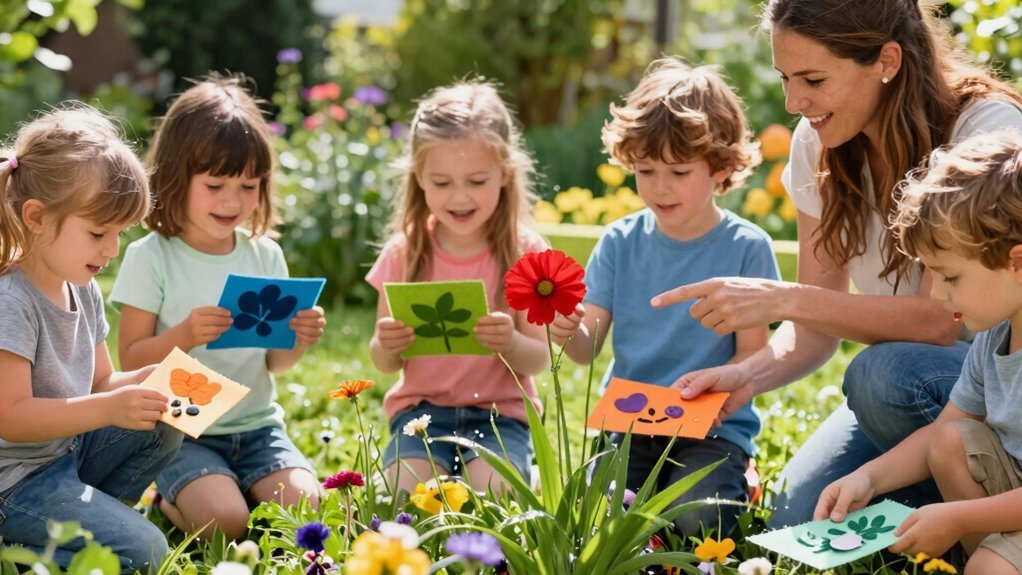
Ever wondered how a simple walk can become a vibrant lesson in color? You’ll love the nature‑based color hunt that turns outdoor learning into an engaging matching adventure for preschoolers. Grab a color wheel or colored cards, then set off on a walk where observation guides each step. As kids spot a green leaf, a red flower, or a blue stone, they practice color recognition and connect textures to hues. The activity reinforces gross motor skills while expanding their sensory vocabulary. You’ll hear excited chatter as they name objects, compare shades, and match finds to prompts. This hands‑on approach solidifies classroom concepts, making every step a purposeful lesson in matching and discovery. Using brightly colored cushions in a reading corner can further enhance the learning environment by supporting comfort and engagement during storytime or breaks, especially those featuring vibrant color variety found in classroom cushions.
Race Through Hopscotch – Outdoor Learning Math Fun
You’ll set up a hopscotch grid and watch kids hop from square to square while shouting each number they land on, turning movement into a counting game.
Their balance and coordination improve as they adjust their stride to hit the right spot, and the vocal number naming reinforces one‑to‑one correspondence.
You can spice it up with random number calls or simple addition prompts for a extra challenge.
Using interactive tools like the Fisher-Price 4-in-1 Activity Table can further engage toddlers in number recognition and counting activities.
Number Hopscotch
By drawing a hopscotch grid on the sidewalk, you turn a classic playground game into a lively math lesson where kids toss a stone onto a numbered square, hop through the sequence, and call out each number aloud, building number recognition, counting fluency, and balance all at once.
This outdoor learning setup lets preschoolers practice number order while strengthening gross‑motor skills.
As they land on each square, they say the number, cementing verbal counting in a dynamic setting.
You can extend the game by asking them to add or subtract steps, introducing simple addition and subtraction.
Use colored markers or foam dice to differentiate difficulty, offering larger numbers for beginners and skip‑counting challenges for advanced preschoolers.
Incorporating natural wooden animal figurines during play can enhance sensory exploration and support imaginative storytelling alongside math skills.
Vocal Number Naming
Two or three simple hops can turn a playground into a math lab, where kids race through a hopscotch grid while shouting each number aloud. You’ll see vocal number naming boost counting confidence as they leap from square to square, merging early math with gross motor play. The rhythmic chant reinforces number sense, and you can spice it up with skip‑counts or tiny addition prompts. Keep the layout clear, use lightweight markers, and supervise closely for safety. This outdoor learning game feels like a lively preschool activity, turning ordinary pavement into a dynamic classroom. Using tools like the Comfy Cubs Kids Step Stool Montessori Tower can also support independence and heighten engagement in outdoor learning environments.
| Step | Prompt |
|---|---|
| 1 | “One!” |
| 2 | “Two!” |
| 3 | “Three!” |
| 4 | “Four!” |
| 5 | “Five!” |
Balance and Coordination
Ever wonder how a simple hopscotch grid can turn playground time into a balance‑boosting math adventure? You’ll see preschoolers hop from square to square, saying each number aloud, turning outdoor play into a kinetic lesson. The chalk‑drawn grid invites 60 minutes of movement that hones gross motor skills, especially balance and coordination. Adding a rock or beanbag toss to the correct square sharpens spatial awareness and motor planning, while the rhythmic counting reinforces auditory‑phonemic learning. Supervise closely, ensure proper footwear, and adjust the track length or number range to match each child’s development level. This sensory‑rich activity blends math, coordination, and fun, giving preschoolers a dynamic, low‑prep way to grow.
Paint a Chalk Garden – Color Mixing & Fine‑Motor Play
You’ll love watching your kids experiment with primary colors, seeing new hues emerge as they mix them on the sidewalk. As they squeeze the bottles and trace lines, their hand muscles and finger coordination get a solid workout. The washable chalk paint keeps the outdoor canvas safe and encourages endless, collaborative creativity. Incorporating Montessori design principles into outdoor learning spaces enhances independent exploration and fine motor development.
Color Mixing Exploration
Usually, kids dive straight into the garden‑themed chalk art, mixing primary colors of red, blue, and yellow to discover new hues while squeezing, smearing, and layering paint on the pavement. You’ll notice how color mixing sparks curiosity about color theory as they blend to create greens, oranges, and purples.
Using chalk paint, you guide them to label each new shade, reinforcing vocabulary while they practice fine motor skills through precise strokes.
The outdoor learning setting amplifies sensory exploration: the gritty texture of chalk, the cool pavement, and the scent of fresh air all engage their senses.
Choose non‑toxic materials, set up a shaded spot, and remind them to wash hands afterward, keeping the experience safe and enjoyable.
Fine‑Motor Skill Development
Squeeze, scribble, and swirl bright paints across the pavement to boost fine‑motor skills while children create a chalk garden. You’ll notice how squeezing a bottle, gripping a brush, and mixing hues strengthens hand strength and refines the pencil grip. The textured cornstarch‑baking‑soda paint gives a tactile surface that encourages precise drawing of petals, leaves, and vines. As kids spread paint, blend colors, and clean up, they practice hand‑eye coordination and directional control. Adding twigs or leaves turns the activity into multi‑sensory learning, sharpening small‑muscle control for future writing tasks.
| Activity | Skill Focus |
|---|---|
| Squeezing bottles | Hand strength |
| Brush or spray control | Fine motor skills |
| Color mixing | Pencil grip |
| Drawing garden details | Hand‑eye coordination |
| Using natural materials | Multi‑sensory learning |
Create Maple‑Seed Dragonflies – Science & Craft Outdoors
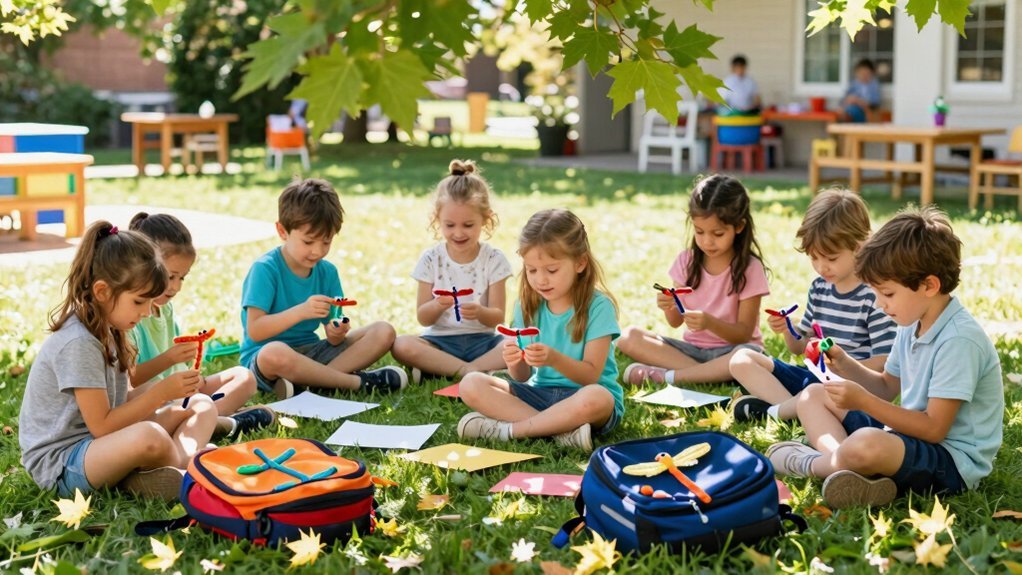
Ever wondered how a simple maple seed can become a vibrant dragonfly wing? You’ll turn outdoor learning into a nature craft that sharpens fine motor skills while preschoolers explore insects and dragonflies. Gather helicopter seeds, twigs, paint, and glue, then let kids design wing patterns and attach them to a twig. The hands‑on learning experience reinforces sequencing, color choice, and basic biology about how dragonfly wings enable flight.
Steps to create your maple‑seed dragonfly
- Collect seeds and twigs, then paint the seeds bright colors.
- Arrange two seeds on each side of a twig to form wing shapes.
- Glue the seeds securely; use leaves if seeds are scarce.
- Discuss dragonfly movement and wing function while the glue dries.
Lay Acorn Shapes – Tangible Geometry for Preschoolers
Curious how a handful of acorns can turn a backyard into a geometry lab? You’ll lay out a simple line on the grass, then place acorns or stones along it to form circles, triangles, and squares. This outdoor learning activity turns preschool geometry into tangible learning, letting kids feel the edges and corners they draw.
As they arrange objects, they boost shape recognition, count, and compare sizes, reinforcing early math concepts. The task sharpens fine motor skills while they pinch, place, and adjust each acorn. Nature play keeps them engaged, and the natural setting ties math to the world around them. You’ll see confidence grow as they discover boundaries, patterns, and spatial relationships through hands‑on exploration. Incorporating tangible magnet tasks like those found in Montessori magnet kits can further enhance fine motor skills and scientific thinking in outdoor play.
Let’s Play a Nature Memory Game – Focus & Vocabulary
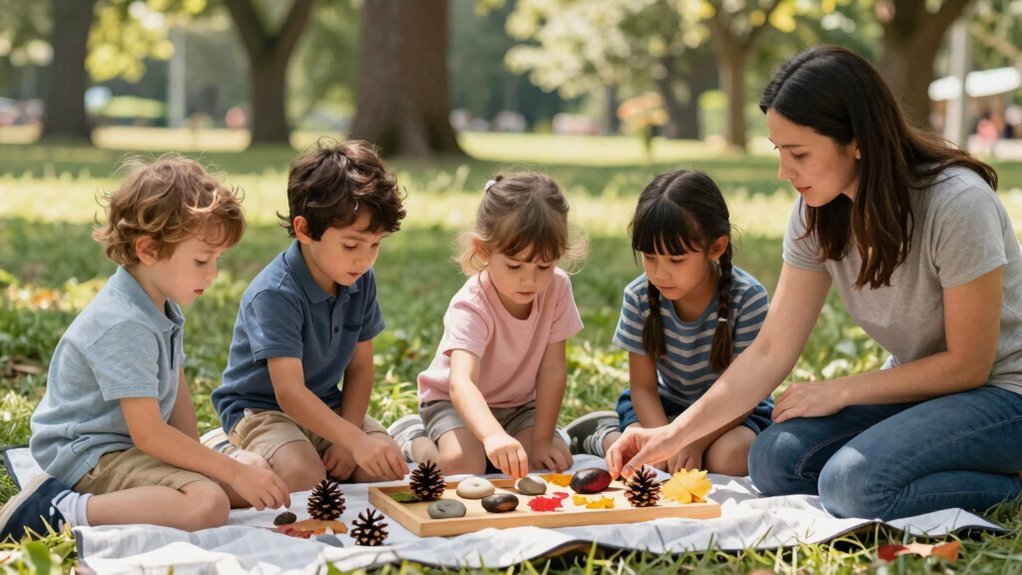
After arranging acorns into shapes, you can keep the outdoor math momentum going with a nature memory game. Lay out plates with large nature images—leaf, rock, flower, bug—on a picnic blanket. When kids flip two plates, they practice memory and visual recognition. A match lets them keep the cards, reinforcing vocabulary and confidence; a miss sends the plates back, sharpening focus. The game scales easily: start with four pairs for beginners, then add more for challenge. You’ll notice preschoolers using new nature words while strengthening concentration, turning simple play into powerful outdoor learning.
- Set up plates in a grid.
- Prompt children to name each image.
- Flip two plates, check for a match.
- Keep matched pairs, return mismatches.
In addition, incorporating activities that develop fine motor skills can further enhance children’s overall cognitive and physical development during outdoor learning sessions.
Tell Stories With Journey Sticks – Outdoor Language & Imagination
How can a simple stick become the spine of a vivid outdoor story? You gather journey sticks and invite preschoolers to collect leaves, feathers, pinecones along a winding path. As they attach each find, you model how to describe textures/colors, naming the soft feather, the rough bark, the bright green leaf. Children then narrate events, using outdoor language to link each segment, which builds sequential thinking and enriches preschool literacy. The activity encourages imaginative storytelling—kids invent why a pinecone fell or how a wind gust moved a feather. After the walk, you facilitate collaborative communication, prompting peers to share their tales, compare details, and reflect on cause and effect. This concise, hands‑on routine turns nature into a living storybook.
Frequently Asked Questions
How Do I Adapt Activities for Children With Sensory Sensitivities?
You’ll start by lowering noise and bright light, offering quiet zones, using soft textures, and letting kids choose activities at their own pace, while providing clear, gentle instructions and sensory‑friendly equipment.
What Safety Gear Is Needed for Outdoor Bug‑Hunting?
You’ll need a sturdy hat, sunscreen, closed‑toe shoes, long sleeves, gloves, and a lightweight, breathable mask if pollen’s high; bring a small first‑aid kit and a water bottle for hydration.
Can These Lessons Be Done in Limited Backyard Space?
Yes, you can adapt them to a small yard by scaling activities, using portable kits, and focusing on compact projects like mini‑garden plots, bug‑watch stations, and simple obstacle courses that fit your space.
How Often Should I Rotate Nature‑Based Themes?
You should rotate nature‑based themes every two to three weeks, keeping activities fresh and kids engaged, while allowing enough time for them to explore each theme deeply and build confidence.
What Indoor Alternatives Exist for Rainy Days?
You can set up a sensory bin with dried beans, create a cardboard obstacle course, bake simple experiments, play “indoor nature” scavenger hunts, and use story‑time puppets to explore ecosystems without getting wet.