
Curiosity‑driven learning fuels your preschooler’s passion by turning their natural “why” moments into hands‑on exploration. Offer open‑ended toys, nature walks, and simple puzzles that let them choose paths and solve problems. Watch for smiles, focused stares, and persistent effort—those are attention signals. Provide a tidy, accessible space and gentle scaffolding, praising effort over talent. When you follow these cues, you’ll discover even more ways to keep their curiosity thriving.
What Is Curiosity‑Driven Preschool Learning?
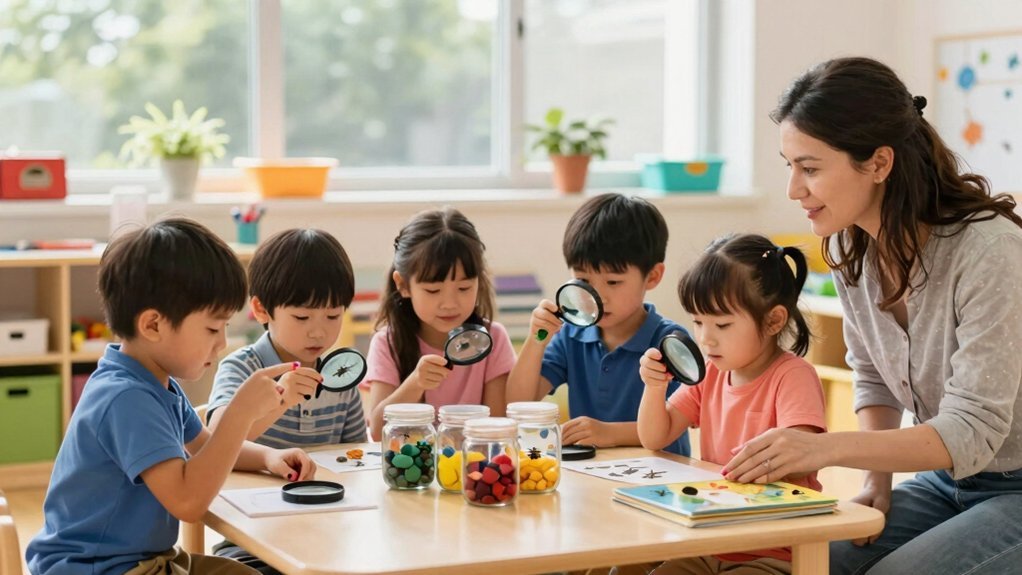
What makes a preschooler truly engage in learning? You’ll notice that curiosity drives them to explore, ask “why,” and test ideas hands‑on. When you watch what captures their attention—smiles, focused stare, persistent effort—you can pinpoint the topics that spark their interest. Offer open‑ended activities, like building blocks, nature walks, or simple puzzles, that let them choose how to solve a problem. This freedom encourages mastery motivation, as they experiment with multiple solution paths and learn perseverance.
Match tasks to their emerging preferences, whether it’s sorting animals or arranging shapes, to deepen understanding. Balance gentle guidance with independence, avoiding overly controlling feedback, so intrinsic curiosity fuels sustained, enthusiastic learning. Providing tools like a Montessori-friendly step stool can support children’s independence and engagement by allowing them to safely explore their environment.
How to Spot Your Preschooler’s Natural Interests?
Curiosity already shows you which topics light up your child’s eyes, so the next step is to spot their natural interests. Pay close attention to what your preschooler picks first, repeats, and smiles about—those choices signal genuine curiosity. Keep a simple log of daily patterns and caregiver reports; note topics they mention often or return to during routines. Watch for mastery signals: sustained focus on puzzles, building blocks, or animal figurines reveals underlying passion. Observe how they dive into activities with minimal prompting, which shows intrinsic motivation and deep learning. Offer open‑ended, varied tasks that align with these clues, then expand gently while respecting their preferred themes. This systematic spotting fuels purposeful learning and keeps their enthusiasm alive. Incorporating natural wooden peg people into play can enhance observation of interests through hands-on exploration and creativity.
Simple Observation Techniques for Parents and Teachers

A simple way to start observing is to watch which toys or activities your preschooler picks first and returns to without prompting. You can note the time of day they gravitate toward puzzles, animals, or movement, and record those moments in a quick notebook or digital log. Look for patterns across days and ask caregivers about similar choices at home. When you see repeated themes, use open‑ended opportunities—like offering a variety of building blocks or storybooks—so your child can explore autonomously.
Combine your observations with teacher notes to confirm interests and identify emerging strengths. This focused Observation lets you tailor future interactions without over‑planning, keeping learning natural and engaging. Incorporating toy storage solutions with low step-in accessibility can further encourage independent exploration and cleanup.
Turning Observed Interests Into Hands‑On Activities
After noting which toys or activities your preschooler gravitates toward, you can turn those observations into hands‑on experiences that deepen learning. Pick a favorite theme—say, dinosaurs—and design a simple activity that weaves language, math, and motor skills. Offer open‑ended materials, let them choose a solution, and gently steer when they need a hint. This approach transforms curiosity into purposeful, hands‑on learning while respecting their autonomy. Incorporating fine motor skill building activities, such as manipulating wooden spinning tops, can enhance coordination and concentration during play.
| Interest | Skill Focus | Sample Activity |
|---|---|---|
| Building blocks | Spatial reasoning | Create a “city” and count streets |
| Storybooks | Language | Act out a tale with puppets |
| Nature walks | Observation | Collect leaves, sort by size, draw findings |
Mastery Motivation: Why Persistence Matters Early On
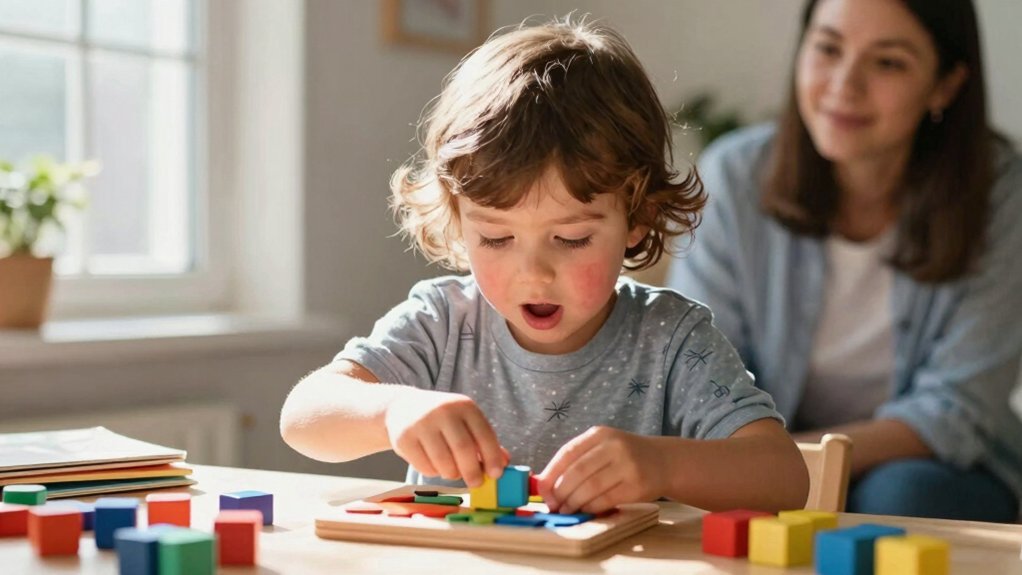
Why does persistence matter so early? Because mastery motivation fuels your child’s drive to tackle tough puzzles, building a foundation for lifelong learning. When preschoolers face varied, solvable problems, they experiment with strategies before you step in, strengthening neural pathways for problem‑solving. Your praise should spotlight effort and perseverance, not innate talent, so they keep trying even after setbacks. If challenges are too easy or praise feels hollow, persistence wanes and independent thinking stalls. As a teacher or caregiver, you validate effort, model sustained focus, and layer progressively harder tasks. This deliberate scaffolding nurtures mastery motivation, turning early grit into the confidence and competence that powers future academic achievement.
Five Strategies to Foster Mastery Motivation in the Classroom
You’ll notice that offering varied challenges keeps kids engaged, while letting them choose their own tasks builds confidence in problem‑solving. When you praise the effort and strategy instead of the result, you reinforce persistence. These simple steps create a classroom where mastery motivation thrives. Incorporating educational and developmental benefits such as cognitive and social skills development can further enhance children’s learning experiences.
Offer Challenges
A handful of thoughtfully designed challenges can transform a preschool classroom into a hub of mastery motivation. You’ll notice children diving into problem‑solving tasks that have several routes to success, building persistence as they try, fail, and try again. Offer activities that rise in difficulty, but let kids pick their own strategies, stepping in only with gentle prompts when frustration spikes. Celebrate effort and the process, not just the result, reinforcing that effort fuels growth. Over time, this scaffolded approach expands skills and deepens intrinsic motivation. Selecting furniture at the right height accessibility can support children’s independent engagement and confidence.
| Challenge Type | What It Looks Like |
|---|---|
| Puzzle stations | Multi‑step shape sorting |
| Construction zones | Open‑ended block building |
| Story sequencing | Rearranging picture cards |
| Nature hunts | Finding items with clues |
| Rhythm games | Creating patterns with beats |
Student-Directed Choices
Ever wonder how giving kids the reins over their own learning can spark relentless curiosity? When you embed child-directed choices into daily routines, you hand them the power to pick tools, materials, or problem‑solving paths. Offer a menu of challenging activities that each allow multiple solution approaches, then step back. If frustration rises, provide gentle nudges instead of instant fixes, letting them wrestle with the task. Celebrate tiny breakthroughs, highlighting perseverance over innate talent. Use language that focuses on the process—“You tried three strategies before finding one that worked.” By consistently honoring their autonomy, you nurture a growth mindset and keep mastery motivation thriving in every classroom moment.
Praise Process Over Outcome
When children choose their own challenges, the real magic happens when you shift praise from the finished product to the steps they took. Celebrate the way they tackled a puzzle, the strategies they tried, and the persistence they showed. Offer varied, challenging activities with multiple solution paths so you can highlight specific problem‑solving moves. Step in only when frustration spikes, giving gentle prompts that keep them in control. Encourage child‑directed choices, then link their successful tactics to future tasks, reinforcing that effort matters more than innate talent. By consistently using praise process over outcome, you nurture mastery motivation, boost confidence, and turn every learning moment into a stepping stone for deeper engagement.
Connecting Play Activities to Early Math and Literacy Skills
How can you turn everyday play into powerful math and literacy lessons? You can weave play‑based activities into daily routines, letting blocks become pattern puzzles and sorting games turn size concepts into tactile lessons. When children narrate their creations, they boost vocabulary and comprehension, turning imagination into literacy practice. Puzzles sharpen logical reasoning and predictive thinking, laying groundwork for both math and reading. Count steps or arrange objects by size while they explore, reinforcing numbers and fine‑motor skills essential for writing. Reading aloud and attending library storytimes expose diverse words and narrative structures, so kids hear math concepts in context and develop verbal explanations. By embedding these simple, joyful moments, you nurture early math and literacy without ever stepping outside play.
Movement‑Based Play: Building Physical and Cognitive Growth
Why not turn a simple game of chase into a mini‑physics lab? When you set up a backyard obstacle course, you’re giving your preschooler a chance to practice sequencing, timing, and risk assessment while sprinting, climbing, and balancing. Movement‑based play fuels physical coordination and sharpens spatial awareness, because each hop, jump, or crawl requires quick mental mapping. Add a counting challenge—“five hops to the red cone”—and you link motor activity to early math concepts. Shared games encourage turn‑taking, cooperation, and social interaction, turning play space into a collaborative lab. By weaving movement into everyday tasks, you create a dynamic environment where physical growth and cognitive skill‑building happen hand‑in‑hand. Just as comprehensive care kits combine multiple tools and techniques to nurture leather goods, integrating diverse activities similarly supports a child’s holistic development.
Art and Creative Play: Encouraging Expression and Problem Solving
Because art lets kids experiment with colors, textures, and tools, it sparks both creative expression and problem‑solving. You’ll notice how a child‑led, open‑ended studio invites artistic expression while sharpening fine motor control. When your preschooler chooses paint versus crayon, they evaluate material properties and decide how best to convey an idea, turning imagination into a strategic decision.
Integrating shapes, patterns, or counting into collage projects links math concepts to visual creation, reinforcing cognitive skills. Pairing storytelling with drawing deepens language and concept understanding, as they illustrate narratives in real time. This autonomy fuels perseverance, intrinsic motivation, and a love of exploration that carries over into every learning arena.
Animal‑Focused Exploration: Boosting Observation and Language
You’ll notice how naming a bird’s beak or a dog’s fur instantly expands your child’s vocabulary, while sensory‑rich habitat walks let them describe textures, sounds, and movements. When they help care for a pet or feed farm animals, they naturally weave those observations into simple stories. By tracking these moments, you can ask targeted questions that turn everyday curiosity into purposeful language practice.
Driven Vocabulary Building
A hands‑on animal adventure turns observation into a language‑learning engine: when kids feel a rabbit’s soft fur, spot a bright‑winged bird’s pattern, or hear a lion’s roar, they naturally label textures, colors, and behaviors, weaving words like “habitat,” “predator,” and “migration” into their everyday speech. You can amplify this driven vocabulary building by pairing each tactile or auditory cue with a quick naming drill, then jotting the term in an observation journal. Simple checklists—animal name, sound, habitat—turn fleeting moments into repeatable learning cycles. Reading animal‑rich books while pausing to describe actions reinforces syntax and creates vivid mental images. Repetitive, hands‑on activities such as feeding, sorting by species, and matching sounds cement recall, expanding expressive language and early literacy.
Sensory‑Rich Habitat Walks
What if you could turn a simple walk into a sensory laboratory where every rustle, scent, and splash becomes a language lesson? You’ll notice textures of bark, the chirp of birds, and the cool mist near a pond, prompting kids to label each detail. Guided questions like “What is the animal doing?” spark reflective thinking and early scientific reasoning. Repeating visits to different habitats lets children compare how a squirrel’s quick scurry differs from a turtle’s slow crawl, reinforcing vocabulary such as “camouflage,” “scavenger,” and “nocturnal.”
Adding magnifiers, photo cards, or tiny toy animals keeps hands busy, boosting attention and narrative skills as they recount observations. This active, sensory‑rich approach transforms ordinary strolls into powerful language‑building experiences.
Storytelling Through Animal Care
Ever wondered how caring for a pet can turn a simple routine into a rich storytelling adventure? When you guide your preschooler to feed, groom, or observe animals, you’re giving them a narrative scaffold. They’ll describe a hamster’s whiskers, a rabbit’s hopping, or a fish’s shimmering scales, weaving in words like habitat, diet, and behavior. Prompt them to retell the steps: “First I filled the bowl, then I placed the lettuce, and finally I watched the rabbit nibble.”
Use picture books, zoo trips, or animal‑themed drawings as concrete prompts, and ask “why” questions to spark hypotheses. Sorting animals by habitat or matching foods reinforces mastery motivation, turning everyday care into purposeful, language‑rich storytelling.
Common Pitfalls That Undermine Preschool Curiosity
Why do so many preschoolers lose their spark? You might overlook subtle roadblocks that sap curiosity. When activities aren’t challenging enough, mastery motivation drops, and persistence fades. Harsh feedback redirects attention to innate ability, not effort, eroding perseverance. Over‑controlling settings choke independent exploration, while praising intelligence (“You’re so smart”) discourages tackling tough tasks. A curriculum that avoids real‑world problems or meaningful choices blunts curiosity and limits self‑motivated learning.
| Pitfall | Effect on Child | How to Counter |
|---|---|---|
| Too easy tasks | Low persistence | Raise difficulty gradually |
| Negative feedback | Focus on ability | Emphasize effort |
| Over‑control | Stifles autonomy | Offer choices |
| Praise for intelligence | Reduces risk‑taking | Celebrate strategies |
| No real‑world problems | Diminished curiosity | Integrate everyday challenges |
Quick Checklist: Sustaining Active Learning at Home and School
Ever feel like your child’s curiosity fizzles once the lesson ends? You can keep the spark alive by weaving active learning into daily routines at home and school. Set up a tidy, dedicated space stocked with manipulatives, art supplies, and simple science kits so your preschooler can jump straight into hands‑on tasks. Pair open‑ended questions with child‑directed choices, and model enthusiasm by exploring museums, nature walks, or cooking experiments together.
- Create a weekly “exploration hour” where you rotate activities—building, experimenting, and observing the outdoors.
- Provide easy access to materials and a clear, organized area that invites spontaneous play and focused work.
- Use real‑world moments to ask “what if” and “how does that work?” reinforcing problem‑solving and higher‑order thinking.
Frequently Asked Questions
What Fuels Your Passion for Teaching?
You’re driven by seeing kids light up when they solve a problem, the thrill of guiding curiosity, and the belief that gentle challenges build lifelong resilience and joy in learning.
What Makes You Passionate About Early Childhood Education?
You love early childhood education because you see curiosity spark, watch kids solve puzzles, and feel the joy when their confidence grows through play, exploration, and supportive guidance.
What Would You Like Your Child to Learn at Preschool?
You want your child to explore numbers, letters, and social skills through play, while nurturing curiosity, creativity, and confidence by linking interests to hands‑on activities, stories, and real‑world experiences.
How to Ignite a Passion for Learning in Students?
You spark curiosity by offering hands‑on, open‑ended projects, letting kids choose paths, praising effort over talent, and gently guiding them through setbacks, so they stay engaged and eager to explore.