You can boost your child’s independence by teaching core self‑care skills—dressing, feeding, and grooming—through clear visual schedules, step‑by‑step routines, and adaptive tools that turn everyday tasks into confident, repeatable actions. Start with simple steps like pulling arms through sleeves, using Velcro shoes, and guided wiping, then add utensil use and hand‑washing sequences. Celebrate each win with stickers or high‑fives, and gradually fade prompts. Keep the routine playful, and you’ll discover even more strategies to support autonomy.
Core Self‑Care Skills Every Kid Needs

How do you help your child master the basics that keep them safe, healthy, and ready for school? You focus on core self‑care skills—dressing, eating, hygiene, and toileting—by weaving them into daily routines that build independence and motor skills. Start with simple steps: let them push arms through sleeves, use adaptive tools like easy‑grip spoons, and practice wiping with guidance. OT supports break each task into manageable parts, reinforcing repetition and consistency. Offer adaptive tools such as Velcro shoes or a step‑stool for bathroom access, and celebrate small victories. As competence grows, transition to independent fastener management, proficient utensil use, and thorough toileting. This structured approach nurtures confidence, prepares them for school, and lays a foundation for lifelong self‑reliance. Using a Montessori-friendly step stool can support independence by allowing children to safely reach sinks and counters during daily routines.
Self‑Care Step‑by‑Step Breakdown of Dressing, Feeding, and Grooming
Building on those core skills, let’s break down the daily routines for dressing, feeding, and grooming into clear, bite‑size steps.
Break daily dressing, feeding, and grooming into simple, visual steps for independent skill building.
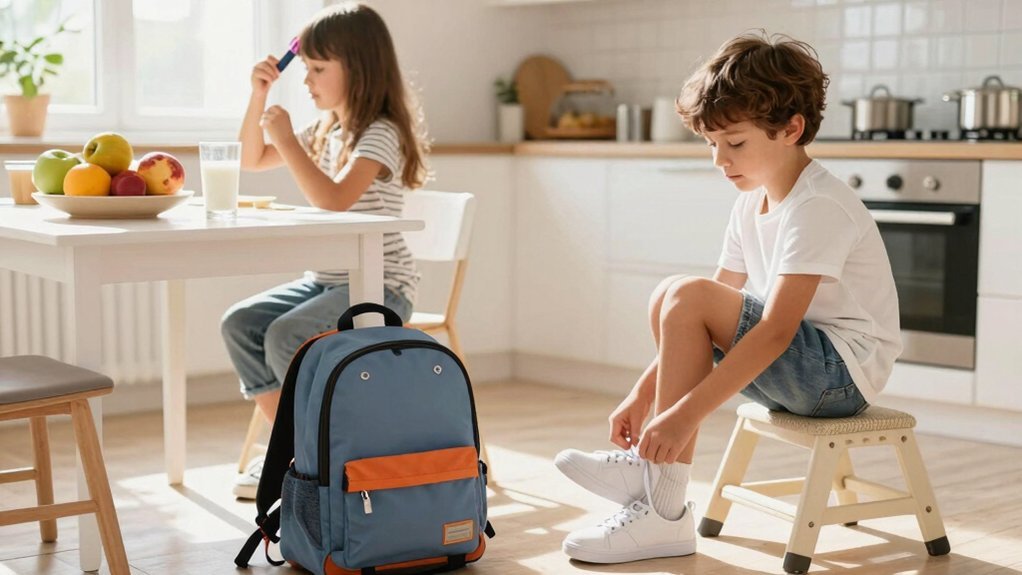
For Dressing, start with a visual schedule that shows each garment. Use step‑by‑step guidance: pull arms through sleeves, then legs into pants, and finally fasten zippers or buttons. Encourage independence by letting the child choose the outfit, reinforcing self‑care and daily living skills.
When feeding, transition from a lid‑covered cup to feeding with utensils. Show a checklist: scoop, bring to mouth, chew, swallow. Practice pouring liquids into a cup under occupational‑therapy supervision.
Grooming follows a similar pattern: wash hands, brush teeth, comb hair, and, if age‑appropriate, shower. Include potty training reminders in the schedule to keep routines consistent.
Introducing kitchen tasks like mixing with child-safe tools such as silicone-coated whisks can further enhance fine motor skills and independence.
Adaptive Tools That Boost Independent Self‑Care

Ever notice how a simple tool can turn a frustrating task into a confidence‑building moment? Adaptive tools give kids the edge they need for self‑care independence. Utensils with built‑up handles or curved designs improve grip, letting them feed themselves without spilling. Non‑slip mats and high‑sided plates keep food steady, while rocker knives let older children press and rock through meals safely.
In the bathroom, raise handles (grab bars) and anti‑slip mats reduce fall risk, and tub transfer benches support bathing routines. Dressing tasks become easier with button hooks, elastic or Velcro shoe closures, and sock aids that simplify sequencing. These adaptive tools strengthen fine motor skills, turning everyday chores into opportunities for autonomy. Choosing tools made from durable wood construction ensures safety and longevity for active use.
Design a Playful Routine With Visual Schedules
Ever wonder how a simple visual schedule can turn daily self‑care into a fun game? You can turn each self‑care routine into a colorful sequence of pictures or checkboxes, letting kids see what comes next and why it matters. Break tasks into tiny steps—like “pull socks,” “snap Velcro shoes,” “brush top” —and role‑play with dolls or pretend meals. Consistency builds confidence, and positive reinforcement (sticker stars, high‑fives) celebrates each win. Adaptive tools keep the experience sensory‑friendly and boost independence, while gradual fading of prompts encourages autonomous living. Using Montessori life cycle cards as visual aids can enhance understanding and engagement in routines.
| Step | Cue |
|---|---|
| 1⃣ Dress | Picture of a shirt |
| 2⃣ Eat | Checkbox for plate guard |
| 3⃣ Clean | Icon of a toothbrush |
Frequently Asked Questions
How Can I Involve Siblings in Teaching Self‑Care Routines?
Invite them to model tasks, set timers together, and reward teamwork. Let older siblings demonstrate, then let younger ones try, offering gentle corrections. Celebrate each success, turning routine practice into fun, shared responsibility.
What Age Is Kids Should Start Using a Toothbrush Without Assistance?
You should let kids start brushing independently around age 6, but begin supervising at age 3–4, gradually reducing help as they master proper technique and timing.
How Often Should Visual Schedules Be Updated for Growing Children?
You should update visual schedules every few weeks, or whenever your child masters a new routine or outgrows a skill, so the charts stay relevant and keep them motivated.
Are There Specific Rewards That Motivate Independence Without Over‑Reinforcement?
You’ll find that small, meaningful rewards—like extra playtime, a favorite snack, or a sticker chart—boost independence without over‑reinforcing. Keep them occasional, varied, and tied directly to the achieved task.
Can Self‑Care Skills Be Practiced During Family Trips or Vacations?
Yes, you can weave self‑care practice into trips by assigning age‑appropriate tasks like packing toiletries, choosing outfits, and managing personal hygiene, turning each routine into a fun, confidence‑building adventure.