
You can learn practical environmental‑care skills by turning daily actions into measurable habits: turn off the faucet while brushing, place reminders near sinks, and log minutes saved; sort waste into paper, plastic, glass, and organics, clean recyclables, and upcycle bottles into planters; compost kitchen scraps, grow herbs, and rotate crops to keep soil healthy; swap disposables for reusable bottles, cloth bags, and natural‑material supplies. By tracking usage, setting goals, and involving your household, you’ll see real impact and discover even more ways to live sustainably.
Turn Everyday Actions Into Sustainable Habits

How can a simple tap turn into a habit that saves water? You’ll notice that turning off the faucet while brushing teeth or shaving instantly cuts waste, and repeating that action cements an environmental habit.
Turning off the faucet while brushing or shaving instantly reduces waste and builds a lasting, habit‑saving habit.
Next, diverting greywater to water plants lets you reuse what would otherwise drain away, strengthening water conservation in daily life.
Keep a reminder near the sink; each pause reinforces the behavior until it feels automatic. Pair this with a habit checklist—tap off, reuse water, verify the flow—so you track progress and stay accountable.
Over weeks, these small choices compound, shrinking your household’s footprint and encouraging others to adopt the same environmental habits. Consistency turns ordinary actions into lasting stewardship. Tools like visual timers can help maintain consistent habits by providing clear reminders and time management cues.
Sort, Recycle & Upcycle: Sustainable Waste Management
Ever wondered how a few simple bins can transform your home into a mini‑recycling hub? You can sort waste into dedicated containers for paper, plastics, glass, and organics, reinforcing correct disposal habits that ripple into public waste management.
By separating items, you make recycling streams cleaner and more efficient, reducing contamination and saving resources.
Turn old bottles into garden planters or craft notebooks from scrap paper—these upcycling projects showcase creativity while cutting waste.
Reusing scrap paper for notes or sketches cuts unnecessary tearing and crumpling, conserving trees.
Lead by example: join neighborhood litter‑picking drives and share your sorting system online.
Your everyday actions demonstrate that practical, hands‑on waste management can protect the environment and inspire community responsibility.
Incorporating modular storage solutions can further streamline your recycling and upcycling efforts by keeping sorted materials organized and accessible.
Garden & Compost: Sustainable Soil & Food Care
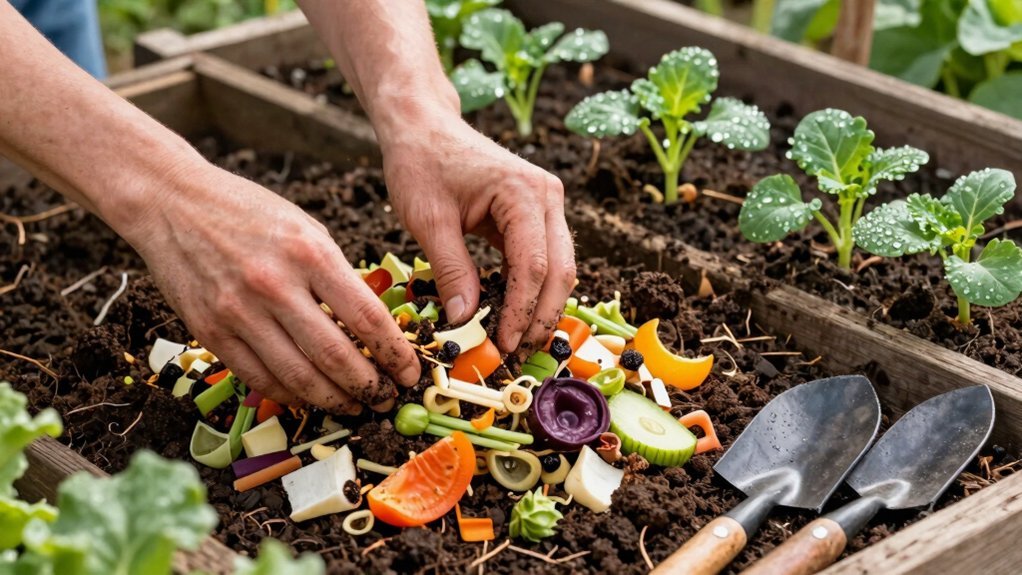
Ready to turn a simple pot into a living lesson? You’ll see how planting flowers, vegetables, or herbs in a garden teaches growth cycles, watering habits, and soil stewardship. When you harvest your own produce, you connect daily meals to sustainability, cutting food miles and supporting local ecosystems. Composting kitchen scraps turns waste into nutrient‑rich soil, closing the loop between kitchen and garden. These hands‑on actions illustrate how caring for soil and food nurtures environmental protection.
Cultivate a pot garden to teach growth, stewardship, and sustainable food cycles.
- Start with a pot, choose fast‑growing veggies, and track daily watering.
- Observe seed sprouting, noting leaf development and root health.
- Collect fruit peels, coffee grounds, and yard clippings for compost.
- Rotate crops and amend soil with compost to maintain fertility and sustainability.
Using sensory tools like All-Inclusive Calm-Down Sensory Bottles can enhance mindfulness and observation skills during gardening activities, fostering a deeper connection to environmental care.
Choose Eco‑Friendly Products For Sustainable Living
Why not start swapping everyday items for eco‑friendly alternatives? You can replace disposable bottles with a reusable water bottle, cut down plastic waste, and boost your environmental consciousness. Choose cloth bags instead of plastic ones; they’re sturdy, washable, and teach kids about sustainable living. Opt for toys and school supplies made from natural materials, which avoid harmful chemicals and lessen pollution. When you pick reusable containers for snacks or lunches, you reduce single‑use consumption and embed protective habits into daily routines. Involve children in these decisions—let them help pick the bag or bottle—to reinforce values and provide hands‑on learning. Storybooks and classroom demos can illustrate how natural products minimize impact, turning simple choices into lasting sustainability habits. Selecting products made from environmentally friendly wood is another effective way to promote sustainability while supporting responsible forestry.
Communicate Your Sustainable Habits To Family

- Turn off taps while brushing teeth and explain how each minute saved cuts water waste.
- Sort waste into labeled bins, modeling proper disposal and inviting kids to help.
- Reuse scrap paper, bring reusable bags, and choose local produce, highlighting the carbon savings.
- Organize a family garden or a weekend clean‑up to practice sustainable habits together.
- Choosing durable storage options with eco-friendly materials can also reduce environmental impact over time.
These steps turn routine actions into memorable dialogues that embed responsibility across generations.
Map & Measure The Impact Of Your Sustainable Habits
After showing your family how to turn off taps and sort waste, the next step is to turn those habits into data you can see. Begin with data analysis: log daily tap‑off minutes and weekly liters saved, then compare those numbers to your baseline water use. For energy, pull monthly electricity bills, calculate the percentage reduction after installing LEDs and powering down appliances, and chart the trend. Conduct measurement and tracking of waste by auditing each bin, noting the recyclables‑to‑trash ratio, and set a target recycling rate such as 75 %. Record paper saved by counting sheets recycled or digitized. Finally, catalog upcycled crafts and reusable items, estimate the landfill material avoided, and translate that into carbon‑footprint savings. This systematic approach reveals clear environmental impact.
Understand Policies That Shape Your Sustainable Habits
How do the laws that govern air, water, and waste shape the everyday choices you make at home? Understanding environmental policy lets you see why you recycle, conserve energy, or choose low‑emission transport. You’ll spot the Clean Air Act’s limits on indoor pollutants, the Clean Water Act’s rules on runoff, and RCRA’s waste‑handling standards. This literacy guides regulation compliance, helping you align sustainable habits with legal expectations and avoid fines.
Environmental laws shape daily habits, guiding recycling, energy use, and low‑emission transport choices.
- Identify which statutes affect your household activities.
- Translate permitting requirements into practical actions, like proper hazardous‑waste disposal.
- Use policy knowledge to advocate for community upgrades, such as greener public transit.
- Track reporting deadlines to document your progress and demonstrate accountability.
Apply Systems Thinking To Sustainable Habit Challenges
What if you could see the whole picture of your home’s resource flow instead of isolated actions? Systems thinking lets you map water use, energy consumption, and waste streams, exposing interdependencies that reveal leverage points for sustainable habits. By tracing how a change—like swapping meat for beans—ripples through agriculture, water demand, and greenhouse‑gas emissions, you avoid treating symptoms and target root causes. Identify feedback loops: a reinforcing loop may boost savings, while a balancing loop warns of rebound effects from efficiency upgrades. Test interventions iteratively, pairing low‑flow fixtures with behavior prompts to learn which combinations stick. This holistic, cross‑functional approach turns small tweaks into durable, system‑wide gains. Tools designed with color-coded sequencing support can help visualize and manage complex systems effectively.
Project‑Manage Sustainable Habit Initiatives At Home
Ever wondered how a simple project plan can turn everyday eco‑efforts into lasting change? You can treat your home like a mini‑enterprise, using project management to embed sustainable habits and boost environmental stewardship. Start by setting clear goals, timelines, and milestones that reflect core sustainability principles. Track weekly water usage, energy consumption, and waste‑sorting accuracy, then adjust tasks and resources as needed. Keep every household member in the loop so buy‑in grows and resistance drops. Reflect on what works, tweak the plan, and scale the habits over time.
Turn your home into a sustainable mini‑enterprise with clear goals, metrics, and collaborative habit tracking.
- Define scope, schedule, and resources for each initiative
- Assign specific tasks and monitor progress with simple metrics
- Communicate results regularly to maintain shared understanding
- Iterate based on feedback to refine and expand sustainable habits
- Consider incorporating reusable products like natural wool dryer balls to reduce energy consumption and environmental impact.
Foster Teamwork & Flexibility For Sustainable Projects
You’ll notice how strong team dynamics keep everyone aligned while adaptive scheduling lets you pivot when resources shift.
By fostering cross‑functional collaboration, you turn diverse expertise into faster, more resilient solutions.
This approach turns challenges into opportunities for sustainable impact.
Team Dynamics
How can you keep a sustainability project on track when conditions shift and deadlines loom? You’ll need sharp teamwork skills, clear communication, and genuine collaboration. Define roles early, delegate tasks, and set up brief daily check‑ins to monitor progress. Encourage cross‑functional input so diverse perspectives improve problem‑solving and embed systems thinking. Foster flexibility by embracing iterative design and rapid prototyping, allowing you to adjust solutions on the fly. Strengthen both hard and soft abilities—data analysis, regulation knowledge, and interpersonal competence—to boost resilience and keep everyone aligned with the project’s environmental goals.
- Assign explicit responsibilities and revisit them weekly.
- Use concise status updates to avoid misinterpretation.
- Invite experts from different fields for joint brainstorming sessions.
- Celebrate small wins to maintain momentum and adaptability.
Adaptive Scheduling
Adaptive scheduling keeps your sustainability project moving smoothly when resources, stakeholder needs, or risks change, aligning timelines with real‑world constraints while preserving environmental goals. You’ll set up dynamic calendars that embed contingency plans and regular review points, so you can reallocate tasks instantly as priorities shift. By sharing real‑time updates and clear communication protocols, you empower teamwork and flexibility across remote or field crews, boosting data collection for environmental monitoring. Use metrics to track responsiveness, ensuring delays and cost overruns stay low. The buffers you create let you adjust to unexpected weather, supply shortages, or new regulations without derailing outcomes. This agile approach keeps the project resilient, on budget, and firmly rooted in its ecological mission.
Cross‑Functional Collaboration
Why should you bring together policy makers, data analysts, and communications specialists on a single sustainability team? You’ll see that cross‑functional collaboration breaks silos, letting each expert share insights that shape stronger sustainability initiatives. Clear communication keeps everyone aligned, while flexible roles let you reallocate resources as needs shift. By joining forces, you accelerate learning, spark innovative solutions, and ensure that policies, data, and messaging work in harmony.
- Establish shared goals and regular check‑ins to maintain focus.
- Use transparent communication channels for rapid feedback.
- Rotate responsibilities so members develop cross‑disciplinary skills.
- Align all outputs with the overarching sustainability initiatives.
Explore Coursera Courses For Sustainable Living
You can start by browsing Coursera’s Sustainable Living courses, which bundle eco‑focused skill paths into clear, job‑ready tracks.
The platform’s 7‑day free trial lets you test the material before committing, and Coursera Plus gives you credential potential across thousands of topics.
Real‑world examples, like Exelon’s use of analytics skills, show how these courses translate into tangible environmental impact.
Sustainable Living Courses
Curious about turning everyday habits into measurable impact? You can dive into Sustainable Living Courses on Coursera and start upskilling with data‑driven tools that translate personal choices into real change. The platform’s 7‑day free trial lets you sample modules on environmental data, circular economies, and low‑carbon lifestyles before committing to Coursera Plus, which unlocks a catalog of 10,000+ courses and credential pathways. You’ll find case studies—like Exelon’s analytics rollout—plus free resources such as the “5 Climate Change Careers to Consider in 2025” video and Ball State’s Environmental Data Scientist webinar, all vetted by editors and global experts.
- Explore analytics‑focused sustainability tracks
- Earn credentials that signal job‑ready expertise
- Leverage real‑world case studies for practical insight
- Access free webinars and career guides for immediate application
Eco‑Focused Skill Paths
When you unlock into Coursera’s eco‑focused skill paths, you’ll quickly see how data analysis, GIS, and environmental regulations blend with communication and teamwork to create job‑ready expertise. You can start with a free 7‑day trial, then dive in unlimited courses via Coursera Plus, which houses over 10,000 options. Hands‑on projects—like the Exelon analytics case or the Ball State Environmental Data Scientist webinar—let you practice data analysis, sharpen GIS mapping, and master environmental communication. Document these projects on your résumé, showcase teamwork, and you’ll stand out to employers seeking sustainable‑focused talent.
| Skill | Course Example | Outcome |
|---|---|---|
| Data analysis | “Data Science for Sustainability” | Build predictive models |
| GIS | “Geospatial Analysis for Climate” | Map impact zones |
| Environmental communication | “Storytelling for Environmental Change” | Persuade stakeholders |
Turn Sustainable Habits Into a Green Career Path
How can everyday sustainable habits become the foundation of a thriving green career? You can turn the routines you already practice—recycling, energy‑saving, mindful consumption—into marketable expertise. By pairing those sustainable habits with formal learning, you build a portfolio that shows employers you live the values they need. Coursera Plus gives you instant access to courses on environmental data analysis, GIS, and regulatory frameworks, while internships and volunteer projects let you apply those skills in real settings. Sharpen your communication skills to translate complex findings into clear recommendations, and you’ll stand out in any sustainability role.
- Complete targeted training in environmental data analysis and GIS.
- Volunteer for NGOs to practice communication skills on real projects.
- Use Coursera Plus to earn certificates that validate sustainable habits.
- Leverage career quizzes and LinkedIn newsletters to match your profile to green job openings.
Frequently Asked Questions
What Are Practical Skills in Environmental Science?
You learn data analysis, GIS mapping, field sampling, and regulatory navigation; you master statistical software, sample preservation, and law comprehension, while sharpening communication, teamwork, and problem‑solving for real‑world impact.
What Are the 7 Core Concepts of Environmental Health?
You learn exposure assessment, dose‑response analysis, risk assessment, epidemiology, toxicology, risk communication, and environmental justice—each concept equips you to evaluate hazards, predict health impacts, and promote equitable protection.
What Are the 5 Major Components of Environmental Education?
You identify five major components: environmental literacy, critical thinking and problem solving, systems thinking, collaboration and communication, and action toward sustainable practices, each guiding you to understand, analyze, connect, share, and implement eco‑responsible solutions.
What Skills Do You Need for Environmental Services?
You need data‑analysis expertise, GIS mapping, regulatory knowledge, statistical tool proficiency, strong communication, teamwork, problem‑solving, adaptability, and the ability to translate technical findings into actionable environmental solutions.