
You develop problem‑solving skills when you dive into real‑world tasks that force you to define the issue, dig into root causes, experiment with solutions, and iterate based on data‑driven feedback. Authentic contexts give you stakes, tools, and people, which make the learning concrete and memorable. Collaboration and peer review amplify insights, while varied constraints and resources build cognitive flexibility. Each cycle’s results get documented, standardized, and reused, turning one‑off challenges into lasting capabilities you’ll explore further.
How Practical Problem‑Solving Tasks Turn Everyday Challenges Into Real‑World Skills
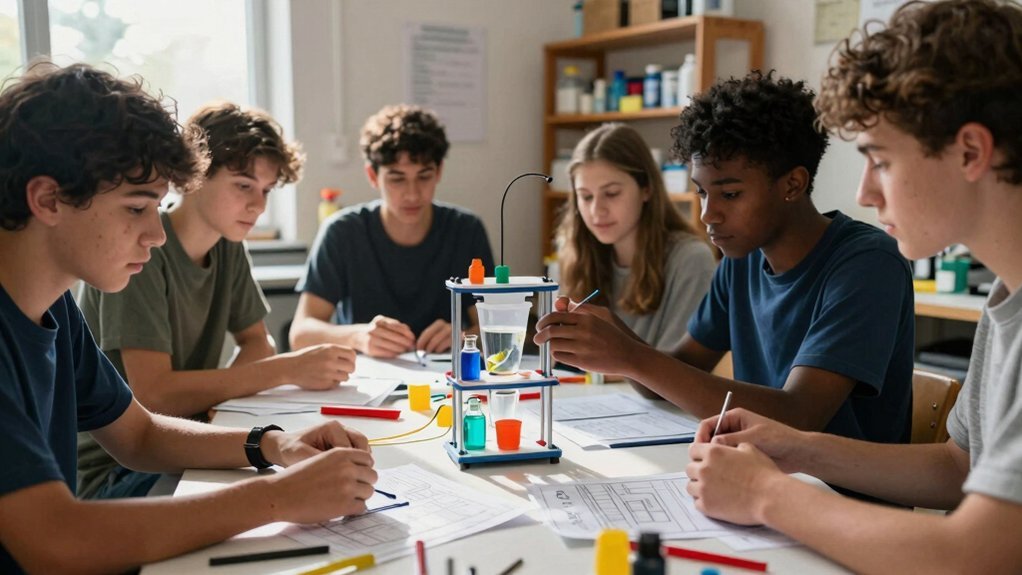
How can everyday challenges become a training ground for real‑world competence? You immerse yourself in practical tasks, then define the problem, run root‑cause analysis, and craft a solution. By applying PDCA, you plan a small experiment, do it, check the data, and act on the results, turning each cycle into data‑based evaluation. This forces critical thinking: you question assumptions, weigh options, and measure outcomes. Collaboration spikes as you share findings, negotiate ideas, and manage pressure together, sharpening emotional intelligence. Repeating iterative testing builds real‑world skills, while standardization locks in successful patterns for future use. In short, everyday hurdles become a structured laboratory for problem‑solving mastery. Montessori-friendly tools like the COSYLAND Toddler Step Stool foster independent learning and hands-on problem solving from a young age.
Why Authentic Context Beats Abstract Exercises for Skill Transfer
When you tackle problems in the real world, the stakes, the people affected, and the tools at hand give your learning a concrete anchor that abstract drills simply can’t match. Authentic context forces you into problem‑solving with real consequences, so you see why root cause analysis matters, why documentation and standardization become habits, and how collaboration shapes outcomes. Gemba reviews surface hidden friction, while feedback channels keep improvements alive, turning each success into a template for future skill transfer. Incorporating eco-friendly materials in practical tasks not only supports sustainability but also encourages mindful decision-making in real use scenarios.
| Aspect | Abstract Exercise | Authentic Context |
|---|---|---|
| Stakeholder impact | None | Real |
| Learning cue | Hypothetical | Tangible |
| Documentation need | Minimal | Mandatory |
| Collaboration level | Low | High |
| Transferability | Limited | Strong |
How to Use Iteration, Feedback, and Reflection to Sharpen Problem‑Solving
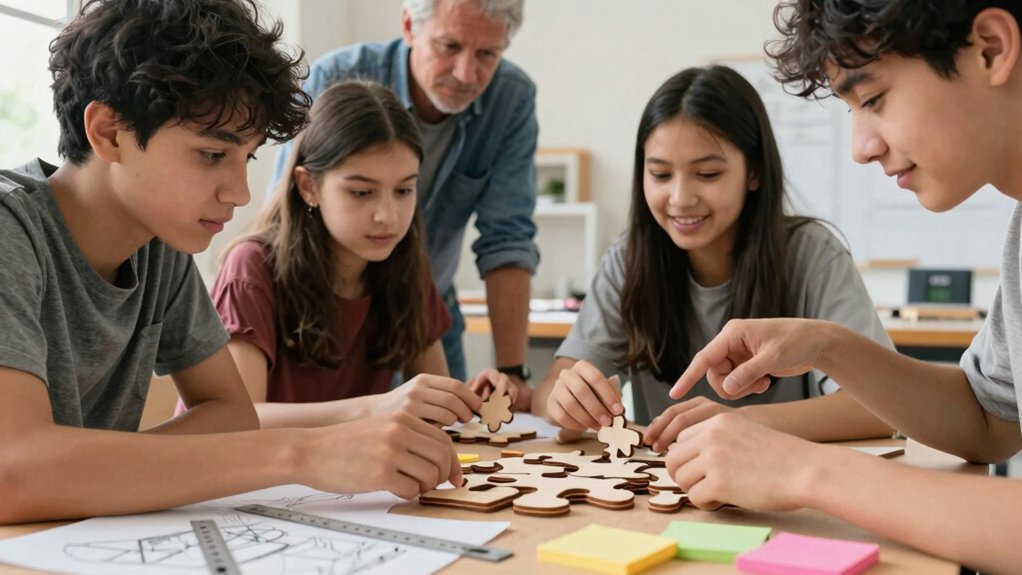
Because real‑world problems rarely resolve on the first try, you need a loop of iteration, feedback, and reflection to turn each attempt into a learning opportunity. Start with testing on a small scale, gather continuous monitoring data, and compare outcomes against your root‑cause analysis. Use feedback to pinpoint what worked and what didn’t, then adjust the approach and document the change. This iteration‑driven improvement builds a clear record of what’s effective, so you can replicate success and avoid past mistakes. After a solution meets its targets, engage in post‑solution actions: standardize the new process, update documentation, and share benefits with the team. Ongoing reflection ensures each cycle refines your problem‑solving skill set. Similarly, products designed with convertibility and progression in mind allow users to gradually increase independence, illustrating how iterative improvements can aid skill development.
Building Cognitive Flexibility With Varied Constraints and Resources
Ever wondered how juggling different constraints and resources sharpens your mind? When you swap time limits, data quality, or stakeholder needs, you force your brain to re‑evaluate and re‑frame problems, boosting cognitive flexibility. You’ll start flipping between divergent thinking for idea generation and convergent thinking for decision making, applying problem‑solving techniques like 5W2H, Fishbone, or TRIZ across tech, business, and social settings. This multi‑domain practice builds adaptable, flexible strategies that transfer to any scenario.
- Rotate constraints: set tight deadlines, then loosen them, to practice rapid reassessment.
- Switch resources: move from spreadsheets to mind maps, forcing new perspectives.
- Blend creativity with logic: use analogical reasoning alongside data analysis.
- Alternate methods: cycle between brainstorming and structured PDCA cycles.
Measuring the Impact of Collaboration and Peer Review on Analysis

Swapping constraints and resources sharpens your mind, but the next step is seeing how collaboration amplifies those gains. When you invite peers to review your analysis, you tap into collective intelligence that surfaces blind spots and fuels bias reduction. Teamwork creates a feedback loop where diverse input fuels richer evaluation, sharpening problem‑solving skills. Track metrics such as idea count, solution variance, and decision‑making speed before and after peer review to quantify impact. Compare individual versus group outcomes, noting how collaborative evaluation improves accuracy and confidence. By logging each iteration, you reveal patterns that link teamwork to faster, more robust conclusions. This data‑driven approach proves that collaboration and peer review aren’t optional—they’re essential levers for stronger analysis. Using tools with NSF certification ensures the reliability and safety of collaborative work environments involving practical tasks.
Turning One‑Off Tasks Into Sustainable Problem‑Solving Practices
You’ll start by standardizing task documentation so every step—problem definition, root‑cause analysis, solution, and follow‑up—is captured in clear checklists and guides.
Then you embed a continuous‑improvement loop that uses monitoring data and feedback to refine the process after each iteration.
This way, one‑off fixes become repeatable practices that keep getting better over time.
Incorporating versatile role play elements can foster creativity and adaptability during problem-solving tasks, enhancing overall engagement.
Standardize Task Documentation
How can you turn a one‑off fix into a repeatable habit? By standardizing documentation, you lock the solution into a repeatable process that anyone can follow. Create a concise procedure, attach a checklist, and store it where the team accesses it daily. This fuels training, eases onboarding, and drives knowledge transfer, turning ad‑hoc fixes into consistent practice.
- Write a short, step‑by‑step procedure that captures the core actions.
- Attach a checklist that forces each step and guaranteeing repeatability.
- Publish the document in a shared hub for easy access and onboarding.
- Promote brief training sessions to embed the new process and spark continuous process improvement.
Integrating spill prevention technology into these procedures ensures practical solutions that enhance daily operational efficiency.
Embed Continuous Improvement Loops
Ever wondered how a single fix can become a lasting habit? You start with root‑cause analysis, then launch a PDCA cycle: plan a tiny change, do a small‑scale testing, check results, act on data. Each loop fuels continuous improvement, turning a one‑off fix into a habit. By documenting every step, you create standardization that locks the new method into the problem‑solving process.
Feedback loops capture insights, prompting iterative refinement when targets miss. When a solution fails, you return to root‑cause analysis, rework, and re‑document. Over time, these cycles embed a learning organization culture, where every task contributes to sustainable, repeatable problem‑solving practices. Incorporating multi-activity versatility in tasks encourages broader skill development and adaptability throughout the improvement cycle.
Frequently Asked Questions
What Develops Problem-Solving Skills?
You develop problem‑solving skills by tackling real tasks, diagnosing issues, brainstorming fixes, testing solutions, reflecting on outcomes, and iterating—while collaborating, documenting, and learning from each experience.
What Are the 5 C’s of Problem-Solving?
You’ve got the 5 C’s: Calmness, Collaboration, Critique, Creativity, and Communication—each a skill you practice to stay composed, work with others, think critically, innovate, and share ideas clearly.
What Are the 3 C’s of Problem-Solving?
You’ll find the three C’s are clarity, creativity, and collaboration. Clarity defines the problem, creativity generates diverse solutions, and collaboration leverages others’ insights to refine and implement the best answer.
What Are the 4 P’s of Problem-Solving?
You’ll find the Four P’s are Problem—clarify the issue, Process—analyze root causes, People—engage collaborators, and Performance—track results, standardize solutions, and continuously improve.