

Watch your child’s energy cues and adjust activities to match their focus spikes and break needs. Set flexible daily anchors—like a cozy breakfast read‑aloud or a quiet drawing break—so they feel secure without a rigid clock. Offer Montessori‑inspired tasks that nurture independence, such as spooning, pouring, or color matching, and let curiosity drive the pace. Keep the environment comfortable with cushions, low‑step storage, and a step stool. If you keep exploring, you’ll discover more ways to fine‑tune their rhythm.
Why Your Child’s Learning Rhythm Matters

Why does a child’s learning rhythm matter? You’ll notice that when you respect a child’s natural rhythm, you nurture a steady learning pace that fuels child development. A secure environment emerges because the child feels heard, not forced into external schedules. By observing cues—such as a sudden focus spark or a need for a break—you can respond with flexibility, reinforcing self‑regulation and intrinsic motivation. This rare act of love reduces peer‑pressure comparisons and lets curiosity, kindness, and exploration guide progress. When the pace aligns with internal drive, retention improves and engagement deepens. Ultimately, honoring the rhythm builds a lasting sense of security, empowering the child to thrive academically and emotionally. Providing comfortable and supportive seating, such as classroom reading corner cushions, can help create an environment conducive to a child’s natural learning flow.
Create Flexible Daily Anchors for Your Child’s Learning Rhythm
How can you give your child a dependable yet adaptable routine? Start with simple, child‑centered daily anchors that echo the world’s natural rhythms while staying flexible. A cozy breakfast read‑aloud, a quiet drawing break after lunch, and a family reflection at night create a predictable framework without strict clocks. Pair these anchors with weekly or seasonal touches—like poetry teatime or nature journaling—to deepen continuity and keep learning lively. Allow pauses for rest and spontaneity so your child’s pace guides transitions.
Simple, child‑centered anchors blended with flexible seasonal touches nurture a predictable yet adaptable routine.
- Choose activities that spark curiosity.
- Set loose time windows, not exact minutes.
- Blend daily anchors with broader seasonal rhythms.
- Build in intentional downtime for natural flow.
Including age-appropriate, low step-in storage options can support your child’s independence and reinforce orderly routines through easy access and cleanup with toy storage organizers.
Apply Montessori‑Inspired Activities & Choose the Right One
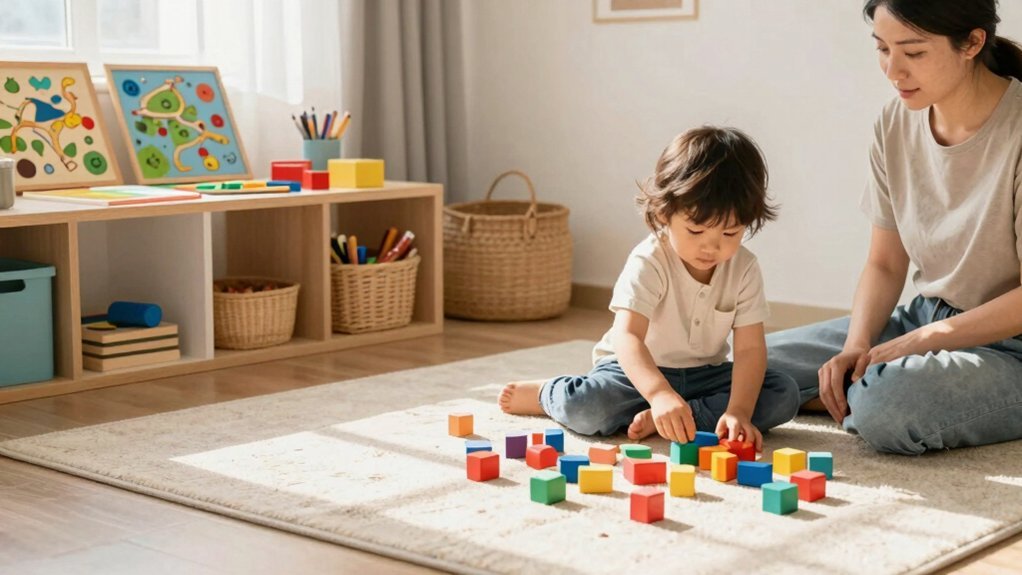
After establishing flexible daily anchors, you can enrich them with Montessori‑inspired activities that let your child pick what interests them most. Observe their sense of rhythm and notice which tasks spark curiosity. Offer practical life activities—spooning, pouring, color matching—so they build independence while honing fine‑motor skills. Keep the environment non‑competitive; you and your child collaborate, adjusting the lineup as interests shift. Revisit favorite storybooks or puzzles repeatedly, letting mastery deepen at their own pace. When choosing the right activity, prioritize the child’s internal drive over external deadlines. This child‑centered approach respects their natural rhythm, nurtures curiosity, and cultivates lasting confidence. Selecting tools like a Montessori step stool can further encourage independence by allowing your child to safely reach and engage with their environment.
Plan Weekly & Seasonal Learning Rhythm Activities
Ever wonder how a simple schedule can turn everyday moments into a rhythm that feels natural for your child? When you map out a weekly time plan, you give children a predictable flow while leaving space for curiosity. Tie the rhythm to seasons so learning feels alive—autumn leaf rubbings, winter stargazing—so each week mirrors nature’s cycle.
- Assign a core activity to a specific day (e.g., painting on Mondays).
- Add a seasonal twist that aligns with the current season.
- Insert a short transition (snack, circle time) between tasks.
- End the week with a brief reflection or family share.
Balancing repetition and novelty keeps children engaged, builds confidence, and deepens learning without rigid timing. Incorporating Montessori tasting activities into the weekly rhythm supports sensory development and vocabulary expansion in meaningful ways.
Reflect & Fine‑Tune Your Child’s Learning Rhythm Over Time
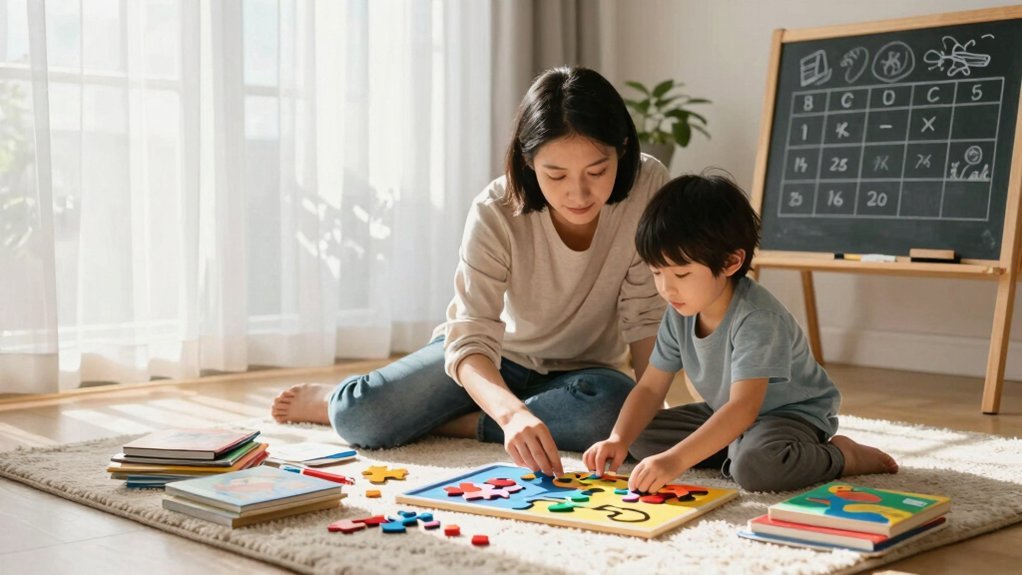
When the weekly schedule you set up starts showing patterns of excitement and fatigue, it’s time to step back and observe. You’ll notice the rhythm shifting as your child’s energy patterns rise and fall. Use reflective pauses to log observational notes, then fine‑tune the learning rhythm. Align activities with those insights, extending curious blocks and shortening tiring transitions. A child‑centered environment thrives when you honor these natural ebbs, keeping expectations flexible and focus on growth, not speed.
Incorporating interactive feeding toys into play can enhance engagement and support natural learning rhythms.
| Focus | Action |
|---|---|
| Attention | Note spikes during hands‑on projects |
| Joy | Record moments of spontaneous laughter |
| Persistence | Track duration before disengagement |
| Energy | Map high‑energy mornings vs. afternoon dips |
| Skill Growth | Highlight curiosity, concentration, kindness |
Frequently Asked Questions
How to Help a Kid Learn Rhythm?
You help a kid learn rhythm by modeling simple beats, clapping together, using everyday chores as timing cues, and alternating lively movement with quiet repetition so they feel the pulse naturally.
What Are 5 Examples of Rhythmic Activities?
You can try clapping games, marching with drums, dancing to metronome beats, tapping spoons as kitchen percussion, and creating simple chants with hand‑claps—each blends movement, sound, and timing for fun learning.
Do People With ADHD Have Good Rhythm?
Yes, you’ll often find that people with ADHD can have strong rhythm skills, especially in beat‑keeping or tempo tasks, because their brains respond well to predictable, engaging patterns that channel their energy.
What Are the 7 Elements of Rhythm?
You’ll find seven elements: daily, weekly, and seasonal rhythms; shifts; repetition; pacing; flexibility; and reflective practice. These create predictable structure while honoring your child’s natural learning pace.




Leave a Reply