You can boost your toddler’s confidence by mastering seven key dressing skills. Start with stable positioning—sit them on a sturdy chair or low stool with back support and a flat surface for clothes. Use a backwards‑chain method for shoes and socks, showing the final foot‑in‑shoe step first, then adding the sock. Teach simple pull‑up pants by sliding elastic waist shorts over hips while seated. Apply the flip‑over coat trick for shirts, slipping arms in before flipping the garment over the head. Modify fasteners: replace tiny buttons with oversized ones, add Velcro, and use color‑coded tags for left‑right cues. Set up a visual dressing station with laminated step cards, mirrors, and bright labels to keep motivation high. Keep these techniques in mind, and you’ll discover even more tips ahead.
How to Teach Toddlers Independent Dressing in 7 Simple Steps
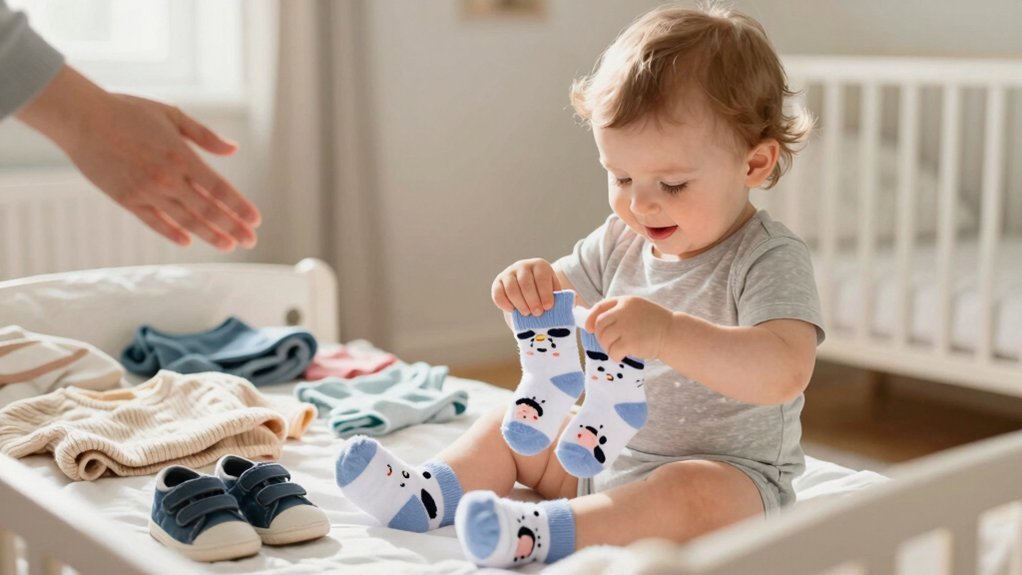
Ever wondered how to turn dressing into a confidence‑boosting routine? Start with undressing, letting toddlers pull off a shirt or socks one piece at a time. Use a backwards, last‑step‑first method: show them the final move—like slipping an arm into a sleeve or zipping up—then add earlier actions. Choose easy fasteners first: elastic waist shorts, slip‑on shoes, Velcro sneakers. Set up a stable dressing setup by having them sit with back support, lay clothing in order, and keep a mirror nearby for alignment checks. Break each item into a step‑by‑step sequence, offering hand‑over‑hand guidance only when needed. Gradually practice prompts fading, so they gain independence with every repeat, mastering dressing skills without frustration. Equipping your child with a stable step stool can greatly enhance their confidence and independence during dressing by providing safe and easy access to their clothing and dressing area.
Master Stable Positioning for Independent Dressing
Where can you find the most secure spot for your toddler to dress without wobbling? A sturdy chair or a low stool with a back support creates the stable positioning you need. Place a flat surface beside the seat, lay out clothing in the order they’ll be used, and keep each item within arm’s reach. Encourage your toddler to sit, prop one foot on the stool edge, or cross legs to access pants and shorts easily. Use visual prompts—color‑coded tags or pictures—so they know the next step.
Position a mirror where they can see themselves, reinforcing correct alignment as they pull sleeves or zip zippers. Consistent routines and sequencing clothing reduce fatigue, boost confidence, and turn dressing into a smooth, independent process for toddlers. Choosing tools and setups with sturdy handles and stable design principles, like those found in child-size strainers and colanders, can ensure safety and confidence during dressing activities.
Backwards‑Chain Shoes & Socks for Independent Dressing
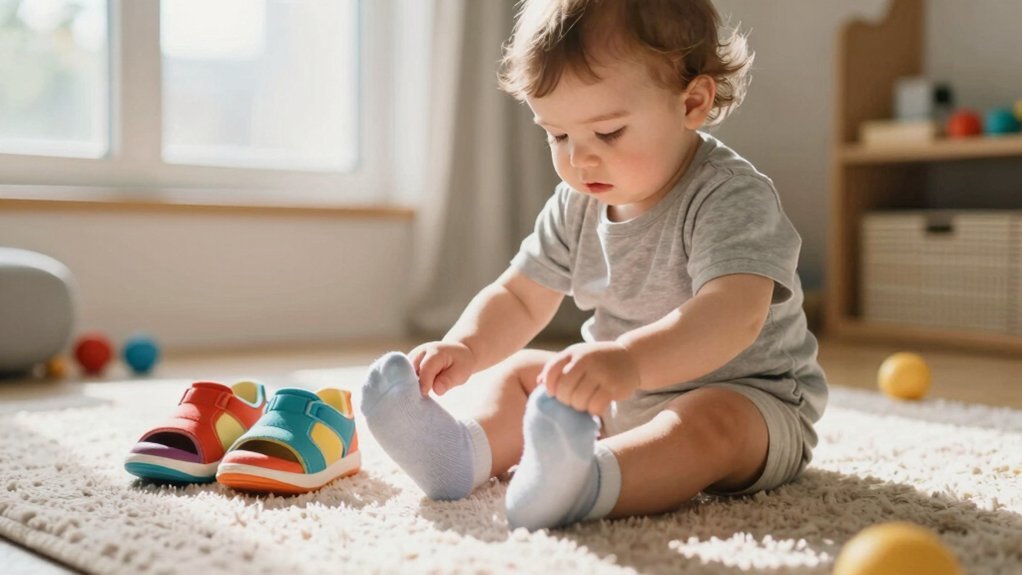
After your toddler is comfortably seated and has a clear view of their outfit, introduce backwards‑chain shoe and sock dressing. Show the final step—foot in the shoe and Velcro fastened—so they see the goal. Then, as confidence builds, add the sock, the left‑right cue, and finally the heel insertion using a tab or horn. This sequence builds independence while keeping dressing fun and low‑stress.
| Step | Cue | Outcome |
|---|---|---|
| 1 | Velcro footwear | Quick fasten |
| 2 | Left‑right stickers | Correct orientation |
| 3 | Sock on foot | Warmth and comfort |
| 4 | Heel insertion | Secure fit |
Keep shoes roomy, avoid tight laces, and celebrate each successful heel insertion. The practice reinforces independence in dressing. Incorporating safe tools designed for children, such as those with blunt tips and serrated edges, can further support fine motor skill development during dressing activities.
Simple Pull‑Up Steps for Pants & Shorts
A simple pull‑up routine for pants and shorts starts with an elastic waistband, letting your toddler slide the garment over their hips without fiddling with buttons or zippers. Begin seated—sit to dress—to keep balance easy while they practice pulling up pants. Lay the clothing in order, guide each leg into the leg hole, then encourage the child to use eye–hand coordination to pull the elastic up to the waist. Offer one‑handed help only if needed, then gradually remove it as prompts fading. Consistent dressing practice builds confidence, and the child soon masters pulling up pants independently. Over time, this routine nurtures independence in dressing, turning a daily task into a self‑sufficient skill. Teaching toddlers simple tasks with easy-to-use tools can enhance their learning and confidence across multiple activities.
Flip‑Over Coat Trick for Shirts & Jackets
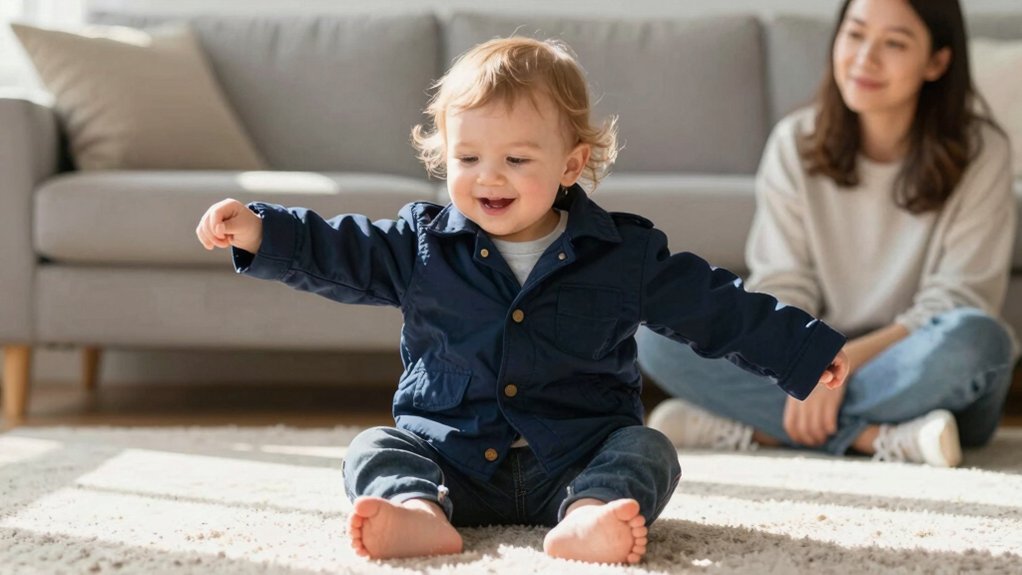
Pull‑up pants is already a win for independence, and the next step—mastering shirts and jackets—becomes just as straightforward with the Flip‑Over Coat Trick. You’ll guide toddlers to slip both arms into the sleeves first, then gently flip the garment over the head. This flip‑over coat trick cuts steps, aligns the shirt or jacket with the body, and lets the child pull it down the shoulders in one smooth motion. Use bright color cues or a left/right label to reinforce orientation during dressing practice. The reduced hand‑over‑hand effort builds motor skills and confidence, turning self‑help dressing into a repeatable routine. Consistent use turns jackets and shirts into easy, independent choices for growing kids. Using age-appropriate design features can further support toddlers in gaining confidence and skill with their clothing choices.
Easy Fastener Modifications for Toddler Independent Dressing
Because toddlers struggle with tiny fasteners, swapping them for larger, easy‑to‑grab alternatives can instantly boost independence. Replace tiny buttons with oversized ones and add Velcro fasteners on shirts and pants so they can pull pants up without fumbling. Use two‑colored laces or color‑coded zipper tabs; the bright pull makes locating the zipper easy and helps them see which side to move. Upgrade regular zippers to bigger gauge zips and attach a ribbon or paper clip to the pull for a secure grip. Start with dressing frames that feature these modifications, then let your child practice dressing, gradually removing the frames as they master each fastener. This step‑by‑step approach builds confidence, speeds up independence, and turns dressing into a fun, repeatable routine. Ergonomic designs with ambidextrous grips can further support toddlers by promoting comfortable, strain-free use of dressing tools and fasteners.
Create a Visual Dressing Station to Keep Motivation High
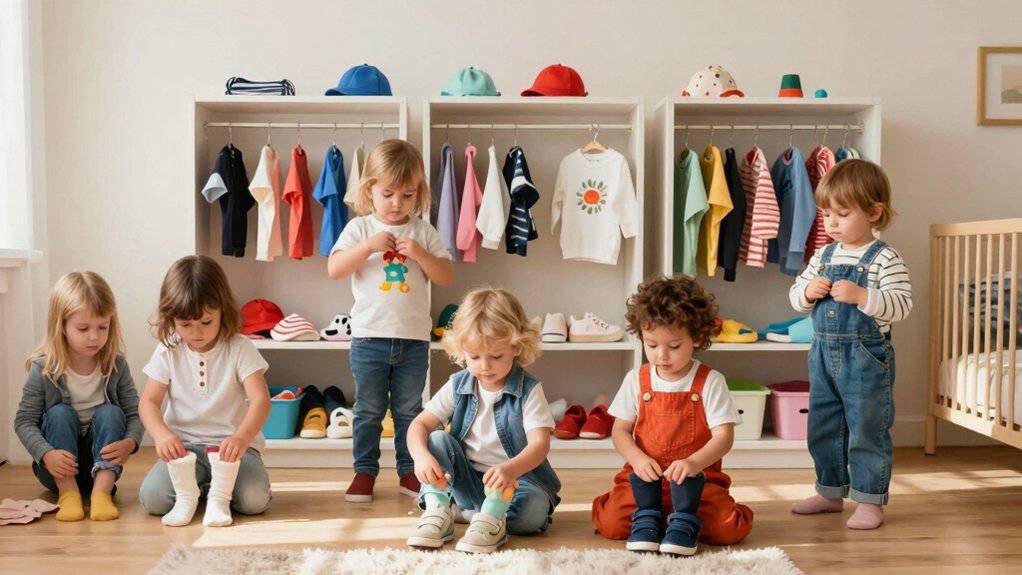
Ever wondered how a simple visual setup can turn dressing into a game? You can build a dedicated dressing station that guides your toddler step‑by‑step. Lay clothes in a sequential order—undies, shorts, pants, shirt, outerwear—so the child sees the exact next piece. Hang a mirror for a quick self‑check, and keep everything within arm’s reach on low shelves or hooks. Add laminated cards with pictures of each step, and attach wearers name labels and color‑coded cues to socks, shirts, and pants. This visual prompts system boosts independence, reduces frustration, and turns routine into play.
- A low‑height rack with numbered hooks for each garment
- Laminated cards showing each dressing step, placed at eye level
- Color‑coded labels and name tags on every item for quick identification
Using visual learning support systems helps structure routines and supports non-verbal independence in toddlers.
Frequently Asked Questions
What Is the 3-3-3 Rule for Clothing?
You follow the 3‑3‑3 rule by picking three simple garments, breaking each into three steps, and practicing each item for three minutes across three sessions, building independence through repeated, focused cycles.
What Is the 10 10 10 Rule for Toddlers?
You follow the 10‑10‑10 rule by keeping dressing tasks under ten minutes, holding the child’s focus for about ten minutes, and offering a short break every ten minutes to prevent frustration.
How to Help a Toddler Learn to Dress Themselves?
Start by letting them pull off socks, then guide them to slip a shirt over one arm, followed by the other. Use elastic waistbands, Velcro shoes, and a stable seat, fading prompts as they succeed.
How to Teach a Child With Special Needs to Dress Independently?
Start with the final action—like pulling the zipper up—then work backward, breaking each garment into tiny steps, using visual cues, supportive seating, and minimal hand‑over‑hand guidance until they succeed.