

You’ll see a calmer, more focused play area when you limit the selection to 8‑12 Montessori‑aligned toys, because fewer choices sharpen attention and reduce overwhelm. Clear, low shelves and labeled bins let kids pick, use, and return items independently, while rotating categories every two weeks sparks anticipation and keeps learning fresh. Organized storage also cuts clutter, promotes safety, and builds confidence. Stick with the system and you’ll discover even deeper benefits.
What’s the Big Deal? How Montessori Toy Rotation Boosts Focus & Calm
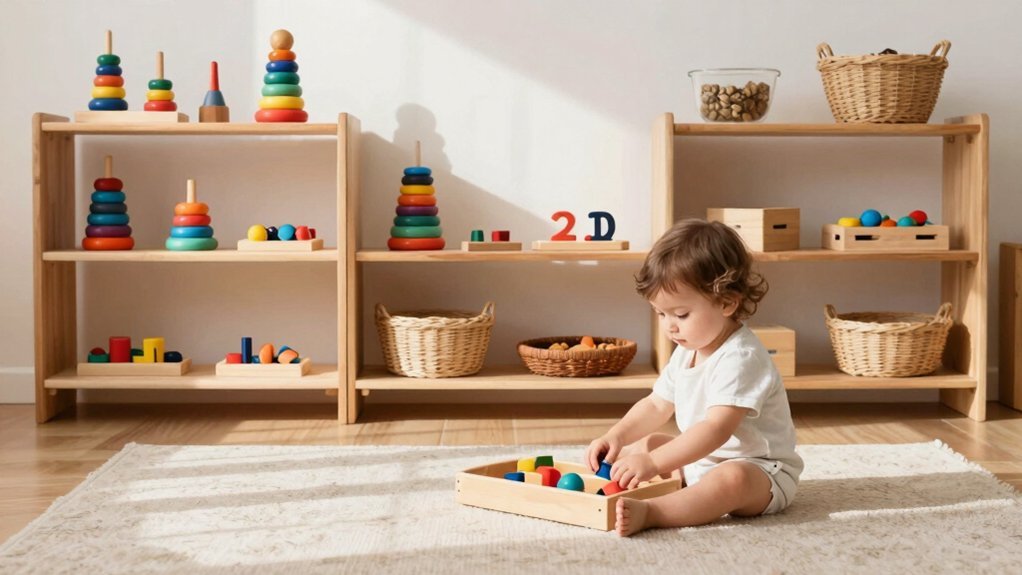
Why does a simple toy rotation matter so much? You’ll notice that a Montessori rotation trims clutter, leaving just 8–12 toys within reach.
A Montessori toy rotation declutters play, leaving 8–12 items to sharpen focus and foster calm.
With fewer options, your child’s focus sharpens; the mind isn’t bombarded by endless choices, so concentration deepens and calm settles in.
Each rotation re‑introduces familiar items after a 2–3‑week pause, sparking anticipation and a fresh‑ of novelty that fights boredom.
By handling the selection, use, and return of toys, your child practices independence, learning to manage their own play environment.
This structured yet flexible system nurtures sustained attention, reduces overstimulation, and builds confidence, turning everyday play into a purposeful, soothing experience.
Incorporating Montessori tools like the step stool helper can further promote independence by granting children safe access to their play and learning spaces.
How to Set Up a Simple Montessori Toy Rotation System at Home
You’ll start by gathering clear, labeled bins and placing them on low shelves so the child can reach them easily.
Then set a simple two‑week rotation schedule, swapping 6–8 toys while you observe which activities keep their interest.
Finally, involve your child in choosing what stays or rotates out, reinforcing autonomy and smooth transitions.
Planning and Accessible Bins
Ever wondered how a few well‑chosen bins can turn chaos into a calm, inviting play space? By using accessible bins, you create a toy rotation system that feels natural and organized. Store the off‑rotation collection in clear boxes or labeled containers in a separate room, keeping the main area uncluttered. Group items by type—blocks, puzzles, textured, plush, musical—so each bin holds a single category.
When it’s time to refresh, pull the appropriate bins onto low, child‑height shelves; the organized environment invites independent selection and easy return. A simple rotation schedule, typically every two weeks, guides when you swap bins, allowing you to adjust frequency as your child’s interests evolve. This setup keeps play fresh without overwhelming anyone.
Choosing storage solutions with rounded corners and anti-tip features ensures safety while maintaining accessibility for young children.
Rotation Schedule and Observation
When you set a 15‑day rotation for a 5‑year‑old, you’ll keep interest high while preventing overload.
Begin by clearing the play area, then group the remaining toys into categories—blocks, puzzles, textures—so each bin reflects a specific learning focus. Place one category on the shelf and store the others out of sight; after 15 days, swap them, creating a fresh environment that invites exploration.
Use a simple calendar or sticky notes to track each cycle, and watch how your child engages. Note which materials spark curiosity, which are ignored, and how long attention lasts.
This observation guides future rotations, ensuring the Montessori setup stays responsive to evolving skills and preferences.
For added safety and ease, choose toys with ergonomic handle designs to promote comfortable and secure play.
Choosing Montessori‑Aligned Toys & Numbers for Each Rotation
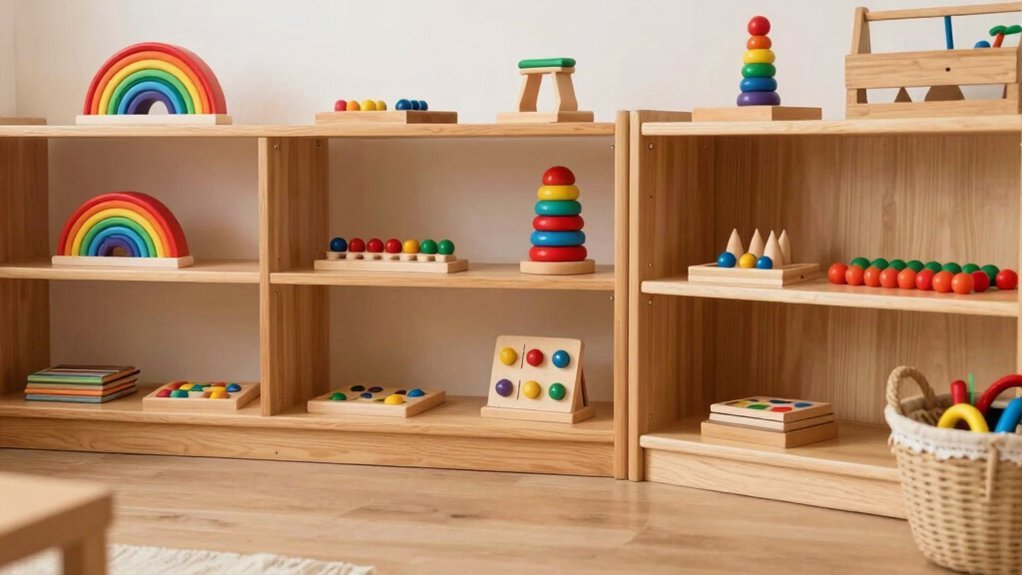
You’ll pick simple, open‑ended materials that invite exploration and keep the focus on hands‑on learning.
Aim for six to eight items per cycle, spreading them across practical life, sensorial, math, and language categories.
Label each piece clearly and place it on low, child‑height shelves so your child can choose and return toys independently.
Choose items made from durable, age-appropriate materials with spill prevention technology to support safe, independent use.
Simple Open‑Ended Materials
Because simple, open‑ended materials invite endless exploration, you’ll want to select Montessori‑aligned toys that are versatile, tactile, and free of preset outcomes. You arrange them in an organized environment, label low shelves, and rotate the set every few weeks. This rotation keeps the child engaged, encourages independent choice, and lets you observe shifting interests.
| Category | Example |
|---|---|
| Practical Life | Wooden dressing frames |
| Sensorial | Color tablets |
| Math | Bead chains |
| Language | Sandpaper letters |
| Creative | Open‑ended blocks |
Pick items that spark imagination, support developmental goals, and can be easily swapped. By curating a balanced mix, you maintain focus, reduce overwhelm, and nurture curiosity. Using low shelves that meet child height and Montessori design principles enhances accessibility and encourages self-directed play.
Six to Eight Items
A well‑curated rotation of six to eight Montessori‑aligned toys gives your child a focused, manageable selection that touches every core learning area. Choose one practical‑life tool, one sensory material, one math set, one language kit, and two supplemental items that spark curiosity. Place each piece on low, accessible shelves so your child can pick and return independently, reinforcing the organized environment you’ve created. Keep the categories distinct—no duplicate puzzles or blocks—so the rotating toys stay fresh and purposeful. Change the set every two to three weeks; this rhythm sustains interest while allowing mastery of each item. By limiting the collection to six to eight items, you avoid overwhelm and nurture concentration, laying a solid foundation for deeper learning. Including sets with real object matching supports concrete-to-symbolic learning and enhances engagement through tactile and visual experiences.
Balanced Skill Categories
Limiting the rotation to six‑to‑eight toys lets you allocate one piece to each Montessori category—practical life, sensorial, math, language, and building—so the child works on a balanced set of skills without feeling overwhelmed. You’ll notice how a thoughtful mix fuels development: a clothespin for fine‑motor control, a set of geometric blocks for spatial reasoning, and a sandpaper alphabet for tactile language learning. By rotating these items, you keep the environment fresh, maintain focus, and prevent overload. Incorporating color variety in related learning materials can enhance engagement and help with color recognition development.
- Practical life: water‑pouring set
- Sensorial: color‑sorting cylinders
- Math: bead‑frame counting board
Each cycle reinforces a different facet of growth while preserving balance, making the Montessori rotation a powerful tool for holistic development.
Practical Tips for Handling Tantrums When Rotating Toys
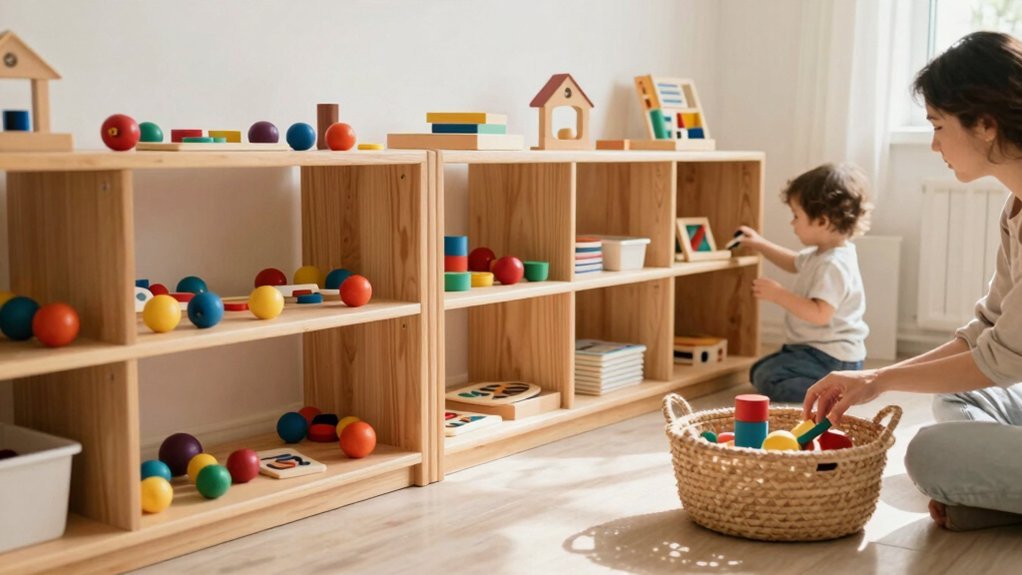
How do you keep a toddler calm when their favorite toys disappear? You start with a predictable routine, letting the child know that the Montessori rotation is a regular, gentle process.
When a tantrum flares, pause, breathe, and offer a limited choice—perhaps which two toys to keep for the next week.
Praise any independent play you see, reinforcing that the environment supports their autonomy.
Keep the storage bins clear and labeled, so the child can see where each item belongs.
Involve them in the swap: hand them a box, ask, “Which one should we bring out?” This sense of control eases frustration and reduces the intensity of tantrums, making each rotation smoother for both of you.
Keeping Your Montessori Toy Rotation Space Organized & Independent
When you place low, accessible shelves and clearly labeled bins in the rotation area, toddlers can pick and return toys independently, turning the space into a self‑directed learning zone. A Montessori rotation thrives on an organized environment where each item lives in its own spot, making independent choice effortless. Keep the display tidy, face‑out on the low shelves, and rotate one category at a time to avoid overwhelm. Store off‑rotation toys in separate labeled boxes to maintain focus.
- Use 6–8 toys per rotation, spaced 2–3 weeks apart.
- Group items by category—blocks, puzzles, sensory, language.
- Position bins at child height, with clear labels for quick return.
How to Track Toy Rotation Benefits
Ever wonder how to know if your toy rotation is truly boosting focus and joy? Start by creating a simple chart that logs each rotation cycle, noting which categories or individual toys the child chooses most often. Use this rotation tracking data to spot patterns—if puzzles dominate one week, you might swap in blocks next. The Montessori approach thrives on an organized environment, so keep the chart visible and update it after every swap. Record how long the child stays engaged with each set; longer focus signals success. Also note how independently they select, use, and return items. Over time, the log will reveal which rotations nurture child independence and sustain enthusiasm, guiding smarter future selections.
Frequently Asked Questions
What Age Range Benefits Most From Montessori Toy Rotation?
You’ll see the biggest gains between ages 2 and 6, when curiosity spikes, attention spans lengthen, and fine‑motor skills blossom, so rotating toys keeps them engaged and learning efficiently.
How Often Should the Rotation Schedule Be Adjusted as a Child Grows?
You should tweak the rotation every few months—roughly every 3‑4 months—so the toys match your child’s advancing skills, interests, and developmental milestones, keeping engagement high and learning fresh.
Can Digital Devices Be Incorporated Into a Montessori Rotation System?
You can blend digital devices into a Montessori rotation by selecting age‑appropriate, interactive apps that reinforce hands‑on concepts, limiting screen time, and ensuring they complement, not replace, tactile materials.
What Signs Indicate a Toy Is No Longer Engaging for the Child?
You’ll notice the child avoids the toy, loses focus quickly, or plays with it only briefly before moving on. They may also become bored, ignoring it, or using it in unintended ways.
How Do Cultural Differences Influence Toy Selection for Rotations?
You’ll notice you prioritize toys that reflect your family’s traditions, language, and values, choosing culturally familiar colors, stories, and materials, while avoiding items that clash with local customs or religious beliefs.