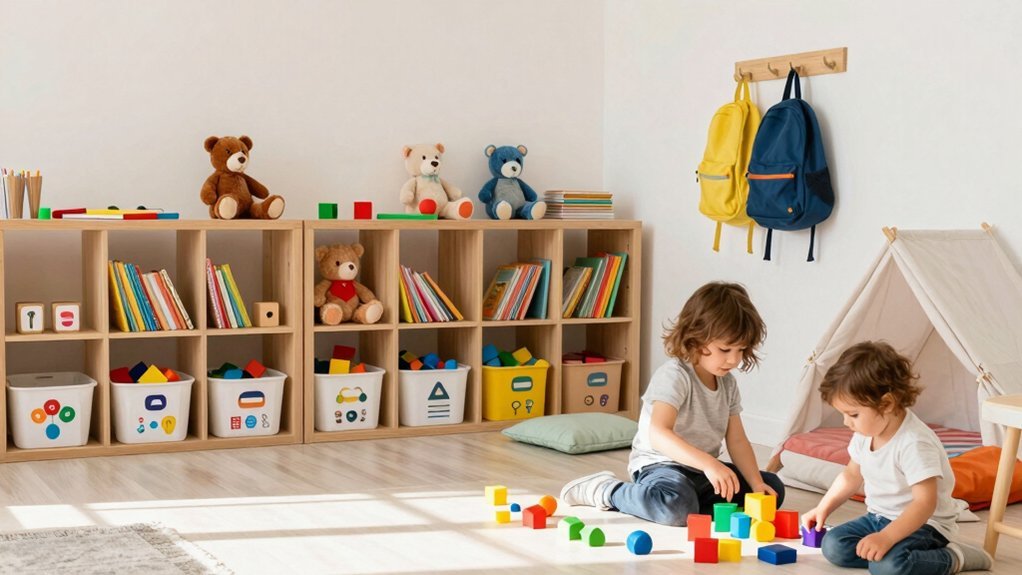
Set shelves and bins at about 30‑36 inches so you can reach everything without help. Use low, picture‑labeled containers and color‑code them (red toys, blue dress‑up, yellow art) for instant identification. Mount child‑height hooks and place a sturdy, low stool nearby for safe stepping. Create a grab‑and‑go snack station on a low shelf with pre‑portioned, clearly labeled bins. Build a mini dressing area with a low mirror, bench, and picture‑labeled outfits. Add a floor‑level reading nook with labeled baskets for books. Keep exploring for more ideas on fostering independence.
Determine the Right Furniture Height for Child‑Friendly Independent Spaces
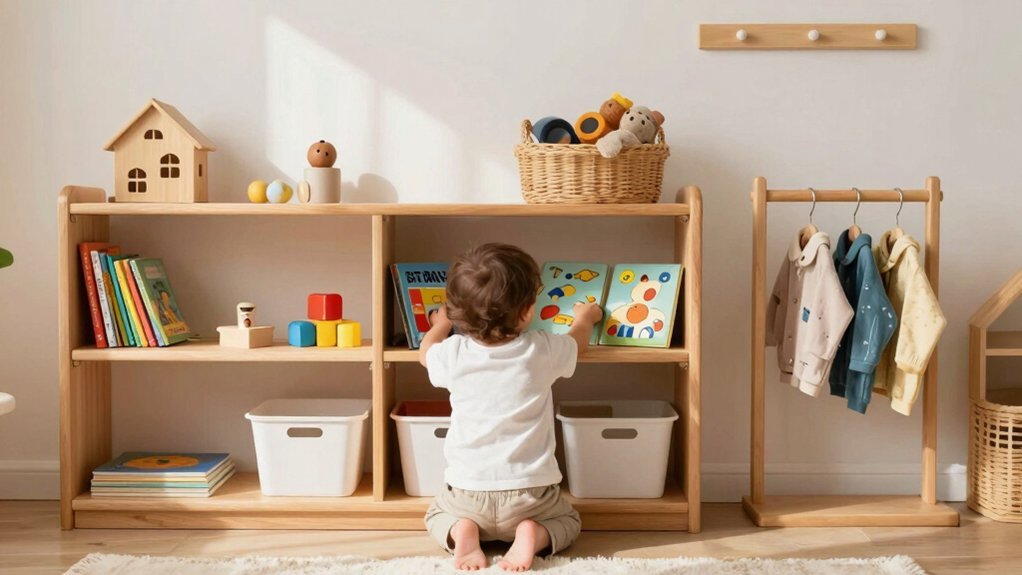
How tall should the furniture be for a child to use it independently? Aim for a child-friendly furniture height of about 30–36 inches for most activities. When you set shelves, racks, and hooks at that level, kids can reach, pull, and place items without stretching or needing adult assistance. Use a small stool or learning tower to bridge the gap to counter‑height zones safely, letting them help with self‑feeding or crafts. Keep storage labels at eye level, so they recognize where things belong and can organize on their own. Design each zone—entry, kitchen, play, dressing—with consistent heights, creating independent spaces that reinforce routine and confidence. This uniformity reduces confusion and encourages kids to navigate and tidy the area effortlessly. Incorporating sensory mats with textures in play and storage areas can further support fine motor skills and sensory development as children interact with their environment.
Install Low Shelves and Picture‑Labeled Bins for Independent Play Areas
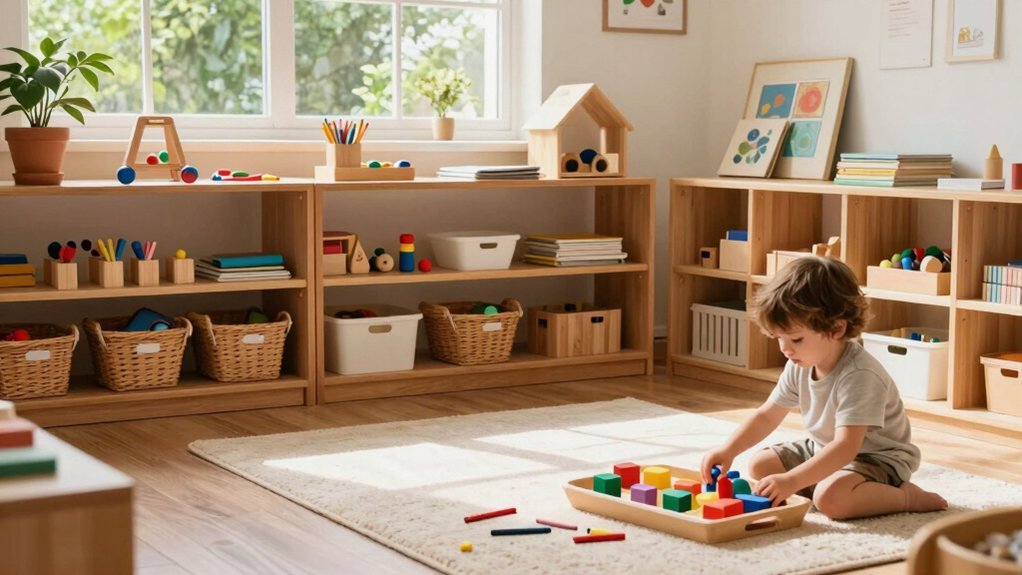
Ever wondered how a simple shelf can turn cleanup into a game? Install low shelves at your child’s height and pair them with picture‑labeled bins so toys stay within reach and sight. Choose durable plastic bins or sturdy wood shelves that survive daily handling. Position the storage along walls to create a dedicated play zone, minimizing trips and meltdowns during tidy‑up. Use clear fronts and picture labels to guide kids in returning items to the right spot, reinforcing consistent organization. Add a routine cue like “Put away toys on the blue shelf” to make the habit stick. This setup gives your child independence while keeping the space orderly and inviting. Ideally, shelves should be within the 24 to 48 inches height range to promote independent browsing and easy access.
Label Bins With Pictures and Colors for Quick Identification
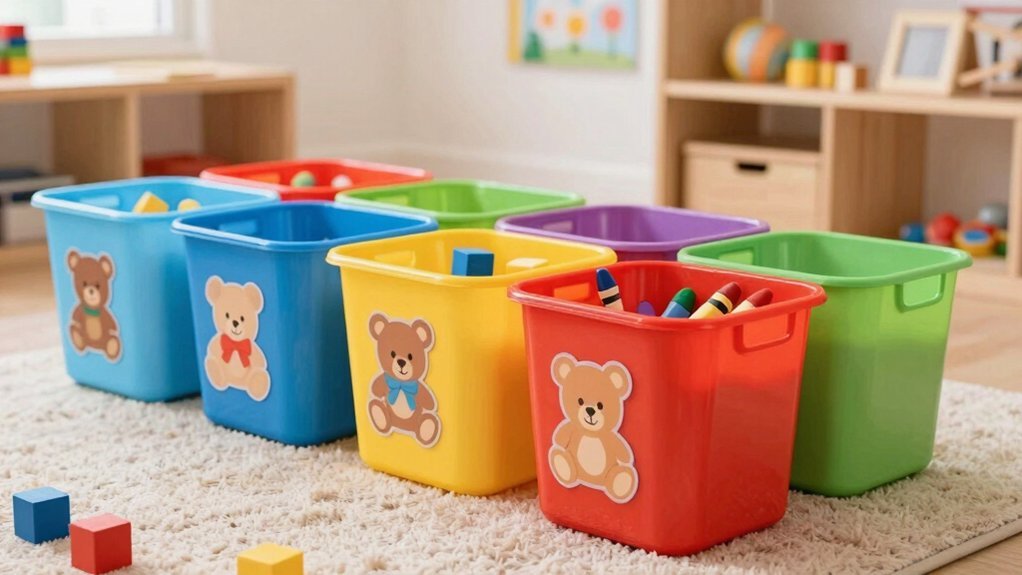
Can a simple color or picture turn a chaotic room into a tidy, self‑service station? You’ll find that labeling bins with bright pictures and matching colors speeds up organization and boosts independence.
Choose a consistent palette—red for toys, blue for dress‑up, yellow for art supplies—so your child can spot the right spot at a glance.
Attach clear, visual labels that illustrate the contents; pre‑readers can match a crayon picture to the art bin without decoding text.
Keep the system fresh by updating labels whenever items rotate, ensuring the visuals stay accurate.
This visual cueing reduces searching time, reinforces category recognition, and encourages your child to clean up confidently and efficiently.
In addition, incorporating adjustable hanging rods with tool-free installation can optimize closet space and help maintain order within accessible storage.
Mount Child‑Height Hooks and a Low Stool for Independent Access
Ever wondered why kids seem to struggle with reaching coats or kitchen shelves? Mount hooks at a child’s height throughout the home, and you’ll see immediate independence. Place a low stool next to each hook so your child can step up safely, grab a backpack, or hang a coat without adult help. Install hooks in functional zones—by the front door, in the mudroom, and near the kitchen—to create clear drop‑off spots. Pair each hook with a labeled bin or basket at the same level, reinforcing where items belong. The stool gives stable access to higher shelves for dressing or snack prep, while the hooks keep everyday belongings within easy reach. This simple setup builds self‑service habits and smoother transitions between activities. Consider choosing a stool with safety rails to minimize fall risks and ensure your child’s steadiness when reaching higher.
Build a Grab‑and‑Go Snack Station for Independent Spaces
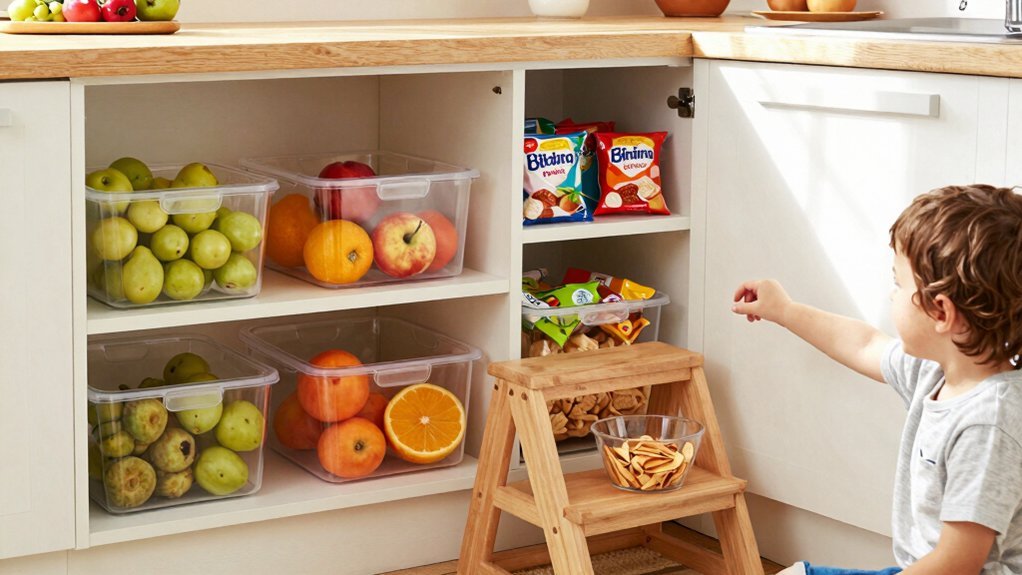
Where can you set up a snack station that lets kids help themselves without a mess? Choose a low shelf away from high‑traffic zones, and use a shallow, washable tray to catch crumbs. Stock pre‑portioned, age‑appropriate items in clear, Label bins so kids can grab a cup of fruit or a handful of crackers instantly. Involve them in rotating snacks and restocking, reinforcing responsibility. Keep the area tidy by pairing the snack shelf with nearby Toy storage bins that hold reusable plates or napkins, creating a seamless “grab‑and‑go” zone.
| Shelf Level | Snack Type | Label |
|---|---|---|
| Low | Mini crackers | Label bins |
| Low | Fruit cups | Label bins |
| Low | Yogurt pouches | Label bins |
| Low | Granola bars | Label bins |
| Low | Pretzel sticks | Label bins |
Create a Mini Dressing Area for Independent Dressing
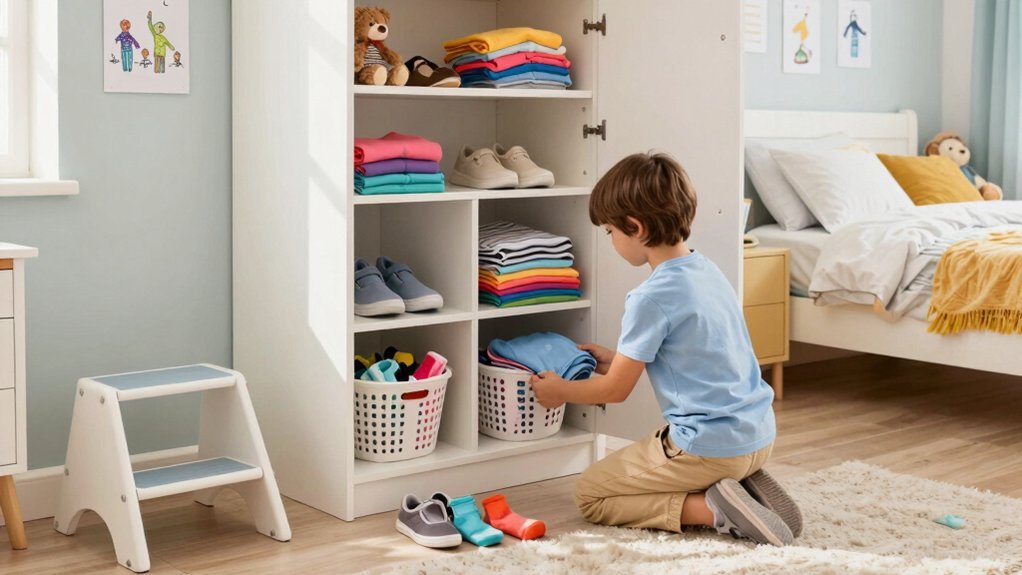
You’ll love setting up a low‑height bench with an open shelf so your little one can reach clothes and a mirror at eye level.
Keep a few season‑appropriate outfits ready on the shelf, letting them pick what to wear each morning.
Add labeled bins for socks and underwear, and a simple hook system for hanging finished outfits, making dressing a smooth, independent routine.
Low‑Height Bench
How can a low‑height bench transform dressing time into a confident, independent routine for a 2‑ to 3‑year‑old? You’ll place the bench in a dedicated dressing zone, letting your child reach clothes without assistance. Pair it with low, open shelves or racks so outfits stay organized and within easy sight. A child‑height mirror and nearby grooming tools invite self‑sufficient habits. Preparing outfits the night before or offering simple choices reduces decision fatigue. This setup becomes a practical storage solution that nurtures independence while keeping the area safe and clutter‑free.
- Open‑front bench at floor level for easy access
- Adjacent low shelves or racks for organized outfits
- Mirror at eye level to encourage self‑checking
- Simple, pre‑selected clothing options for quick decisions
- Choose storage with low height and clear compartments to enhance accessibility for young children.
Open Shelf Storage
Ever wonder how a simple open‑shelf setup can turn dressing into a confident, independent habit for a 2‑ to 3‑year‑old? Install low, open shelves at a child‑friendly height so your toddler can reach shirts, pants, and socks without adult help. Add a small bench nearby for sitting while they slip on shoes, and keep a stool handy for any higher items. Label each shelf with a picture cue, so the child knows where to find socks versus shirts. Prepare a “tomorrow’s outfit” the night before, placing those pieces on the front shelf for quick access. Include a dedicated spot for a brush, hair ties, and a small mirror, reinforcing independence every morning. This mini dressing area turns routine into a fun, self‑directed activity. Incorporating interactive toddler art easels nearby can further stimulate creativity and fine motor skills during independent dressing time.
Mirror and Outfit Choices
What if a tiny mirror and a low bench turned morning dressing into a confident, self‑directed routine? You’ll see how a mini dressing area empowers a 2‑ to 3‑year‑old to choose outfits, check the reflection, and master the organization process. Keep the space inviting and functional, so the child can put things back without adult prompting.
- Place a low mirror at eye level so they can see the whole outfit and feel proud of their choice.
- Add a bench or learning tower for safe reach to shelves and the mirror.
- Use open, low racks or shelves stocked with pre‑selected outfits labeled with pictures.
- Include a small basket for “to‑wear tomorrow” clothes, reinforcing the habit of putting things back after use.
These steps turn dressing into a smooth, independent ritual.
Design a Low‑to‑the‑Ground Reading Nook for Independent Reading
Ever wondered why a child‑sized reading nook sparks independent curiosity? You’ll boost independence by keeping everything at floor level: a low bookshelf, plush cushions, and soft lighting create a cozy, inviting space. Choose a small bookcase that sits at your child’s eye level, rotating picture books and early readers so they can pick what they want. Add labeled baskets or bins nearby—storybooks, board books, rhyme books—so your toddler can self‑serve without adult help. A soft rug, a pillow fort or bench, and a hook for a reading‑buddy blanket make the nook feel personal and comfortable. Sprinkle similar low shelves throughout the house, and the a calm, screen‑free routine to encourage frequent, self‑directed reading sessions. Incorporating ergonomic handles throughout the space can make it easier for little hands to manage books and toys independently.
Frequently Asked Questions
What Is the 3 3 3 Rule for Kids?
You follow the 3‑3‑3 rule by limiting kids to three items per category, scheduling three clean‑ups daily, and creating three dedicated zones—play, reading, and study—to foster independence and tidy habits.
What Is the 10-10-10 Rule for Kids?
You follow the 10‑10‑10 rule by picking toys you can play with for ten minutes, clean up in ten, and put away in ten. It teaches you quick, manageable shifts and builds independence.
How to Increase Independence in Children?
You boost kids’ independence by letting them choose tasks, giving them accessible tools, setting clear routines, and praising effort. Offer choices, step‑by‑step guidance, and safe spaces where they can succeed on their own.
What Is the 9 Minute Rule for Kids?
You apply the 9‑minute rule by setting a timer, telling kids they have nine minutes to tidy, then praising them after the interval. Short bursts keep focus, reduce overwhelm, and build independence.

Leave a Reply