
You’ll want low, open‑front shelves at child height so kids can grab items without help. Choose rounded edges, non‑toxic finishes, and anchor everything securely. Group forward‑facing books, themed toy sets, and color‑coded bins in intuitive zones, leaving negative space for calm visual flow. Rotate a few books and toys every week to keep interest fresh and support skill development. Keep frequently used pieces on the lower levels and store seasonal items up high. Keep exploring to discover more details.
What Makes a Montessori‑Friendly Shelf Work?
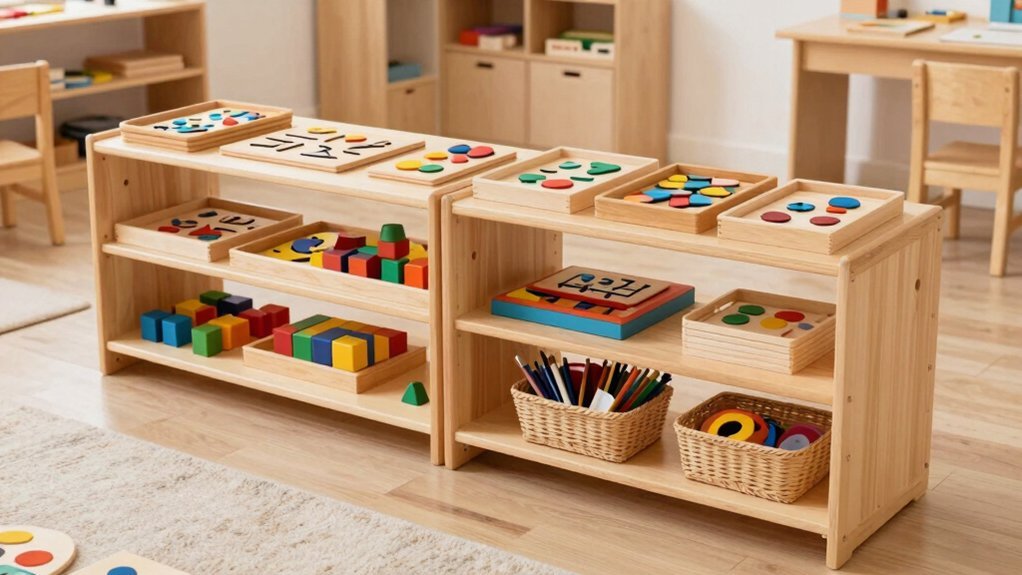
How does a Montessori‑friendly shelf actually work? You place it low, open, and within reach so you can pull a book or toy without help. The design prioritizes accessibility: no doors, no high shelves, just a clear view of forward‑facing covers that invite you to pick. You arrange items into tiny themed worlds—animals with their habitats, storybooks with matching figurines—so each shelf tells a mini‑narrative.
Rotation keeps the experience fresh; every week or two you swap a few pieces, preventing clutter and deepening focus. By limiting choices to a curated, manageable set, you foster independence, tidy up after play, and stay engaged without the urge to dump everything at once. This simple, intentional layout makes the Montessori approach work. Using materials made from BPA-free, food-grade substances ensures safety and health, which aligns well with Montessori principles.
Select Child‑Height, Open‑Front Shelves for Easy Access
You’ll want shelves that sit at your child’s eye level so they can reach books and toys without help. An open‑front design lets them see everything at a glance, making selection and cleanup faster.
Keep the units low and secure them to the wall for safety while maintaining easy access. Shelves with rounded edges and non-toxic finishes enhance safety and durability for active play.
Height Reachable Shelves
Ever wonder why child‑height, open‑front shelves make a difference? You’ll see that kids gain confidence when they can see and pull items without assistance. By placing the most used toys and books on the lower two levels, you boost reachability and cut down on risky climbing. Baskets on those shelves corral blocks, cars, and trains, keeping everything tidy and within arm’s length. Reserve the top sections for seasonal or rarely used items, and anchor the unit to prevent tipping. This layout balances independence with safety, letting children develop tidy habits while you avoid clutter. Many Montessori-inspired play kitchens feature compact size designs that complement child-height shelving for easy accessibility and encourage independent play.
| Level | Typical Items | Safety Tip |
|---|---|---|
| 1 (0‑24″) | Picture books, small bins | Anchor unit |
| 2 (24‑36″) | Action figures, puzzles | Light, non‑fragile |
| 3 (36‑48″) | Board games, art supplies | Store higher, less used |
| 4 (48‑60″) | Seasonal décor, spare blankets | Keep out of reach |
Open‑Front Design Access
Why do child‑height, open‑front shelves work so well? You see the books and toys at eye level, so you can grab them without adult help. The open‑front design boosts accessibility, letting you scan covers and colors instantly, which sparks early reading interest. Because the selection is limited and displayed forward‑facing, you feel less overwhelmed and more confident choosing items. Secure anchoring and rounded edges keep the setup safe while preserving quick access. Grouping related books and toys on the same open‑front creates intuitive organization, helping you make connections and tidy up independently. This Montessori‑inspired approach encourages autonomy, nurtures decision‑making, and keeps your space orderly and inviting. Incorporating child-height step stools can further enhance independence by helping children reach shelves safely and confidently.
Organize Books, Toys, and Tools on Your Shelf
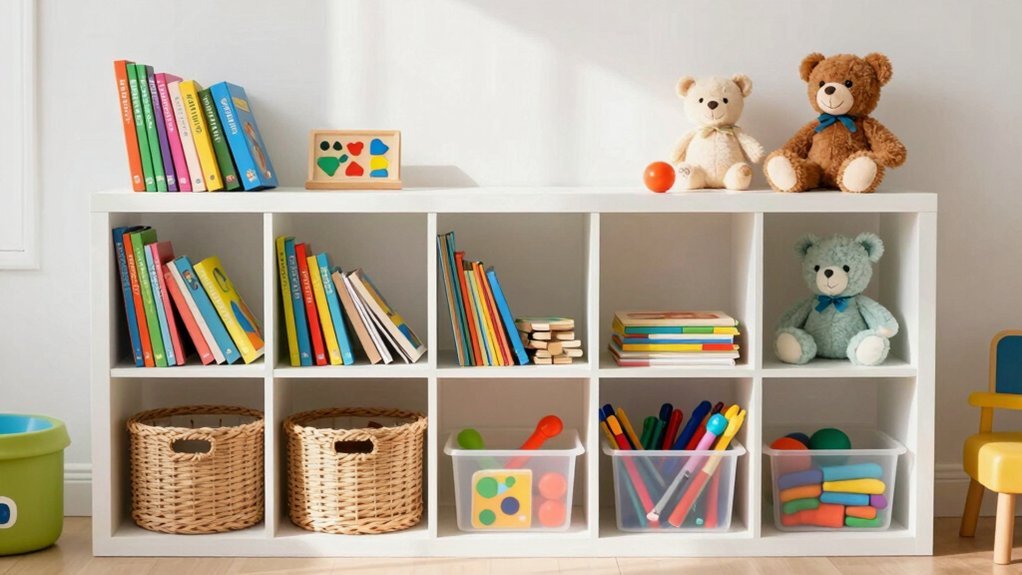
How can a kid‑friendly shelf stay tidy and inviting? Place the most‑used books, toys, and tools on lower shelves so kids reach them without stretching. Keep items at eye level using wall‑mounted drawers, floating ledges, and hooks; this creates natural storage solutions that stay organized.
Display forward‑facing books on open shelves or clear acrylic frames, letting cover art draw attention. Cluster blocks, crayons, and small toys in uniform baskets of varying sizes, leaving breathing room between groups. Anchor any tall or heavy unit to the wall, then reserve upper shelves for decorative pieces you short‑term storage. Including Montessori materials like the Brown Stair set can enhance learning and organization through tactile and visual engagement.
Create Color‑Coded Bins and Zones for Kids
Can you imagine a room where kids instantly know where everything belongs? You’ll create color-coded bins and zones that turn clutter into a game. Assign each zone a purpose—reading corner, Lego area, dress‑up nook—and match durable, child‑accessible bins to the zone’s hue. The visual cue lets kids spot the right bin without prompting, reinforcing organization and independence. Pair lower shelves with labeled baskets so they can reach and store items safely. Rotate toys within each color zone to keep the layout fresh while the overall structure stays stable. By layering storage and keeping colors consistent, you build a predictable environment that encourages tidy habits and makes cleanup feel effortless. Opt for storage solutions with waterproof surfaces to ensure easy cleaning and durability during frequent use.
Use Negative Space to Keep the Display Calm
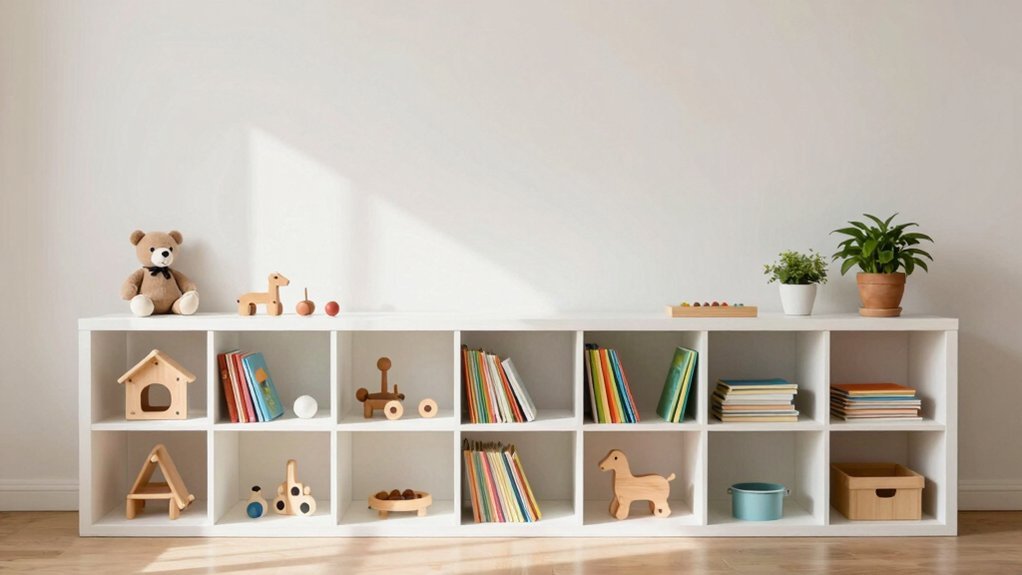
You’ll notice the shelves feel more inviting when you give each group some breathing room, so the eye can pause between items. Arrange books and toys in uniform stacks, leaving intentional gaps that balance the visual weight. Incorporating natural wood toys with smooth edges and non-toxic finishes can enhance both aesthetic and safety in your display.
Keep Space Breathing
Ever notice how a shelf packed to the brim feels overwhelming? You can calm it by giving each row a little negative space. When you leave a gap between stacks, the eye gets a rest and the display feels less noisy. Use the top shelves for intentional breathing room, reserving a single object or a small stack up there. Keep lower shelves more densely arranged for easy access, but don’t max out every level. A well‑placed empty space creates a visual rhythm that guides a child’s focus without shouting. By zoning the shelves—easy bins down low, curated moments up high—you let each section breathe, turning a chaotic wall into a soothing showcase.
Balance Objects Uniformly
Often, a little negative space between items lets the eye rest and keeps the display calm. You’ll notice that uniformity in book stacks—matching series, size, and color—creates visual cohesion while preventing chaos.
Apply shelf zoning by assigning lower levels to kid‑friendly, frequently used items and reserving upper zones for styled moments, photos, or artwork. Keep the top shelf deliberately open, allowing taller decorative pieces or pure air to breathe.
Resist the urge to fill every gap; a single object or a modest gap offers a visual pause that enhances composition. By balancing objects uniformly and respecting negative space, you craft a calm, organized shelf that feels inviting and easy for children to navigate.
Add Wall Hooks and Message Boards for Function
Looking to squeeze more utility out of a kid’s room? Install wall hooks and message boards to turn empty wall space into a functional organization zone. Choose colorful hooks that match the décor and mount them on walls, doors, or shelf sides for backpacks, hats, jackets, and dress‑up costumes.
Pair them with Mosey message boards placed at eye level, giving kids a reusable surface for notes, reminders, and artwork. The boards’ non‑graffiti coating lets them erase and rewrite without hassle, while grouped sections let each child or a small team post updates.
Together, these elements keep essentials within reach, reinforce daily routines, and provide a collaborative display area that brightens the room without sacrificing floor space.
Rotate Toys and Books to Boost Skill Development
After you’ve turned blank walls into handy hooks and message boards, the next step is to keep the play area lively by rotating toys and books. Schedule a rotation every one to two weeks so each item aligns with your child’s current developmental stage. Keep the most engaging books forward‑facing and display toys openly; this boosts accessibility and invites independent choice. Limit the shelf to a manageable number of high‑quality pieces, which sharpens focus and reduces clutter. Use simple tags or a checklist to track what’s in and out—this reinforces memory, decision‑making, and organization skills. Kids will notice the fresh challenges, stay motivated, and develop confidence as they explore new materials while you maintain a tidy, purposeful space.
Secure Shelves, Edges, and Heavy Items Safely
How do you keep a kid‑friendly shelf both sturdy and safe? Anchor every unit to the wall with anti‑tip hardware, treating it as a non‑neg fre freestanding piece. Choose solid‑wood or low‑VOC engineered wood, then sand edges smooth and round them to eliminate sharp corners. Finish surfaces with non‑toxic paint or sealant to protect indoor air quality and your child’s skin. Position heavy books, games, or décor on lower‑shelves, lowering the center of gravity and reducing strain on brackets. Conduct a quick safety audit after installation: tighten bolts, verify anchors, and ensure loads haven’t shifted. Repeat the check every few months to catch loose components early, keeping the shelf stable and the play area hazard‑free.
Mix Color and Function for a Kid‑Friendly Look
You’ll notice that bright, coordinated colors instantly make the space feel lively while guiding kids to the right zones.
By placing lower shelves for everyday toys and higher ones for display pieces, you create a functional height hierarchy that encourages independence.
Pairing vivid hues with neutral hooks and whiteboards ties the look together without overwhelming the room.
Vibrant Color Coordination
Ever wondered how a splash of color can turn a plain shelf into a kid‑friendly hub of independence? You can mix vibrant hues with sturdy storage like Fat Lippie Shelves and Popsicle hooks, turning the area into an inviting, functional display.
Use color‑coordinated baskets and bins on low shelves to group Books by shade or theme, keeping favorite titles within easy reach.
Pair colored wall hooks and shelf lip designs with matching or contrasting shelving colors to anchor zones for reading, dress‑up, and toy storage.
Balance bold accents with neutral backgrounds—light boxes or natural‑toned shelves—to avoid visual overload while maintaining a playful, cohesive palette that encourages kids to explore and organize on their own.
Functional Height Zoning
Mixing bright hues with smart placement turns a colorful shelf into a functional playground. You’ll notice that vertical space becomes a design ally when you apply functional height zoning: low shelves host kid‑accessible storage, while higher levels showcase rotating displays. Pair vibrant Fat Lippie shelves with reachable hooks and magnet boards, then layer baskets on mid‑level shelves for blocks, dolls, and art supplies. Use forward‑facing books and artwork at eye level to invite independent selection, and reserve the top tier for seasonal treasures. This mix of color and function guides kids to organize purposefully and explore safely.
- Place the most used items within arm’s reach for effortless access.
- Use bright bins and hooks at kid‑height to reinforce visual cues.
- Reserve upper shelves for decorative, rotate‑often pieces that spark curiosity.
Quick Cleaning Routines for a Neat Montessori Shelf
Where does a tidy Montessori shelf start? You begin with clear shelf organization that respects low‑access zones, so kids can reach what they need without top pile‑ups. Each morning, do a quick cleaning: return items to their designated baskets, wipe the non‑toxic surface, and flip books forward for visual scanning. Keep frequently used toys and books on the lower shelves; this encourages independent cleanup and limits clutter. Rotate a small group of items weekly—two books, one toy—to keep interest high and prevent overcrowding. Use uniform stacks and labeled bins as visual cues, guiding children where to place each piece after use. The wipeable finish makes your routine swift, keeping the shelf neat and inviting every day.
Frequently Asked Questions
What Is the Rule of Three for Shelves?
You arrange items in groups of three—usually a book, a toy, and a decorative piece—varying heights within each trio, so the shelf looks balanced, easy to see, and simple for kids to tidy.
How to Style Shelves in Kids Room?
You style kids’ shelves by placing daily essentials on lower levels, using baskets and vertical dividers for small items, mixing heights and textures, leaving intentional gaps, and anchoring sturdy, rounded‑edge units.
What Is the Montessori Approach to Bookshelves?
You’ll keep shelves low, open, and sparse, placing books at eye level with covers facing out. You rotate selections regularly, let kids choose and return items, and group related stories with toys for meaningful connections.
What Is the Bookshelf Rule?
You follow the Bookshelf Rule by keeping shelves low, eye‑level, and anchored; use bins or baskets for easy grab‑and‑go, display books front‑facing, and rotate items weekly to stay engaging.