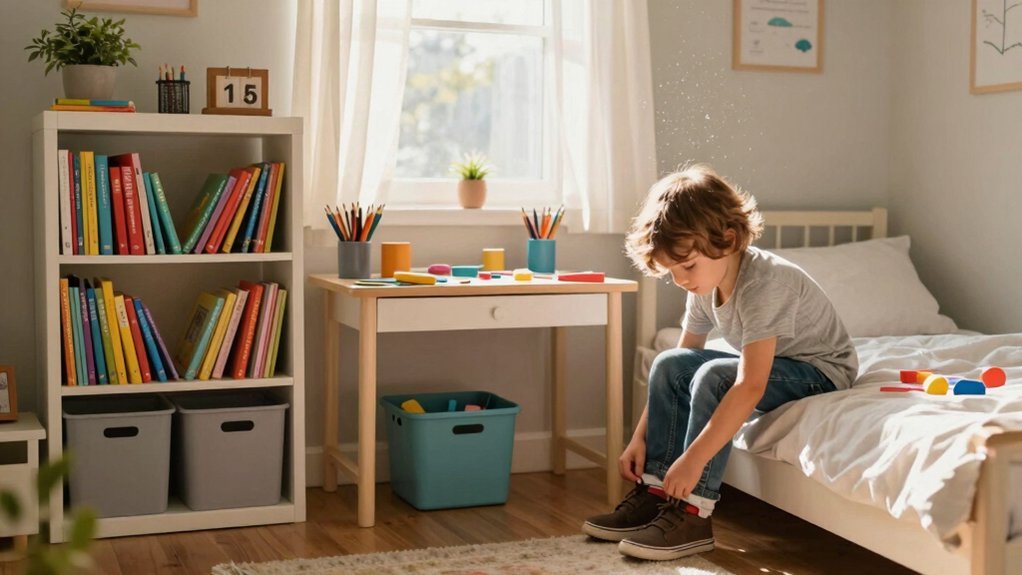
When you give kids a predictable daily order, you cut decision fatigue and let them focus on mastering each step—like toilet, dressing, breakfast—using visual schedules that sit in the same spot. Offer two clear choices during routines, celebrate each decision, and let them handle simple chores such as clearing plates or sorting socks. Slow transitions, low‑height bins, and backward‑chaining build confidence, while problem‑solving moments and organized free‑play spaces reinforce independence. Keep exploring to discover deeper strategies.
Build Preschool Independence With Structured Routines
Ever wonder how a simple routine can turn chaotic mornings into smooth, confidence‑building moments? You start by lining up the same steps—toilet, dressing, breakfast, backpack—so the day feels predictable. That routine cuts decision fatigue and creates momentum, letting your child focus on self‑help tasks instead of guessing what comes next. Place labeled bins and hooks within reach; the child can grab a coat or a shoe without prompting. Use backward chaining: teach one tiny action, celebrate mastery, then add the next piece. Slow the pace for transitions, giving ample time for shoe‑tying or coat‑putting. Over time, the child gains independence, confidently navigating each step and building a solid foundation for future self‑direction. Incorporating practical life baby doll care sets can also enhance responsibility and nurturing skills through interactive, hands-on play.
Use Visual Schedules to Boost Preschool Independence
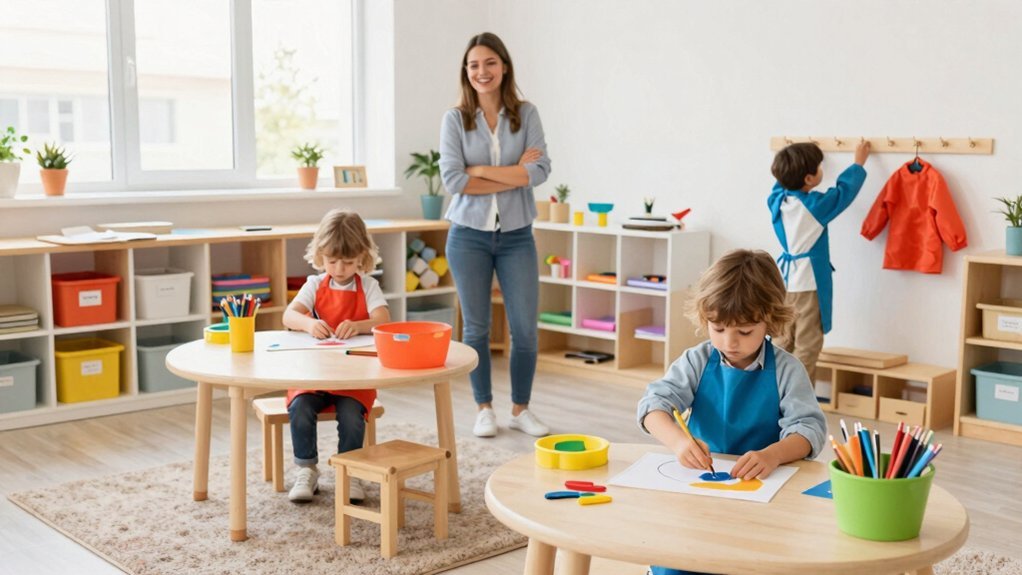
How can a simple picture board turn a hectic morning into a smooth, self‑directed routine? You can give your preschooler a visual schedule that lives in the same spot every day. Pictures replace words, so nonreaders instantly know the sequence—toilet, get dressed, breakfast, backpack. Teach each step using backward or forward chaining, celebrating every mastered piece. Hooks at child height and labeled bins keep the environment navigable, cutting prompts and encouraging independence. Allow extra time between actions so your child never feels rushed. Selecting low step-in toy storage solutions at child height further supports easy access and promotes independent cleanup.
- Create a short, consistent visual schedule.
- Use hooks and bins at eye level.
- Teach steps one at a time, celebrating mastery.
- Build in transition time for self‑directed movement.
Give Preschoolers Choices to Foster Independence
You can start by offering two clear options, like choosing between two shirts, so your child practices decision‑making without feeling overwhelmed. Phrase each option as a question when it’s a genuine choice, and give a direct instruction when it isn’t, keeping the routine predictable. Celebrate the choices they make, and you’ll reinforce independence and motivate more self‑reliance. Providing toddlers with tools like a Montessori step stool with safety rail can further enhance their confidence and ability to act independently in daily tasks.
Simple Offer Two Options
Why not let your preschooler pick between two simple options each day? Giving them a pair of choices each day fosters independence and strengthens decision‑making without overwhelming them. Frame the options as a question—“coat on the bedroom hook or the kitchen hook?”—so they feel in control while you guide safe outcomes. Keep the selections limited to safe, appropriate areas to preserve routine and avoid power struggles. Celebrate each successful pick to reinforce their confidence.
- Offer a snack choice (apple or banana).
- Let them choose a shirt (red or blue).
- Ask which book to read (dinosaur or space).
- Decide the play‑area (puzzle table or art easel).
Providing choices within reachable child height and accessibility encourages autonomy and aligns with Montessori design principles.
Empower Decision‑Making Moments
Ever notice how a simple choice can light up a preschooler’s confidence? When you give two or three clear choices—like a coat in the bedroom or kitchen—you let them practice decision‑making without feeling overwhelmed. Frame each option as a question; it reduces power struggles while keeping safety in mind. Let them pick a shirt, a puzzle, or which friend to call, and watch them plan and anticipate outcomes. Celebrate each successful independent decision with genuine praise; it reinforces the behavior and encourages repetition.
Even when limits apply, involve them in the process so they feel heard and respected. These moments build independence, nurture confidence, and turn everyday routines into empowering learning experiences. Using tools with child-safe certifications can enhance safety and confidence during these activities.
Celebrate Chosen Actions
How often do you pause to celebrate the little victories when a preschooler follows through on a choice they made? When you notice a child pick a snack, dress themselves, or tidy up, seize the moment. Your genuine praise turns a simple action into a powerful lesson in independence and autonomy. It also signals that their voice matters, encouraging more thoughtful decisions.
- Name the action briefly (“Great job putting your shoes away!”).
- Link the praise to the choice (“You chose to put them in the rack”).
- Keep feedback specific and immediate.
- Model enthusiasm for future choices.
Incorporating sensory activities like Montessori smelling bottles can further enhance independence by developing olfactory discrimination and concentration in preschoolers.
Blend Choice‑Making Into Everyday Routines
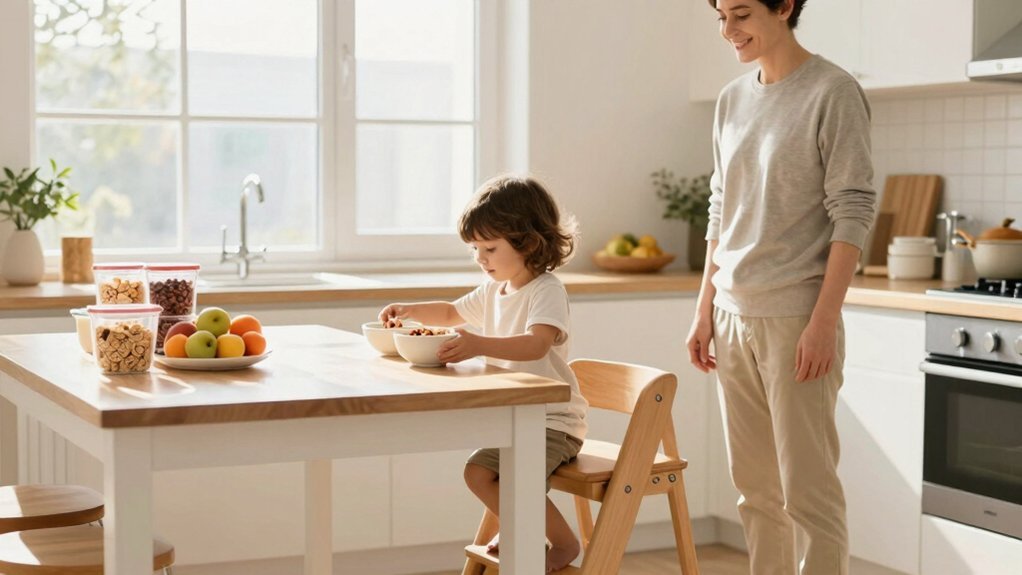
Ever wondered how a simple daily decision can boost a child’s independence? Offer two or three clear options during routines—like which shirt to wear or which book to read—so the child practices decision‑making without feeling overwhelmed. Phrase choices as questions when a real option exists, for example, “Do you want your coat in the bedroom or the kitchen?” This language promotes autonomy, reduces power struggles, and keeps transitions smooth. When the child picks, give specific praise: “Nice job choosing your own clothes today.”
If a true choice isn’t possible, state the expectation directly but still invite participation in related steps, such as letting them select a toothbrush color while you brush. These small, consistent choices weave independence into everyday life.
Preschool Independence Through Simple Chores
You can let your preschooler pick a simple chore—like clearing plates or sorting socks—to give them a sense of ownership.
As they repeat the task, they’ll gradually master the skill and build confidence in their ability to contribute.
This steady practice turns everyday chores into stepping stones toward real independence.
Using toys designed for fine motor skills development can further support their coordination and focus during such tasks.
Simple Chore Choices
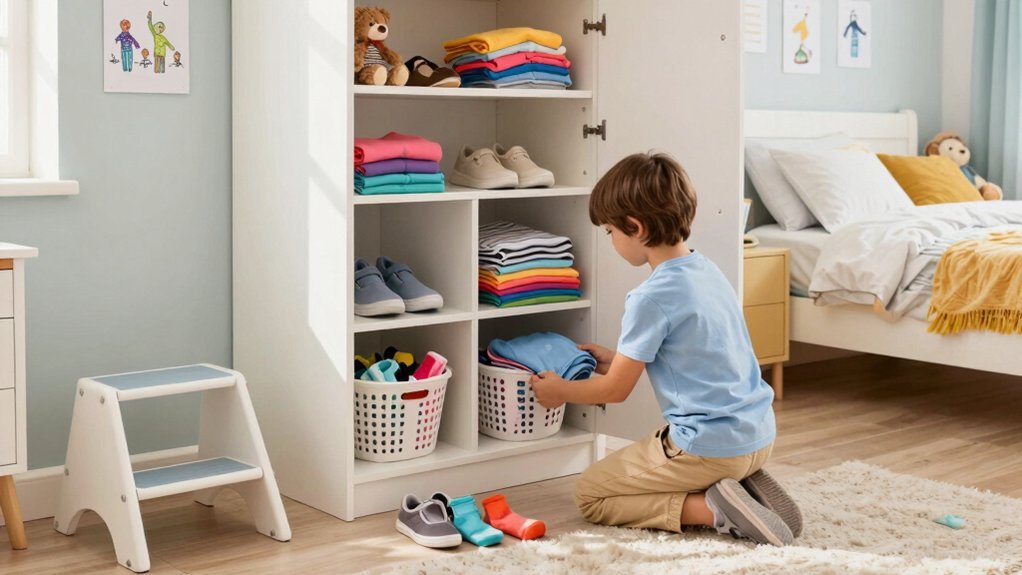
Ever wonder why a preschooler can clear a plate or sort socks by color? When you give them simple chores, you’re not just cleaning up—you’re building independence and solid routines. Choose tasks that match their ability, give brief directions, and place them in natural transitions like after meals or before bedtime. Visual checklists keep them on track and let you celebrate each completed step.
- Clear a plate after dinner.
- Sort socks by color before bedtime.
- Feed the family pet in the morning.
- Put toys in a labeled bin after playtime.
These choices embed responsibility into daily life, boost executive function, and make the child feel competent and trusted.
Gradual Skill Mastery
How can you turn a simple task into a confidence‑building milestone for your preschooler? Start with age‑appropriate chores—picking up toys or placing laundry in a basket—to Build Independence. Pair each chore with a visual checklist or labeled bin, embedding it in daily routines like mealtime or bedtime. Use backward chaining: demonstrate the final step, then guide them backward through each action, celebrating every mastered piece. Give extra time, so they can complete tasks without rushing, which reinforces accurate execution.
As they succeed, gradually increase complexity, adding steps such as sorting socks before folding. This gradual skill mastery makes chores feel natural, repeatable, and empowering, turning everyday moments into lasting confidence.
Encourage Problem‑Solving in Everyday Challenges
Ever wonder how everyday moments can become mini‑workshops for independence? You can turn daily tasks into confidence‑building exercises by letting your child try, stumble, and succeed with minimal guidance. Offer hints instead of solutions, let them pick tools, and narrate your own thinking process. When they face a spill or a misstep, let the natural consequence teach them to adjust their approach. This approach strengthens problem solving, nurtures independence, and makes routine chores feel like purposeful challenges.
- Pose a simple problem and step back.
- Encourage choice of method or tool.
- Break the task into clear steps.
- Discuss the outcome and what could be tried next.
Free Play in an Organized Space to Strengthen Preschool Independence
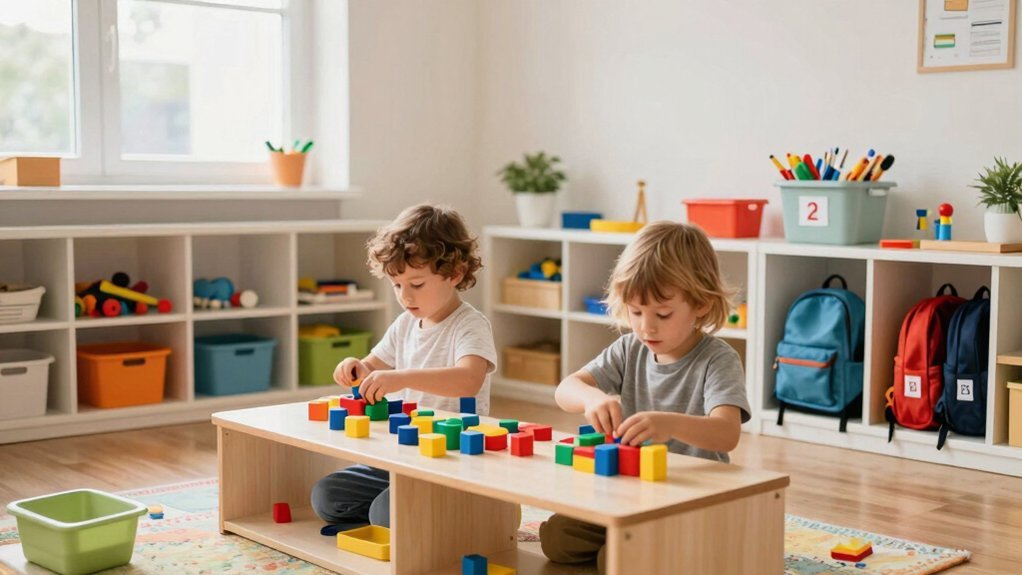
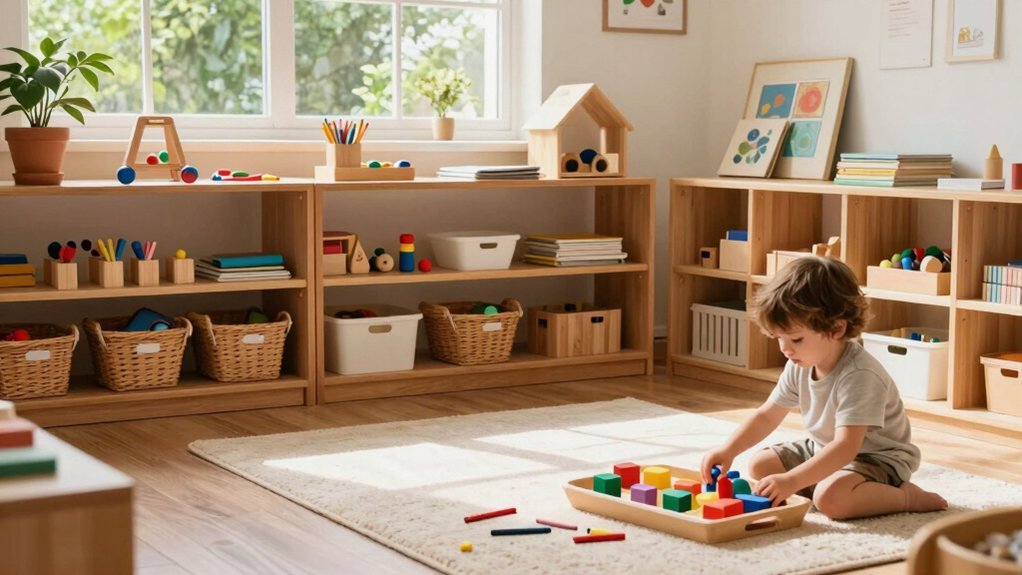
When the child solves a spill on their own, the next step is to give them a space where they can keep exploring without constant prompts. You set up an organized space with low shelves, labeled bins, and an open floor area that invites free play.
By arranging blocks, dress‑up clothes, natural items, and recyclables within easy reach, you let the child choose materials and invent scenarios independently. Keep sessions short and unstructured, hovering only to observe or offer a timely prop if interest wanes.
Rotate supplies regularly so novelty sustains engagement and supports executive‑function growth. This simple, orderly environment nurtures independence, confidence, and self‑directed learning while you stay in the background.
Frequently Asked Questions
How Many Chores Are Appropriate for a 3‑Year‑Old?
You should give a three‑year‑old about two to three simple chores daily—like putting toys away, wiping spills, or feeding a pet—so they feel helpful without feeling overwhelmed.
What Age Should Children Start Using Timers for Tasks?
You should start letting kids use timers around age 5 or 6, when they can grasp short intervals and begin managing simple tasks independently, helping them develop time awareness and responsibility.
Can Independence Be Taught Without Compromising Safety?
Yes, you can teach independence while keeping safety intact by setting clear boundaries, supervising gradually, giving age‑appropriate responsibilities, and encouraging problem‑solving that respects rules and risk awareness.
How Do Cultural Differences Affect Structured Independence?
You’ll notice cultural differences shape structured independence by setting varying expectations for autonomy, authority, and collaboration; they influence how much freedom you grant children, how you enforce rules, and how you balance guidance with self‑direction.
What Role Should Technology Play in Fostering Preschool Autonomy?
You should let technology act as a supportive scaffold, offering interactive choices and gentle feedback while you guide kids to self‑direct, experiment, and solve problems independently, without letting screens dominate their play.

Leave a Reply