

Fine‑motor practice rewires your brain by strengthening the corticospinal tract, linking your primary motor cortex to spinal motor neurons for precise finger control, while about40% of those fibers sprout from the somatosensory cortex to tighten sensorimotor integration. This boosts executive functions—working memory, inhibitory control, and cognitive flexibility—freeing mental resources for attention and learning. It also sharpens coordination among the motor cortex, premotor areas, supplementary motor area, and cerebellum. Keep exploring how specific activities can further enhance these neural pathways.
What Neural Pathways Are Strengthened by Fine‑Motor Skills?
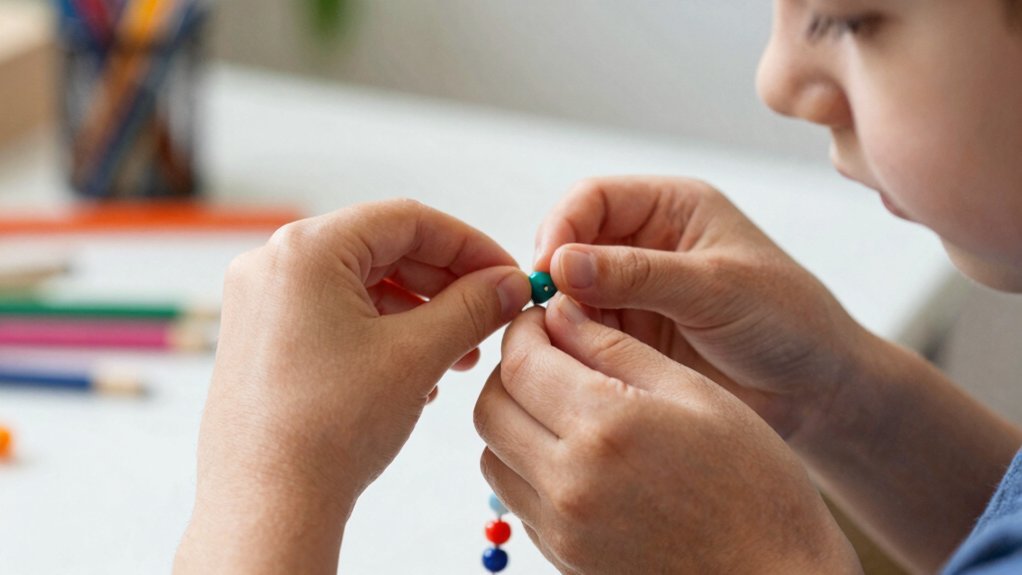
How do fine‑motor activities reshape your brain’s wiring? When you practice fine motor skills, you boost the corticospinal tract, the highway linking the primary motor cortex to spinal motor neurons for precise finger control. About 40 % of those fibers sprout from the somatosensory cortex, tightening sensorimotor integration that fine‑tunes each movement.
This coordinated activity refines motor planning across the prefrontal cortex and cerebellum, sharpening internal models and feedback loops. Repeated practice rewires neural pathways, strengthening connections between the primary motor cortex, somatosensory regions, and supporting networks.
As plasticity consolidates these routes, you gain sharper dexterity, quicker response times, and more efficient coordination—all hallmarks of a well‑trained fine‑motor system. Using Montessori tools like the Kitchen Step Stool for Kids with Safety Rail can also promote independence and support the development of fine motor skills in children as they engage in hands-on activities.
Which Brain Regions Activate During Fine‑Motor Skills?
After strengthening the corticospinal tract and sensorimotor integration, fine‑motor activities light up a specific network of brain regions. You’ll feel the primary motor cortex in the frontal lobe fire to drive voluntary hand actions, while the somatosensory cortex in the adjacent parietal lobe supplies tactile feedback. The premotor cortex and supplementary motor area coordinate sequencing and planning, and the cerebellum fine‑tunes timing and smoothness. Together, these areas create a seamless loop of execution and adjustment. Engaging children in activities like buttoning frames can effectively develop these critical neural pathways.
How Do Early Fine‑Motor Skills Influence Academic Success?

Early fine‑motor skill development lays a foundation for academic success by sharpening the brain’s executive functions—working memory, inhibitory control, and cognitive flexibility. When you practice precise hand movements, you boost brain development and reinforce executive function. Fine motor skills improve motor planning, which translates into smoother handwriting and quicker note‑taking. Those abilities free cognitive resources, letting working memory hold more information while inhibitory control keeps distractions at bay. As a result, your cognitive development accelerates, and school readiness rises. Research shows that early fine motor practice predicts later academic performance better than gross motor activity. Selecting age-appropriate storage solutions with low step-in access can encourage independent fine motor skill development and organization habits in young children.
Integrating sequencing and direction‑following tasks amplifies both motor proficiency and classroom‑related outcomes.
What Play‑Based Activities Strengthen Fine‑Motor Skills?
Ever wondered which play activities can boost your child’s fine‑motor skills? You can turn everyday fun into powerful brain development tools. By choosing the right play‑based activities, you stimulate the corticospinal tract, sharpen finger dexterity, and improve motor control, all while nurturing early childhood development.
Turn everyday play into powerful brain‑boosting activities that sharpen fine‑motor skills and nurture early development.
- Cutting with scissors or threading beads forces precise hand movements, building fine motor strength and hand‑eye coordination.
- Puzzles and building blocks require sequential actions, linking motor practice to executive function and brain development.
- Multisensory play with sand, rice, or dough offers variable resistance, enhancing grip, finger isolation, and somatosensory input.
- Arts‑and‑crafts that involve tracing and sorting sharpen motor precision and support early literacy planning.
- Interactive games that mimic writing motions reinforce fine motor control and reinforce neural pathways for future learning.
- Engaging with wooden lacing and threading toys can further develop hand-eye coordination and pattern recognition skills in young children.
When Should You Consult a Professional About Fine‑Motor Delays?
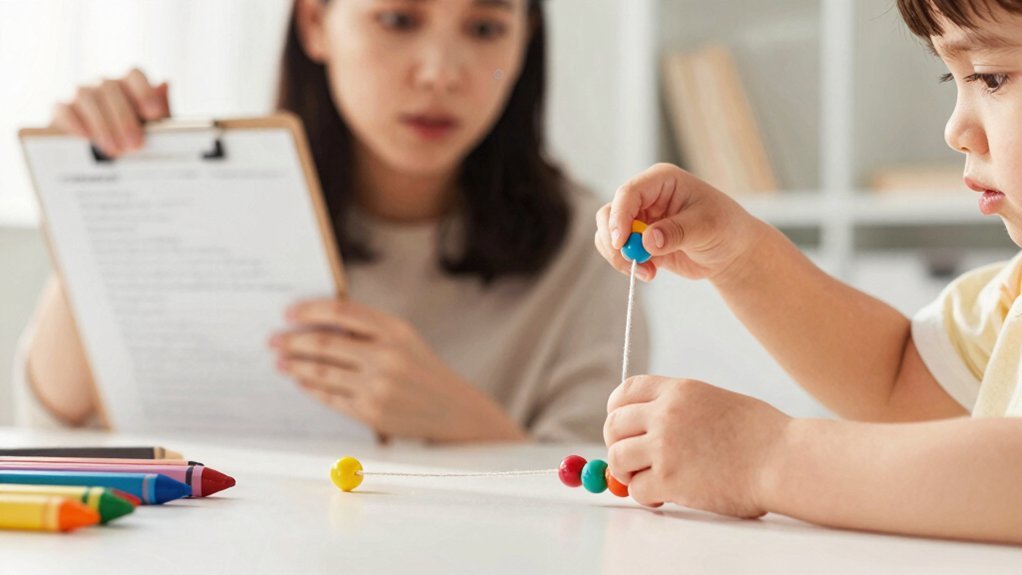
If your child isn’t hitting typical fine‑motor milestones—or suddenly loses a skill they once had—it’s time to seek professional help. Watch for persistent fine motor delays, regression, or difficulty with handwriting and buttoning. Pediatricians can perform screening and refer you to occupational therapy or a neurodevelopmental specialist for a developmental assessment. Early intervention improves outcomes and may uncover underlying conditions. Using appropriately sized tools with ergonomic handles can support fine motor development in children.
| Sign | Recommended Action |
|---|---|
| Missed milestones (e.g., grasp, stacking) | Schedule pediatric screening |
| Sudden loss of skill | Request immediate professional consultation |
| Ongoing handwriting trouble | Arrange occupational therapy |
| Concerns about neurodevelopment | Pursue comprehensive developmental assessment |
Frequently Asked Questions
What Are Fine Motor Skills in Brain Development?
Fine motor skills let you coordinate tiny muscle movements, strengthening neural pathways between motor and sensory cortices, boosting cerebellar refinement, and enhancing neuroplasticity, which together accelerate brain development and cognitive growth.
At What Age Is 90% of Brain Development Complete?
You’ll have about 90% of your brain’s adult weight by age five, so most structural growth is done then, though synaptic pruning and myelination keep refining connections well into adolescence.
Does Neuropathy Affect Fine Motor Skills?
Yes, neuropathy can impair your fine motor skills by damaging the nerves that control hand and finger movements, causing weakness, numbness, and reduced dexterity, which can make precise tasks harder.
Can Anxiety Affect Your Fine Motor Skills?
Yes, anxiety can mess up your fine motor skills; it spikes muscle tension, disrupts neural pathways, and overloads your cognition, making tasks like writing or buttoning shakier and slower.