
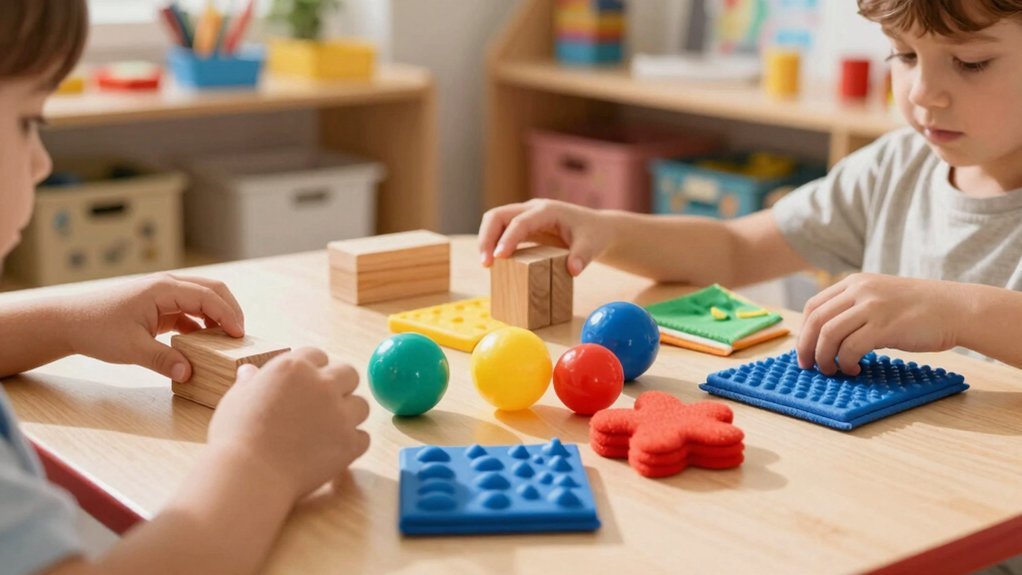
You’ll find that tactile learning tools spark sensory integration by blending touch, sight, and sound, which fires fine‑motor muscles and links tactile cues to visual patterns, boosting attention and regulation. Repeated, age‑appropriate tools—like sensory balls for infants or weighted pillows for preschoolers—strengthen neural pathways, improve memory, language, and problem‑solving, and support proprioceptive body awareness. Durable, washable, non‑toxic options keep play safe and consistent, and embedding them in daily routines turns everyday moments into structured learning. Keep going to discover practical tips for choosing and using these tools.
Benefits of Tactile Learning Tools for Multi‑Sensory Development
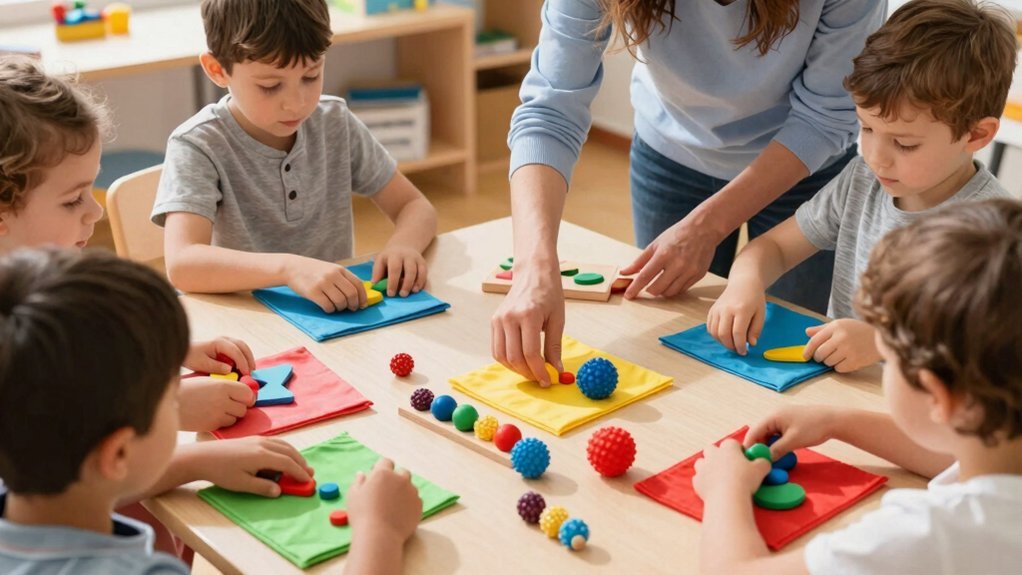
What if you could turn a simple touch into a powerful learning experience? You’ll notice that tactile tools spark sensory integration, letting you blend touch, sight, and sometimes sound into one seamless activity. When a child squeezes a sensory ball or slides textured puzzle pieces, fine‑motor muscles fire while the brain links tactile cues to visual patterns, boosting attention and regulation.
Hands‑on exploration creates calm, organized input that steadies emotions, turning play into purposeful learning. Multisensory engagement strengthens neural pathways, improving memory, language, and problem‑solving. By weaving these experiences into daily routines, you support overall development, ensuring each touch contributes to richer, more durable learning outcomes. Using ergonomic handles on child-safe tools enhances tactile engagement while promoting safe, confident manipulation.
Choosing Safe, Age‑Appropriate Tactile Learning Tools
After seeing how tactile tools boost sensory integration, the next step is picking items that are both safe and suited to a child’s age.
Choose age‑appropriate tactile learning tools like Sensory Shapes for 6‑month‑olds and the Sensory Seek & Find Box for 3‑year‑olds, ensuring textures and sizes match developmental milestones.
Prioritize safety and non‑toxic materials—beechwood River Stones and Squeaky Balls offer varied textures without harmful chemicals.
Match each child’s sensory profile; weighted pillows calm deep‑pressure seekers, while textured flash cards engage avoiders.
Opt for multi‑sensory sets such as Playfoam Pluffle, which combines tactile and visual cues.
Finally, check durability and cleanability: whiteboard tops, surface‑washable textures, and sturdy construction keep tools hygienic and long‑lasting for ongoing development.
For children learning fine motor skills, consider tools with convertible training mechanisms that transition from guided to independent use.
How to Use Tactile Learning Tools in Daily Routines
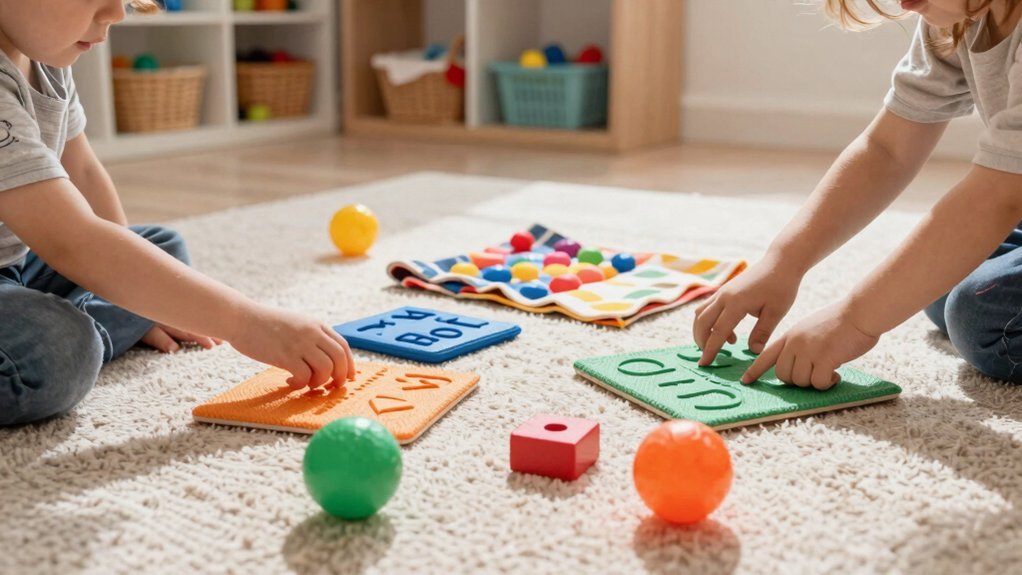
Embedding tactile learning tools into everyday routines turns ordinary moments into purposeful sensory experiences. You can sprinkle multi‑sensory activities across daily routines, letting sensory input flow naturally while your child builds fine motor skills and proprioceptive input. Use tactile exploration during transitions, calm‑down moments, and independent work to keep engagement high.
| Routine | Tool | Goal |
|---|---|---|
| Breakfast clean‑up | Squeaky Balls (three textures) | Sensory textures, fine motor |
| Desk work | Weighted lap pad | Proprioceptive input, focus |
| Playtime | Textured Puzzles | Tactile exploration, coordination |
| Bedtime | Sensory Weighted Pillow | Calm‑down moments, regulation |
Choosing tools that are sturdy and designed with non-slip safety features enhances independent and confident use during tactile learning.
Rotate items, watch preferences, and adjust to keep each daily routine fresh and beneficial.
Frequently Asked Questions
How Can Tactile Tools Support Children With Sensory Processing Disorders?
You can use tactile tools to calm overstimulation, provide predictable textures, and reinforce motor planning, helping you regulate sensory input, focus better, and develop confidence through hands‑on, controlled exploration.
What Role Does Temperature Play in Tactile Learning Experiences?
You feel temperature as a cue that sharpens or calms your tactile focus; warm textures relax you, while cool surfaces heighten alertness, helping you differentiate materials and regulate sensory input during learning.
Can Tactile Tools Be Integrated With Digital Learning Platforms?
Yes, you can embed tactile tools into digital platforms by pairing sensors with software, syncing real‑time feedback, and using APIs that translate physical interactions into interactive on‑screen responses.
How Often Should Tactile Materials Be Rotated to Maintain Engagement?
You should rotate tactile materials every two to three weeks, keeping them fresh but familiar. Frequent swaps prevent boredom, while occasional consistency lets children master each tool before introducing new textures.
What Are the Best Practices for Cleaning and Sanitizing Tactile Toys?
You should wipe toys with mild soap and water, rinse, then sanitize using a 70 %is solution or dishwasher‑safe cycle; air‑dry completely before storage, and repeat weekly or after each use.