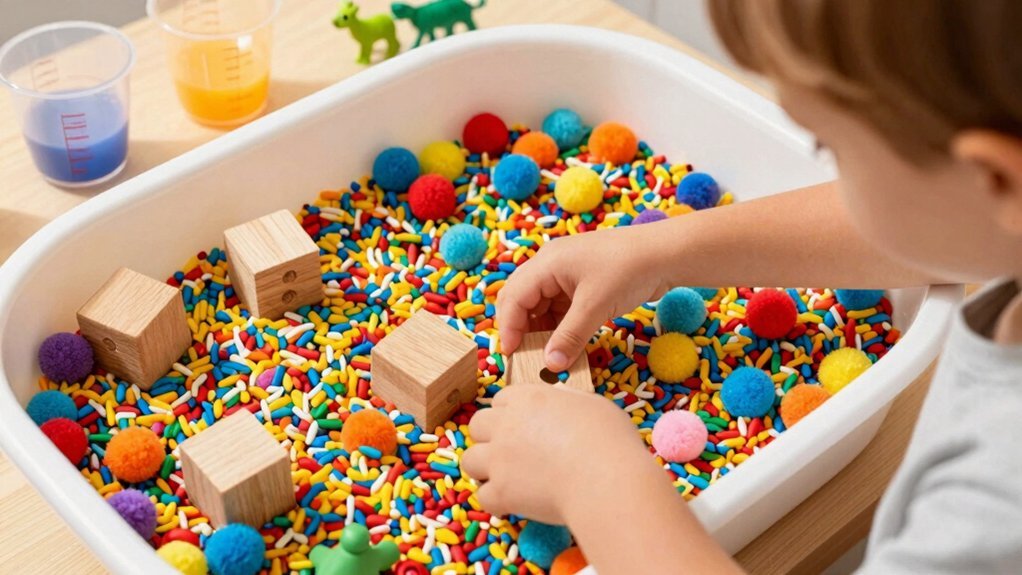
Start with a shallow, clear bin so your child can see and reach the materials. Choose a safe, age‑appropriate base like dry rice, pasta, or shredded paper, then add textured fillers such as beans, pom‑poms, or sand for tactile variety. Include scoops, tweezers, or small bowls to boost fine‑motor skills, and sprinkle in a few toys or everyday objects for imaginative play and language growth. Rotate themes and tools regularly to keep challenges fresh, and you’ll discover even more ideas ahead.
Pick the Right Sensory‑Bin Base Materials
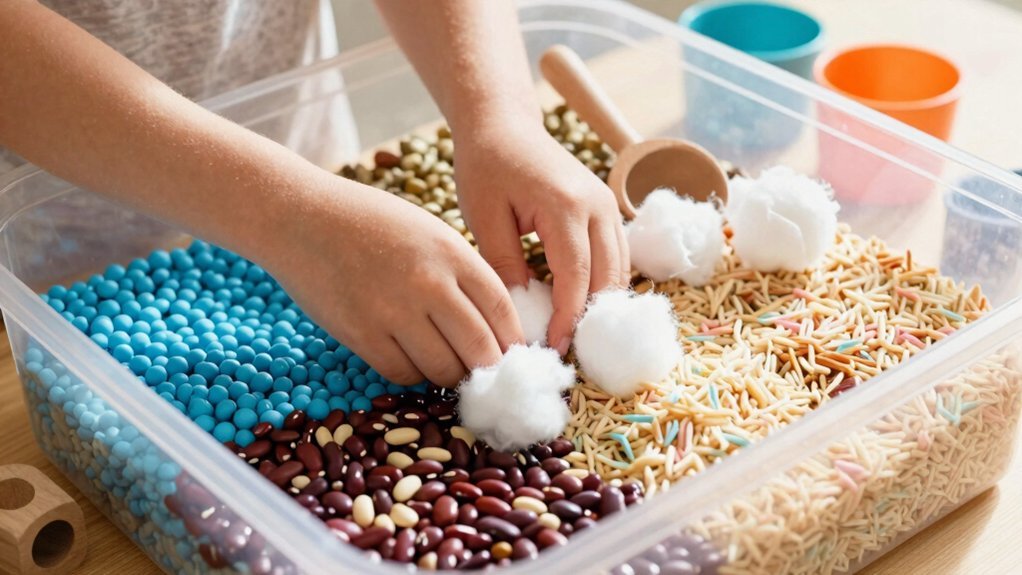
Wondering which base material will spark the most engagement? You’ll find sensory bin base materials range from dry bases like rice, beans, pasta, or shredded paper to water‑based fillers that let kids pour, sink, and float.
Dry bases are reusable, easy to clean, and support texture exploration without mess. Water‑based fillers add fluid dynamics, while cloud dough and kinetic sand give moldable, non‑water options that boost fine‑motor skills.
Dry bases are reusable, mess‑free texture explorers; water fillers add fluid dynamics; cloud dough and kinetic sand boost fine‑motor skills.
Prioritize safety: avoid small items that pose choking hazards and choose age‑appropriate materials. Transparent shallow bins let children see and reach the base, encouraging scooping and sorting.
Match the bin’s depth and transparency to the child’s developmental stage, and you’ll create a secure, engaging play space that fuels curiosity. Incorporating natural wood toys like Montessori-inspired ring stackers can further enhance fine motor development and tactile engagement in sensory bins.
Build a Development‑Focused Sensory Bin
A well‑designed sensory bin starts with a large, shallow, clear container that lets kids see every texture and item inside. Choose a base material such as rice, pasta, or shredded paper, then sprinkle textured fillers—beans, pom‑poms, sand—to create varied tactile layers. Add age‑appropriate tools like scoops, cups, and tweezers; these promote fine motor skills and hand‑eye coordination as children grasp, pour, and pinch. Include small toys or everyday objects that invite imaginative play and language development when kids name and describe what they find. Rotate themes and materials regularly, turning each bin into a fresh cognitive challenge that keeps sensory play engaging without overstimulation. This approach builds a development‑focused sensory experience. Incorporating bendable wooden animal toys can further enhance dexterity and imaginative storytelling within sensory bins.
Adapt Your Sensory Bin as Skills Grow
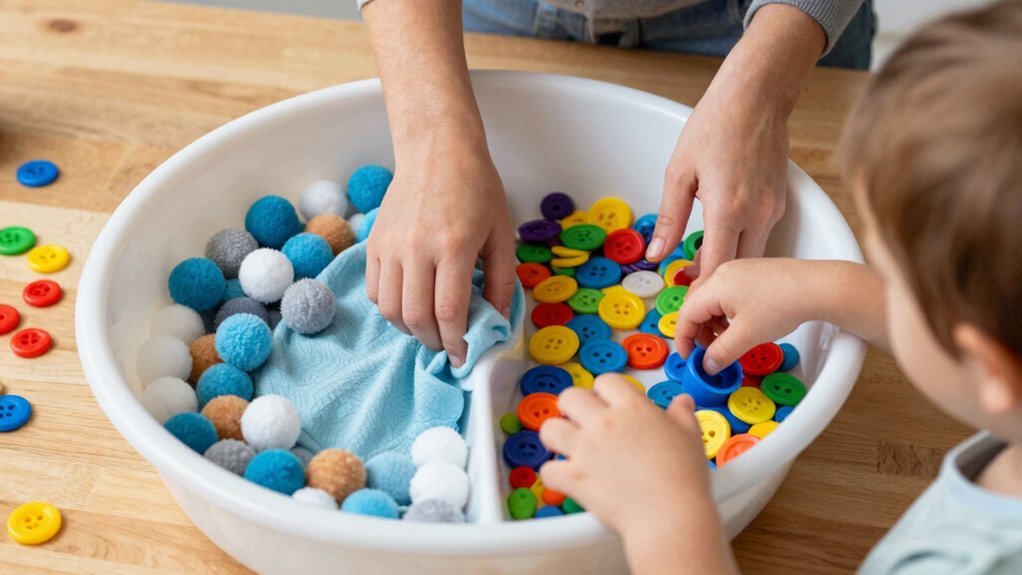
As your child’s abilities expand, you can gradually increase the bin’s complexity by mixing textures—like adding beans or sand to rice—to sharpen tactile discrimination. This adaptation fuels child development and keeps open‑ended play fresh. Rotate themed bins every week, introduce finer tools, and ask descriptive questions to boost language development while monitoring safety.
- Introduce tools – tongs, tweezers, or small bowls with labeled colors/shapes sharpen fine motor skills and early math concepts.
- Add new textures – combine rice, beans, sand, or shredded paper to deepen tactile discrimination and keep curiosity alive.
- Prompt language – ask “What does this feel like?” or “How many blue beads do you see?” to weave vocabulary into play.
Using practical, compact cleaning tools like a mini dustpan and brush combo helps maintain a tidy play area and encourages responsibility.
Frequently Asked Questions
How to Make Your Own Sensory Bins?
You gather a shallow, clear bin, fill it with age‑appropriate base like rice or beans, add scoops, cups, and themed items, then supervise while kids explore textures, colors, and motor skills.
What Are Good Fillers Ideas for a Sensory Bin?
You can fill bins with cloud dough, kinetic sand, homemade snow, dyed rice, water, soap foam, or shredded paper—each offering unique textures, colors, and mess‑friendly cleanup for endless tactile play.
How Are Sensory Bins Developmentally Appropriate?
You’ll find sensory bins developmentally appropriate because they let you explore textures, practice fine‑motor actions, solve simple problems, and language concepts, all at a pace that matches your current cognitive and emotional stage.
What Are 5 Examples of Sensory Social Routines?
You can try a color‑sort circle, a count‑and‑scoop bin, a describe‑and‑match tray, a texture‑guessing bag, and a shared‑story‑building bucket, each encouraging turn‑taking, language, and cooperation.