
Sensory activities flood your child’s nervous system with rich, multimodal input, wiring neural pathways that boost attention, language, and motor control. Touch play sharpens fine‑motor skills and hand‑eye coordination, while sound play enhances phonological awareness and memory. Smell and taste cues help regulate emotions and integrate sensory information. Movement‑based play refines balance, body awareness, and vestibular processing. Together, these experiences strengthen executive function, problem‑solving, and social collaboration, and the more you explore, the deeper the benefits become.
What Is Sensory Play and Why It Matters for Early Brain Development
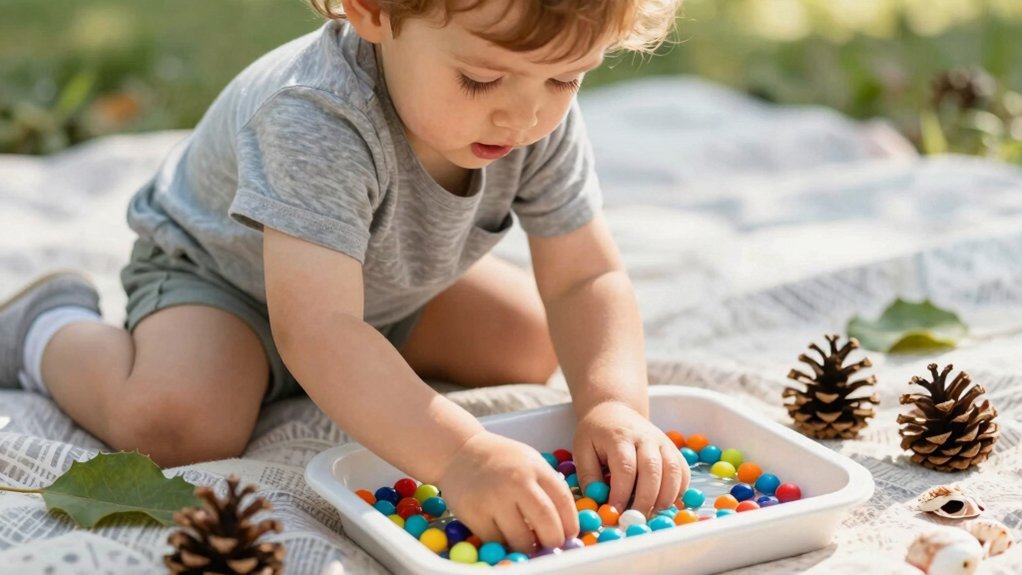
When children explore textures, colors, sounds, and movements, they’re actually wiring their brains. You’ll notice sensory play sparks early brain development by flooding the nervous system with multi‑sensory exploration. Each tactile, visual, or auditory cue fires neural connections, forging pathways that underlie memory and attention. As you provide varied materials, you’re strengthening those pathways, so cause‑and‑effect relationships become clearer and cognitive development accelerates.
The rich language contexts that arise when kids name a squishy bean or a crunchy leaf boost language development, expanding vocabulary effortlessly. Even before fine motor precision emerges, the act of reaching, grasping, and shifting objects refines motor skills, laying a solid foundation for future learning. Toys with movable clock hands encourage hands-on interaction that further develops motor coordination and cognitive flexibility.
How Touch‑Based Sensory Play Strengthens Fine Motor Skills and Hand‑Eye Coordination
You’ll notice your child’s pincer grip tightening as they pinch and squeeze playdough, building the fine‑motor muscles needed for writing and buttoning.
Each textured object they explore forces them to match visual cues with precise hand movements, sharpening hand‑eye coordination.
Over time, these tactile challenges improve grip adjustments and motor planning while keeping play safe and engaging.
Incorporating activities with varied textures and protective elements can promote fine motor skill development in sensory play.
Fine Motor Muscle Development
Manipulating tiny objects, shapes, and tools during touch‑based sensory play directly strengthens the fine motor muscles in your child’s fingers and hands, boosting precision for everyday tasks like writing and buttoning. When your child scoops sand, pinches play dough, or squeezes slime, they’re building muscle strength and finger dexterity that translate into smoother fine motor skills. Adding scissors and tweezers introduces controlled grip development, encouraging each finger to isolate and work independently. Repeating these actions refines hand‑eye coordination without extra instruction, letting visual feedback guide the muscles. Over time, the repeated resisted motions create a solid foundation for pre‑writing tasks, ensuring your child’s grip steadies and their overall manual steadiness improves. Incorporating tools with serrated edges designed to protect little hands in sensory play can further enhance safe fine motor skill development.
Hand‑Eye Coordination Practice
How does a simple scoop of sand turn into a powerful hand‑eye workout? When you pour, scoop, or pinch tiny beads, you force your child’s brain to sync hand movement with visual feedback, sharpening hand-eye coordination and fine motor control.
Each transfer between containers demands dexterity and grip adjustments, building the tiny muscles needed for writing or buttoning.
Repetitive object manipulation boosts proprioception, so your child senses limb position and pressure without looking.
Watching a marble roll across a tray hones visual tracking, reinforcing the link between sight and hand.
As confidence grows, they tackle precision tasks like tying shoelaces, cutting with safety scissors, or zipping jackets, all while reinforcing the neural pathways that underlie coordinated movement.
Incorporating natural materials such as smooth beechwood rattles in sensory play can further enhance tactile development and fine motor skills due to their ergonomic shapes and gentle textures.
Texture Exploration Benefits
Exploring textures lets your child’s fingertips discover smooth, rough, sticky, and granular sensations, which directly hones the pinch, grip, and precision movements needed for writing and buttoning.
When you set up texture‑rich sensory play, your child engages in tactile exploration that fires neural connections across motor and sensory pathways. Squeezing playdough, pinching clay, or scooping rice builds intrinsic hand strength and refines fine motor skills. Each grasp translates visual cues into coordinated action, sharpening hand‑eye coordination.
Repeating these activities supplies proprioceptive feedback, improving body awareness and control. Over time, the brain integrates these signals, making everyday tasks like buttoning shirts, cutting paper, or drawing smoother and more confident. This texture‑based approach turns play into a powerful developmental engine. Using safe, ergonomically designed tools such as child‑safe whisks with non-scratch silicone coatings can further enhance tactile experiences during sensory play.
How Sound‑Based Sensory Play Enhances Language Acquisition and Memory
Ever wondered why a simple drumbeat or a squeaky toy can spark a child’s vocabulary? You’ll see that sound‑based sensory play fuels language acquisition by flooding ears with diverse auditory cues. When kids tap a drum, shake a maraca, or listen to a chime, they map pitch, rhythm, and timbre to words, sharpening phonological awareness. Open‑ended dialogue during these moments—asking what they hear, predicting the next note, labeling emotions—boosts expressive skills and reinforces memory. The repeated exposure strengthens auditory processing and pattern recognition, which underpins sentence rhythm and syntax. By embedding these activities in multisensory learning, you help children encode and recall auditory information more effectively, turning playful sounds into lasting language and memory gains. Incorporating elements like natural wooden tunnels in sensory play also enhances spatial awareness and motor skills alongside auditory development.
How Smell & Taste Sensory Play Boosts Emotional Regulation and Sensory Integration

Why do scents and flavors feel so calming for kids? When you introduce olfactory and gustatory cues during sensory play, you’re giving children grounding cues that signal safety. A whiff of lavender or a sip of vanilla‑infused milk can lower arousal, helping emotional regulation during noisy or new environments.
Pairing these aromas with predictable, soothing routines reinforces the calming effect, turning the activity into a reliable self‑soothing practice.
Mixing tastes and smells also strengthens sensory integration: kids learn to match flavors with textures and temperatures, expanding tolerance for varied foods. As they label the sensations, they build a richer emotional vocabulary, which further supports expressive language and confidence in managing feelings.
Incorporating tools with extendable reach can help caregivers engage children in multi-sensory environments safely and effectively.
How Movement‑Based Sensory Play Improves Balance and Body Awareness
You’ll notice that proprioceptive integration sharpens your child’s sense of where their body is, while vestibular stimulation techniques—like crawling or rolling—boost spatial orientation.
Introducing dynamic balance challenges, such as walking on a pillow or transferring objects while standing, helps them fine‑tune coordination and motor planning.
As these movements repeat and vary, your child builds stronger whole‑body awareness and smoother transitions between positions.
Proprioceptive Integration
When kids immerse themselves in movement‑based sensory play—pushing, pulling, climbing, or squeezing weighted toys—their brains receive rich proprioceptive input that sharpens body awareness and position sense. You’ll notice that heavy pressure and vibration help the nervous system organize signals from muscles and joints, boosting proprioceptive integration. This integration supports regulation, calming hyper‑ or sluggish states, and refines motor planning for smoother coordination. Repeated challenges like obstacle courses or bear‑crawls develop dynamic balance, giving children a clearer sense of spatial orientation and steadier posture for tasks such as handwriting.
- A child pushes a weighted cart across the floor, feeling the resistance.
- A toddler climbs a low rope ladder, sensing each grip and foot placement.
- A preschooler crawls under a tunnel, experiencing deep pressure and spatial flow.
Vestibular Stimulation Techniques
Ever wondered how a simple swing can sharpen a child’s sense of balance? When you introduce vestibular stimulation through swinging, spinning, or wobble‑board play, you’re feeding the inner ear’s semicircular canals and otolith organs with graded input. This input fine‑tunes balance, spatial orientation, and proprioception, letting the child feel where their body is in space. As they sway, they practice motor planning and core stability, which translate into smoother handwriting and buttoning.
Pairing these movements with visual or tactile cues creates multisensory play that strengthens neural pathways for coordination. Slow rolls or gentle jumps also regulate arousal, boosting attention and reducing hyperactivity, while reinforcing the body‑mind connection essential for confident exploration.
Dynamic Balance Challenges
Dynamic balance challenges—like walking a taped line, squatting to reach for a toy, or shifting weight while sorting objects—activate the vestibular system and sharpen a child’s sense of body position. When you set up these activities, you’re giving the brain real‑time proprioceptive feedback that refines spatial awareness and motor planning. Repeated practice builds core stability, strengthens lower‑limb control, and boosts gross motor skills essential for everyday tasks. As the child negotiates each balance challenge, neural pathways linking balance, coordination, and neurodevelopment become more robust, supporting self‑regulation and reducing hyperactivity. Gradually increasing difficulty keeps the experience safe, engaging, and developmentally enriching.
- Walking a taped line while balancing a beanbag on the head
- Squatting to retrieve a toy from a low shelf, then standing tall
- Shifting weight side‑to‑side while sorting colored blocks on a wobble cushion
How Sensory Play Supports Cognitive Problem‑Solving and Executive Function
Why does a simple bin of sand or a tray of water feel like a brain‑boosting workout? You’re actually wiring neural connections as you splash, sift, and sort. Sensory play forces you to notice texture, color, and motion, turning curiosity into cognitive problem‑solving. Open‑ended tasks let you experiment with cause‑and‑effect, sharpening planning and working memory. Each pour and transfer builds attention, while repeated experiences help you generalize strategies across contexts, boosting executive function.
| Activity | Skill Strengthened |
|---|---|
| Pouring water between containers | Planning & working memory |
| Sorting beads by size or color | Cognitive problem‑solving |
| Manipulating sand to create shapes | Neural connections & executive function |
How Shared Sensory Play Grows Social Skills and Collaborative Exploration
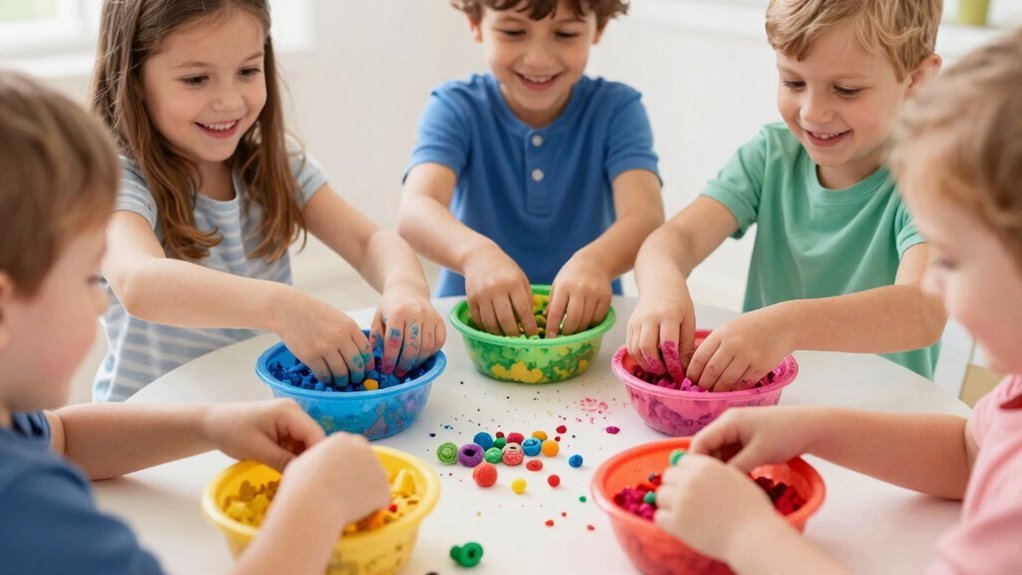
A handful of simple sensory activities can instantly turn playtime into a social laboratory, where kids practice turn‑taking, sharing, and collaborative problem‑solving as they negotiate roles and goals together. When you set up a shared experience—like building a sandcastle, mixing colored rice, or passing water beads—children naturally talk about textures, ask for help, and label emotions, which fuels language development and social skills. The group activity becomes a rehearsal for cooperation: they read peers’ cues, adjust strategies, and celebrate joint successes, reinforcing empathy and self‑regulation. Over time, these moments of collaborative exploration cement peer relationships and resilience, turning everyday play into a powerful catalyst for lifelong social competence.
- A child pours glitter into a communal jar, then watches a friend add more, prompting “Your turn!”
- Two kids sculpt a clay figure together, negotiating shape and color while describing each step.
- A trio mixes scented playdough, naming smells and sharing reactions, building a shared vocabulary.
Sensory Play Activities You Can Do at Home for Each Age Stage
Ever wonder how you can turn everyday household items into powerful learning tools? For newborns, lay a soft blanket and gently rustle a crinkly bag; the varied textures and sounds spark neuroConnections and early language development.
Everyday household items become powerful learning tools, sparking newborns’ neurodevelopment through texture and sound.
Toddlers love a bin of dry beans mixed with smooth pasta—let them scoop, pour, and compare textures while naming colors and sizes, boosting child development.
Preschoolers can build a mini‑city from cardboard boxes, tape, and fabric scraps; add music to a drum made from a pot, encouraging imagination, spatial reasoning, and richer vocabulary.
Across early childhood, these simple home activities keep sensory play fresh, supporting attention, self‑regulation, and social interaction without costly toys.
Simple Ways to Track Developmental Gains From Sensory Play
When you watch a child’s eyes stay fixed longer on a bin of beans or hear them name the “crunchy” texture of a cardboard tube, you’re seeing concrete evidence that sensory play is strengthening neural pathways. To capture that growth, keep a tiny notebook or phone note and jot daily observations. Notice if their pincer grip tightens, if they label “smooth” versus “rough,” and if they stay engaged longer. Compare these entries each week; the pattern reveals developmental gains and highlights milestones. Over time you’ll see fine‑ motor skills sharpen, language development blossom, and confidence rise—all without fancy tools.
- A bean‑count chart showing how many beans they can pick up in 30 seconds.
- A texture‑label collage where they match pictures to “soft,” “bumpy,” and “slimy.”
- A milestone log marking when they request a specific tool during play.
Frequently Asked Questions
How Does Sensory Play Help Children’s Development?
You’ll notice sensory play strengthens neural pathways, sharpens language, refines fine‑motor control, boosts problem‑solving, and steadies attention, so kids become more focused, adaptable, and confident in learning.
Why Are Sensorial Activities Important for Children’s Growth?
You’ll notice that sensorial activities sharpen your child’s perception, boost neural pathways, and enhance language, memory, and executive skills, giving them a stronger foundation for learning and social interaction.
What Are the Benefits of Increased Sensory Activities?
You’ll see stronger neural connections, richer vocabulary, sharper problem‑solving, better fine and gross motor control, and improved emotional regulation, all because sensory play constantly engages your brain, body, and social skills.
What Are the Benefits of Children Having Sensory Experience?
You’ll notice children gain stronger neural pathways, richer vocabularies, sharper fine‑motor control, better problem‑solving, and steadier emotional regulation, all from regularly exploring textures, sounds, smells, and movements.