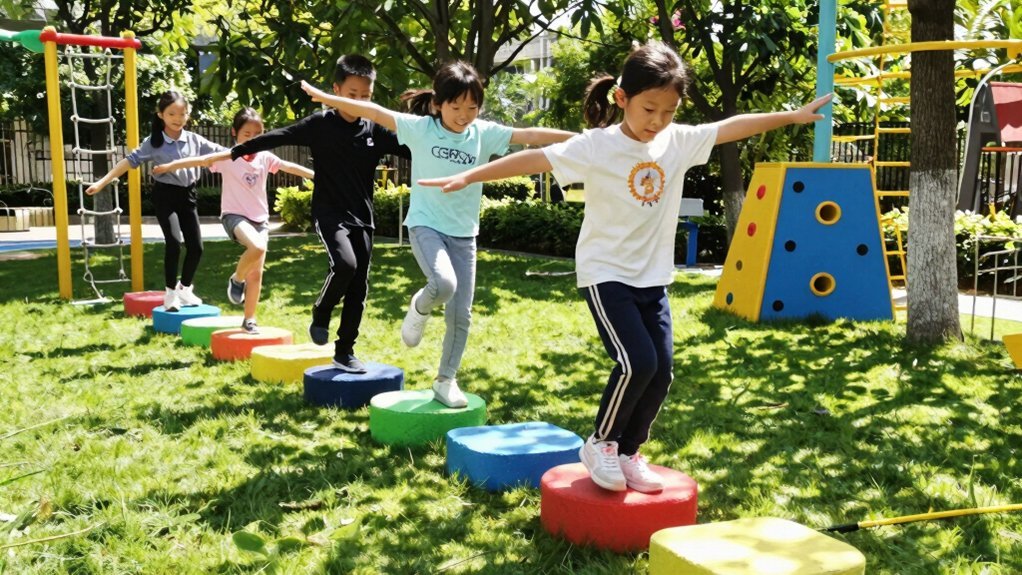
You can boost sensory pathways by doing large‑muscle moves like hopping, balancing on a textured beam, climbing a low obstacle, or skating on four‑plate indoor skates. These actions fire proprioceptive, vestibular, and tactile inputs, sharpening motor planning and coordination. Pair them with simple chores—carrying water buckets, shoveling snow, or organizing kitchen items—to add bilateral work and core stability. Add sensory bins or oil‑and‑water bags for fine‑motor and tactile challenges, and you’ll discover even more ways to integrate play and sensory development.
What Are Gross Motor Skills and Why They Matter

Because they involve the larger muscle groups—arms, legs, and trunk—gross motor skills let you run, jump, climb, and hop, laying the groundwork for balance, coordination, and core strength. When you engage in large muscle movement, you stimulate sensory pathways that feed back to the brain, sharpening motor planning and enhancing overall motor development.
Regular physical activity builds core strength, which stabilizes the trunk and improves balance, while repeated practice of running, hopping, and climbing refines coordination. These foundational abilities translate into smoother, more confident movement across daily tasks and social play.
Using tools like a Montessori step stool can encourage children to explore their environment independently, further enhancing gross motor skills and sensory integration.
Tailor Activities for Age & Neuro‑Diversity
You’ll notice that adaptive play works for every child when you match the activity’s complexity, pace, and sensory load to their age and neuro‑diversity. By weaving familiar routines and tactile elements into movement—like textured paths or simple obstacle courses—you keep engagement high while supporting regulation. Track clear milestones such as balance time or coordinated hand‑eye tasks to fine‑tune the design and ensure each child progresses safely. Utilizing materials with non-toxic, water-based finishes enhances safety and sensory experience in gross motor activities.
Adaptive Play for All
When you tailor gross‑motor play to a child’s age and neuro‑diversity, you create a flexible framework that can be simplified or intensified in minutes. Adaptive play lets you adjust obstacle courses, chalk paths, or wall push‑ups on the fly, delivering just‑right proprioceptive and vestibular input.
You can pause crawls for 1–3 seconds, add sandbox digging, or use tongs for nature sorting to boost sensory pathways while maintaining safety. Therapy collaboration with occupational therapy and physical therapy guides you in choosing visual cues and sensory diets that fit home or summer settings.
Neuro‑Inclusive Activity Design
Designing neuro‑inclusive gross‑motor activities means matching each movement to a child’s age, sensory profile, and motor abilities while embedding clear visual, verbal, and tactile cues. You’ll weave multi‑sensory input—proprioception, vestibular, and tactile cues—into simple sequences that reinforce sensory pathways and boost motor planning. Predictable routines, countdowns, and role‑modeling keep the session fluid, while adaptive activities let you dial difficulty up or down.
- Obstacle course – adjustable height and distance, tactile markers for proprioceptive feedback.
- Wall push‑ups – varied hand placement, visual cue cards for alignment.
- Slow‑paced dance – rhythmic music, vestibular sway, verbal count‑offs.
- Balance beam – textured surface, visual stepping lines, optional support.
Track progress with observable targets—balance, coordination, sequencing, grip strength—and collaborate with therapists and caregivers to set individualized goals. Using natural wooden peg people during breaks can support fine motor development and imaginative play enrichment.
Boost Sensory Skills With Simple Indoor Skates

Ever wondered how a simple pair of paper plate skates can turn a living room into a sensory playground? You’ll see gross motor gains as kids glide, wobble, and correct their stance, sharpening balance and proprioception. Decorating the plates adds fine motor work, letting them cut, color, and glue while they prep for movement.
The four‑plate version lets hands and feet mimic animal walks, boosting coordination and sensory processing across a smooth indoor surface. You can scale difficulty by adding obstacles or timing runs, supporting motor development and keeping indoor activities fresh.
Pediatric therapists love this low‑cost, adaptable tool because it merges play with purposeful practice, reinforcing kids’ body awareness and strengthening pathways that underlie everyday function. Using visual timers during these activities can help children self-regulate and improve transition skills.
Turn Everyday Chores Into Whole‑Body Workouts
If you treat routine chores as intentional movement drills, you’ll turn mundane tasks into full‑body workouts that boost strength, balance, and coordination. Each step you take engages gross motor systems while firing sensory pathways, so even simple housework becomes purposeful training.
- Shovel snow or rake leaves – squat, lift, and swing to develop core stability and proprioception.
- Carry water buckets – alternate sides, engage bilateral coordination, and strengthen shoulder girdles.
- Gather sticks for a firepit – reach, twist, and load to improve whole‑body balance and coordination.
- Organize kitchen cupboards – lift, bend, and sort to refine proprioceptive feedback and core control.
- Introducing age-appropriate tools with ergonomic designs can further enhance grip comfort and fine motor skills during everyday activities.
Build a Rice‑and‑Pipe‑Cleaner Sensory Bin
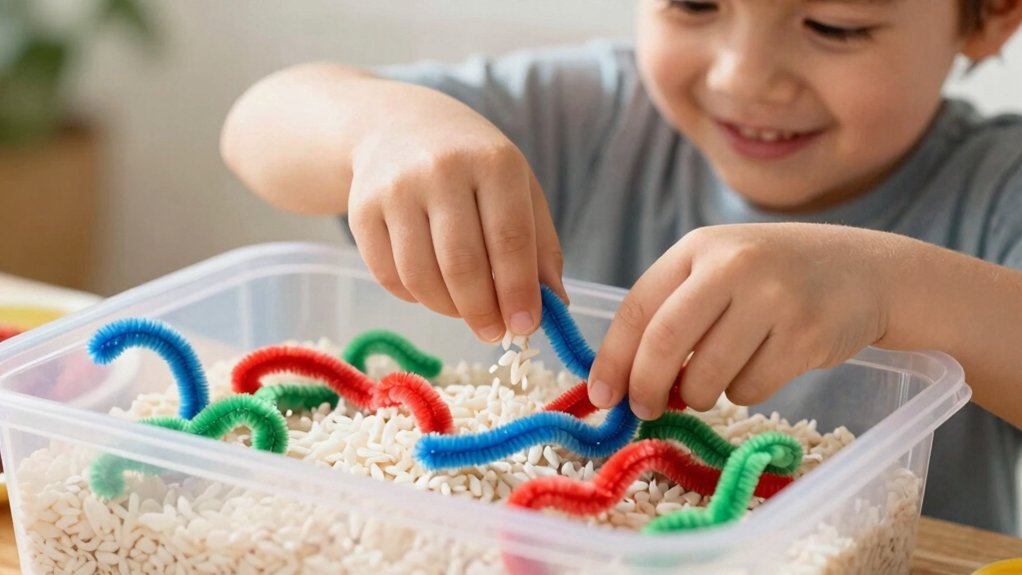
You’ll notice how scooping, threading, and transferring the colored rice and pipe cleaners sharpens finger dexterity while keeping you engaged.
The scent of vanilla and the varied textures invite your senses to work together, boosting attention and calm.
As you sort and move each piece, you’re simultaneously strengthening fine‑motor control and sensory integration.
Incorporating activities that encourage reaching and standing while viewing oneself can further enhance motor skills development.
Fine‑Motor Skill Development
Wonder how a simple rice‑and‑pipe‑cleaner bin can boost your child’s fine‑motor skills? You’ll see how scooping colored rice, threading pasta, and squeezing vanilla‑scented drops sharpen grasp, pincer control, and bilateral coordination. The tactile feedback offers proprioceptive input that supports sensory regulation and motor planning, echoing goals in physical therapy and even complementing gross motor activities that reinforce sensory pathways. Incorporating toys with Montessori-inspired features can further enhance developmental benefits through realistic and engaging play.
- Fill the tub with rice and let your child level it with a spoon.
- Use a funnel to pour rice into a cup, encouraging hand‑eye coordination.
- Thread pipe cleaners through a colander, developing pincer grip and bilateral coordination.
- Add vanilla drops for olfactory cues, enriching sensory regulation while they sort shapes.
Sensory Integration Through Play
The fine‑motor tasks you just explored naturally lead into a richer, whole‑body experience: a rice‑and‑pipe‑cleaner sensory bin that blends tactile, olfactory, and visual cues. You’ll scoop colored rice with spoons, level it, and transfer it through funnels, prompting proprioception and hand‑eye coordination. Adding vanilla drops introduces scent, while pipe cleaners and pasta threaded through a colander demand oculo‑motor control and finger dexterity. These movement activities also spark gross motor involvement as children bend, reach, and shift the tub, enhancing mobility and overall sensory integration. By varying textures and tools, you keep play‑based therapy engaging and encourage sequencing, tactile exploration, and coordinated movement—all within a structured, dynamic sensory bin.
Explore Texture With Oil‑And‑Water Sensory Bags
What happens when you squish a sealed bag filled with shimmering oil, water, and a splash of color? You feel cool, viscous motion that sparks texture exploration and boosts sensory pathways. The oil and water sensory bags let you practice tactile discrimination while gaining proprioceptive input. As you press, stretch, and roll the bag, fine motor planning sharpens and movement exploration supports gross motor regulation.
- Seal a freezer bag with oil, water, food coloring, and a pinch of air.
- Add leaves or small flowers for varied tactile cues.
- Tape the opening securely to prevent leaks.
- Use markers to draw on the surface, encouraging hand‑eye coordination.
This simple activity blends sensory integration with gross motor goals, strengthening the neural links that underlie coordinated movement.
Frequently Asked Questions
What Is an Example of a Sensory Motor Activity?
You can roll a ball back and forth while tracking it with your eyes, scooping rice with scented fingers, and pouring it into containers, blending tactile, visual, and proprioceptive feedback for sensory‑motor development.
What Are 5 Examples of Gross Motor Skills?
You can practice running, jumping, climbing, throwing, and balancing. Each activity engages large muscle groups, improves coordination, boosts core strength, and enhances proprioceptive feedback for overall sensory development.
What Are Examples of Sensory Activities?
You can try sandbox digging, water play, walking barefoot, scent‑matching games, and textured obstacle courses; each blends movement with touch, smell, or sound, keeping kids engaged while strengthening their sensory pathways.
Is Sensory Play Gross Motor?
Yes, sensory play can be gross motor when you move your whole body—like crawling through sand, jumping in puddles, or balancing on a beam—while feeling textures, sounds, and sights that stimulate your senses.



Leave a Reply