

You’ll see your child’s confidence soar when Montessori materials give instant, tangible feedback—puzzle pieces click only when they fit, bead frames resist wrong moves, and cylinders settle with a satisfying thunk. These built‑in error‑control cues let them spot and fix mistakes without adult interruption, turning errors into clues rather than setbacks. The tactile and perceptual signals reinforce independence, resilience, and a growth mindset, and the more they practice, the deeper their self‑belief becomes, setting the stage for even greater learning.
Self‑Correction in Montessori: Definition and Benefits
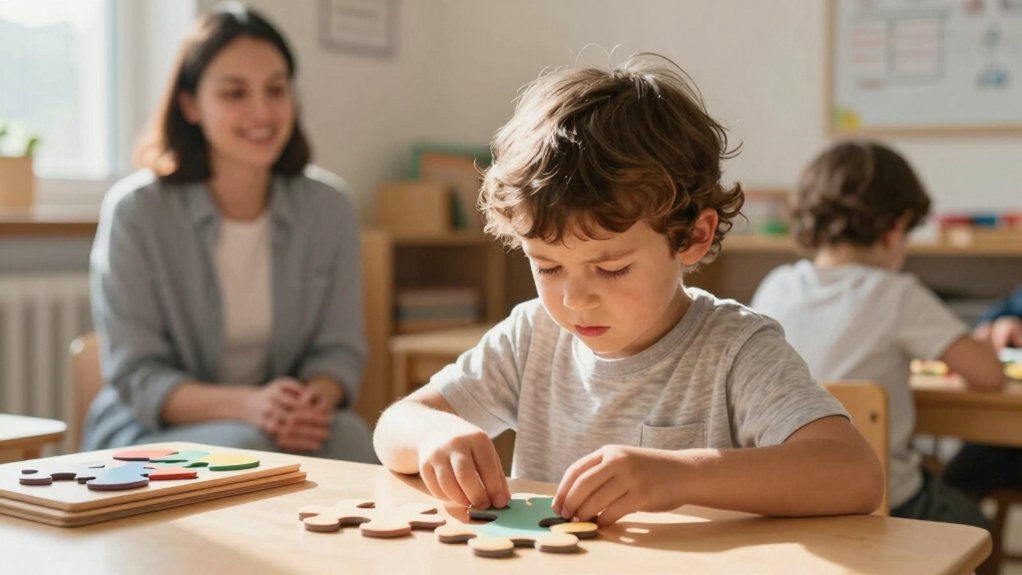
Ever wondered how Montessori classrooms turn mistakes into learning moments? You’ll see self‑correction in action when a child manipulates a puzzle that only clicks together correctly, or a bead frame that reveals a mis‑placement through a tactile cue. The material itself signals the error, so you don’t need adult interruption. This control‑of‑error design sharpens concentration, fuels inner motivation, and nurtures independence. As your child repeatedly discovers and fixes mistakes, confidence‑building blossoms; they learn that challenges are solvable, not shameful. The approach cultivates resilience, intrinsic drive, and a positive attitude toward problem‑solving, turning every slip into a stepping stone for deeper mastery. Using tools like the Kitchen Step Stool with Safety Rail allows children to independently access learning environments safely, further enhancing their confidence and autonomy.
How Error‑Control Gives Kids Instant Feedback
How does error‑control give kids instant feedback? When a child tries a Montessori puzzle, the piece either snaps into place or wobbles, instantly showing right or wrong. That tactile cue triggers self‑correction without an adult’s voice, so the child learns to notice discrepancies and adjust on the spot. Visual or auditory signals—like a bell that rings when a bead is correctly threaded—reinforce the lesson, turning error into a moment of discovery. Because the feedback comes directly from the material, the child builds independence, trusting their own senses rather than waiting for adult approval.
Over time this rapid loop deepens concentration, resilience, and intrinsic motivation, turning each mistake into a stepping stone toward confidence. Incorporating visual learning support systems in Montessori environments further enhances a child’s ability to self-correct by providing clear, reusable cues that promote independence and reduce cognitive overload.
Mechanical Error Control: Physical Fit That Builds Trust
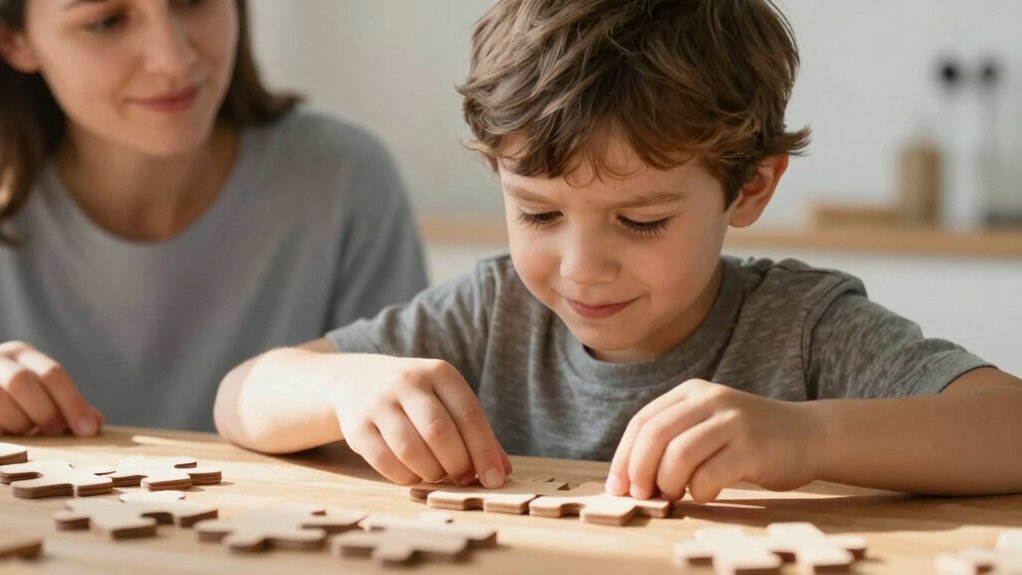
When a child’s hands meet a puzzle that only clicks into the right slot, the material itself tells them whether they’re on track. Mechanical error control gives that instant physical feedback, so they feel the shape, the resistance, and the certainty of a correct fit. As they try cylinder blocks, spindle boxes, or pegboards, each successful insertion confirms the solution, while a mis‑fit nudges them to adjust. This tactile loop encourages self‑correction without adult prompting, turning trial and error into a confident learning cycle. By relying on these built‑in constraints, you nurture independence, sharpen concentration, and boost inner motivation, because the child learns that the world’s physical rules can be trusted. Using supportive seating like classroom reading corner cushions can further enhance focus and comfort during these learning moments.
Perceptual Error Control: Using Senses to Spot Mistakes
Why not let your child’s own senses become the teacher? Perceptual feedback turns a misplaced block or a rough‑cut puzzle piece into a clear visual cue that something’s off. When they feel a jagged edge or see a misaligned picture, they spot the error instantly and trigger self‑correction. This tactile or visual signal fuels confidence building because they own the fix. You can choose toys that make the correct result obvious—bright colors for right angles, textured surfaces for smooth finishes—so children learn to rely on perception, not adult prompts. Similarly, selecting tools with non-scratch silicone coatings helps maintain the correct tactile experience and prevents damage during learning activities.
| Sense | Typical Cue |
|---|---|
| Visual | Misaligned colors, uneven lines |
| Tactile | Rough edges, loose fit |
| Auditory | Unclear sound from a broken instrument |
Social/Adult‑Based Error Control: Guiding Observation Without Direct Fixes

Perceptual cues give children a concrete signal, but the next step is to let the social environment reinforce that signal without stepping in. You let adults observe the task quietly, noting where the child hesitates or repeats a step.
Instead of correcting on the spot, they later re‑present the activity, prompting the child to revisit the problem. This non‑intrusive observation nurtures autonomy, letting the child stay engaged and discover the discrepancy themselves.
When the adult refrains from judgment, the child feels trusted and motivated to self‑correct. The social feedback loop thus complements perceptual and mechanical controls, reinforcing confidence while preserving the child’s sense of capability. Designing environments with height accessibility between 24 to 48 inches helps children independently engage in such learning processes.
Turning Mistakes Into Learning Moments: Psychological Impact on Self‑Esteem
How can a simple slip become a confidence boost? When you let your child treat a mistake as a learning moment, you shift the focus from embarrassment to discovery. Self‑correction signals—internal cues that highlight the error—replace external judgment, so fear fades and curiosity rises. By framing the slip as a chance to experiment, you nurture resilience and persistence, reinforcing the belief that effort, not fixed ability, drives success. This process‑oriented mindset builds self‑esteem because the child sees growth as a personal journey. The child trusts their own judgment, links effort to improvement, and carries that confidence into future challenges, all without adult‑driven criticism. Encouraging children to engage with age-appropriate storage solutions can further support their independence and confidence through organized play and self-management.
Fostering Independence: How Self‑Correction Encourages Decision‑Making
You’ll notice your child starts exploring choices on their own, testing options and seeing the results without waiting for your input.
Each successful self‑correction builds a quiet confidence that they can trust their judgment.
As they gain autonomy, decision‑making becomes a natural part of their play and learning.
Using tools with convertibility and progression supports this independence by allowing children to adapt as their skills develop.
Empower Choice Exploration
Encourage your child to explore choices by letting the material itself signal mistakes—whether a puzzle piece clicks into place, a bead rolls into the correct slot, or a peer nods in agreement. When the feedback is built in, self‑correction becomes a natural part of play, and autonomy grows with each successful adjustment. You’ll notice deeper concentration as your child follows the cue, turning error into a moment of exploration rather than frustration.
| Step | Cue | Result |
|---|---|---|
| 1 | Click | Confidence |
| 2 | Roll | Insight |
| 3 | Nod | Decision‑making |
Boost Confidence Through Autonomy
What if your child could turn every mistake into a stepping stone toward independence? When you let them notice and fix errors themselves, self-correction becomes a catalyst for autonomy. They learn to weigh options, choose solutions, and see the outcome without waiting for adult direction. This hands‑on problem solving builds confidence‑building momentum; each successful correction reinforces a belief in their own capabilities. Mechanical cues, perceptual hints, and gentle social feedback give immediate guidance, while your quiet observation lets them practice self‑regulation and persistence. As they concentrate deeper and stay intrinsically motivated, they tackle harder tasks with less fear of failure. Ultimately, fostering independence through self‑correction transforms mistakes into powerful confidence‑building experiences.
Developing a Growth Mindset Through Repeated Self‑Correction Practice
How does repeatedly fixing your own mistakes shape a growth mindset? When you let your child use self-correction tools, they see errors as clues, not failures. The built‑in feedback of Montessori materials lets them spot a slip, adjust, and confirm success without adult rescue. This loop fuels intrinsic motivation, because the reward comes from their own discovery. Over time, they internalize a growth mindset: challenges become opportunities, and setbacks turn into data for improvement.
Mechanical, perceptual, and social cues teach them to verify correctness independently, strengthening concentration and confidence. As fear of mistakes fades, resilience rises, and they persist through setbacks, building a lasting belief in their capacity to learn.
Applying Growth Mindset With Montessori Materials
Ever wondered why a child’s eyes light up when a cylinder clicks into place on a Montessori spindle? That moment shows self‑correction in action, turning a simple error into a growth mindset lesson. When you set out cylinder blocks, a Pink Tower, or three‑part cards, you’re giving your child instant feedback. The material tells them whether they’re right, so they adjust without adult prompting. Keep the space tidy and step back while they work; this encourages autonomous problem‑solving and builds confidence. Each corrected mistake reinforces resilience, showing that mastery comes from trying again. By pairing Montessori materials with purposeful encouragement, you nurture a mindset that sees every slip as a stepping stone toward deeper learning.
Practical‑Life Montessori Materials That Teach Self‑Correction
When you hand a child a practical‑life set—like a water‑pouring jug or a buttoning frame—the material itself signals success or error, so the child can see what went wrong without a teacher’s correction. The design is non‑instructive; a spill or a mis‑aligned button instantly reveals the mistake, prompting the child to pause, analyze, and try again. Mechanical controls—such as a tray that only fits when the spoon is centered—provide tactile feedback that reinforces correct technique. As they repeat the task, they build independence, learning that errors are clues rather than failures. This self‑correction loop strengthens intrinsic motivation, sharpens focus, and prepares them for more complex challenges, all while nurturing confidence.
Sensorial Montessori Materials That Foster Self‑Correction
Sensorial materials are built to reveal errors the moment a child mis‑aligns or mis‑matches, turning every tactile or visual cue into a built‑in correction mechanism. You’ll notice how cylinder blocks only fit their matching holes, and how the pink tower collapses if a rung is placed out of order. Each slip signals a mistake instantly, prompting the child to adjust without adult intervention. This self‑correction loop deepens concentration and nurtures independence, because the child learns to trust their senses over external guidance.
Spindle boxes, three‑part cards, and moveable alphabet work the same way—providing perceptual checks that reinforce confidence. By repeatedly experiencing these sensorial Montessori tools, your child builds an inner drive to solve problems autonomously.
Long‑Term Benefits of Self‑Correction: Confidence, Thinking, Growth
Why does self‑correction matter beyond the classroom? When your child learns to spot and fix errors, they develop confidence that isn’t tied to grades or praise. They realize they control their own learning, so they approach new problems with curiosity rather than fear. This habit builds emotional resilience; setbacks become data, not defeats, encouraging persistence. Over time, the brain strengthens pathways for critical thinking, letting them analyze situations quickly and adapt. The intrinsic motivation sparked by self‑correction fuels growth across subjects, sports, and social interactions. You’ll notice them tackling challenges with a calm, solution‑focused mindset, and their confidence will ripple into every area of life, turning mistakes into stepping stones for continuous improvement.
Frequently Asked Questions
What Is the 7 7 7 Rule for Parenting?
You follow the 7‑7‑7 rule by giving your child seven brief touches, seven focused minutes, and seven days of practice for a new skill, reinforcing consistency and confidence through short, repeated interactions.
How Do I Rebuild My Child’s Confidence?
You rebuild your child’s confidence by giving them chances to try, notice mistakes, and fix them themselves; celebrate effort, offer gentle guidance, and create an environment where failure feels safe and learning.
What Are the 5 C’s of Confidence?
You’ll find the five C’s are competence, consistency, courage, connection, and curiosity—each one you nurture through practice, supportive feedback, encouraging risk‑taking, building relationships, and exploring new challenges together.
What Is the 3-3-3 Rule for Anxiety Children?
You apply the 3‑3‑3 rule by choosing three trusted people, three safe places, and three comforting objects you can turn to when anxiety spikes, giving you quick, concrete grounding options.