

You can boost your child’s fluency with Montessori self‑correction tools that let mistakes surface instantly—tiles that won’t fit, cards that feel wrong, or gray‑out cues that highlight silent letters. After each syllable, pause, count with a finger break, and reread the whole word to confirm meaning. This control‑error loop builds concentration, fine‑motor coordination, and a growth mindset, turning errors into progress. Keep going to discover how these techniques deepen independence and confidence.
What Is Self‑Correction in Montessori Language Activities?
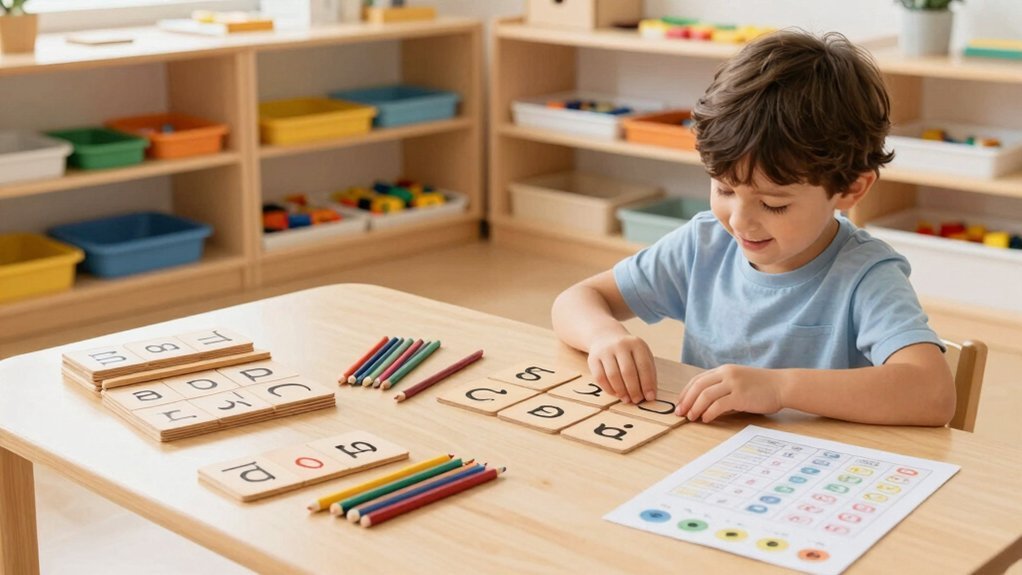
How does self‑correction work in Montessori language activities? You engage with materials that signal mistakes themselves—tiles that won’t fit, cards that feel wrong, or a teacher who simply observes and later re‑presents the task. This built‑in feedback creates a control of error that lets you notice the slip without adult interruption. As you adjust, you deepen concentration and spark inner motivation, turning each error into a learning cue. The process nurtures independent learning and autonomous learning, because you’re responsible for spotting and fixing the problem. Over time, you develop confidence, seeing errors as natural steps rather than failures, and you become a self‑directed language learner. This approach aligns with Montessori principles that emphasize self-correcting materials to foster independence and concentration in learners.
How to Use Self‑Correction Error‑Control Techniques for Independent Reading
Ever wondered how you can turn reading mistakes into learning moments? You can start by applying self‑correction error‑control techniques while independent reading. Use Readable English mark‑up to decode unfamiliar words, and let gray‑out cues highlight silent letters. After each syllable, pause for rereading, confirming meaning from context.
Count syllables with finger breaks, cover letters after each chunk, then reread the whole word to ensure accuracy. Embrace a growth mindset; remind yourself, “It’s okay to make mistakes,” and view each correction as progress. This metacognition builds a feedback loop—your brain notes errors, you adjust, you improve.
Track progress by comparing pre‑ and post‑test scores, and reflect on how each self‑correction shapes your reading fluency. Using fine motor skill development tools like child-safe tongs can also support the coordination needed for precise finger movements in tracking text.
Why Self‑Correction Benefits Kids and Parents Long‑Term
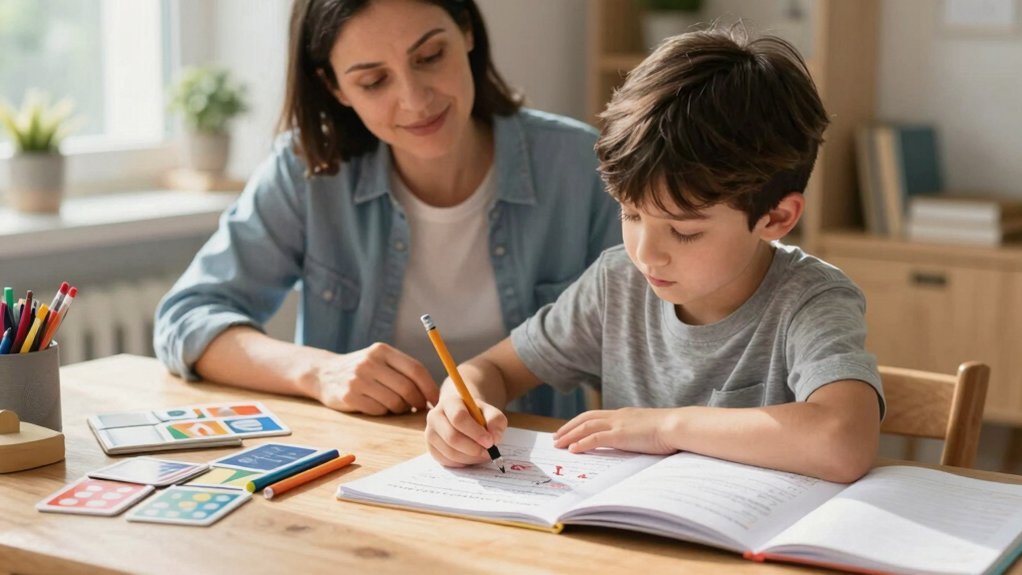
Why does self‑correction matter beyond the classroom? You’ll see that when kids own their mistakes, they turn each error into a stepping stone rather than a setback. This habit builds independence, fuels inner motivation, and embeds resilience into the learning process. Parents reap the reward of quieter evenings and confident children who tackle new challenges without constant prompting.
Kids owning mistakes turns errors into stepping stones, building independence, motivation, and resilient confidence.
- Independence grows as kids rely less on adult feedback.
- Ownership of work strengthens self‑esteem and accountability.
- Mistakes become data points, not defeats, sharpening problem‑solving.
- Resilience develops through repeated, self‑guided practice.
Providing supportive environments, like using a Montessori step stool, can further encourage children to engage confidently in self-directed learning activities.
Frequently Asked Questions
How Can Parents Track Progress Without Formal Assessments?
You can monitor growth by noting daily conversation fluency, tracking new vocabulary usage, reviewing journal entries, and setting short‑term goals; regular informal chats and quick quizzes reveal trends without formal assessments.
What Technology Tools Support Self‑Correction at Home?
You can use speech‑recognition apps like Google Speech‑to‑Text, AI‑powered writing assistants such as Grammarly, pronunciation trainers like ELSA Speak, and interactive platforms like Duolingo that flag errors instantly.
Can Self‑Correction Be Adapted for Multilingual Learners?
Yes, you can adapt self‑correction for multilingual learners by using language‑specific feedback tools, bilingual dictionaries, and AI‑driven pronunciation checks, ensuring each language’s rules and cultural nuances are respected.
How Often Should Self‑Correction Activities Be Scheduled?
You should schedule self‑correction activities three to five times weekly, spacing them evenly so you get regular feedback without overwhelming yourself, and adjust frequency based on progress and workload.
What Signs Indicate a Child Needs Additional Guidance?
You’ll notice frequent frustration, repeated mistakes, or avoidance of tasks; if they ask for help constantly, seem stuck on simple concepts, or display low confidence, those signs mean they need extra guidance.