
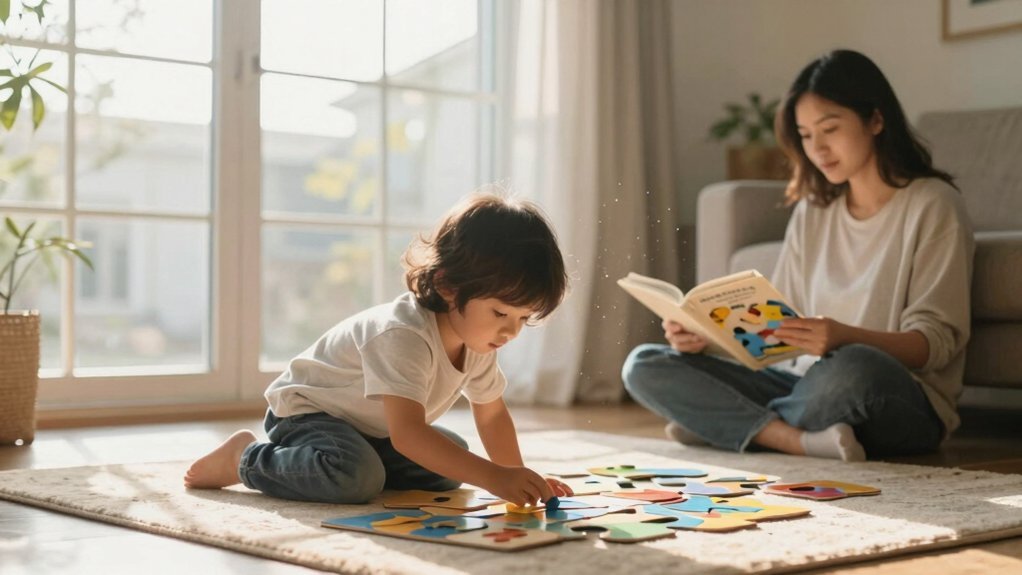
When you honor your child’s natural rhythm, you create calm, secure routines that let them explore and learn at their own pace. This fluid tempo reduces interruptions, builds trust, and nurtures curiosity, so they stay engaged longer and develop skills confidently. Flexible transitions and simple Montessori‑style tasks support independent decision‑making and fine‑motor growth. Consistency eases big emotions, turning learning into joy rather than pressure—keep going to discover practical ways to nurture this rhythm.
Understanding Your Child’s Rhythm and Learning

Ever wonder how a child’s natural rhythm shapes their learning? You’ll notice that when you honor that rhythm, a calm routine emerges, giving the child a sense of security and predictability.
Honoring a child’s natural rhythm creates calm, secure routines that foster deep, joyful learning.
In early childhood, this stability lets them dive deep into activities—like focused sand play—without adult interruptions. You’ll see growth as they choose tasks, stay engaged, and develop fine‑motor and language skills at their own pace.
By providing a consistent environment, you reduce speed‑driven pressure and nurture trust between you, educators, and the child. The result is joyful, lasting learning where curiosity drives progress, not timetables or peer comparison.
Supportive tools, such as Montessori-friendly step stools, can foster independence and confidence by allowing children to engage actively and safely in their daily routines.
Embrace the rhythm, and watch their confidence and competence flourish.
Why Montessori Rhythm Beats Rigid Schedules
How does a child’s natural rhythm compare to a rigid timetable? You’ll notice that a fluid Tempo lets a child stay immersed, while a strict clock shatters focus. In the early years, cadence creates a present‑centered flow that feels safe and encourages exploration. Flexibility lets play end naturally and wind‑down gradually, matching each child’s pace instead of imposing uniform timing.
Predictable routines—though not rigid—help regulate big emotions, lower anxiety, and smooth transitions between activities. Montessori‑inspired environments prioritize this balance, using rhythm to nurture curiosity and holistic development. By honoring rhythm over exact minutes, you give your child the space to engage deeply, transition smoothly, and thrive emotionally and cognitively. Many Montessori settings enhance this approach by integrating visual timers that support transitions and independence in a gentle, child-friendly way.
Simple Montessori‑Style Activities That Match Rhythm

When you move from understanding why rhythm beats rigid schedules, the next step is to see it in action through simple Montessori‑style activities. Offer a polishing table task; the child sweeps, rubs, and watches the shine appear, moving at a calm pace that mirrors their inner rhythm.
Provide spooning and pouring exercises, letting them choose the amount and speed, fostering independent learning and fine‑motor confidence.
Use repetition with a favorite storybook or color‑matching set, revisiting the same material until they feel secure.
Select practical life projects—buttoning, wiping, or arranging beans—that let the child decide when to start and stop, reinforcing decision‑making and a steady, self‑paced flow.
This approach nurtures concentration, joy, and a natural, sustainable rhythm.
Choosing tools like an adjustable toddler kitchen helper can align with a child’s growth and rhythm, supporting their independence safely over time.
Spotting and Nurturing Curiosity in Rhythm
Notice how a child’s eyes linger on a sand‑filled scoop, fingers tracing the same motion again and again. You can spot curiosity when they repeat a task, because rhythm creates security and invites uninterrupted exploration. Let the routine stay gentle; don’t intervene, and self‑directed learning blossoms. Offer simple, meaningful activities—polishing a table, matching colors—so the child’s focus deepens and you see what truly sparks them. Choosing age-appropriate, low step-in storage options supports a safe and accessible environment that fosters this natural rhythm.
| Observation | What it Shows | How to Nurture |
|---|---|---|
| Repeating a motion | Rhythm in play | Provide time, no redirection |
| Returning to a storybook | Sustained curiosity | Keep the book accessible |
| Polishing a surface | Focus on detail | Offer safe tools |
| Matching colors | Pattern recognition | Celebrate successes |
| Asking “why” after play | Emerging inquiry | Listen, expand gently |
How Respecting Rhythm Builds Trust and Joy

Ever notice how a child’s face lights up when they can move at their own tempo? When you honor that Rhythm, you create Predictability that feels safe, and the child learns to Trust you and the environment. Simple Routines—circle time, mealtime rituals, or a calm art session—signal that you respect their natural pace. This consistency reduces anxiety, allowing Joy to surface naturally. As they engage in self‑directed tasks, they build decision‑making skills, fine‑motor coordination, and a sense of competence that fuels Child development. The trust that blooms from these rhythmic spaces supports resilience and a lifelong love of learning, turning everyday moments into joyful, collaborative experiences.
Frequently Asked Questions
Why Is Rhythm Important for Children?
You need rhythm because it gives children predictable structure, lowers anxiety, boosts focus, and eases transitions. It nurtures emotional regulation, creates safe anchors, and supports balanced growth across learning, play, and rest.
What Is the 3 3 3 Rule for Kids?
You follow the 3‑3‑3 rule by revisiting a decision or skill every three days, then three weeks, then three months, letting your child practice incrementally, observe readiness, and adjust pacing naturally.
What Are the 4 C’s of Positive Parenting?
You’ll find the 4 C’s are Connection, Cooperation, Confidence, and Competence—each one helps you nurture empathy, collaborative problem‑solving, self‑efficacy, and skill‑building in your child’s everyday life.
What Is the 10-10-10 Rule for Kids?
You apply the 10‑10‑10 rule by pausing before you act, then asking how your decision will affect your child in the next ten minutes, ten months, and ten years, guiding balanced, growth‑focused choices.




Leave a Reply